
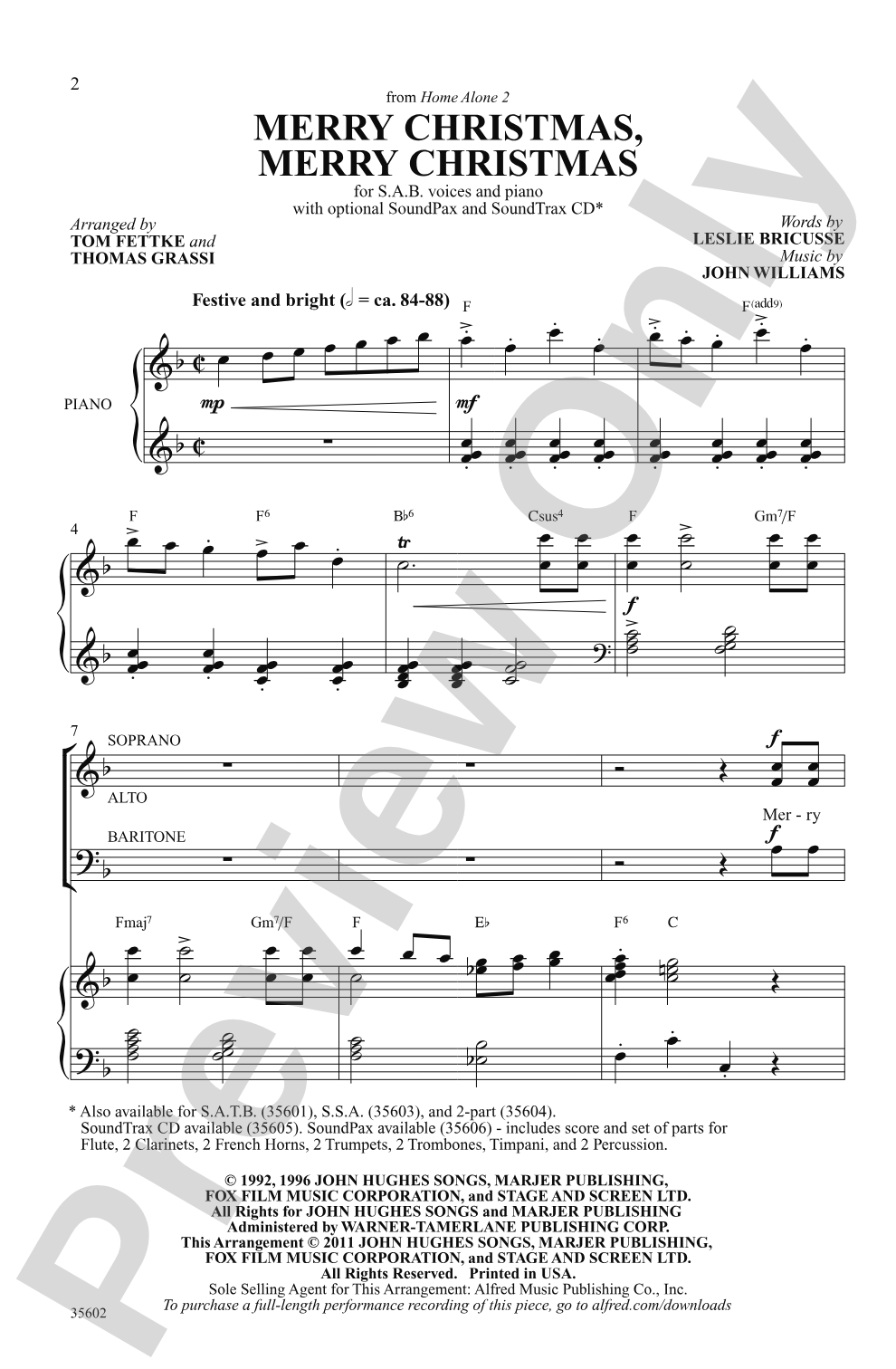
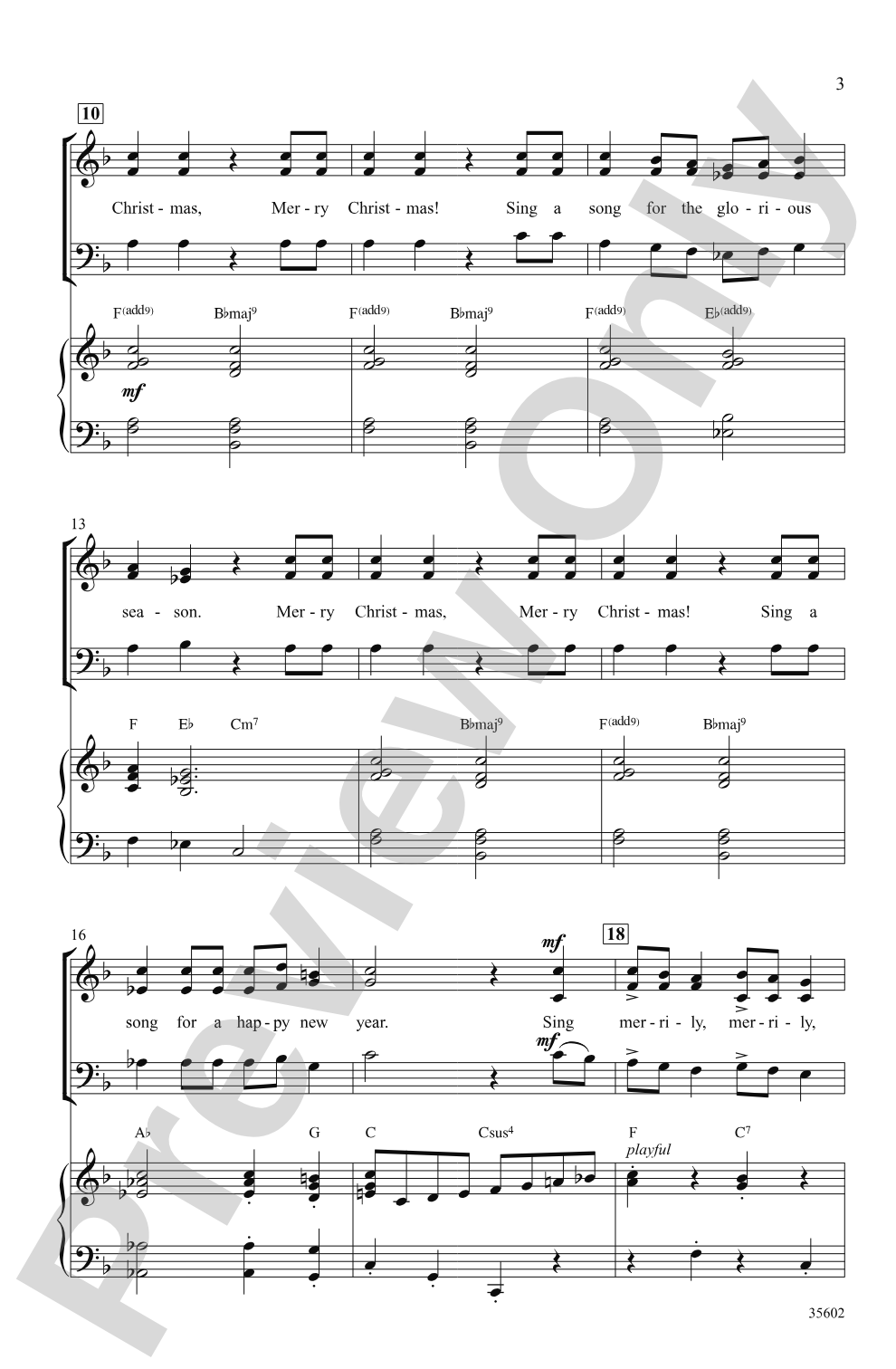
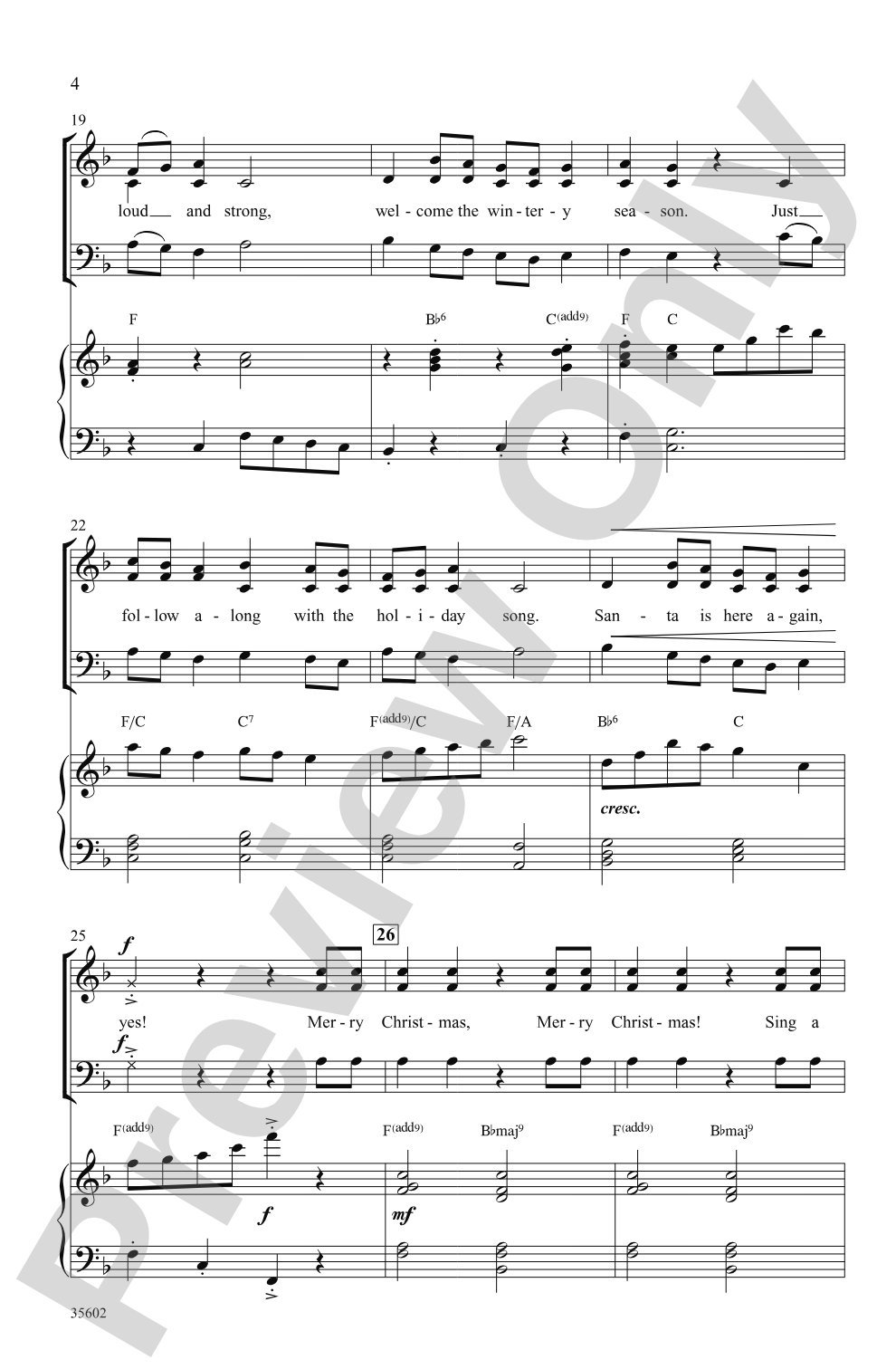

Merry Christmas, Merry Christmas (from Home Alone 2): SAB Choral Octavo
From Home Alone 2
Words by Leslie Bricusse, music by John Williams / arr. Tom Fettke and Thomas Grassi
Item: 00-PO-0001005
$2.10
Minimum order quantity: 20 copies
One moment…
Related Items
Merry Christmas, Merry Christmas: SoundTrax Digital Audio Download |
$29.99
|
View | |
Merry Christmas, Merry Christmas (from Home Alone 2): SATB Choral Octavo |
$2.10
|
View | |
Merry Christmas, Merry Christmas (from Home Alone 2): SSA Choral Octavo |
$2.10
|
View | |
Merry Christmas, Merry Christmas (from Home Alone 2): 2-Part Choral Octavo |
$2.10
|
View | |
Merry Christmas, Merry Christmas (from Home Alone 2): Choral SoundPax |
$40.00
|
View | |
Merry Christmas, Merry Christmas: SATB Choral Octavo |
$2.10
|
View | |
Merry Christmas, Merry Christmas: SAB Choral Octavo |
$2.10
|
View | |
Merry Christmas, Merry Christmas: SSA Choral Octavo |
$2.10
|
View | |
Merry Christmas, Merry Christmas: 2-Part Choral Octavo |
$2.10
|
View | |
Merry Christmas, Merry Christmas: Choral Octavo SoundTrax CD |
$29.99
|
View | |
Merry Christmas, Merry Christmas: Choral SoundPax |
$40.00
|
View |
Description
It's a magical, miracle, lyrical opener or closer for holiday programs of all levels. A sparking seasonal favorite from Home Alone 2.


Merry Christmas, Merry Christmas (from Home Alone 2): SAB Choral Octavo isn't in MakeMusic Cloud just yet...but it could be. Let us know you'd like to see it, and you'll help shape what comes next. In the meantime, start a free trial and dive into thousands of interactive titles your students can play along with today.
Request This Title
Tell us you want it.
Start Your Free Trial
Explore everything that's ready to play right now.
Sample Audio
1
Audio File
--:--
0:00
0:00
Sample Video
No sample videos found.
Additional Details
Series:
Alfred Pop Choral Series
Publisher:
Alfred Music
Page Count:
12
SKU:
00-PO-0001005
More about this title
About the Composer: John Williams
John Williams stands among the most prolific and celebrated film composers in cinema history. His work spans seven decades of scoring, from Star Wars and Indiana Jones to Harry Potter and Schindler's List, demonstrating an unmatched ability to craft memorable melodies that enhance narrative while standing alone as concert music. In the classroom and rehearsal room, his compositions consistently inspire musicians because they balance accessibility with sophisticated orchestration and genuine emotional depth.
Why we love this
Williams' gift for writing instantly singable melodies shines through here, and the arrangement sits comfortably for mixed choirs of varying experience levels without sacrificing charm or polish. The piece captures that specific warmth audiences felt in the film while functioning brilliantly as a program anchor, whether you're opening your concert or closing it with something genuinely magical rather than predictable.
What to expect
It's bright and optimistic without being saccharine, with a lyrical quality that feels more Broadway than traditional carol. The arrangement has space and light in it; you're not battling dense harmony or constant rhythmic complexity. Instead you're inhabiting a moment of quiet joy that audiences recognize immediately.
Who it's for
This works for choirs at the middle school level and up, from community choirs to advanced high school groups. If your ensemble has solid basic blend and can balance three parts without one section drowning out the others, you have what you need to make this sound genuinely good.
How to get the most out of it
- Balance the melody prominently in whichever voice part carries it, but let the harmonies underneath breathe; this piece lives in the space between accompaniment and orchestration rather than in aggressive voice independence.
- Use the recorded accompaniment strategically during rehearsal to lock ensemble entrances, then gradually move rehearsals toward singing without it so the choir owns the phrasing.
- Shape the dynamics with intention across the full arc rather than treating each phrase in isolation; Williams composed this for film, so think in terms of cinematic pacing and emotional momentum.
- The text matters here. This isn't a novelty arrangement. Sing through the lyrics with clarity and conviction; the sentimentality in the film comes from genuine warmth, not from cute delivery.
How to use it
Consider pairing this with other film scores or contemporary seasonal music if you're building a non-traditional holiday concert, or place it as the opening number where its familiarity settles the audience in before moving into deeper choral repertoire. It also functions perfectly as a closer if your program needs something that sends people out smiling rather than moved to contemplation.
Skills your students will build
- Blending three-part harmony without losing individual line integrity
- Shaping lyrical phrases with stylistic awareness
- Tracking independent melodic lines while supporting the primary tune
- Connecting text expression to musical shape in contemporary arrangements