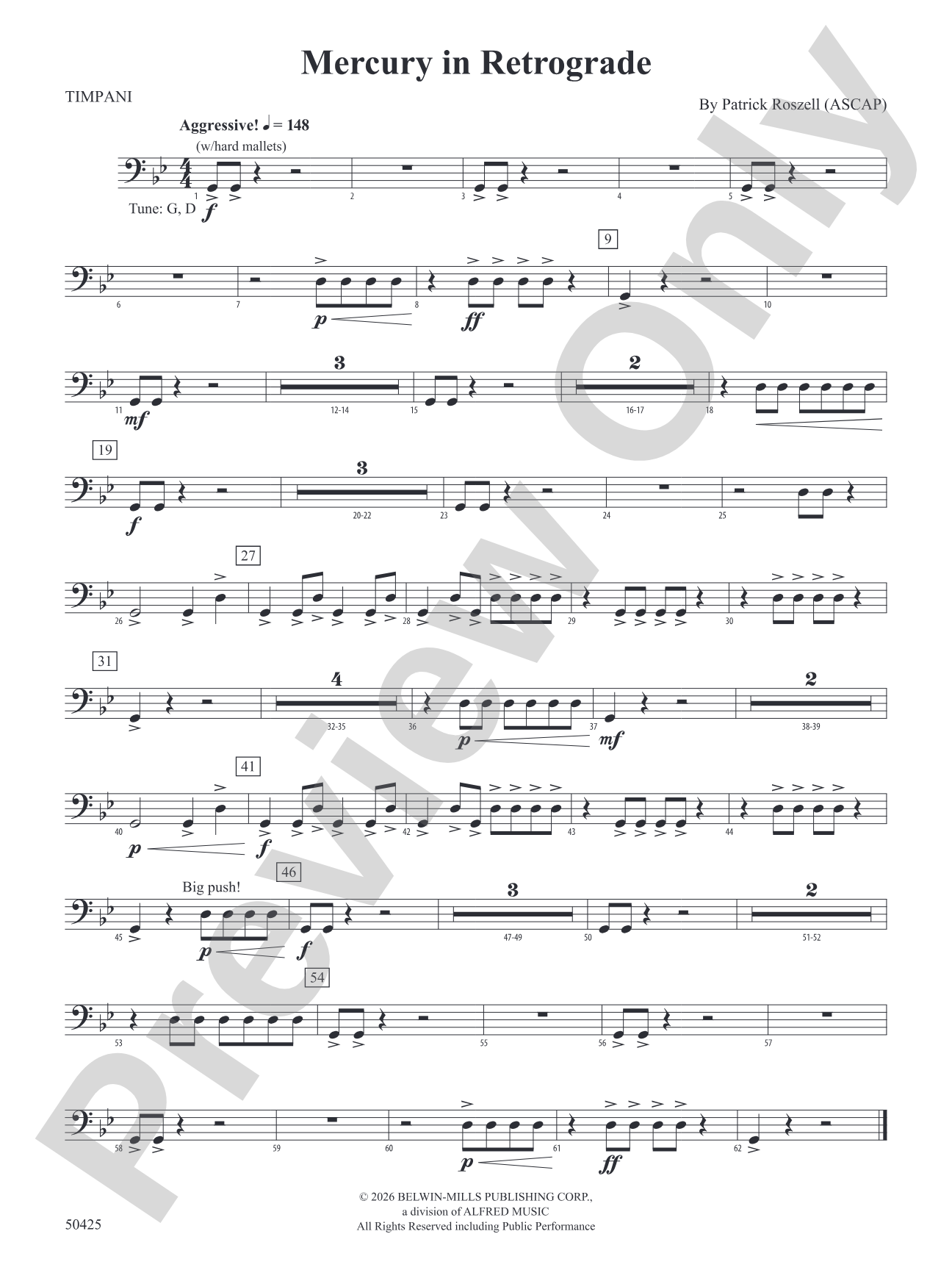
Mercury in Retrograde: Timpani Sheet Music Preview

Mercury in Retrograde: Timpani

By Patrick Roszell

Level:.5

Item: 00-PC-0019679_TMP

Digital Download
$3.00
Description
Mercury in Retrograde, by Patrick Roszell, was inspired by the temporary optical illusion where the planet Mercury appears to move backward in the sky. This clever piece recreates that sense of mystery, weaving the simplest materials into a surprisingly mature and sophisticated composition.

Create a mature and impressive sound with only the first few notes! This work uses clever scoring to create a sophisticated piece inspired by the famous astronomical illusion. With simple rhythms and fun clapping and stomping, it's the perfect "big-sounding" work for your beginning band.

Don't just read it, hear it, play along with it, and watch your students grow with it. In MakeMusic Cloud, Mercury in Retrograde: Timpani comes alive with professional accompaniment, adjustable tempo, and built-in practice tools that turn solo practice into real progress.

Sample Audio
0:00
0:00
Sample Video
Additional Details
Series: Belwin Very Beginning Band
Publisher: Alfred Music
SKU: 00-PC-0019679_TMP

More about this title

Why we love this

Roszell understands what beginning bands actually need: music that sounds full and confident without demanding technical sophistication. The concept of Mercury in retrograde provides a unifying narrative that keeps students engaged beyond the page, while the clever orchestration proves you don't need complex passages to create an impression.

What to expect

Mysterious and deliberate, like watching something move counter to expectation. The piece builds atmosphere through clever use of space and dynamics rather than sheer technical display, creating an experience that feels more intricate than its notation suggests.

Who it's for

Beginning concert bands looking for repertoire that reads accessibly but sounds polished enough for contest or festival performance. This works equally well for groups in their first year of ensemble playing or slightly more experienced bands seeking a shorter, high-impact opener.

How to get the most out of it

  • Shape the piece around the clapping and stomping patterns. These rhythmic elements aren't decoration; they anchor the ensemble's sense of pulse and create the illusion of musical momentum even when harmonic movement is minimal.
  • Balance your upper woodwinds carefully during the sections where they carry melody. With limited instrumental forces, every voice needs to project without overblowing.
  • Conduct with a clear, deliberate pulse to unify the simple rhythms. Beginning ensembles benefit from seeing your beat define the character of the retrograde concept.

How to use it

Program this as a concert opener to establish artistic credibility early, or place it alongside other contemporary works that showcase compositional craft at accessible levels. It also makes an excellent festival selection where impact and ingenuity matter more than duration or complexity.

Skills your students will build

  • Maintaining consistent pulse with simple rhythmic patterns
  • Listening for balance and blend in full ensemble texture
  • Interpreting compositional intent through program music
  • Executing clean attacks and releases with non-pitched percussion
  • Reading and responding to conductor direction with minimal written complexity

You May Also Like