
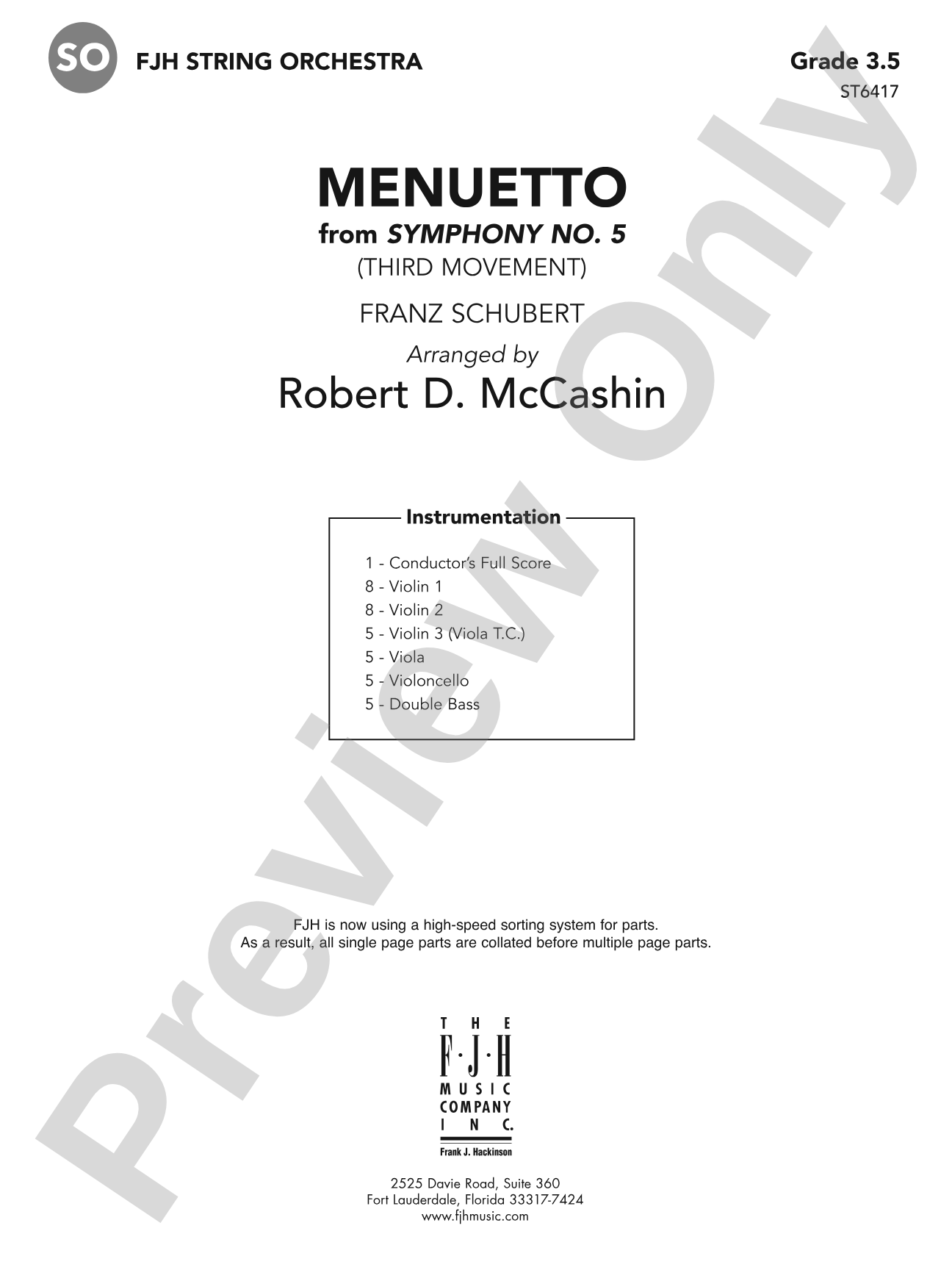
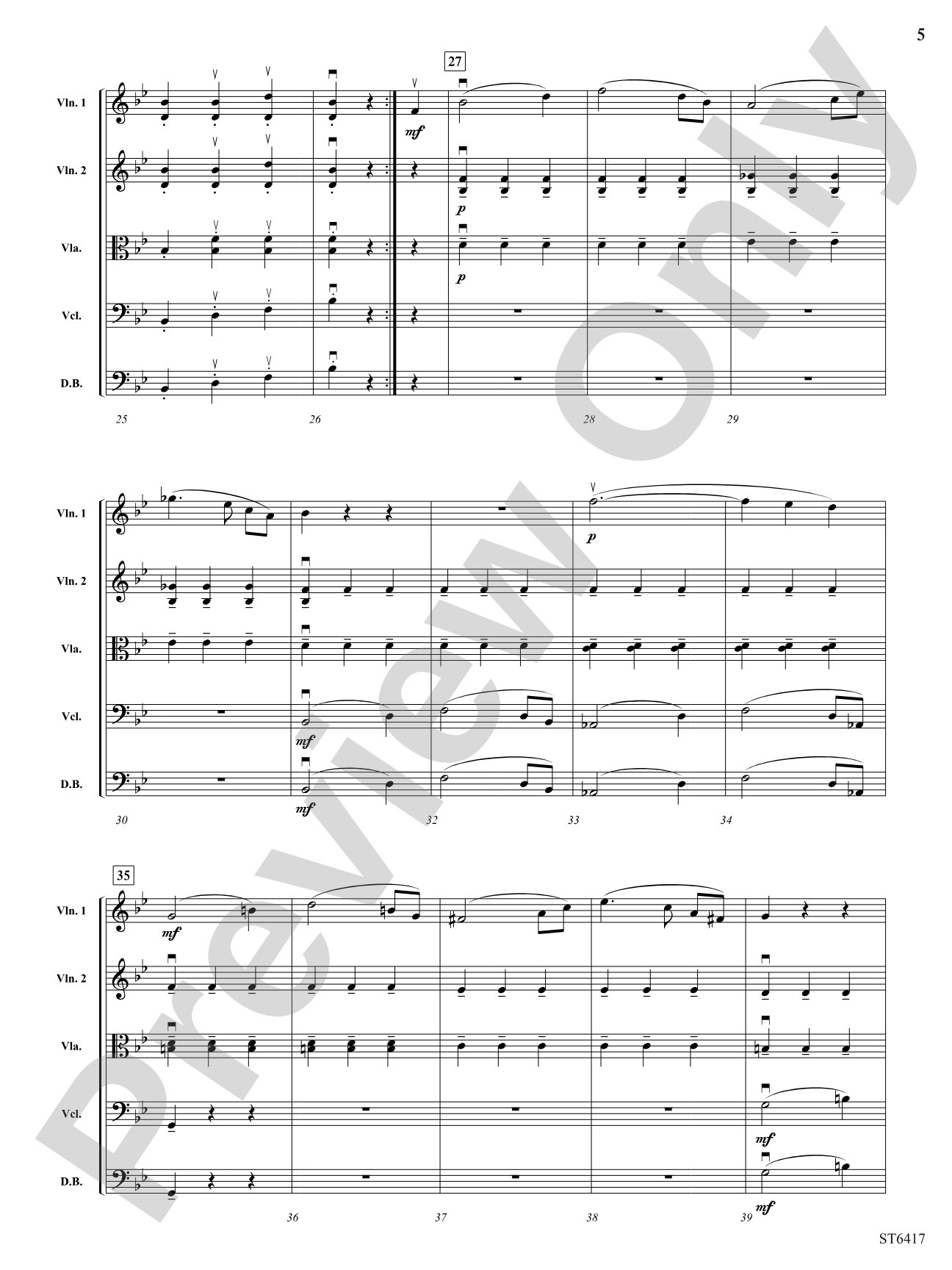
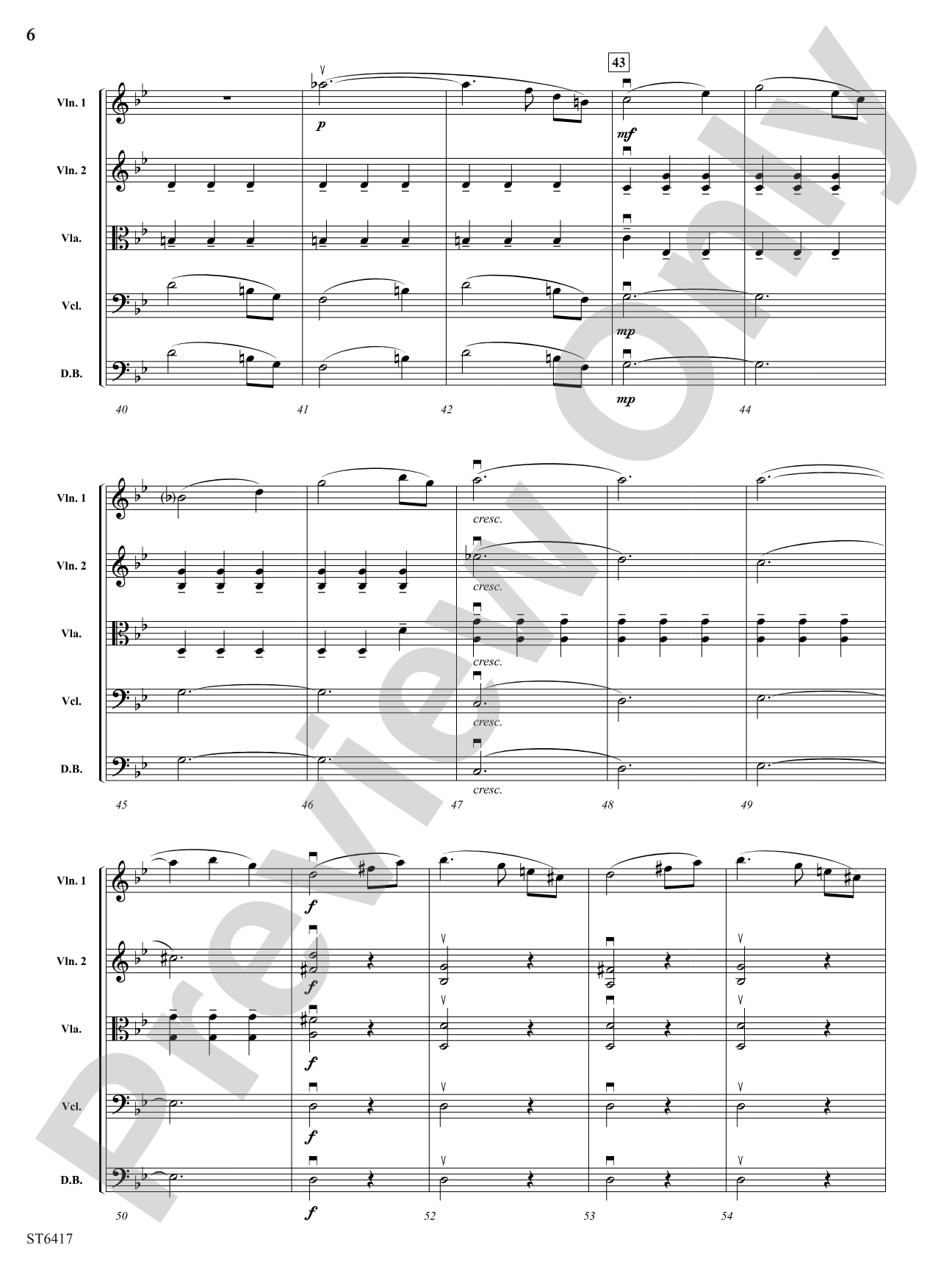
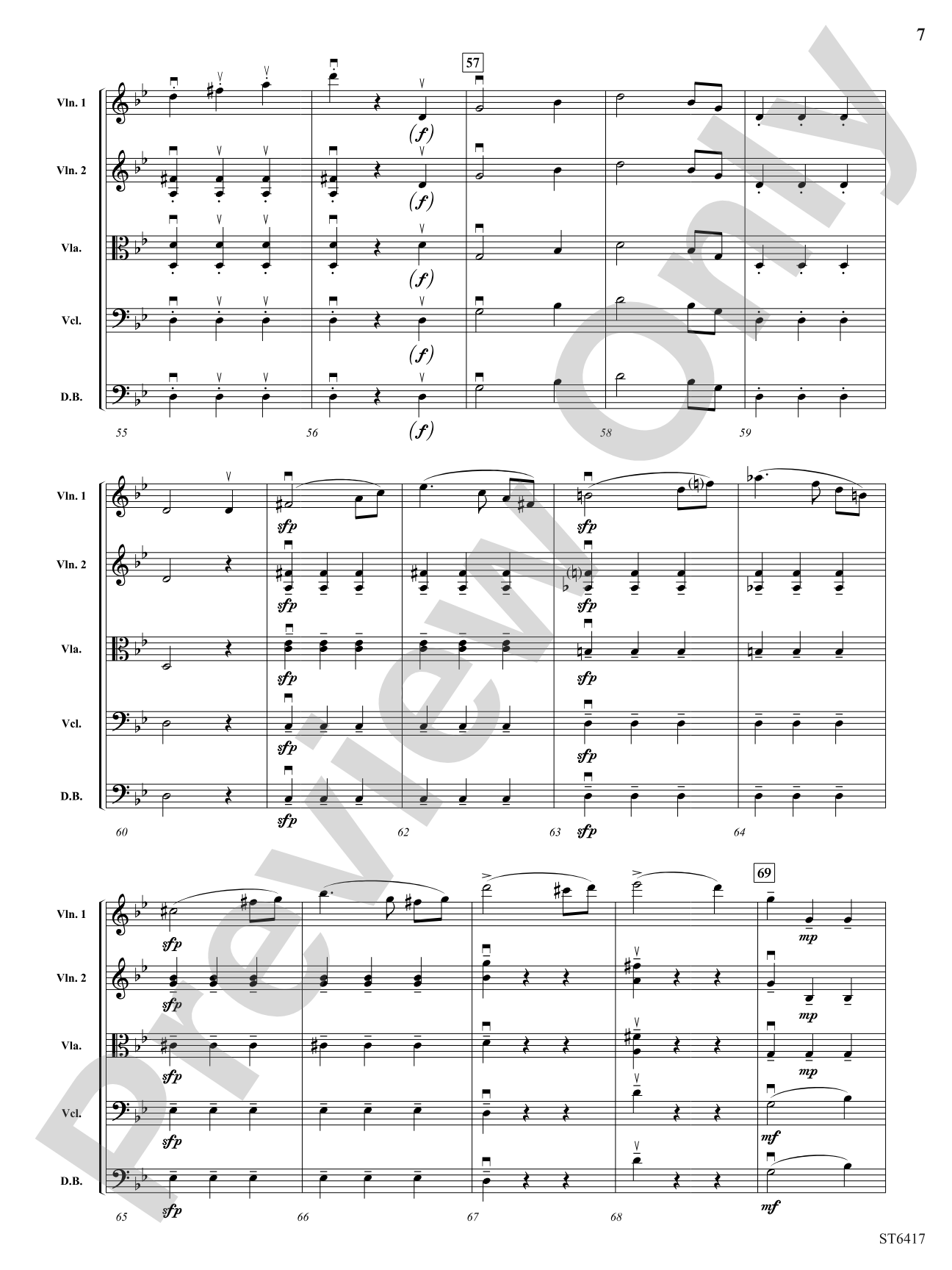
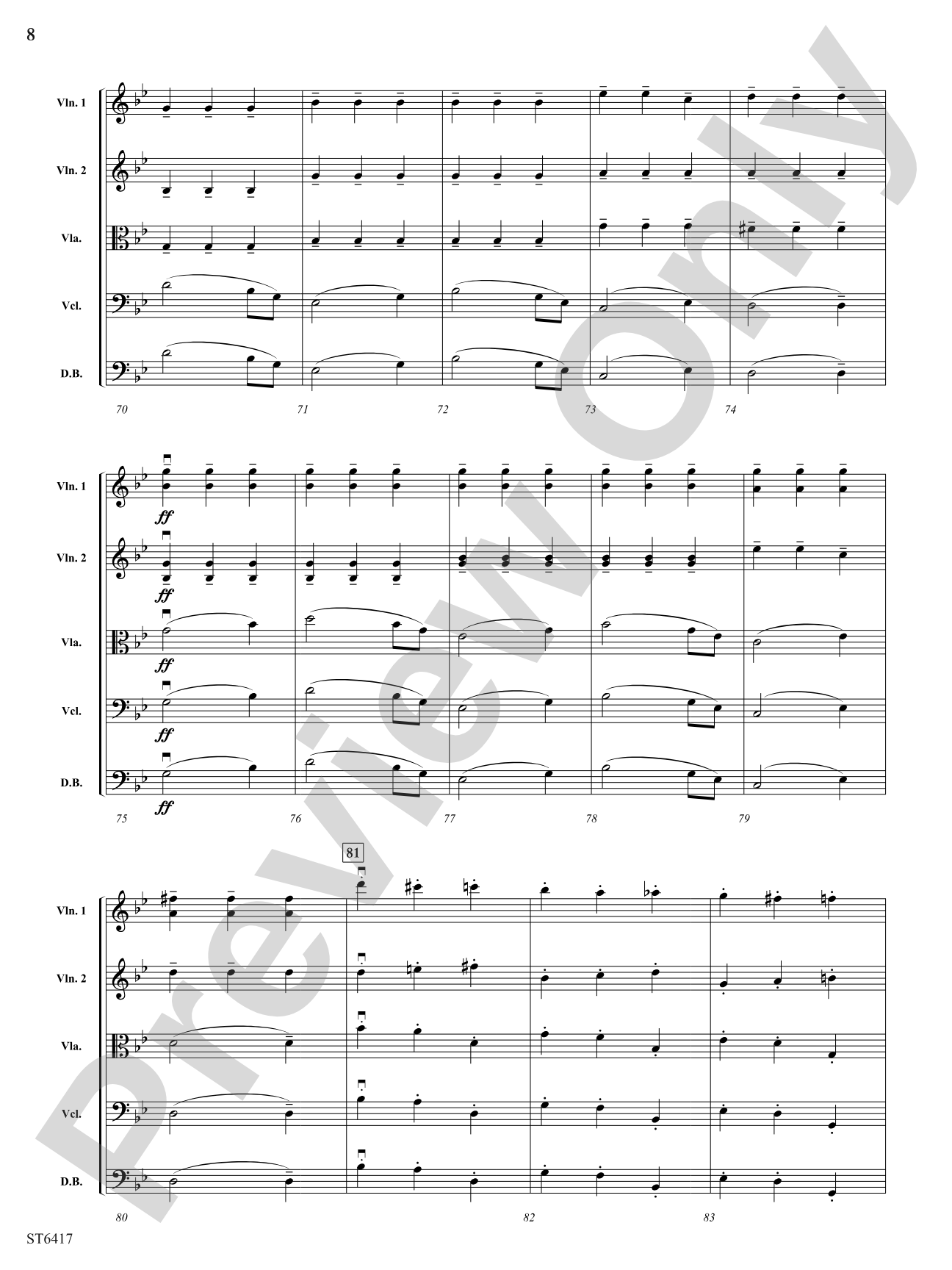
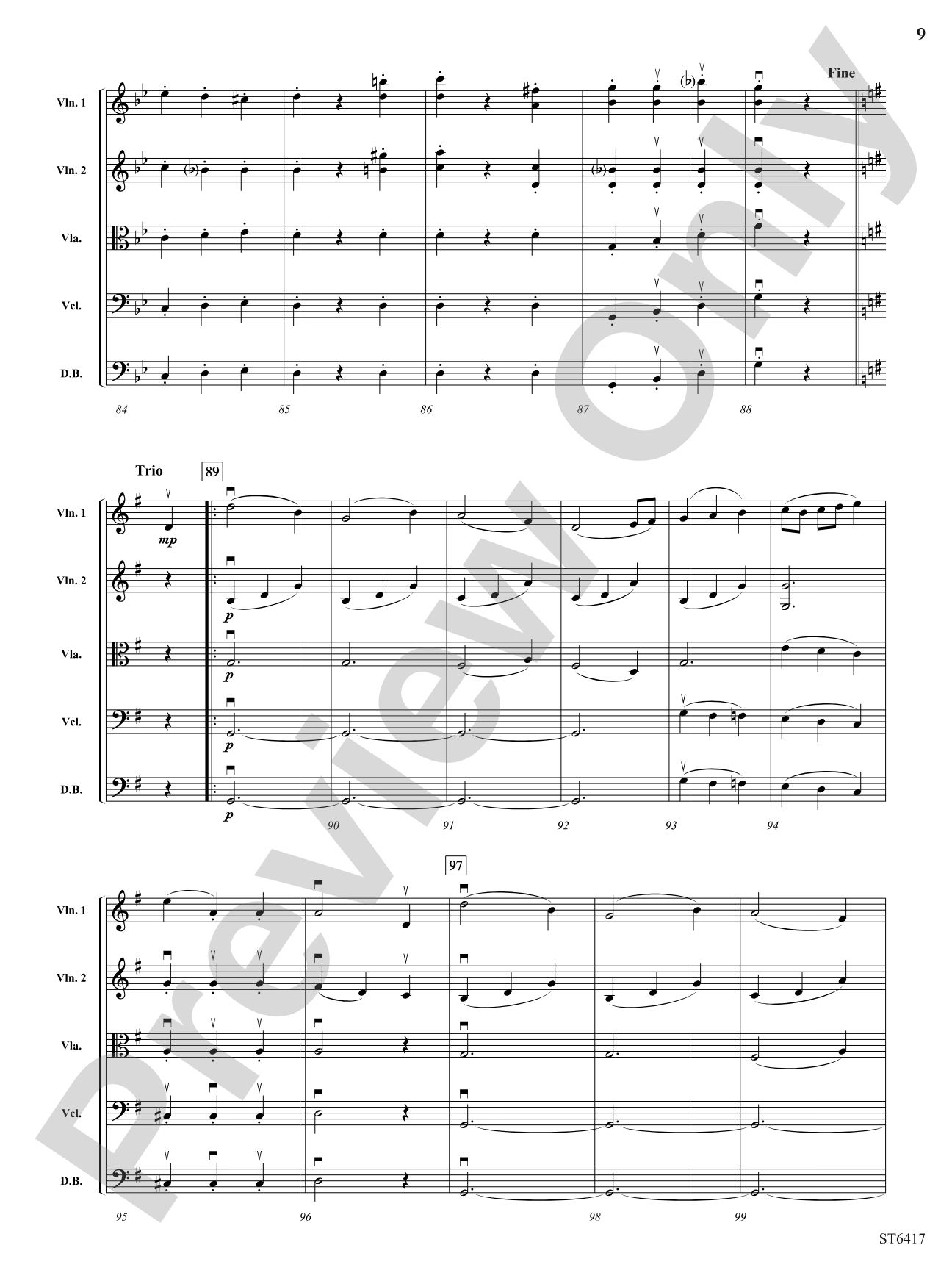
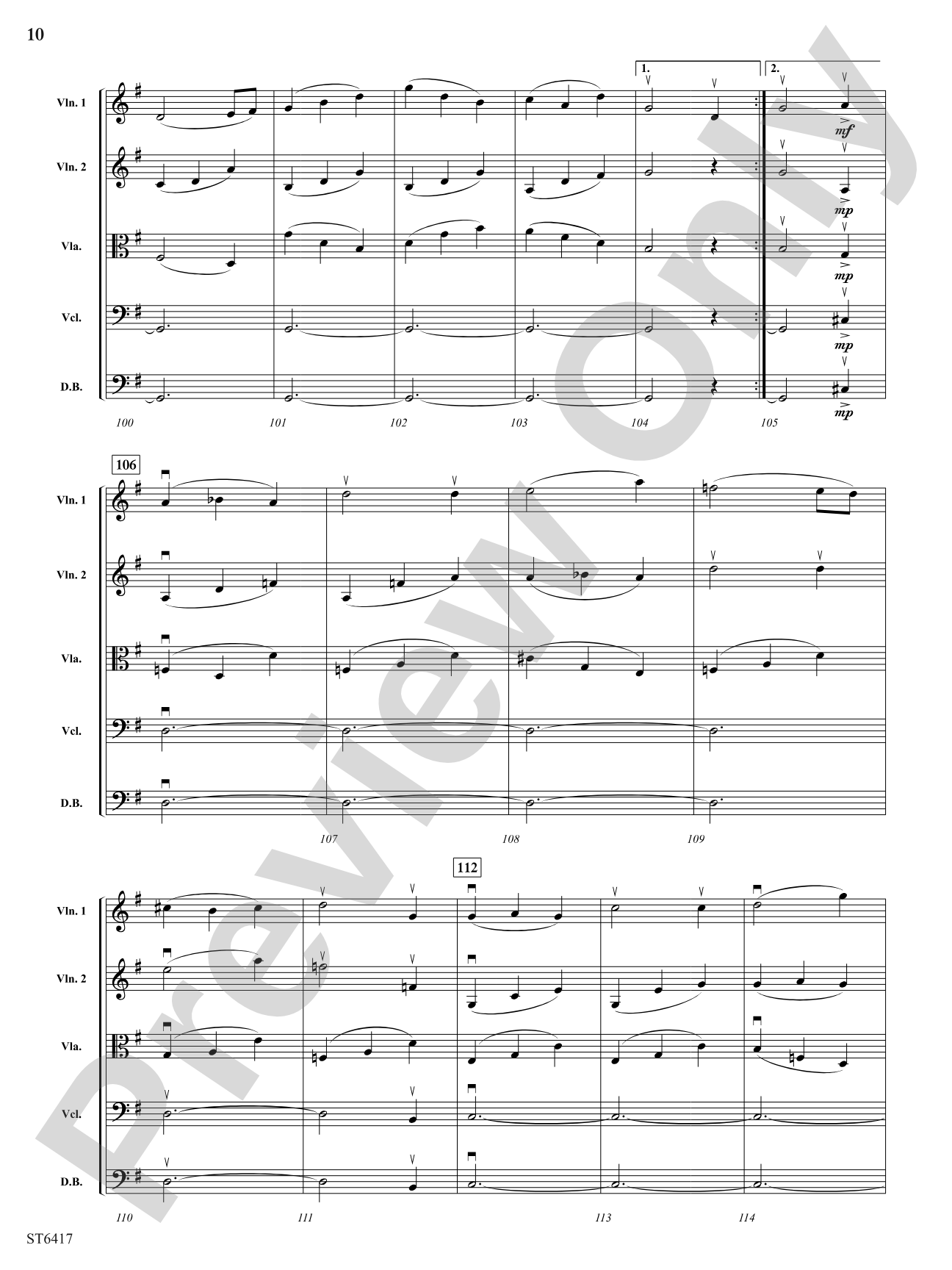
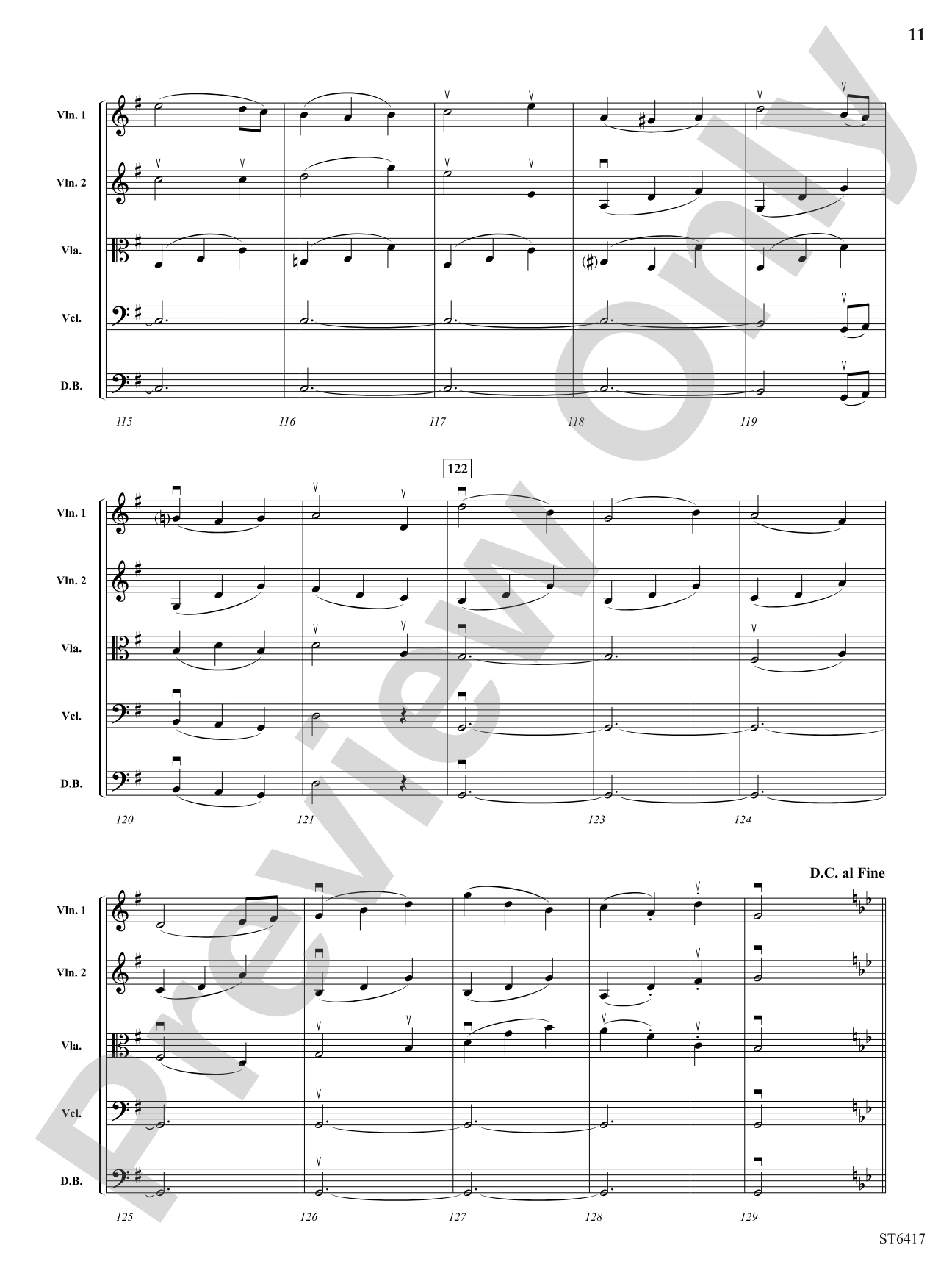

Menuetto From Symphony No 5: String Orchestra Conductor Score & Parts
By Franz Schubert / arr. Robert D McCashin
Grade: 3.5
Item: 98-DST6417

$55.00
Pickup currently not available
Buy Extra Parts (Digital PDF Download)
| Product | Price | Quantity |
|---|---|---|
| Menuetto From Symphony No 5: Score | $5.00 | |
| Menuetto From Symphony No 5: Violin 1 | $7.00 | |
| Menuetto From Symphony No 5: Violin 2 | $7.00 | |
| Menuetto From Symphony No 5: Violin 3 (Viola T.C.) | $7.00 | |
| Menuetto From Symphony No 5: Viola | $7.00 | |
| Menuetto From Symphony No 5: Violoncello | $7.00 | |
| Menuetto From Symphony No 5: Double Bass | $7.00 |
Parts Added to Cart!
Description
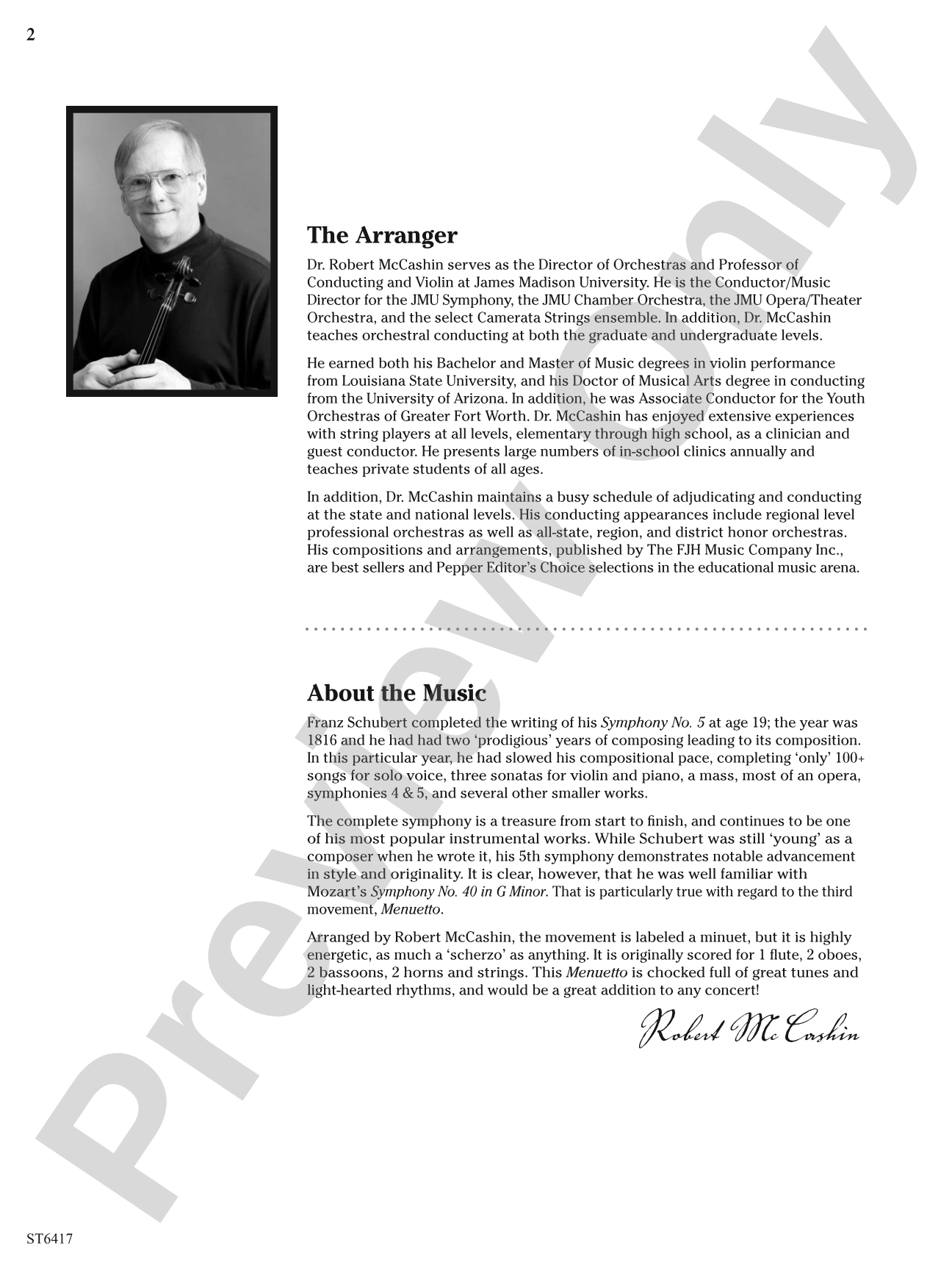
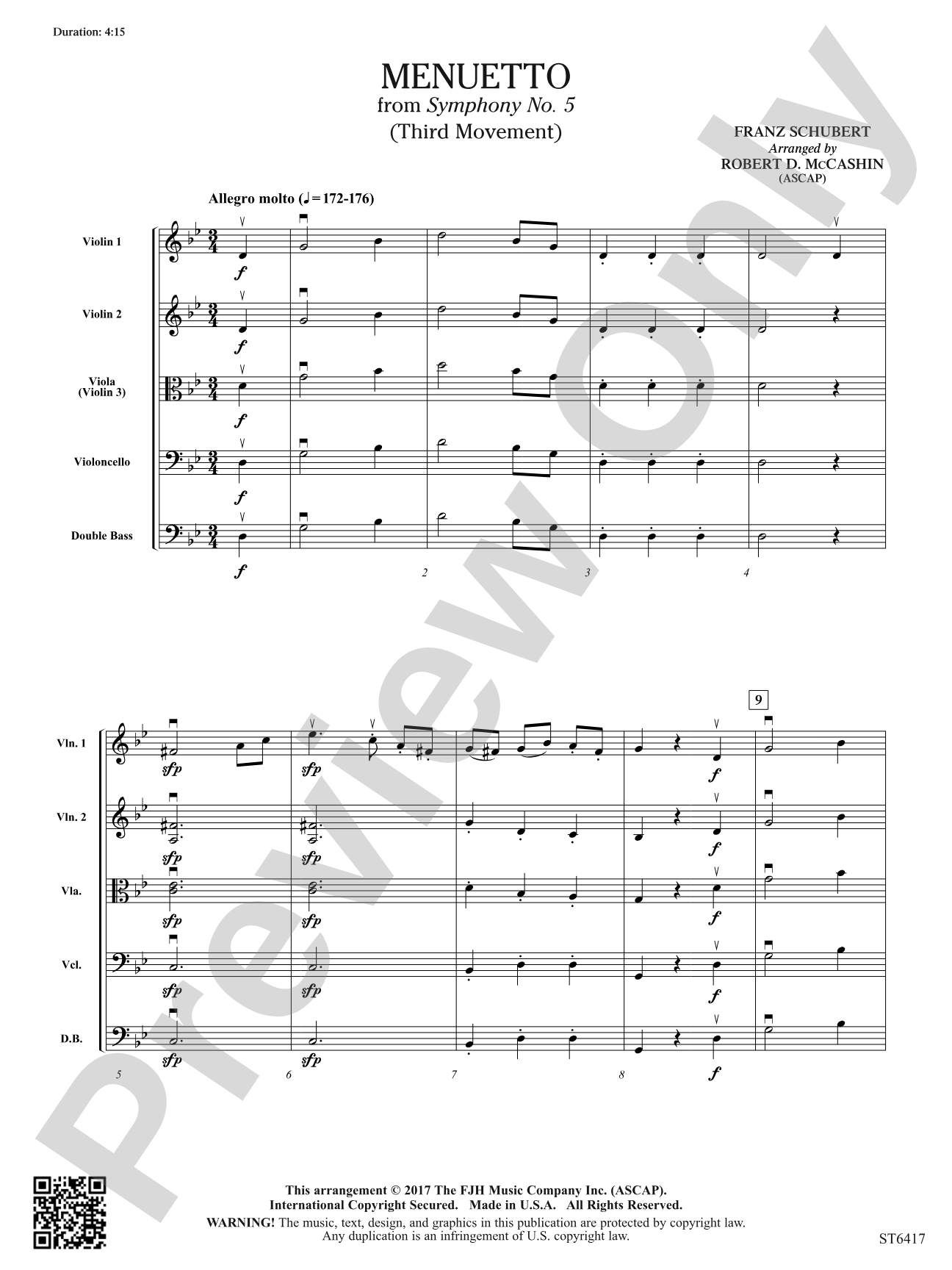
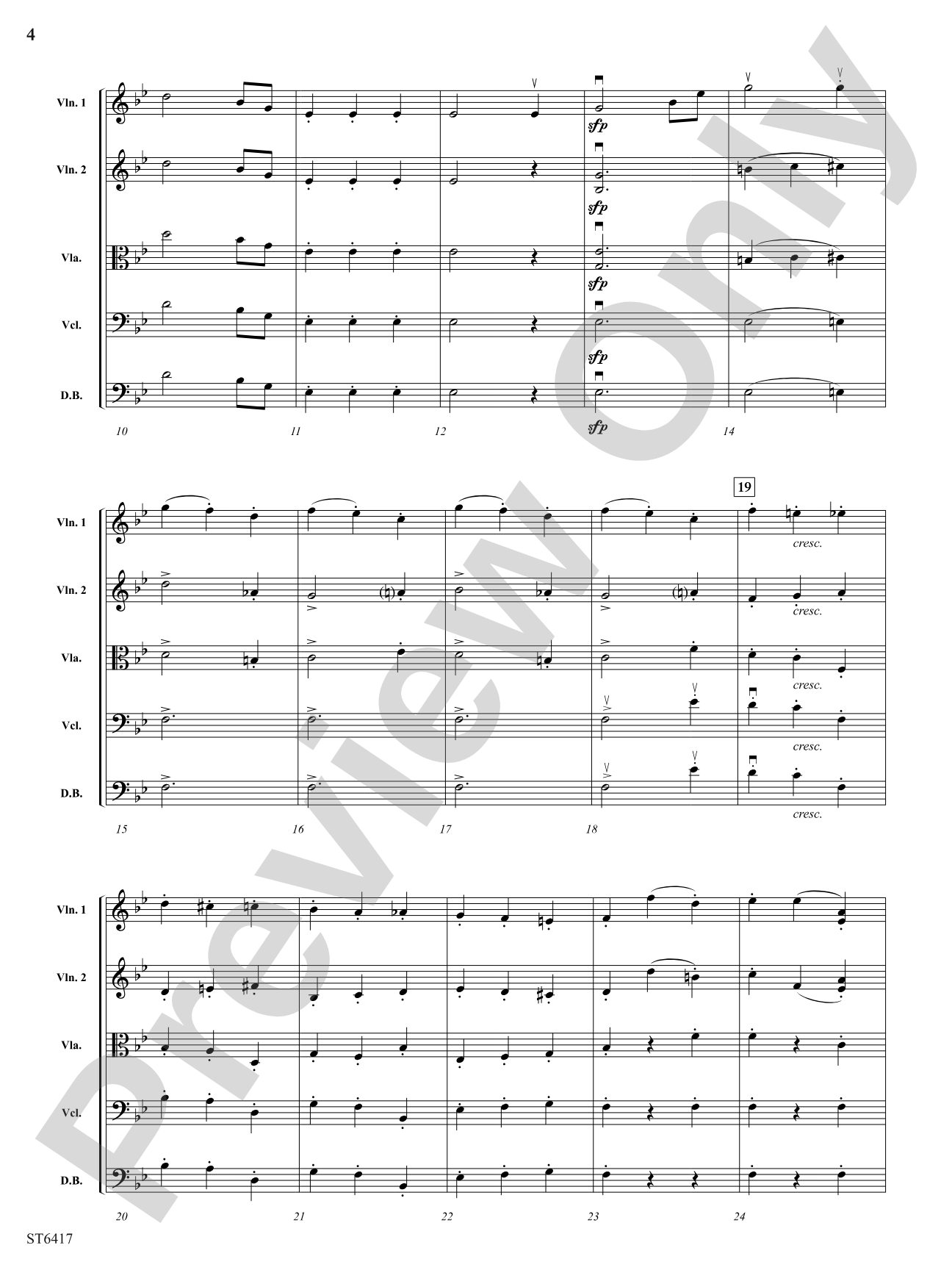
Drawn from one of Schubert's most popular instrumental works, this authentic arrangement features the third movement of his 5th symphony. While the movement is labeled a minuet, it is highly energetic, as much a 'scherzo' as anything. Chocked full of great tunes and light-hearted rhythms, this will be a great addition to any concert!


Don't just read it, hear it, play along with it, and watch your students grow with it. In MakeMusic Cloud, Menuetto From Symphony No 5: String Orchestra Conductor Score & Parts comes alive with professional accompaniment, adjustable tempo, and built-in practice tools that turn solo practice into real progress.
Open in the Player
Jump straight in and assign it today.
Start Your Free Trial
Open this title and explore the full library in minutes.
Sample Audio
1
Audio File
--:--
0:00
0:00
Sample Video
Additional Details
Series:
FJH String Orchestra
Publisher:
The FJH Music Company, Inc.
SKU:
98-DST6417
More about this title
About the Composer: Franz Schubert
Franz Schubert (1797-1828) composed across every major genre during his short life, leaving behind symphonies, chamber music, art songs, and piano works that fundamentally shaped Romantic music. His ability to write memorable melodies and sophisticated harmonic language made him one of the most performed composers in concert halls worldwide, and his works remain central to orchestra and chamber ensemble repertoires.
Schubert's symphonies in particular occupy a unique place in the orchestral canon. While he inherited Classical formal structures from Haydn, Mozart, and Beethoven, his harmonic imagination and gift for instrumental color pushed beyond those boundaries. His Fifth Symphony, composed in 1816, showcases the brilliance and accessibility that make his music enduringly popular in educational settings.
Why we love this
This movement lands in the sweet spot between genuine Schubert and immediate accessibility. Robert McCashin's arrangement preserves the original's melodic charm and rhythmic vitality while writing idiomatically for student strings, making a masterwork feel well within reach. The piece works equally well as a concert opener, festival entry, or teaching tool for understanding how great composers handle form and orchestration.
What to expect
Buoyant and elegant, with an almost dance-like forward motion. The movement sparkles with crisp rhythms and memorable tunes that feel both natural and refined; it never loses the sense of play that defines its scherzo character, even when the texture grows richer.
Who it's for
String orchestras at the Grade 3.5 level who are ready to tackle a recognized masterwork without technical overreach. This arrangement suits ensembles preparing for festival competitions, concert programming, or students who benefit from encountering great symphonic writing in a manageable form.
How to get the most out of it
- Establish the tempo early and lock it in. The minuet marking invites elegance, but Schubert's scherzo-like character needs momentum; too slow and the light-heartedness evaporates.
- Balance the main melody generously when it passes between sections. Mark clear dynamic shaping in parts so every player knows whether they're carrying the tune or supporting it.
- Articulate crisply through the rhythmic figures, especially in the accompaniment patterns. Clean staccatos and precise attacks define this movement's character.
- Shape the phrase endings with slight softening and breath; avoid letting notes drag through to the downbeat. Schubert writes melodies that speak clearly when phrased with intention.
How to use it
Open a concert with this piece to establish energy and clarity before moving into longer or more introspective works. Its bright, accessible character and manageable length make it ideal for youth orchestra festivals or as a contrast to heavier contemporary selections on the same program.
Skills your students will build
- Shaping Classical forms (minuet/scherzo structure with repeats and contrasting sections)
- Balancing melody and accompaniment across multiple string parts
- Executing clean, articulated rhythmic figures at moderate tempo
- Reading conductor cues and responding to subtle dynamic shaping
- Understanding harmonic movement and voice leading in orchestral writing