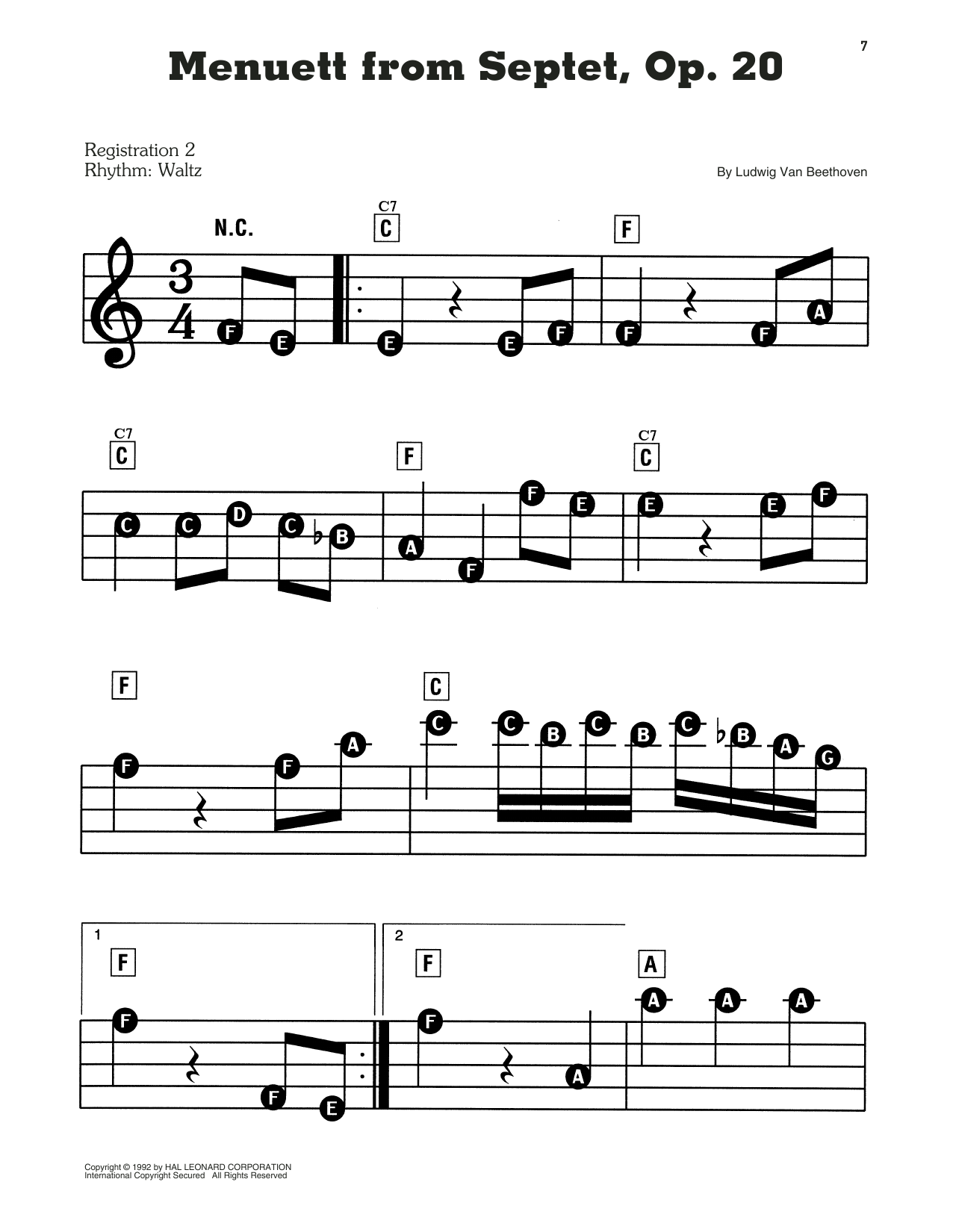
Menuett Sheet Music Preview

Menuett: E-Z Play Today

By Ludwig Van Beethoven

Item: 35-DS00603410

Digital Download
$4.99
Description

Menuett: E-Z Play Today isn't in MakeMusic Cloud just yet...but it could be. Let us know you'd like to see it, and you'll help shape what comes next. In the meantime, start a free trial and dive into thousands of interactive titles your students can play along with today.

Sample Audio
No sample audio found.
Sample Video
Additional Details
Publisher: Hal Leonard
Page Count: 3
SKU: 35-DS00603410

More about this title

About the Composer: Ludwig Van Beethoven

Beethoven's transition from Classical to Romantic ideals transformed what a menuett could be. While his earlier minuets followed the courtly dance form, his later works in this genre shed predictability in favor of character and structural surprise. Teachers value his menuetts as gateways to understanding how composers stretched traditional forms from within.

Why we love this

This E-Z Play arrangement makes Beethoven's elegant counterpoint accessible without sacrificing the work's character. Students encounter a genuine Classical structure without the technical barrier of the original score, letting them focus on phrasing, ornamentation, and the subtle asymmetries that make Beethoven's voice distinct.

What to expect

Courtly and gentle, yet alert. The piece maintains the menuett's mincing grace while hinting at the intellectual architecture beneath. There's warmth here, not stiffness; Beethoven never lets the form become mere decoration.

Who it's for

Early intermediate pianists developing comfort with Classical form and Beethoven's harmonic language. This works equally well in a music history unit, recital program, or ensemble setting where students explore dance forms across periods.

How to get the most out of it

  • Honor the written articulations. Beethoven's staccatos and legato markings shape the melody's conversation with itself.
  • Shape phrases in three rather than counting mechanically through bars. The menuett form invites natural breathing points.
  • Keep the tempo steady but never rigid. Baroque and Classical dances live in their forward motion, not metronomic precision.
  • Bring out the inner voices when they carry harmonic or melodic interest. This is where Beethoven's compositional wit emerges.

How to use it

Pair this with other Classical minuets to show how composers engaged the form. It bridges Mozart's playfulness and Beethoven's later structural boldness, making it ideal for programs exploring Classical aesthetics or a "Dance Forms Across Time" recital theme.

Skills your students will build

  • Reading and performing standard Classical form (minuet and trio structure)
  • Executing ornamentation and articulation in the Classical style
  • Balancing melody and accompaniment while maintaining phrase direction
  • Recognizing harmonic function within a tonal center

You May Also Like