Menuett Sheet Music Preview

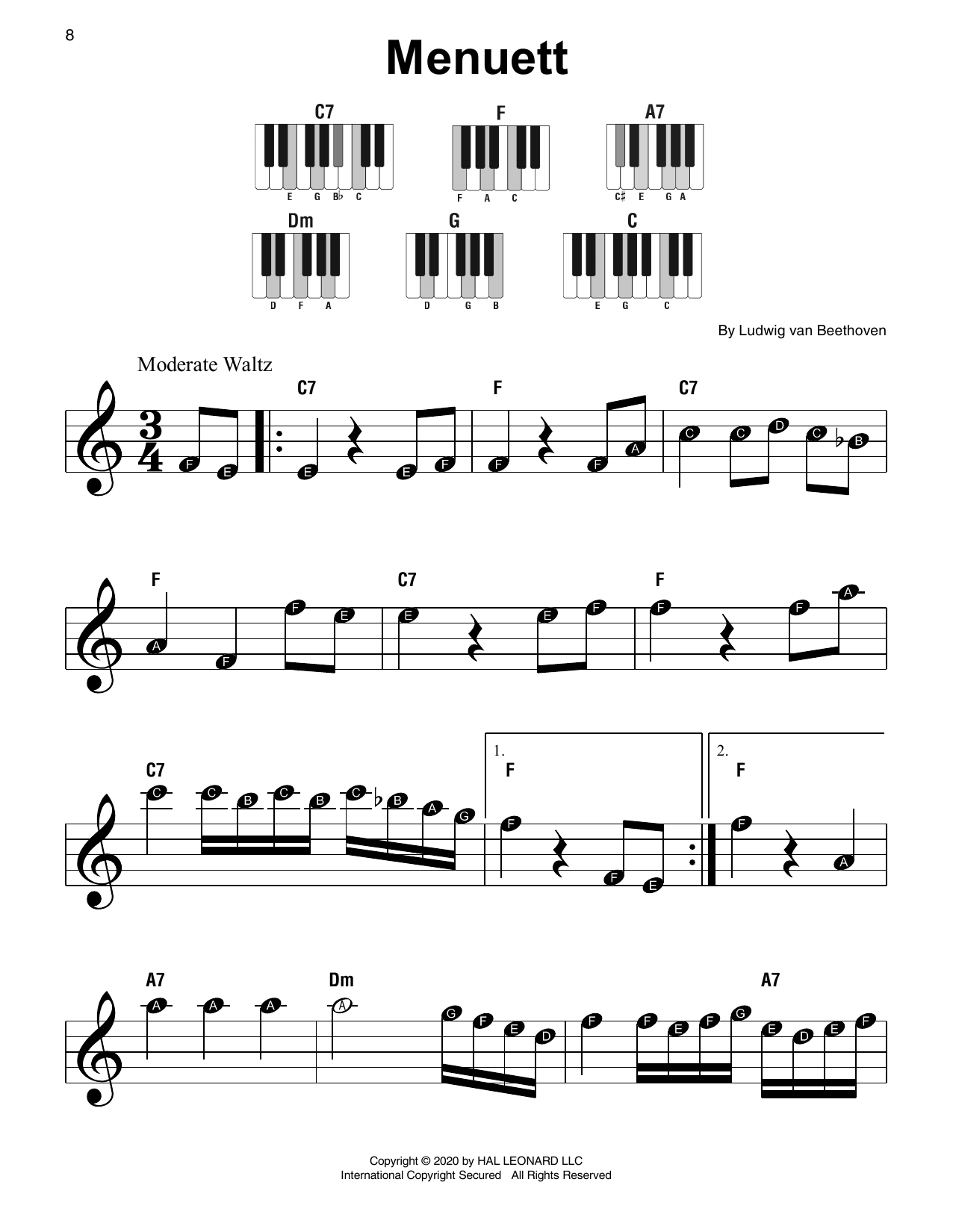
Menuett: Super Easy Piano

As performed by Ludwig Van Beethoven

Item: 35-DS00460448

Digital Download
$3.99
Description

Discover MakeMusic Cloud: thousands of interactive titles your students can play along with today.

Sample Audio
No sample audio found.
Sample Video
Additional Details
Publisher: Hal Leonard
Page Count: 2
SKU: 35-DS00460448

More about this title

About the Artist: Ludwig Van Beethoven

Beethoven's minuets occupy a fascinating middle ground in his output. Written during his early Classical period, they show his command of the form's grace and clarity while hinting at the harmonic adventurousness that would define his later works. These pieces remain essential teaching tools because they demonstrate how a master composer handles constraint: every gesture serves a purpose, and economy of means never compromises musical substance.

For students, Beethoven's minuets bridge two worlds. They're approachable enough for developing musicians to perform successfully within a reasonable rehearsal timeline, yet sophisticated enough to reward careful attention to phrasing, articulation, and the subtle architecture that separates a polished performance from a merely competent one.

Why we love this

Beethoven's minuets offer something genuinely rare at this level: a piece that sounds effortlessly elegant yet demands real musicianship to execute. The two-page length makes it manageable for student ensembles, but the harmonic language and phrase shaping require the kind of intentional interpretation that transforms young musicians into thoughtful players.

What to expect

Beethoven's minuet balances courtly refinement with an undercurrent of forward motion. There's clarity and poise in every phrase, yet nothing feels stiff or ceremonial. The piece moves with purposeful grace, inviting performers to find elegance through precision rather than grandeur.

Who it's for

This works for upper elementary through early high school ensembles seeking a genuine Classical form that doesn't require vast instrumentation or extended rehearsal time. It's equally valuable for individual students building performance repertoire or preparing for auditions where stylistic awareness matters.

How to get the most out of it

  • Shape the melodic line with gentle contour rather than uniform dynamics. The Classical minuet thrives on subtle weight shifts that clarify phrase structure without sounding heavy.
  • Pay particular attention to the repeat sections. Beethoven often varies texture or articulation on second repeats; discovering and executing these details separates pedestrian readings from polished ones.
  • Treat accompaniment figures as active support, not filler. Even simple harmonic patterns benefit from steady tone and rhythmic precision that locks with the melody.

How to use it

Pair this with other short Classical forms to create a suite demonstrating the period's structural principles. It works particularly well on student showcases or as a palate cleanser between weightier contemporary pieces. For classroom settings, use it to teach phrase analysis and the dialogue between melody and harmony that defines the era.

Skills your students will build

  • Phrasing within the minuet form (A section, B section, return to A)
  • Stylistically appropriate articulation and dynamic shaping for Classical repertoire
  • Harmonic awareness through ensemble balance between melody and accompaniment
  • Attention to repeat structures and the variations that Beethoven incorporates on repeated sections

You May Also Like