
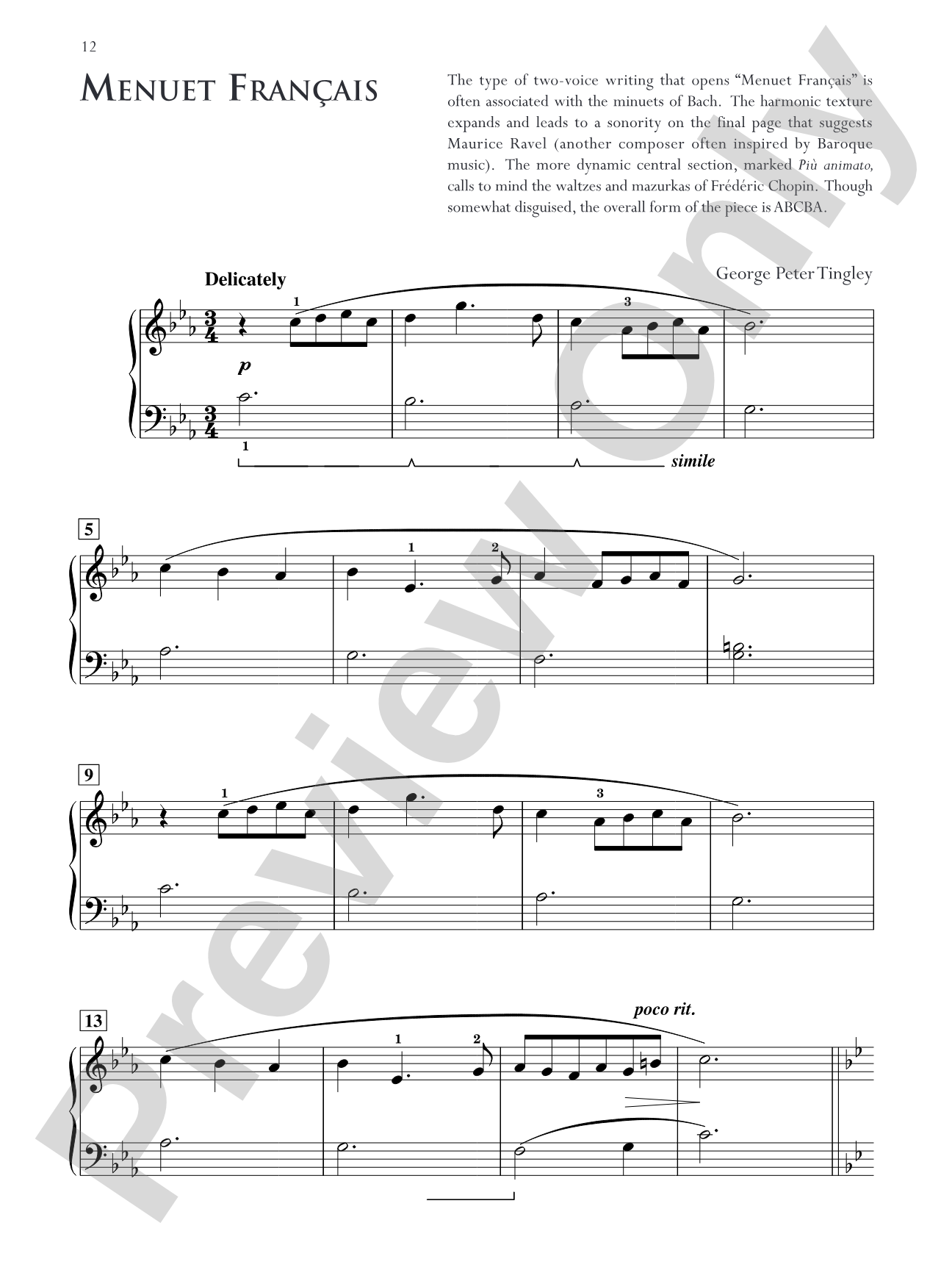

Menuet Français: Piano
7 Intermediate to Late Intermediate Piano Solos That Reflect and Celebrate Styles of Past Masters
By George Peter Tingley
Level: Intermediate / Late Intermediate
Item: 00-PS-0016692
$4.99
Pickup currently not available
Description
Reflect and celebrate the styles of past masters with these pieces ranging from early to late intermediate in level. One might hear echoes of such composers as Beethoven, Tchaikovsky and sounds suggestive of European folk music. Program notes are included explaining the construction of the solos and specific influences.


Menuet Français: Piano isn't in MakeMusic Cloud just yet...but it could be. Let us know you'd like to see it, and you'll help shape what comes next. In the meantime, start a free trial and dive into thousands of interactive titles your students can play along with today.
Request This Title
Tell us you want it.
Start Your Free Trial
Explore everything that's ready to play right now.
Sample Audio
No sample audio found.
Sample Video
No sample videos found.
Additional Details
Publisher:
Alfred Music
Page Count:
24
SKU:
00-PS-0016692
More about this title
About the Composer: George Peter Tingley
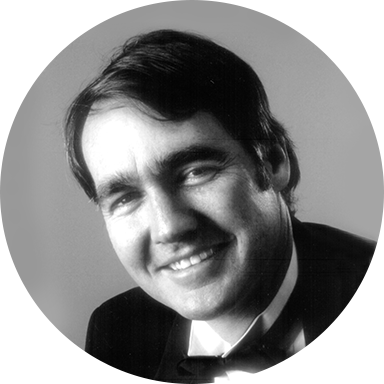
George Peter Tingley is a pianist and composer based in Point Richmond, California, with formal training in both performance and theory. He earned a Bachelor of Arts degree in Piano Performance from California State University, Hayward, followed by Bachelor and Master of Music degrees in Music Theory from the University of Southern California. During the 1970s, he studied composition privately with Nadia Boulanger in Paris, deepening his understanding of musical construction across multiple traditions.
Since 1989, Tingley has focused on writing for music education, building a catalog of over 75 published piano pieces. His work spans solo repertoire, duet collections, and commissioned compositions, including a piece for Olympic figure skater Kristi Yamaguchi that was orchestrated and recorded for broadcast. His educational pieces are known for their stylistic clarity and pedagogical insight.
Why we love this
Tingley writes with genuine affection for the classical tradition without becoming derivative. Each piece carries a distinct musical voice while remaining transparent enough for intermediate players to grasp the underlying architecture. The included program notes transform practice time into a masterclass in composition, showing students how their favorite historical composers constructed melody, harmony, and form.
What to expect
These pieces inhabit a thoughtful space between homage and originality. You'll recognize echoes of the Romantic era and touches of folk melody, yet the voice remains Tingley's own. The writing feels conversation-like at times, inviting rather than demanding, with clarity that lets a player focus on expression rather than decoding.
Who it's for
Intermediate to late intermediate pianists ready to explore how historical styles inform contemporary composition. Students at this level benefit from repertoire that balances technical development with musical substance, and these pieces offer both without sacrificing artistic merit.
How to get the most out of it
- Study the program notes before diving into the score. Understanding the compositional influences and construction details will inform your interpretive choices and help you hear the piece as a coherent whole rather than a series of notes.
- Pay close attention to the harmonic progressions, which often echo the practices of the composers cited in the notes. Highlighting voice leading and chord changes through subtle dynamic shaping brings out the classical craftsmanship.
- Balance technical passages with the songlike quality that runs through these pieces. Avoid rushing; let the phrasing breathe in a way that honors both the European folk elements and classical restraint.
- Use the stylistic references as a performance guide. If the notes mention Beethoven or Tchaikovsky, listen to their work before performing; this context helps you find the appropriate character and tempo relationships.
How to use it
Ideal for recitals that explore the relationship between classical and contemporary voice. These pieces work beautifully in a themed program about compositional influence or as anchors in a set of character pieces. They also serve well in competitions where judges value both technical accomplishment and musical maturity.
Skills your students will build
- Stylistic awareness and the ability to recognize compositional influences within a single piece
- Voice leading and harmonic analysis through transparently written accompaniment patterns
- Interpretive decision-making informed by program notes and historical context
- Pedal control and color variation appropriate to different European musical traditions
- Phrasing and structural coherence across moderate-length classical forms