Mendelssohn: Songs Without Words (Complete) and Six Children's Pieces, Op. 72 Sheet Music Preview

Mendelssohn: Songs Without Words (Complete) and Six Children's Pieces, Op. 72

By Felix Mendelssohn

Level: Advanced

Item: 00-PC-0008488

Digital Download
$0.99
Description
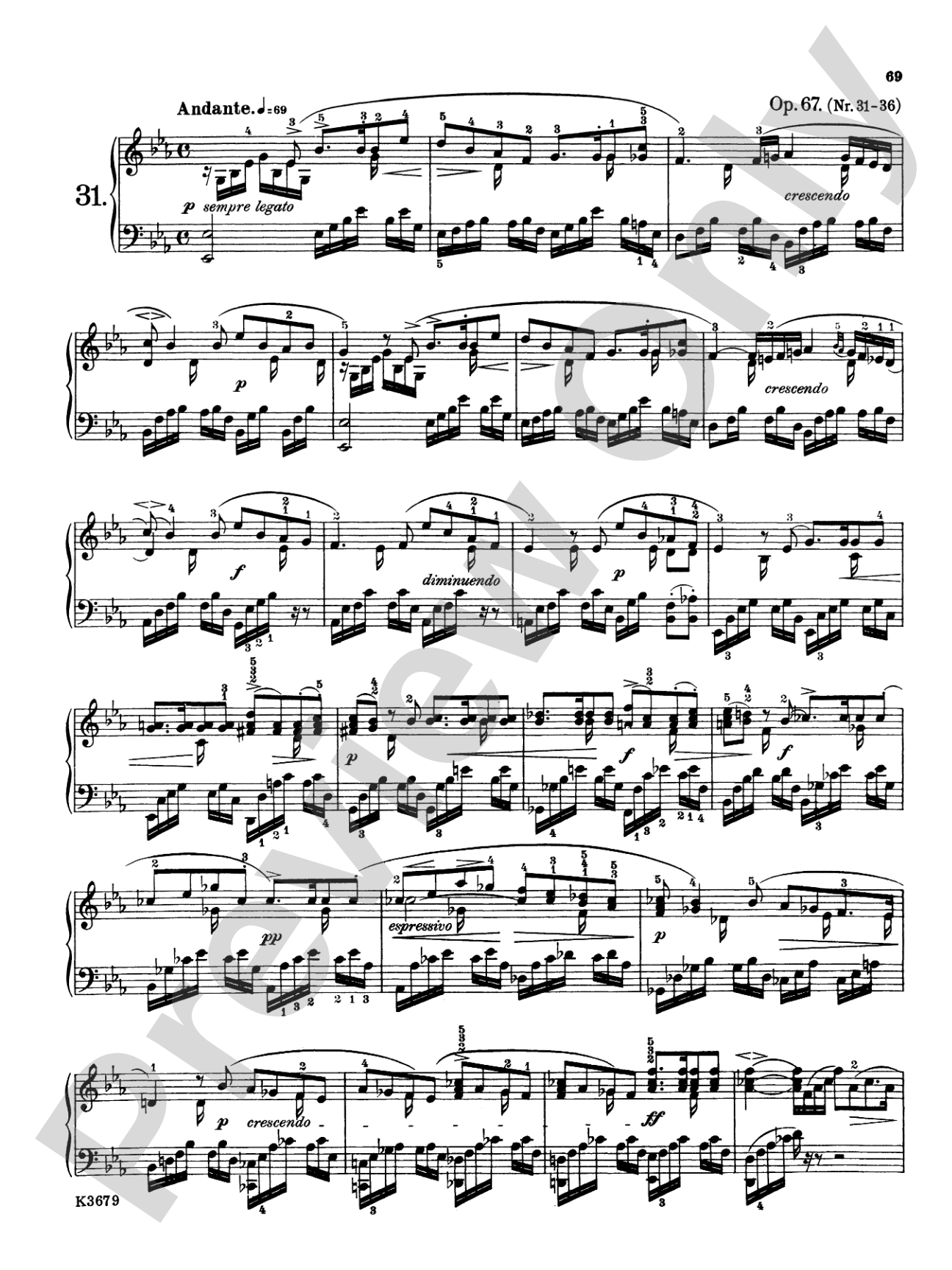
This collection contains all fifty Songs Without Words and the Six Children's Pieces

Don't just read it, hear it, play along with it, and watch your students grow with it. In MakeMusic Cloud, Mendelssohn: Songs Without Words (Complete) and Six Children's Pieces, Op. 72 comes alive with professional accompaniment, adjustable tempo, and built-in practice tools that turn solo practice into real progress.

Sample Audio
No sample audio found.
Sample Video
Additional Details
Series: Kalmus Edition
Publisher: Alfred Music
Page Count: 112
SKU: 00-PC-0008488

More about this title

About the Composer: Felix Mendelssohn

Felix Mendelssohn (1809-1847) was a German composer, conductor, and pianist whose gift for melody and formal clarity shaped Romantic music profoundly. A prodigy who performed publicly as a child and composed steadily throughout his life, Mendelssohn moved with ease between symphonic, chamber, choral, and keyboard works, earning respect from peers like Schumann and Chopin.

His piano music reveals the lyrical sophistication that defined his compositional voice. The Songs Without Words, in particular, established a new genre: instrumental pieces with songlike character and emotional directness, requiring no text to convey their poetic intent. This collection, paired with the gentler Children's Pieces, demonstrates Mendelssohn's range from introspection to accessibility.

Why we love this

These pieces strike an uncommon balance: they demand serious technical and interpretive skill while remaining genuinely musical rather than purely virtuosic. The Songs Without Words have shaped repertoire standards for generations because Mendelssohn understood how to craft memorable melodies within sophisticated harmonic language. Programming this collection signals to audiences and students alike that piano literature contains emotional depth beyond the canon of Bach, Beethoven, and Brahms.

What to expect

The Songs Without Words unfold like a conversation: intimate, reflective, occasionally passionate, always thoughtful. Some pieces drift into reverie; others pulse with gentle energy. The Children's Pieces offer moments of unguarded simplicity and charm, a respite from the sophistication of the larger work yet no less carefully crafted.

Who it's for

Advanced pianists seeking substantive solo repertoire that combines technical demands with deep musical satisfaction. This collection serves students preparing for competitions, recitals, or undergraduate auditions, as well as experienced amateurs building a well-rounded Romantic-era library.

How to get the most out of it

  • Shape each song as you would a vocal line: maintain the principal melody's continuity even when accompaniment patterns shift, and resist the urge to rush through passage work that connects phrases.
  • Attend closely to Mendelssohn's dynamic markings and tempo indications. His notation is precise and intentional; these details anchor the emotional arc of each piece.
  • Allow the harmonic progressions time to register. Mendelssohn's harmonic language is richer than it first appears; clarity of voice leading and breath in phrasing let listeners follow the musical thought.
  • Explore the full dynamic range within each piece. The contrast between intimate, introspective moments and more animated sections demands subtle control and genuine expression rather than literal adherence to tempo.

How to use it

Individual Songs Without Words work beautifully as recital openers, encores, or intermission pieces in mixed programs. A pianist might select contrasting pieces (a bright, spirited song paired with a meditative one) to showcase Mendelssohn's expressive range. The Children's Pieces suit contexts calling for accessible yet artistically substantive fare, such as outreach performances or student recitals emphasizing craftsmanship.

Skills your students will build

  • Lyrical phrasing and sustaining melodic lines across harmonic accompaniment patterns
  • Pedal control for blending sonorities without sacrificing clarity
  • Romantic-era harmonic language and voice leading
  • Balancing introspection with appropriate structural shape in character pieces
  • Expressive interpretation of detailed dynamic and tempo markings

You May Also Like