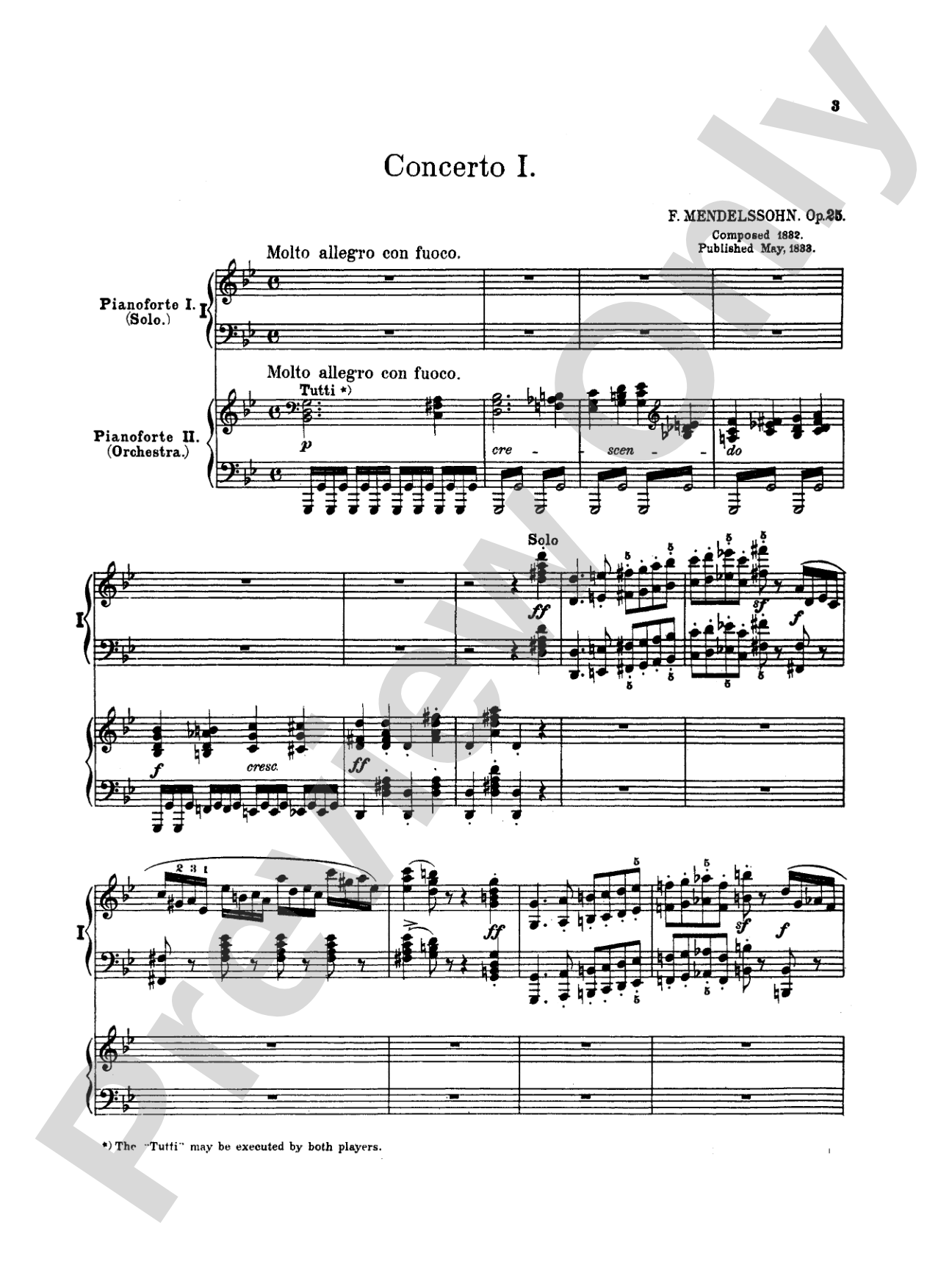
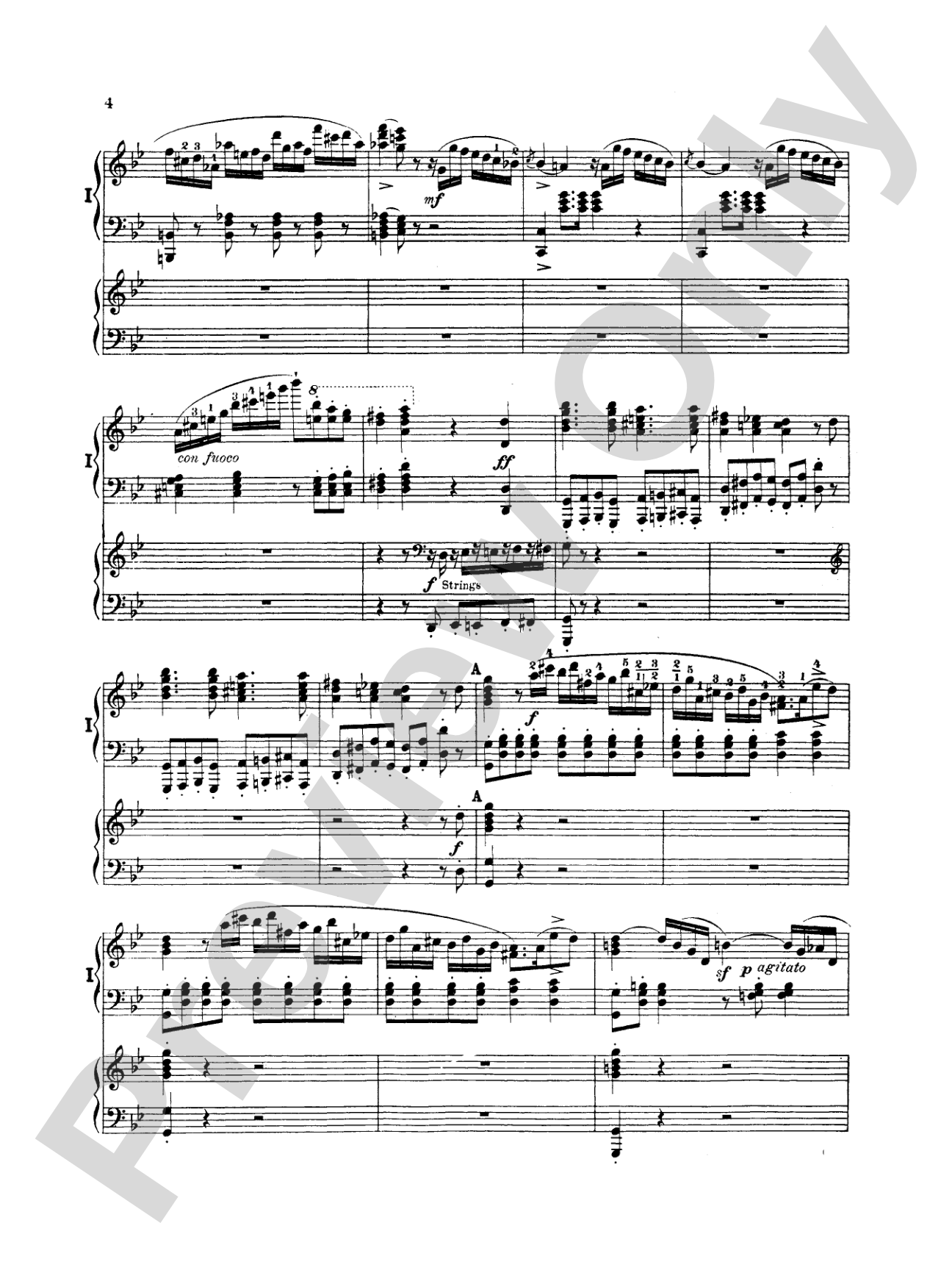
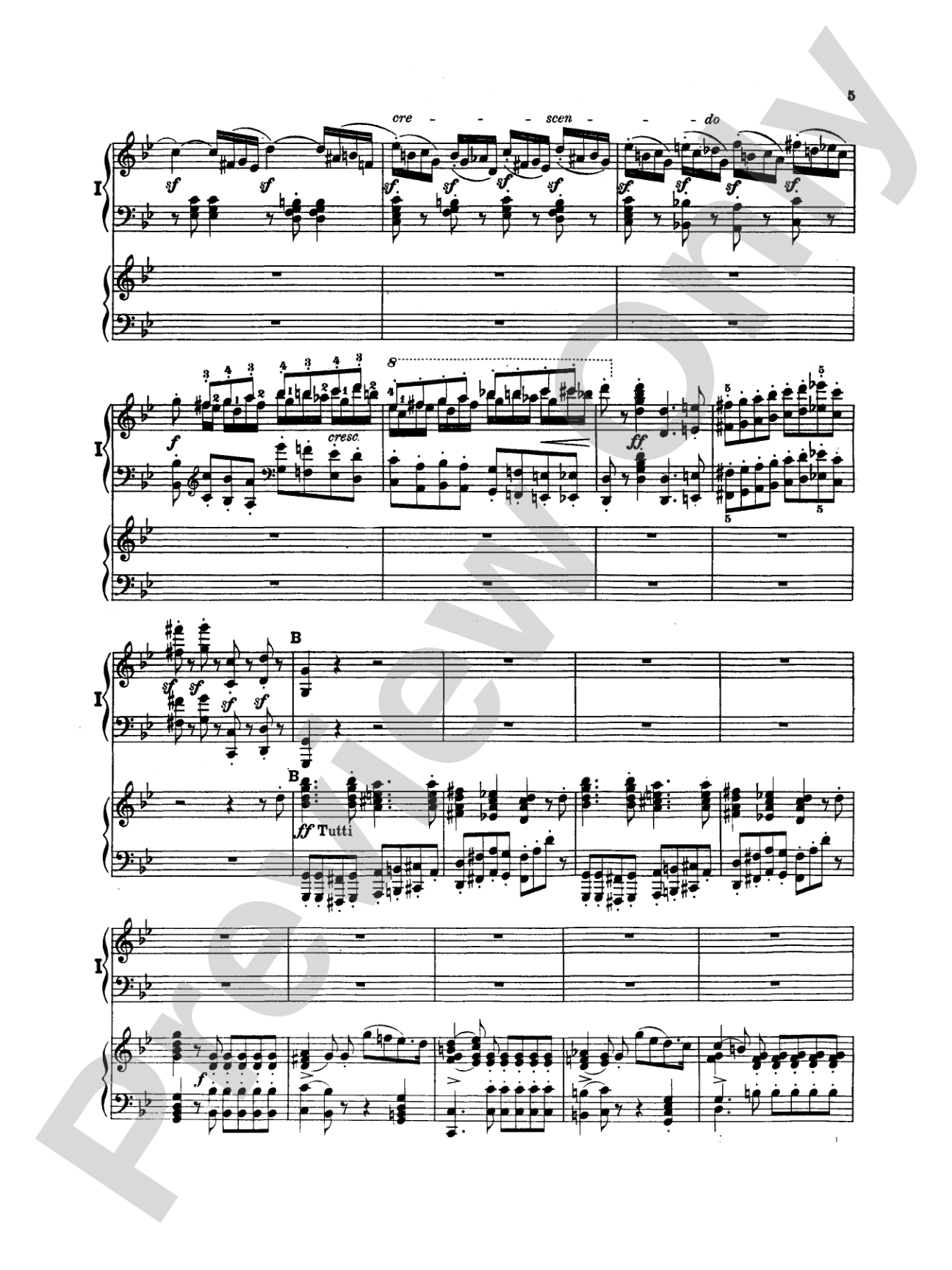
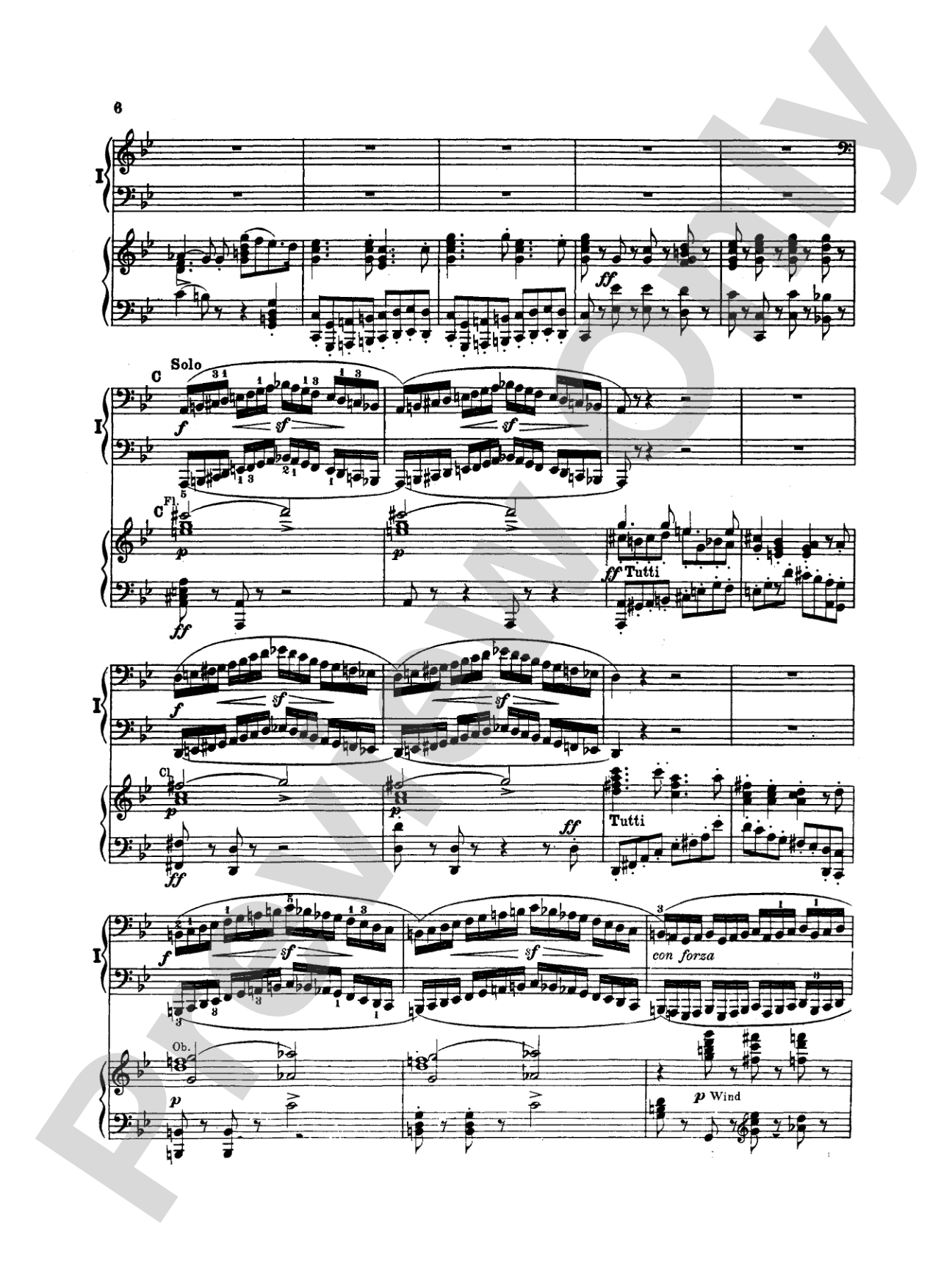
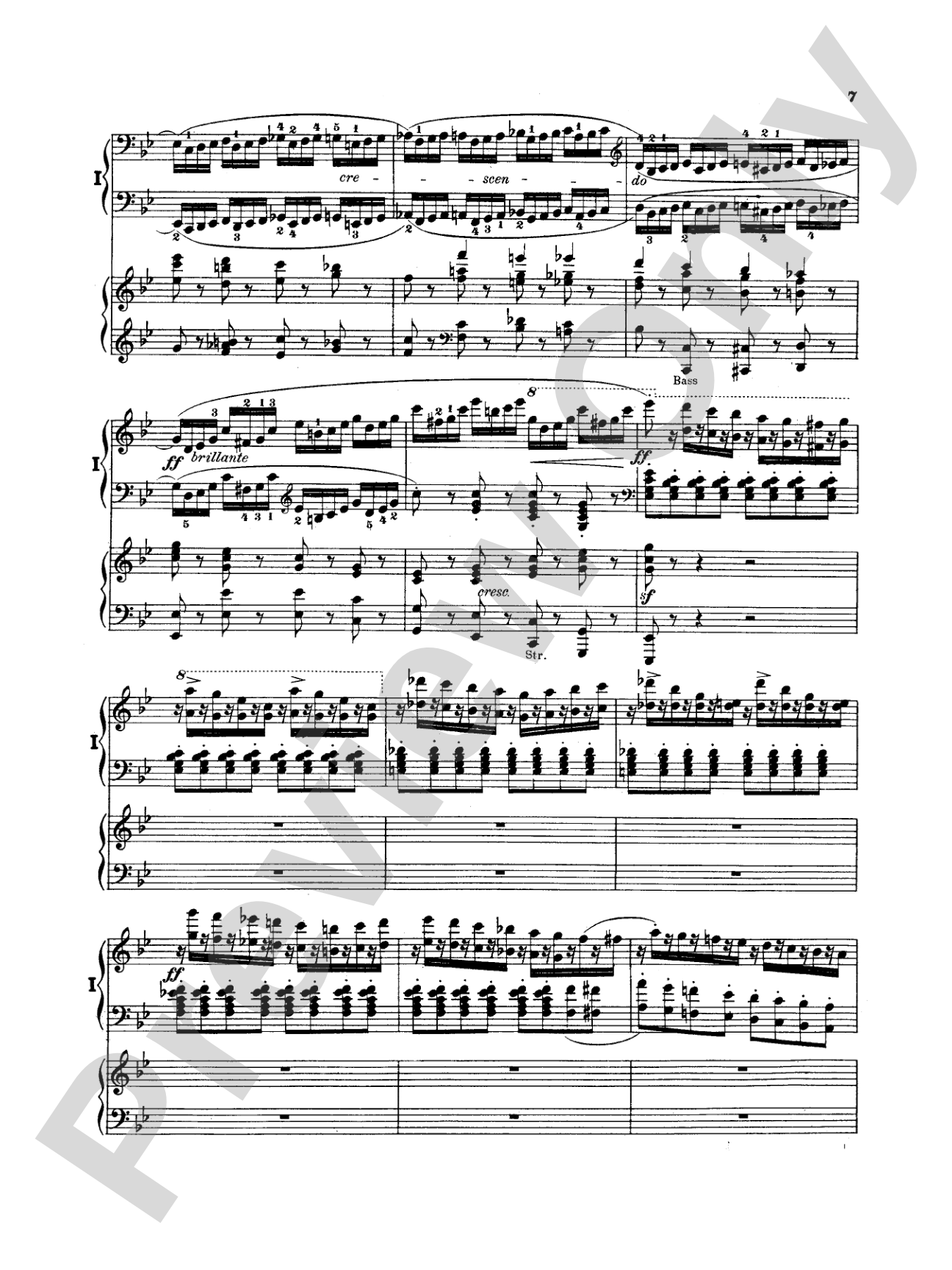
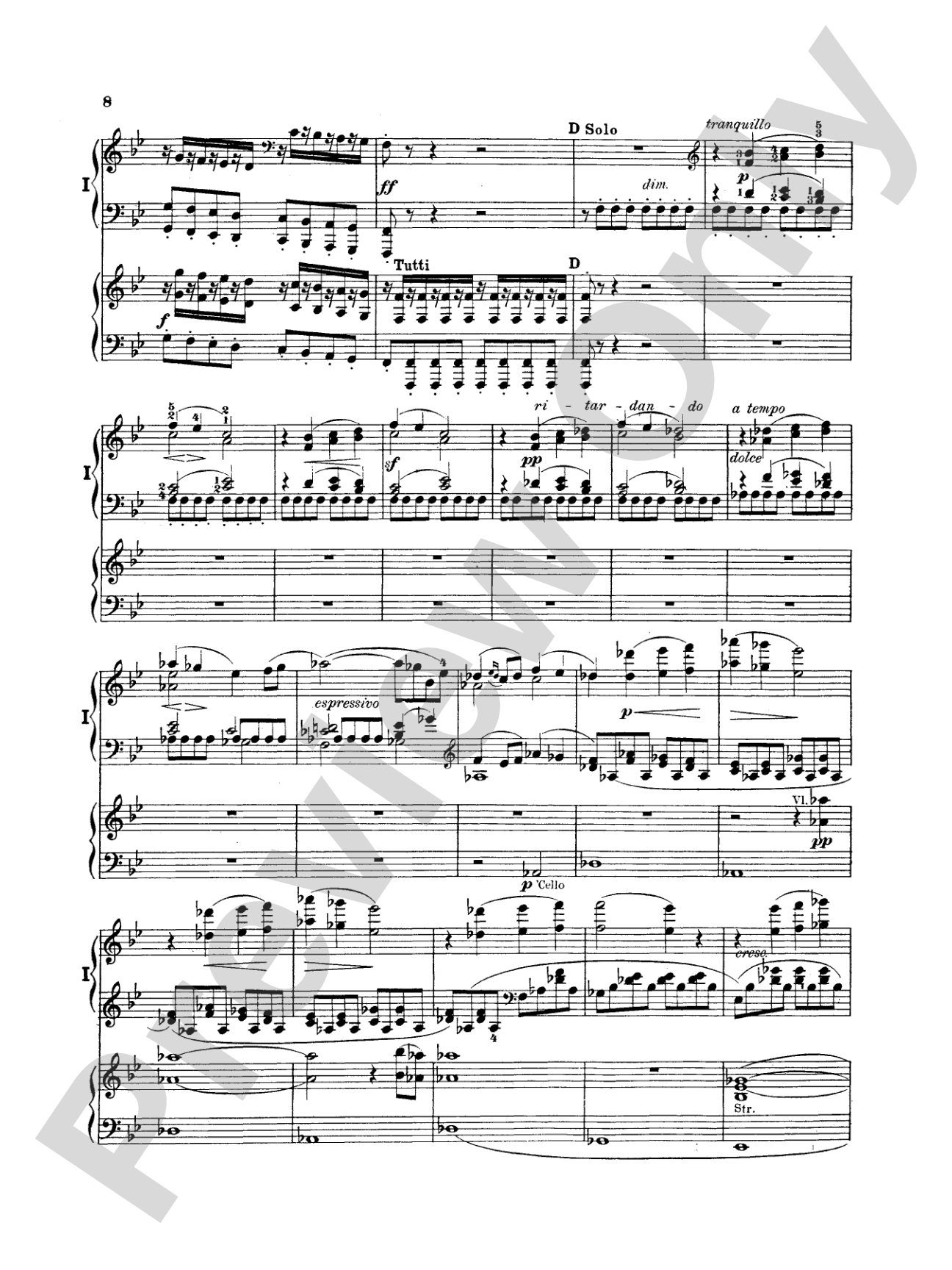
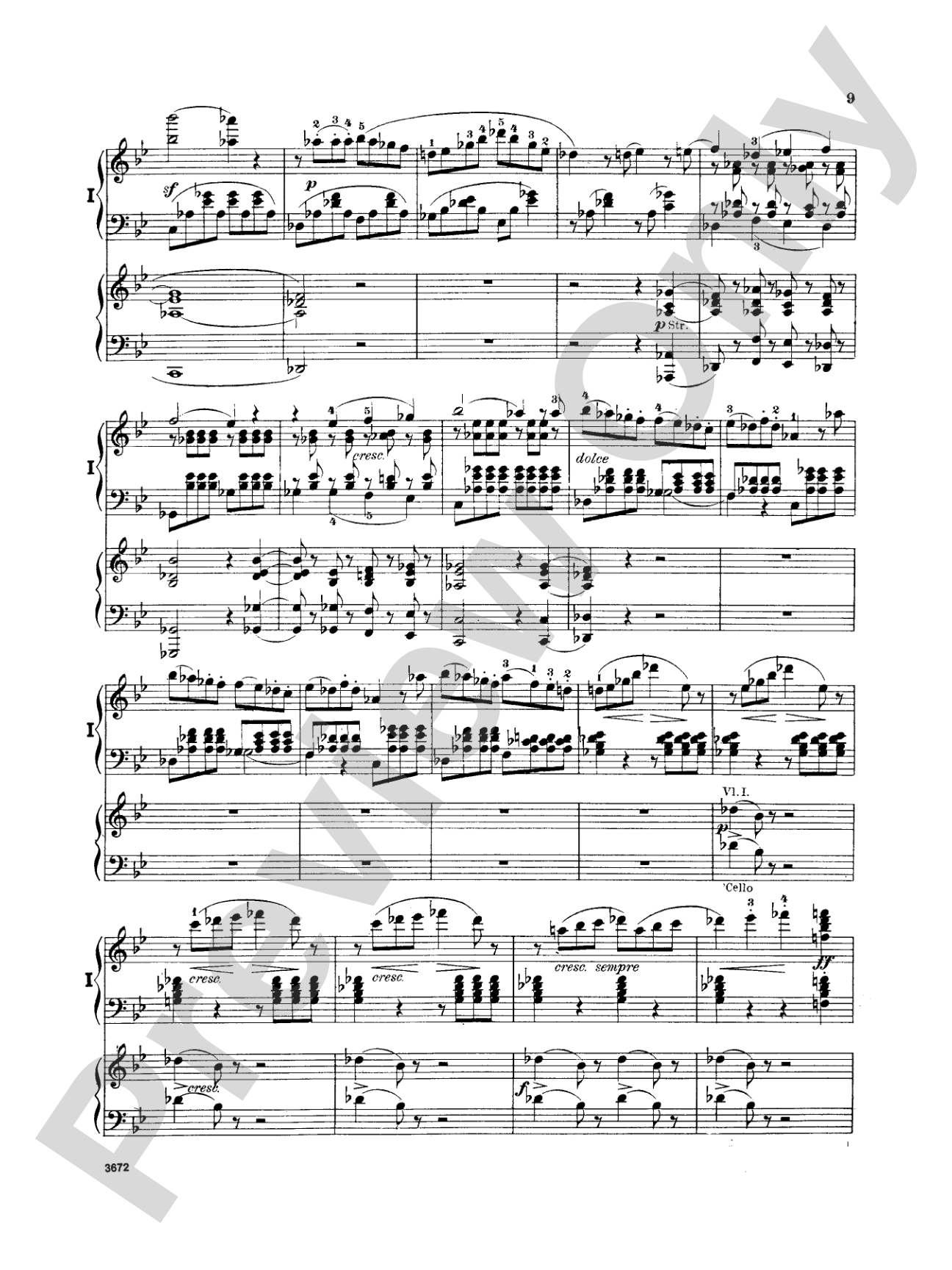
Mendelssohn: Piano Concerto No. 1 in G Minor, Op. 25 Sheet Music Preview

Mendelssohn: Piano Concerto No. 1 in G Minor, Op. 25

By Felix Mendelssohn

Level: Advanced

Item: 00-PC-0008440

Digital Download
$11.95
Description
Expertly arranged Piano Duet by Felix Mendelssohn from the Kalmus Edition series. This Advanced Piano Duet (2 Pianos, 4 Hands) is from the Romantic era. 2 copies are required for performance.

Don't just read it, hear it, play along with it, and watch your students grow with it. In MakeMusic Cloud, Mendelssohn: Piano Concerto No. 1 in G Minor, Op. 25 comes alive with professional accompaniment, adjustable tempo, and built-in practice tools that turn solo practice into real progress.

Sample Audio
No sample audio found.
Sample Video
Additional Details
Series: Kalmus Edition
Publisher: Alfred Music
Page Count: 44
SKU: 00-PC-0008440

More about this title

About the Composer: Felix Mendelssohn

Felix Mendelssohn (1809-1847) was a German composer, pianist, and conductor whose works bridged Classicism and Romanticism. His facility at the keyboard and gift for orchestration shaped an enormous output across symphonies, concertos, chamber music, and choral works that remain central to the concert repertoire.

Mendelssohn's Piano Concerto No. 1 in G Minor represents his mature compositional voice: virtuosic yet lyrical, structurally elegant yet emotionally direct. The work demands both technical command and interpretive depth, making it a touchstone for advanced pianists seeking to understand Romantic-era keyboard writing.

Why we love this

This two-piano arrangement transforms a keyboard concerto into an accessible but genuinely rewarding shared performance experience. Both pianists engage with substantive musical material rather than one serving as accompaniment, and the Kalmus edition's clear engraving keeps the score readable across 44 pages of textured Romantic writing.

What to expect

Mendelssohn's G Minor Concerto in two pianos captures the lyrical urgency of the Romantic temperament: dramatic yet never overwrought, technically brilliant yet transparently voiced. The writing balances moments of intimate dialogue between the two instruments with passages where both pianists drive forward together, creating an intimate yet expansive soundworld.

Who it's for

Advanced pianists preparing a four-hands concerto repertoire piece benefit from the collaborative challenge this arrangement presents. Teachers pairing advanced students for recital or competition performance, and serious amateur duet partnerships, will find an authentic Romantic-era work that showcases both pianists' musicianship.

How to get the most out of it

  • Balance the two pianos in early rehearsals by sitting where you can both see each other's hands; the independence of the parts demands visual as well as auditory awareness.
  • Map out the structural arch before drilling passages. Mendelssohn's themes return in varied forms, and pianists who know where climaxes build will shape phrasing more convincingly together.
  • Address tempo stability in the virtuosic passages by establishing a secure pulse during slow practice; two pianists can drift apart quickly in figuration-heavy sections.
  • Experiment with dynamic balance in the lyrical sections where one piano carries the melody. The accompanying piano's restraint brings transparency to Mendelssohn's harmonic language.

How to use it

Program this concerto on an all-keyboard recital pairing it with other two-piano works, or as the centerpiece of a concert exploring Mendelssohn's instrumental output alongside his chamber music. The substantial length and Romantic-era sophistication suit end-of-year performances or competitions where advanced students showcase interpretive maturity.

Skills your students will build

  • Ensemble coordination across two pianos with independent melodic lines
  • Balance and transparency in Romantic harmony
  • Sustaining virtuosity and character in lengthy figurative passages
  • Structural listening (recognizing theme transformation and arch form)
  • Interpretive independence within shared artistic vision

You May Also Like