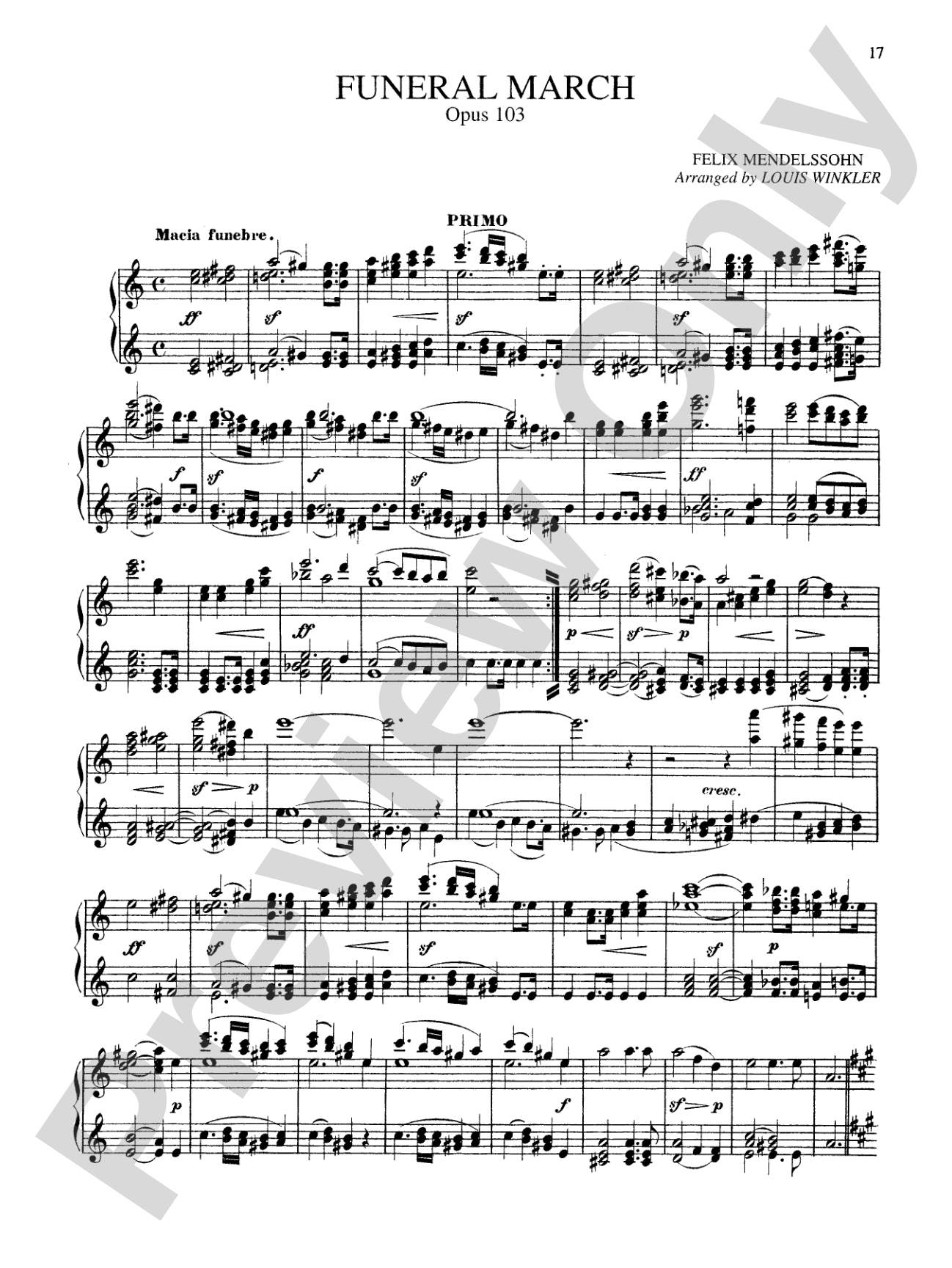
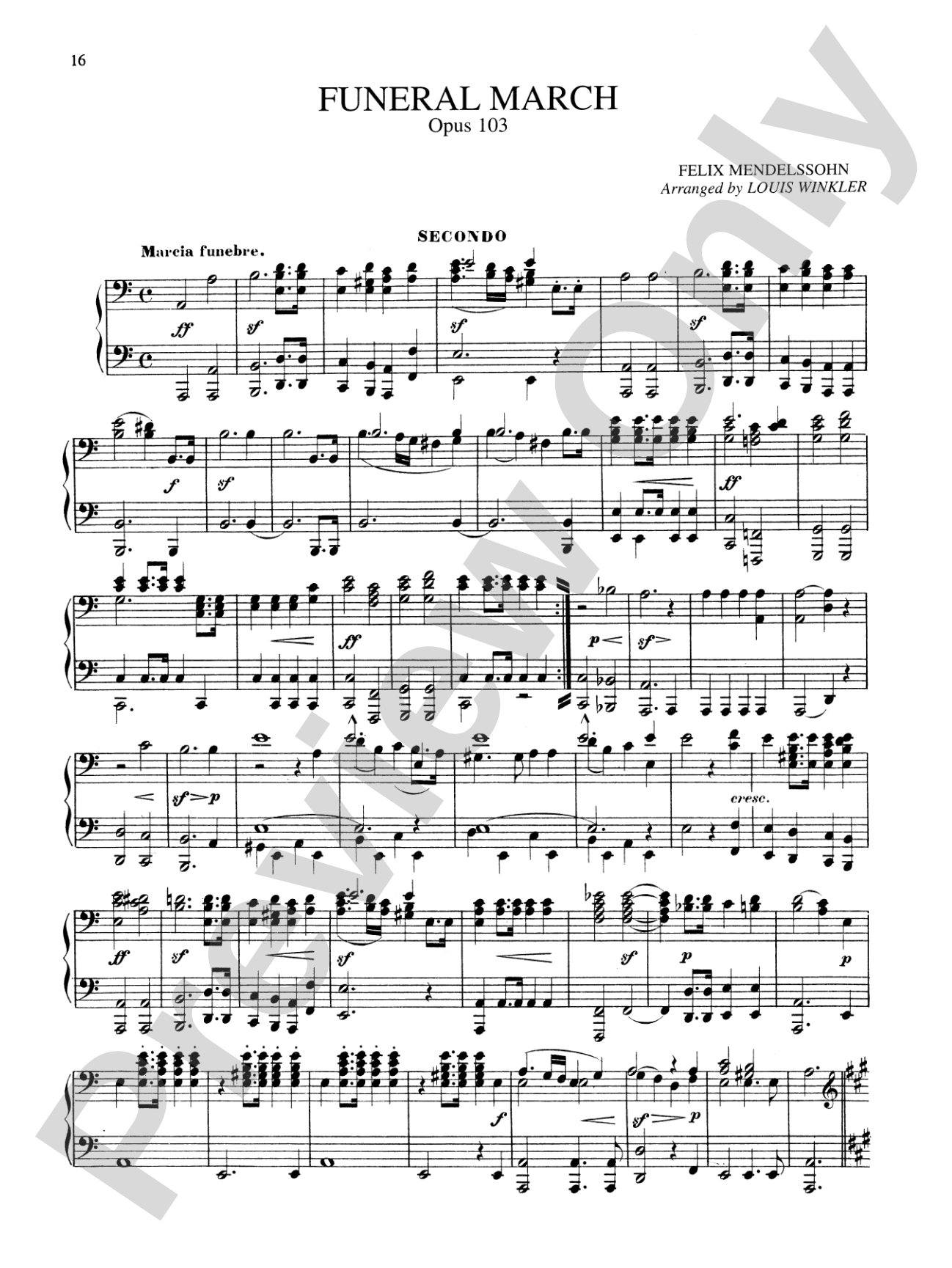
Mendelssohn: Marches Sheet Music Preview

Mendelssohn: Marches

By Felix Mendelssohn

Item: 00-PC-0003905

Digital Download
$1.99
Description
A Piano Duet for 1 Piano, 4 Hands, composed by Felix Mendelssohn.

Don't just read it, hear it, play along with it, and watch your students grow with it. In MakeMusic Cloud, Mendelssohn: Marches comes alive with professional accompaniment, adjustable tempo, and built-in practice tools that turn solo practice into real progress.

Sample Audio
No sample audio found.
Sample Video
Additional Details
Series: Kalmus Edition
Publisher: Alfred Music
Page Count: 28
SKU: 00-PC-0003905

More about this title

About the Composer: Felix Mendelssohn

Felix Mendelssohn (1809-1847) was a German composer, conductor, and pianist whose gift for orchestration shaped the sound of Romantic music. Though known primarily for his symphonies, concertos, and overtures, Mendelssohn was equally invested in keyboard music; his piano works span the full arc of his career and reveal a composer acutely attuned to texture, harmonic color, and lyrical line.

Mendelssohn's duets for one piano occupy a special place in his catalog. Writing for four hands allowed him to explore richer sonorities and more elaborate formal structures than solo writing typically permitted. These works demand equal partnership between players and offer pianists direct access to the orchestral thinking that defined his symphonic language.

Why we love this

Mendelssohn's marches bring genuine character to the duet repertoire without resorting to empty bravura. The writing distributes the musical material generously between primo and secondo, so neither player is ever relegated to accompaniment. These are works that sound like Mendelssohn at his most natural, with the march form giving them architectural clarity that beginning and intermediate duet players can grasp immediately.

What to expect

Marches by Mendelssohn combine forward momentum with lyrical grace. You move through clear formal structures anchored by singing melody lines, crisp rhythms, and the kind of harmonic color that Mendelssohn brought to orchestral writing. There is pageantry here, but never bombast; these are marches that know how to breathe.

Who it's for

Pianists at the intermediate level and beyond who want to explore Romantic-era duet literature with real musical substance. This collection works equally well for private studio teachers preparing students for recitals and for ensemble pianists looking to expand their chamber music experience.

How to get the most out of it

  • Shape the primo line as you would a vocal melody; Mendelssohn conceived his best melodies with singing in mind, even when writing for keyboard.
  • Balance the two parts carefully during rehearsal. The secondo player carries harmonic weight and must be heard, not buried under the primo part.
  • Establish a steady pulse early in rehearsals; march forms require rhythmic confidence and clarity, especially during transitions between sections.
  • Pay attention to Mendelssohn's dynamic markings and text indications. He marks scores with care, and honoring these details reveals the architecture of each piece.

How to use it

These marches work beautifully as contrasting program pieces alongside Romantic-era solo repertoire or other chamber works. Consider pairing one with a more introspective piano solo to showcase the range of Mendelssohn's output. They also function well as opening or closing numbers on a recital, giving you a confident, energetic frame for the program.

Skills your students will build

  • Ensemble balance and independence between two hands at opposing ends of the keyboard
  • Sight-reading and part management in duet format
  • Phrasing and linear singing across longer melodic lines
  • Understanding march form and sectional architecture
  • Coordinating rhythm and tempo with a partner

You May Also Like