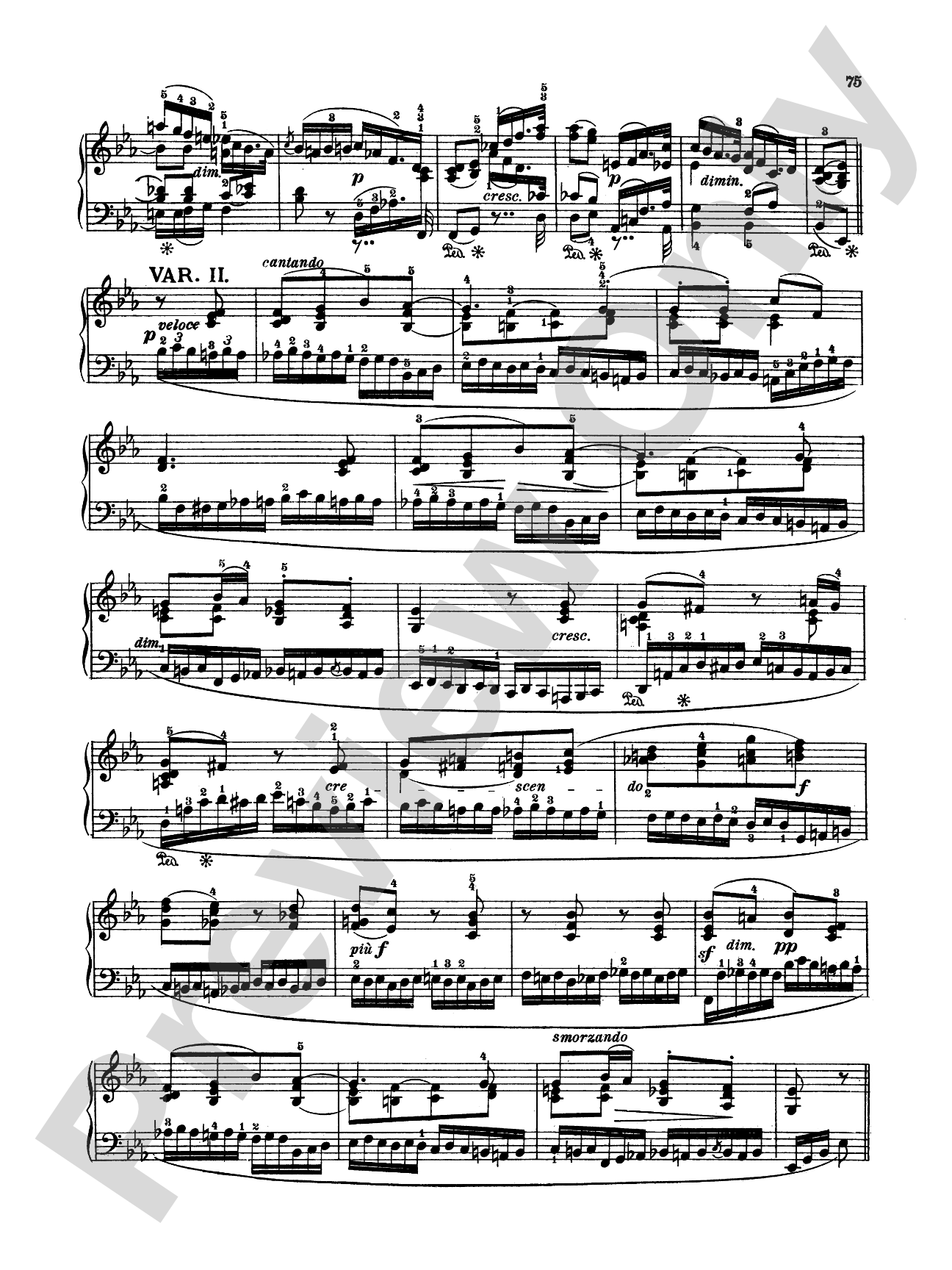
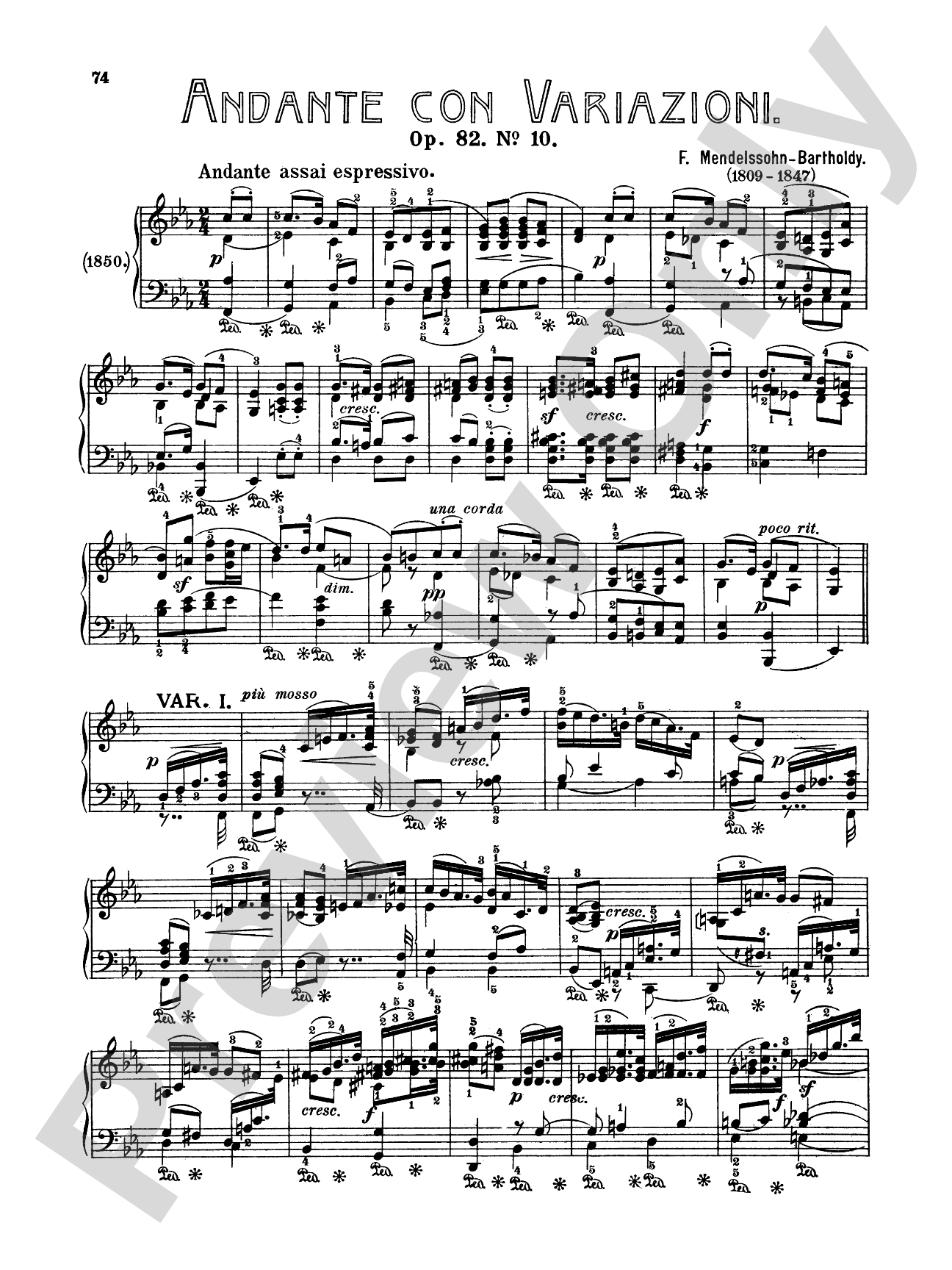
Mendelssohn: Complete Works (Volume II) Sheet Music Preview

Mendelssohn: Complete Works (Volume II)

By Felix Mendelssohn

Item: 00-PC-0008529

Digital Download
$0.99
Description
(Op. 25, 28, 54, 82, 104 (Three Etudes) * Etudes in F minor * Scherzo in B minor * Scherzo a Capriccio)

Don't just read it, hear it, play along with it, and watch your students grow with it. In MakeMusic Cloud, Mendelssohn: Complete Works (Volume II) comes alive with professional accompaniment, adjustable tempo, and built-in practice tools that turn solo practice into real progress.

Sample Audio
No sample audio found.
Sample Video
Additional Details
Series: Kalmus Edition
Publisher: Alfred Music
Page Count: 112
SKU: 00-PC-0008529

More about this title

About the Composer: Felix Mendelssohn

Felix Mendelssohn (1809–1847) composed with a clarity and formal elegance that made him one of the most performed Romantic composers of his era. His piano works synthesize Classical structure with Romantic harmonic language, creating pieces that reward both technical mastery and lyrical depth. As a composer, conductor, and educator, Mendelssohn shaped 19th-century musical taste and remains essential repertoire for pianists developing interpretive maturity.

Mendelssohn's smaller forms (etudes, scherzos, character pieces) showcase his gift for compression and witty orchestration of the keyboard. His writing is idiomatic and pianistic without sacrificing compositional rigor, making these works ideal bridges between standard Classical repertoire and larger-scale Romantic statements.

Why we love this

This collection captures Mendelssohn's range as a piano composer: the technical demands and motivic rigor of the etudes, the mercurial character and unexpected harmonic turns in the scherzos. Programming these works signals a student's arrival at repertoire that requires interpretive decisions, not just note accuracy. The pieces reward repeated listening and reveal new layers of craftsmanship each time through.

What to expect

These pieces shimmer with elegance and restless energy. The etudes sparkle with figuration; the scherzos dart unpredictably through harmonic space, mixing playfulness with sudden moments of introspection. Mendelssohn writes for the fingers and the ear in equal measure, creating music that feels both virtuosic and intimate.

Who it's for

This collection suits intermediate-advanced pianists working toward early Romantic repertoire and pianists preparing for conservatory auditions or competitions. It serves teachers seeking smaller works that demonstrate Mendelssohn's compositional voice without the commitment required by the larger sonatas and concertos.

How to get the most out of it

  • Attend carefully to Mendelssohn's tempo and character markings. His indications (Allegro con fuoco, Presto, Con moto) are not generic; they shape the entire harmonic and rhythmic character of each piece.
  • Balance technical clarity with singing tone in the etudes. These are not finger exercises; the passagework should support melodic and harmonic logic, never overshadow it.
  • Use the scherzos' chromaticism and rhythmic wit to establish character early. Once the listener grasps the piece's personality, technical passages land more effectively.
  • Explore the dynamic range available within Mendelssohn's markings. His piano and forte indications are selective and purposeful; honor them without exaggeration.

How to use it

Etudes work as concert openers or standalone recital pieces highlighting technical command. The scherzos pair beautifully with other Romantic character works (Chopin Mazurkas, Brahms Intermezzos) in themed programs exploring Romantic wit and formal compression. This collection also serves as essential preparation for pianists approaching Mendelssohn's larger works.

Skills your students will build

  • Managing rapid passagework and hand position shifts
  • Understanding Romantic harmonic language and chromatic voice-leading
  • Interpreting character markings and translating them to tone color
  • Formal clarity in smaller Romantic forms (etude, scherzo)
  • Balancing technical display with lyrical purpose

You May Also Like