
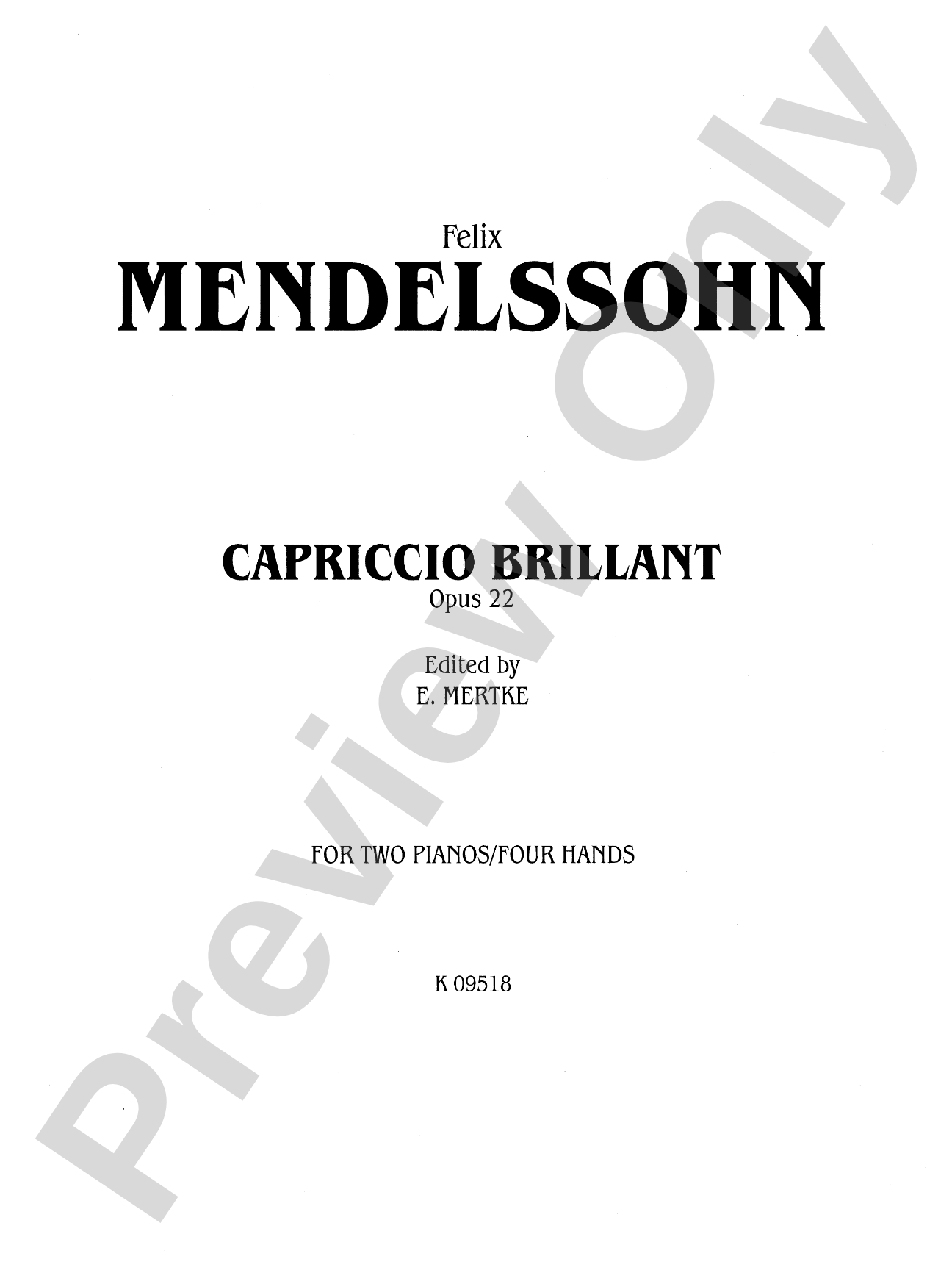

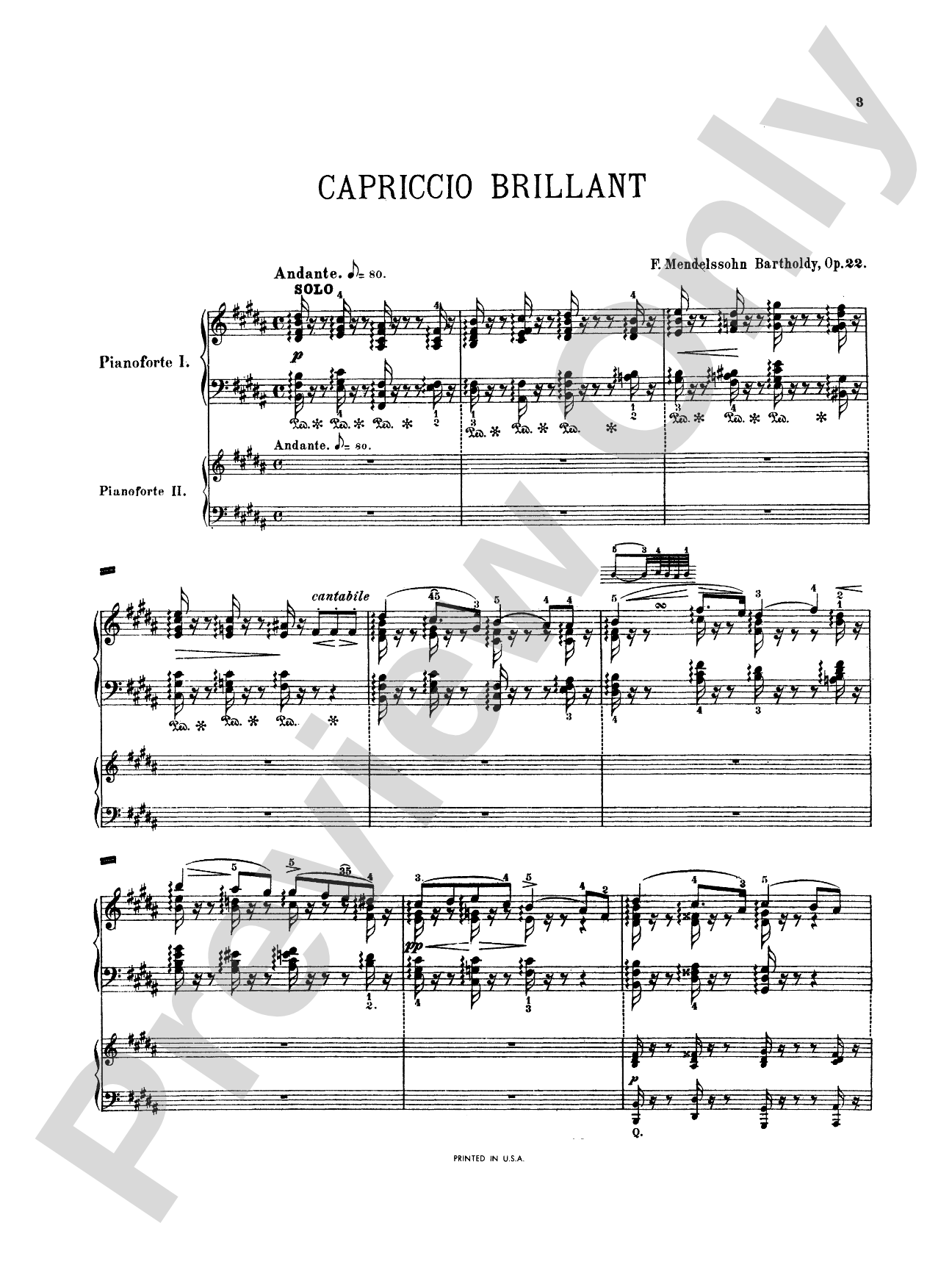
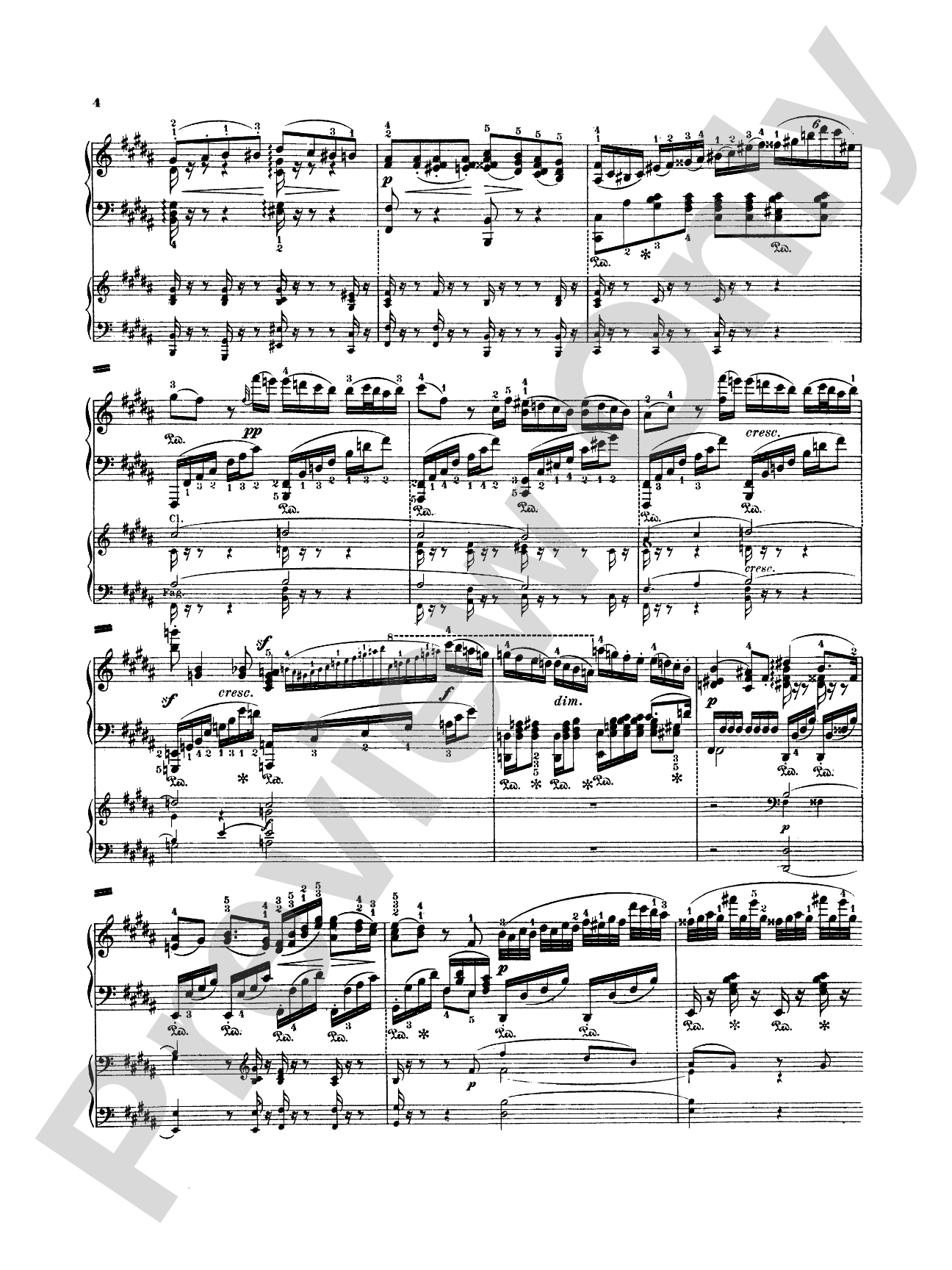
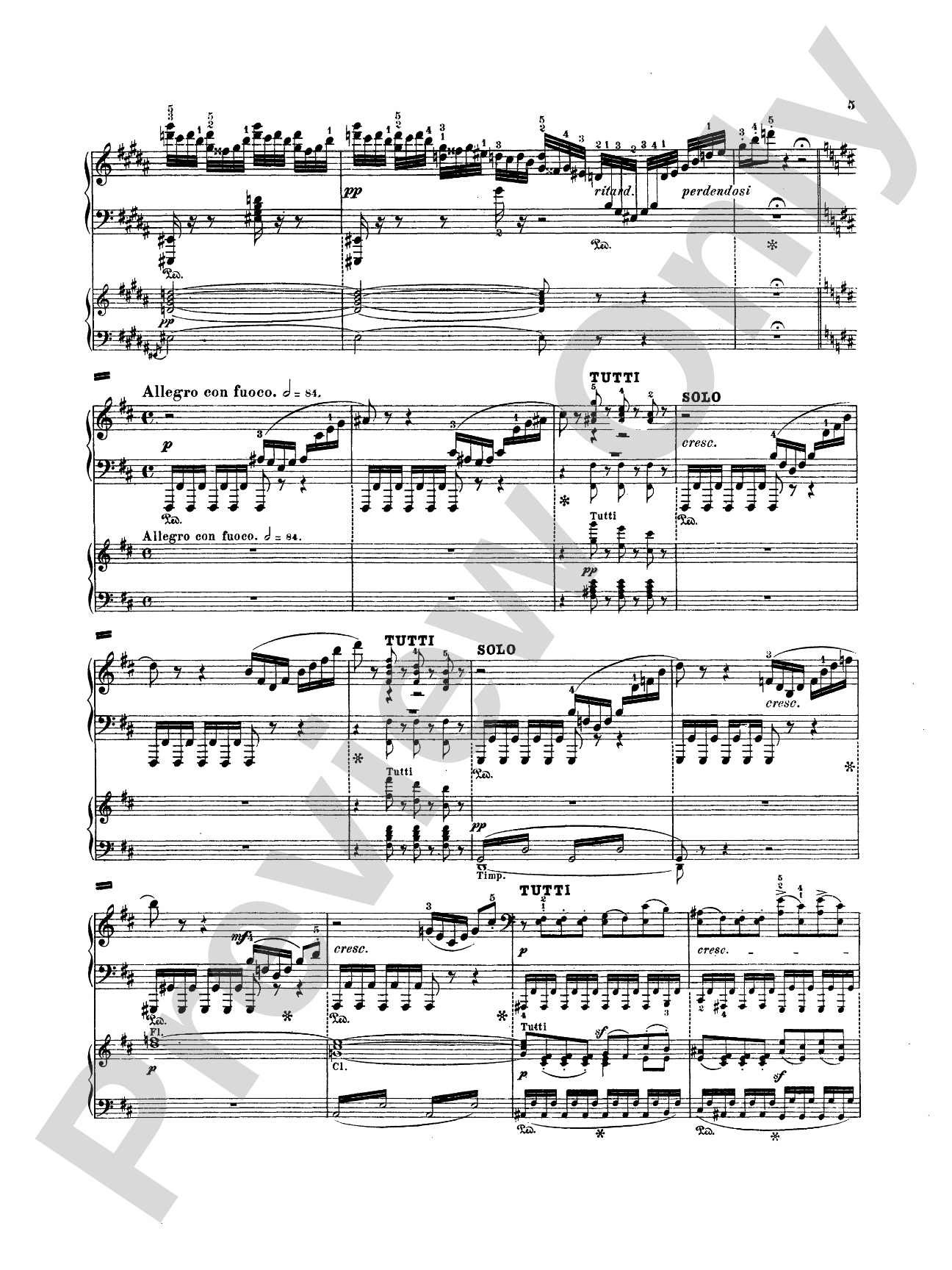

Mendelssohn: Capriccio Brillante, Op. 22
By Felix Mendelssohn
Level: Intermediate / Advanced
Item: 00-PC-0012737
$11.95
Pickup currently not available
Description
Expertly arranged Piano Duet by Felix Mendelssohn from the Kalmus Edition series. This Intermediate / Advanced Piano Duet (2 Pianos, 4 Hands) is from the Romantic era. 2 copies are required for performance.


Don't just read it, hear it, play along with it, and watch your students grow with it. In MakeMusic Cloud, Mendelssohn: Capriccio Brillante, Op. 22 comes alive with professional accompaniment, adjustable tempo, and built-in practice tools that turn solo practice into real progress.
Open in the Player
Jump straight in and assign it today.
Start Your Free Trial
Open this title and explore the full library in minutes.
Sample Audio
No sample audio found.
Sample Video
No sample videos found.
Additional Details
Series:
Kalmus Edition
Publisher:
Alfred Music
Page Count:
24
SKU:
00-PC-0012737
More about this title
About the Composer: Felix Mendelssohn
Felix Mendelssohn (1809-1847) stands among the most gifted composers of the Romantic era, a musician equally at home writing orchestral works, chamber music, and keyboard literature. His training was rigorous and cosmopolitan; he traveled throughout Europe, absorbing influences from Bach, Beethoven, and the musical traditions he encountered in Italy, Scotland, and beyond. This wide exposure shaped his elegant compositional voice, which balanced Romantic expression with Classical clarity.
Mendelssohn was a virtuoso pianist himself, and his keyboard writing reflects both technical brilliance and deep musicality. He understood the instrument's capabilities intimately, which made his piano works especially rewarding for advanced students and professionals. His legacy extends far beyond concert halls; his music has remained central to piano pedagogy and recital programming for nearly two centuries.
Why we love this
The Capriccio Brillante captures everything that makes Mendelssohn's music irresistible: virtuosic flair married to genuine lyricism and architectural grace. As a two-piano duet, it offers advanced pianists a rare chance to share the spotlight while navigating passage work that demands precision, clarity, and interpretive sophistication. Programming this work signals that your students are ready for serious repertoire that audiences recognize and respect.
What to expect
The Capriccio Brillante sparkles with wit and verve, its rapid figurations and bright harmonic language creating an atmosphere of elegant virtuosity. The music oscillates between moments of breathless technical display and passages of genuine lyrical warmth, giving performers and listeners room to catch their breath. There's an almost theatrical quality to the piece, a sense of playful confidence that makes it both exhilarating to play and delightful to hear.
Who it's for
This duet is designed for two advanced pianists preparing a recital program, competing at chamber music festivals, or seeking substantial repertoire that challenges both technical facility and musical maturity. It works equally well in collegiate piano studios or professional performance settings where musicians want to explore an accessible yet musically substantial chamber work.
How to get the most out of it
- Establish a clear hierarchy of voices at the outset. One pianist often carries the thematic material while the other provides harmonic and rhythmic support; these roles shift, so rehearse passage by passage to ensure both players understand who leads in each section.
- Pay attention to the balance between the two pianos. The Primo and Secondo parts sit at different dynamic levels throughout; use the characteristic of each piano (if they differ in brightness or projection) to your advantage, or adjust pedal and touch to create necessary color contrast.
- Shape the capriccio's brilliant figurations with rhythmic precision and forward momentum. Mendelssohn's rapid passage work can feel scattered if it lacks direction; think of each run and flourish as part of a larger melodic or harmonic gesture, not as pure display.
- Lock in the rhythmic relationships between the two pianos from the start, especially where sixteenth-note patterns interlock or where one player's rhythm complements the other's. A shared metronome in early rehearsals helps establish this foundation.
How to use it
This work makes a natural centerpiece for a chamber music recital or a concluding piece on a solo piano program where the second performer joins as a guest. It also suits competitions and showcases where judges expect to hear Romantic-era literature played with sophistication. Consider programming it alongside other Mendelssohn piano works or as a contrasting companion to earlier duet literature to demonstrate the stylistic range your advanced students command.
Skills your students will build
- Coordinating fast parallel passage work between two pianists across different registers
- Balancing melody and accompaniment when roles shift between Primo and Secondo parts
- Executing rapid sixteenth-note figures with rhythmic clarity and tonal evenness
- Interpreting Romantic-era harmonic language and voice leading across both instruments
- Collaborating on interpretation and phrasing as an ensemble rather than as individual soloists