
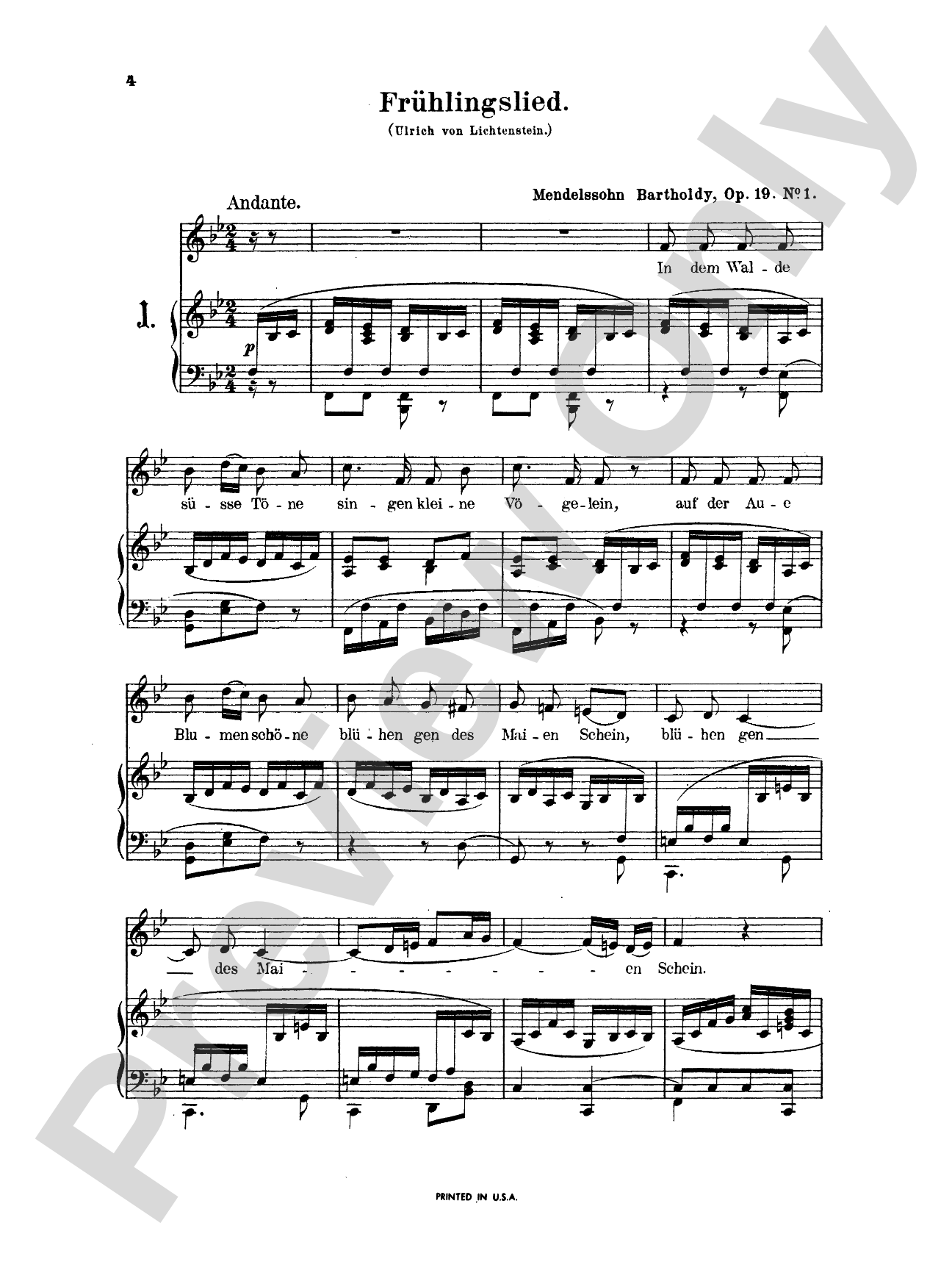
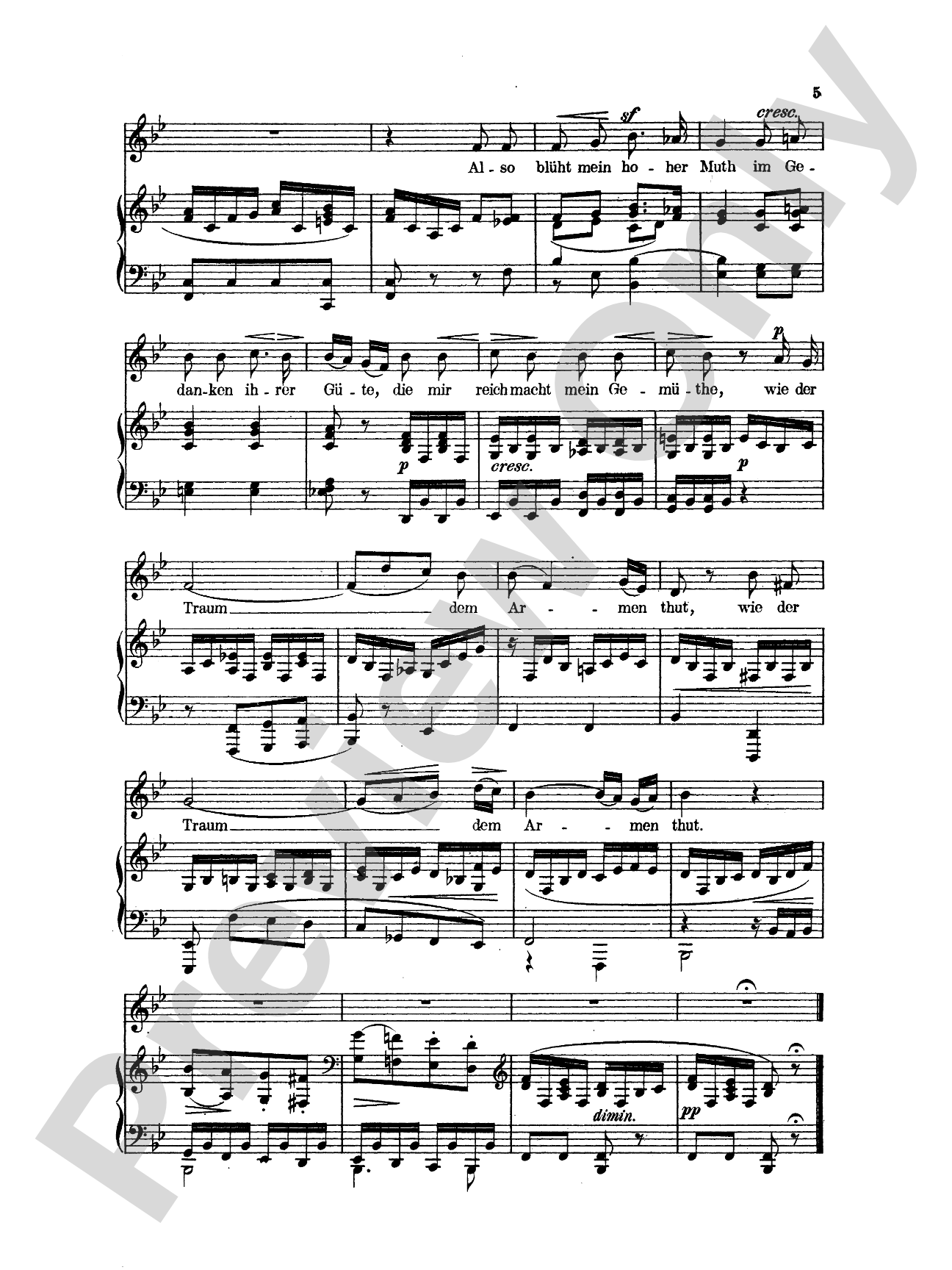

Mendelssohn: 79 Songs, Low Voice (German): Low Voice Book
By Felix Mendelssohn
Item: 00-PK-0003889

$22.99
Pickup currently not available
Buy Extra Parts (Digital PDF Download)
Parts Added to Cart!
Description
A collection of songs for Low Voice, composed by Felix Mendelssohn.


Don't just read it, hear it, play along with it, and watch your students grow with it. In MakeMusic Cloud, Mendelssohn: 79 Songs, Low Voice (German): Low Voice Book comes alive with professional accompaniment, adjustable tempo, and built-in practice tools that turn solo practice into real progress.
Open in the Player
Jump straight in and assign it today.
Start Your Free Trial
Open this title and explore the full library in minutes.
Sample Audio
No sample audio found.
Sample Video
No sample videos found.
Additional Details
Series:
Kalmus Edition
Publisher:
Alfred Music
Page Count:
172
SKU:
00-PK-0003889
More about this title
About the Composer: Felix Mendelssohn
Felix Mendelssohn (1809, 1847) was a German composer whose gift for melody and formal clarity shaped the Romantic era. He excelled across all genres, but his songs reveal his most intimate voice: direct, emotionally precise, and crafted with a chamber musician's care for balance between voice and piano.
Why we love this
Mendelssohn's lieder reward singers with melodic generosity and harmonic interest that never feels overwrought. A collection this large ensures you can build a program around genuine masterworks rather than filler, and the range of character and emotional temperature means you can program intelligently across a full recital or integrate selections into thematic concerts without repetition.
What to expect
These songs navigate between intimate vulnerability and expansive lyricism, often within a single work. You'll encounter direct emotional expression alongside carefully wrought formal architecture, moments of folk-like simplicity layered with subtle harmonic turns, and accompaniments that shift from transparent to richly textured. The collection captures the breadth of Mendelssohn's imagination within the miniature form.
Who it's for
This collection serves professional singers, advanced vocalists preparing recitals, voice teachers building a curriculum of Romantic lieder, and serious students ready to tackle substantial repertoire in the original language. It is equally valuable for tenor, baritone, and bass singers seeking alternatives to the heavily soprano-centric lied repertoire typically available.
How to get the most out of it
- Honor the melodic line as the primary voice; Mendelssohn's accompaniments are sophisticated but always in service to the song itself.
- Pay close attention to dynamic markings and articulation, which shape phrase architecture and emotional color more than you might initially assume.
- Work with your accompanist to balance textural detail in the piano part with clarity of the vocal line, especially in songs with more elaborate figuration.
- Use the original German pronunciation and phrasing conventions of the text to shape musical phrasing; Mendelssohn's setting is inseparable from the language.
How to use it
Build a recital or substantial song cycle around selections from this collection, or use individual songs as opening and closing pieces to frame concert programs. The breadth of this resource makes it ideal for exploring Mendelssohn across an entire season, returning to different songs as your interpretive understanding deepens and as they complement other repertoire you're performing.
Skills your students will build
- Singing in German with idiomatic phrasing and diction
- Interpreting Romantic-era harmonic language and modulation
- Coordinating vocal phrasing with sophisticated piano accompaniment
- Building interpretive choices from textual and musical details
- Sustaining vocal control and musical focus across longer song forms