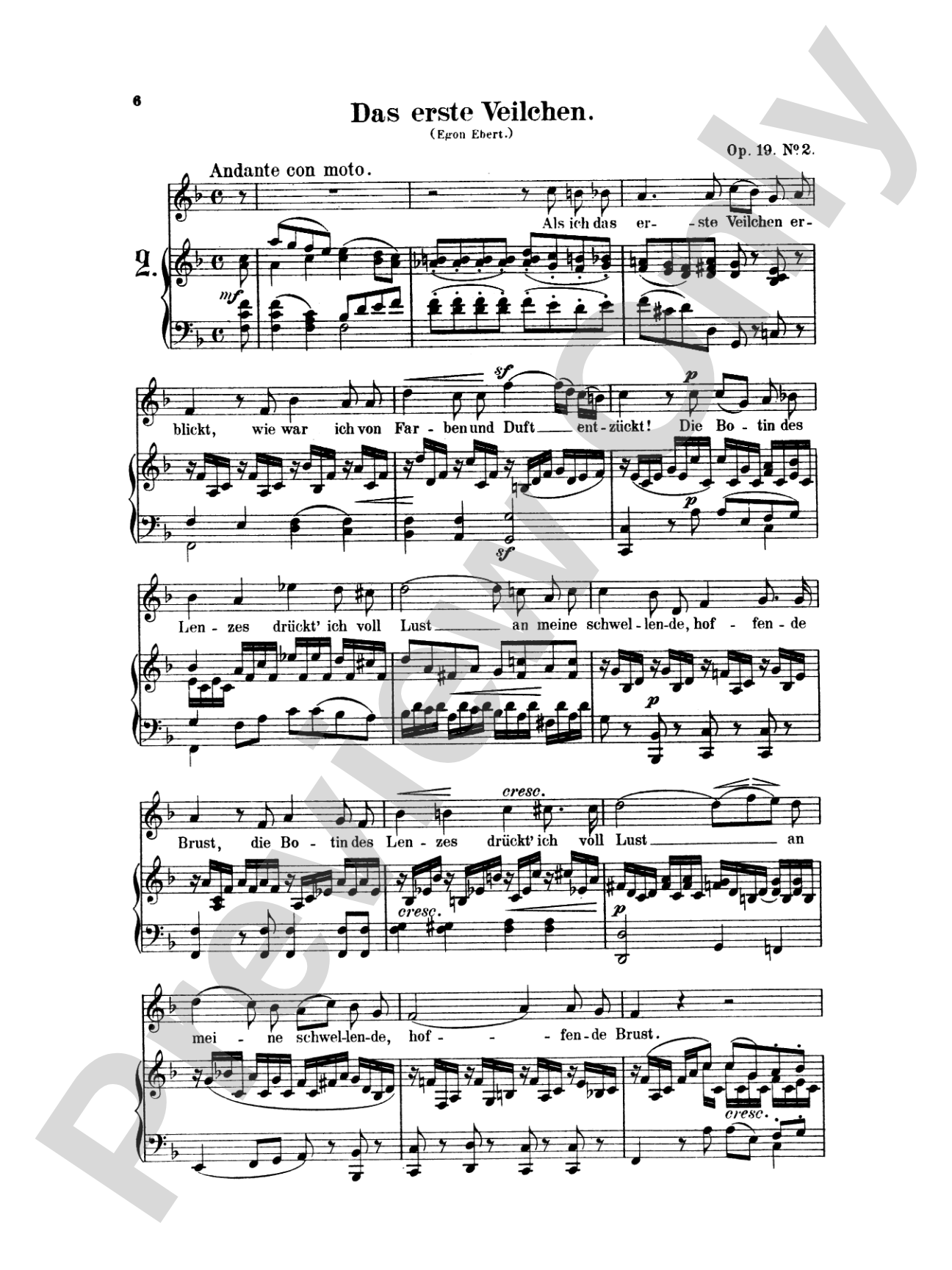
Mendelssohn: 79 Songs, High Voice (German) Sheet Music Preview

Mendelssohn: 79 Songs, High Voice (German)

By Felix Mendelssohn

Item: 00-PC-0013524

Digital Download
$0.99
Description

Don't just read it, hear it, play along with it, and watch your students grow with it. In MakeMusic Cloud, Mendelssohn: 79 Songs, High Voice (German) comes alive with professional accompaniment, adjustable tempo, and built-in practice tools that turn solo practice into real progress.

Sample Audio
No sample audio found.
Sample Video
Additional Details
Series: Kalmus Edition
Publisher: Alfred Music
Page Count: 176
SKU: 00-PC-0013524

More about this title

About the Composer: Felix Mendelssohn

Felix Mendelssohn (1809-1847) was a German composer whose gift for melody and structural clarity defined the Romantic era. A virtuoso pianist and conductor, Mendelssohn bridged Classical form and Romantic expression with remarkable balance, producing masterworks across every genre from symphonies and concertos to intimate vocal works.

His 79 songs (Lieder) represent some of the finest examples of the form outside Schubert's output. Written throughout his life, these pieces showcase his ability to match music to poetry with precision and emotional directness, making them essential repertoire for singers exploring the Romantic lied tradition.

Why we love this

This collection gives singers access to one of the Romantic era's greatest melodists in a single, organized resource. Mendelssohn's songs demand nothing flashy from the voice; instead, they reward clear diction, line control, and the ability to shape phrases with architectural clarity. The range of character and mood across 79 works means recital programmers and voice teachers can find exactly the right pieces for student voices, skill levels, and artistic goals.

What to expect

Mendelssohn's songs feel like conversations between melody and text, never overwrought but never simple. The harmonic language shifts between warmth and wistfulness, moments of direct emotion and subtle introspection. Singing them requires both technical precision and emotional sincerity; they reward singers who listen to themselves and commit to the composer's architectural vision.

Who it's for

High soprano and light tenor voices will find this collection essential for recital preparation, audition materials, and repertoire building. Voice teachers use these songs to develop musicianship, diction, and interpretive independence in intermediate and advanced singers. Art song enthusiasts and Lieder specialists benefit from having Mendelssohn's complete output organized and accessible.

How to get the most out of it

  • Honor the text first. Mendelssohn's melodies follow the contours of the German poetry with remarkable fidelity; let the words shape your phrasing rather than imposing external expression onto the line.
  • Balance vocal warmth with clarity of articulation. These songs sit naturally in the voice, but their power comes from precise consonants and open vowels that let the harmonic language shine through.
  • Work closely with your pianist on tempo and rubato. Mendelssohn's accompaniments are not ornamental; they carry harmonic and rhythmic ideas essential to the song's architecture.
  • Explore the full dynamic range. Many songs move through intimate passages and moments of real dramatic weight; commit fully to both without losing vocal ease.

How to use it

Build a Mendelssohn recital or fill an entire concert with selections from this collection, mixing intimate character pieces with stronger dramatic works. Pair individual songs with other Romantic composers in a thematic program (love, nature, humor, or storytelling). Use these works as core repertoire for voice studio teaching, assigning pieces progressively as students develop the technical and musical maturity to sustain Mendelssohn's elegant lines.

Skills your students will build

  • Reading German poetry and matching vocal line to textual meaning
  • Sustaining long melodic phrases with consistent support and tone
  • Understanding harmonic function and voice-leading in Romantic accompaniments
  • Building recital stamina through contrasting character pieces
  • Interpreting rubato and phrasing without vocal strain
  • Recognizing formal structures (strophic, modified strophic, and through-composed) in art song

You May Also Like