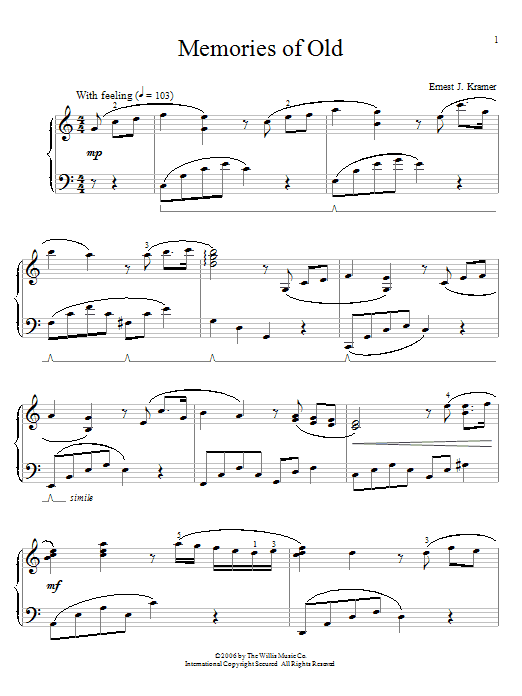
Ernest J. Kramer was a prolific composer and educator whose output spanned both original works and pedagogical arrangements. His compositions for piano demonstrate a clear understanding of how to craft pieces that serve learning goals without sacrificing musical integrity. Kramer's approach to educational writing shows his commitment to building student technique and musicality in tandem.
Why we love this
Kramer's ability to embed genuine musical substance into a three-page package makes this work rewarding for both student and teacher. The piece respects the performer's developing abilities while offering real interpretive decisions to consider, avoiding the trap of many educational works that reduce complexity to the point of boredom.
What to expect
The work carries the wistful quality its title suggests, with harmonic movement that supports introspection rather than virtuosic display. Melodic lines emerge and recede like moments recalled in thought, creating an intimate atmosphere that hinges on the player's willingness to listen closely to what they are creating.
Who it's for
Intermediate pianists developing interpretive maturity alongside technical facility will find this piece both accessible and musically substantive. Teachers seeking a three-page work that avoids both oversimplification and technical overreach will appreciate its proportions and pedagogical clarity.
How to get the most out of it
Shape the phrase contours thoughtfully; resist the urge to mechanically separate different sections. The memories evoked in the title benefit from connected phrasing that draws listeners through the musical narrative.
Attend to dynamic gradations in the middle register, where much of the piece's harmonic interest lives. A whisper of color here makes the surrounding material stand out more effectively.
Balance technical clarity with expressive breathing. Students often rush through passages they find comfortable; this piece rewards the discipline of matching tempo to the emotional content rather than muscle memory.
How to use it
This works well as a recital piece for intermediate students seeking something beyond method book fare, positioned alongside Baroque or early Romantic works to show stylistic evolution. It also serves as a bridge between pure technique study and the expressive demands of more challenging repertoire, making it valuable for end-of-term student showcases.
Skills your students will build
Shaping longer melodic lines with intentional phrasing rather than default articulation
Reading and executing dynamic nuance across varied registers
Balancing hand independence in textures where melody and accompaniment sit in different ranges
Translating interpretive intent into physical control at the keyboard
You May Also Like
Scan to Complete Your Purchase
Use your phone's camera to scan the code below
You'll log in on your phone and the order will be added to your account