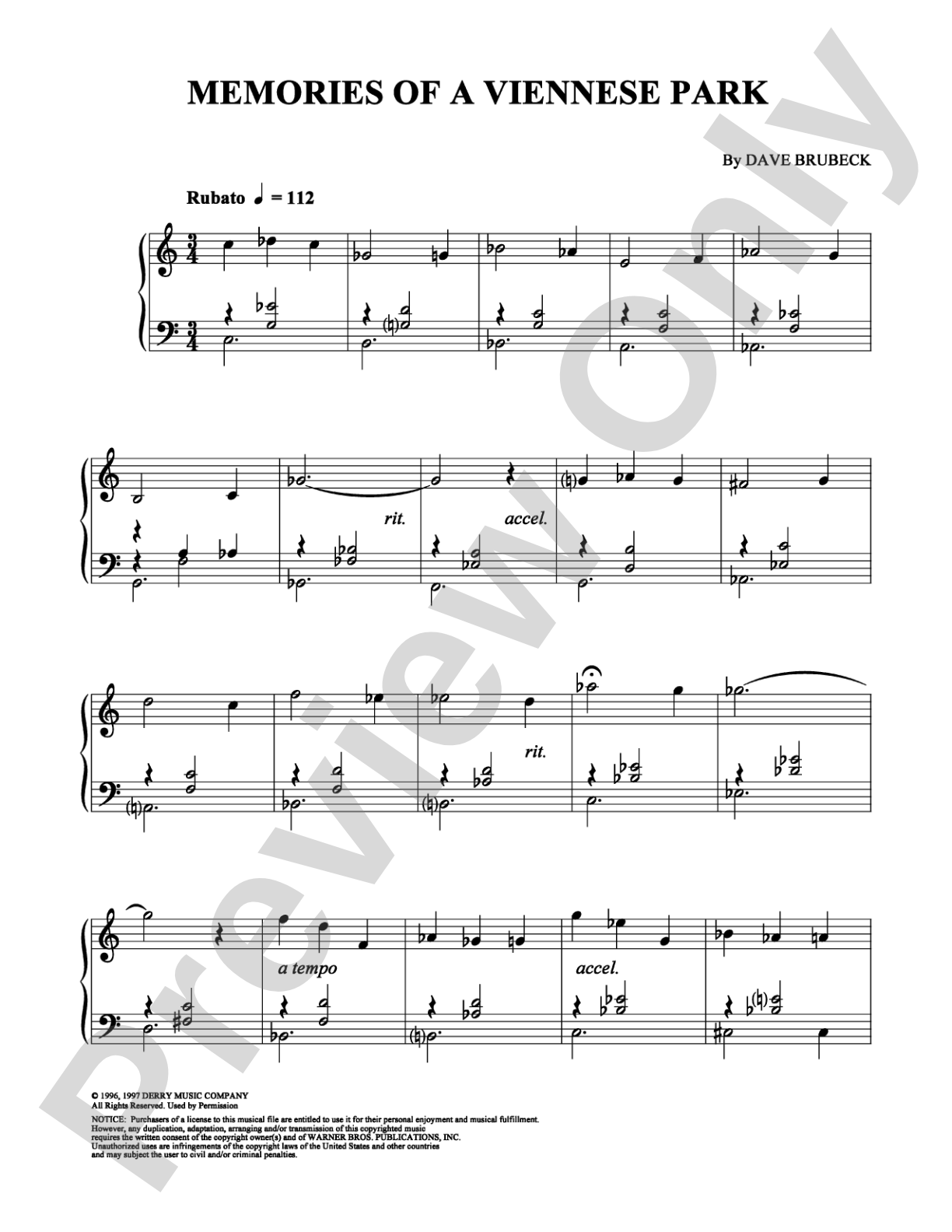
Memories of a Viennese Park: Piano Digital Sheet Music

Memories of a Viennese Park: Piano Digital Sheet Music

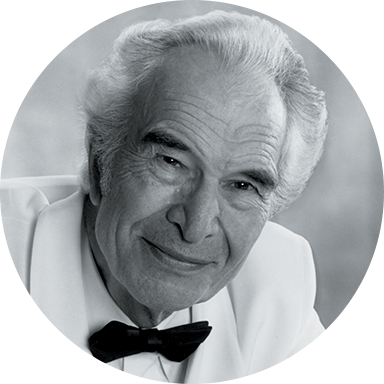
Dave Brubeck

Item: 00-PS-0001316

Digital Download
$3.99
Description

Memories of a Viennese Park: Piano Digital Sheet Music isn't in MakeMusic Cloud just yet...but it could be. Let us know you'd like to see it, and you'll help shape what comes next. In the meantime, start a free trial and dive into thousands of interactive titles your students can play along with today.

Sample Audio
No sample audio found.
Sample Video
Additional Details
SKU: 00-PS-0001316

More about this title

About the Artist: Dave Brubeck

Dave Brubeck

Dave Brubeck built his reputation as a jazz pianist through fearless improvisation, but his compositional ambitions extended far beyond the jazz idiom. He studied with Darius Milhaud at Mills College following World War II, and Milhaud's influence encouraged him to synthesize jazz language with classical forms across orchestral works, chamber music, choral pieces, and solo compositions for piano, violin, and voice. His 1959 album Time Out became the first jazz record to sell over a million copies, anchored by the now-iconic "Take Five," yet his larger ambitions found expression in sacred works like the mass To Hope! and oratorios recorded by the London Symphony Orchestra.

Brubeck's impact extended beyond music into civil rights advocacy at a time when integrated jazz ensembles faced significant social resistance. He received the Presidential Medal of the Arts from President Clinton, lifetime achievement honors from both the Grammy Awards and the London Symphony Orchestra, and was inducted into the American Classical Music Hall of Fame in 2003. His composed works have been performed internationally across concert halls, cathedrals, and ballet stages, demonstrating his commitment to writing music that could speak across musical traditions and audiences.

Why we love this

Brubeck's piano compositions occupy a rare space where jazz harmonies and improvisational spirit meet classical structure and notational precision. This piece invites pianists into a distinctly Brubeckian soundworld without requiring them to navigate complex polytonal writing or exhausting technical demands, making it accessible to intermediate players who want to explore jazz composition beyond lead sheets and chord changes.

What to expect

The piece evokes the wistful nostalgia suggested by its title, with the character of a pianist taking an unhurried walk through a familiar Vienna landmark. Brubeck's jazz vocabulary surfaces through sophisticated harmonic movement and subtle rhythmic nuance, while the overall mood remains introspective and contemplative rather than driven or swinging hard.

Who it's for

This piece suits intermediate to advanced pianists who enjoy jazz repertoire but want fully notated music that reads clearly without relying on fake books or improvisation. It appeals to musicians interested in exploring how a major jazz figure approached composition, and to pianists preparing recital programs that blend jazz sophistication with accessible musicality.

How to get the most out of it

  • Let the harmonic colors breathe. Brubeck's jazz voicings benefit from clarity in the left hand rather than dense pedaling, which allows listeners to hear the quality of each chord.
  • Balance rubato with groove. The Viennese park setting suggests flexibility and impressionistic phrasing, but maintain enough rhythmic anchor so the piece doesn't float entirely free.
  • Shape phrases as a vocalist would. Brubeck composed these works with singable lines in mind, so listen for the melodic intent and shape accordingly rather than treating passages as mechanical patterns.

How to use it

Program this alongside other twentieth-century piano works that explore jazz or popular idioms to demonstrate how composers of that era engaged with vernacular music. It works equally well as a solo recital piece or as part of a jazz history concert that examines the boundary between composition and improvisation.

Skills your students will build

  • Reading and interpreting jazz voicings in notated form
  • Balancing rubato with rhythmic stability in a jazz context
  • Voicing awareness and control across both hands
  • Stylistic understanding of how classical and jazz languages intersect

You May Also Like