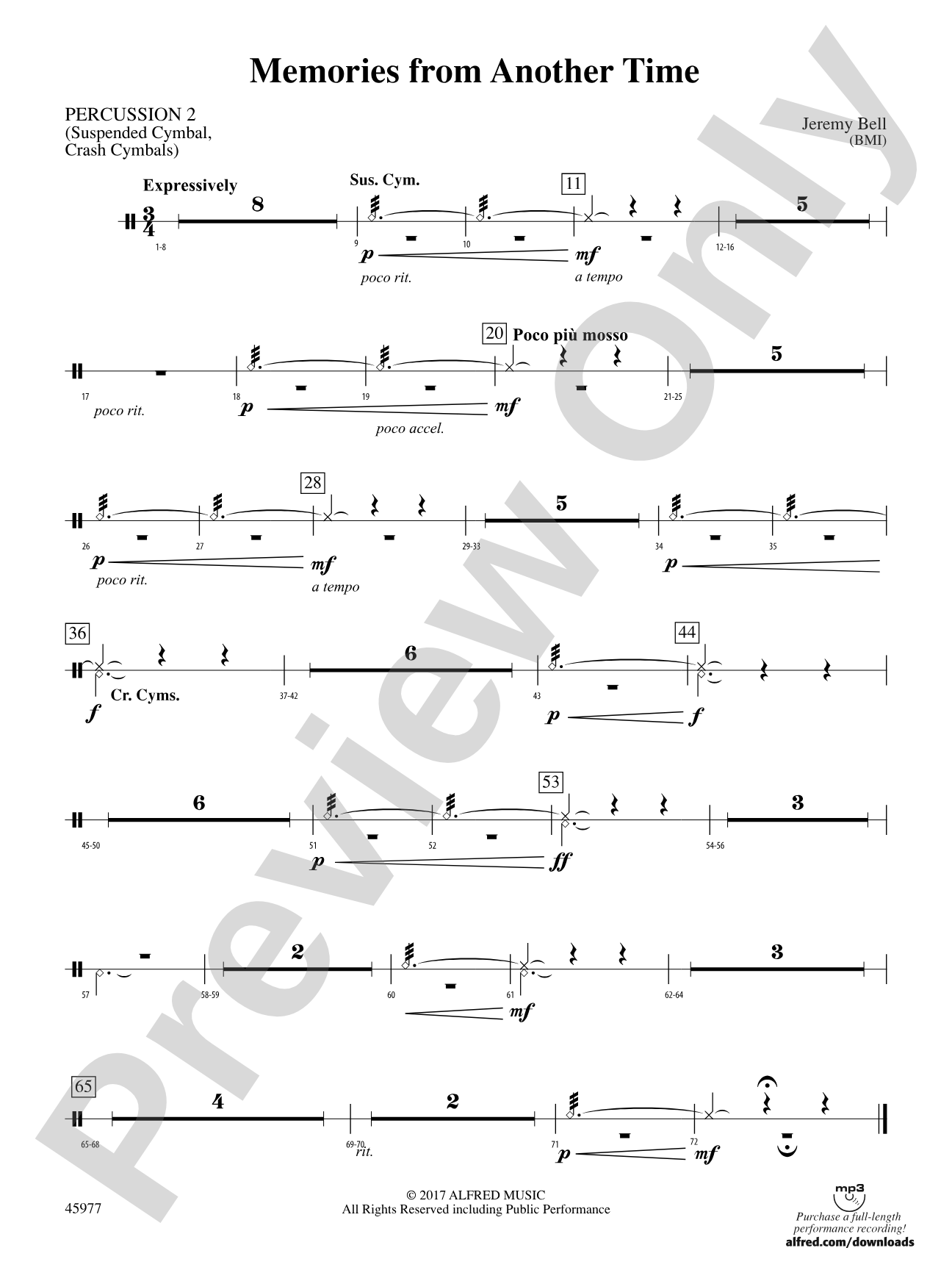
Memories from Another Time: 2nd Percussion Sheet Music Preview

Memories from Another Time: 2nd Percussion

By Jeremy Bell

Grade: 1.5 (Easy)

Item: 00-PC-0017703_PC2

Digital Download
$3.00
Description
Evoking of feelings of nostalgia and serenity, this composition has a lot of teachable moments for young musicians, including low brass and woodwind melodies and opportunities for part independence and expression. (2:40)

Don't just read it, hear it, play along with it, and watch your students grow with it. In MakeMusic Cloud, Memories from Another Time: 2nd Percussion comes alive with professional accompaniment, adjustable tempo, and built-in practice tools that turn solo practice into real progress.

Sample Audio
0:00
0:00
Sample Video
Additional Details
Series: Alfred Debut Series
Publisher: Alfred Music
Page Count: 126
SKU: 00-PC-0017703_PC2

More about this title

About the Composer: Jeremy Bell

Jeremy Bell

Jeremy Bell studied composition at Bradley University under Dr. Stephen Heinemann, then earned his master's degree from Arizona State University where he worked with Dr. Rodney Rogers and Dr. Jody Rockmaker. His compositional voice spans band and choral literature alongside commercial work for television and film, reflecting a versatile approach to music across multiple genres and contexts.

Why we love this

Bell writes for young ensembles with genuine musicality and clear pedagogical intent. The balance between accessible voicing and real expressive opportunities means your students will sound mature and feel engaged, not condescended to. At Grade 1.5, this score respects both the limitations and capabilities of developing musicians.

What to expect

Memories from Another Time unfolds with quiet dignity, inviting players into reflective moments rather than demanding flashy virtuosity. The piece breathes with calm introspection, drawing strength from thoughtful voicing and harmonic clarity rather than orchestral density.

Who it's for

Beginning to early intermediate concert bands looking for accessible literature with genuine musicality. Directors seeking pieces that develop musicianship without overwhelming younger ensembles, and students ready to explore expression and part independence at a manageable technical level.

How to get the most out of it

  • Shape the low brass and woodwind melodies with long phrases rather than choppy articulation; support the lyrical quality by having players imagine singing rather than simply reading notes.
  • Use the sectional independence moments to build individual part confidence in rehearsal before layering full textures; isolate the inner voices so each player hears their role in the harmonic fabric.
  • Balance the nostalgic mood by resisting overly bright dynamics in the upper voices; let the serenity come through in the restraint of your tempo choices and dynamic control.

How to use it

This works beautifully as a ballad on a mixed concert program, offering a welcome contrast to march or uptempo selections. Its modest length (2:40) and emotional clarity also make it effective for festival programming where a single reflective statement can anchor a well-rounded set.

Skills your students will build

  • Singing through sustained melodic lines with proper phrasing
  • Balancing independent part lines within a harmonic texture
  • Controlling dynamics to support lyrical expression
  • Listening to and supporting lower brass and woodwind solos
  • Maintaining musical independence while blending with the ensemble

You May Also Like