
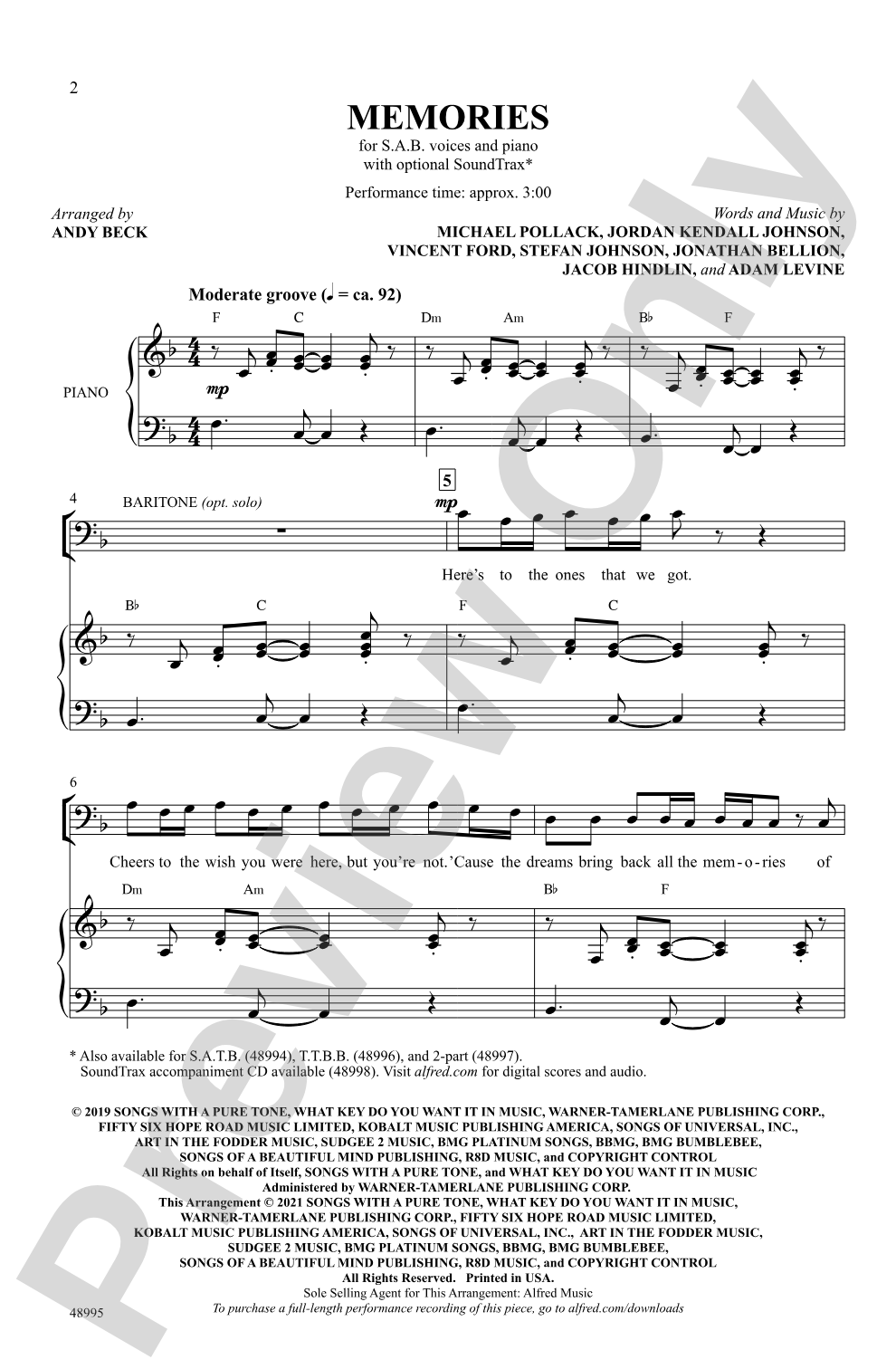
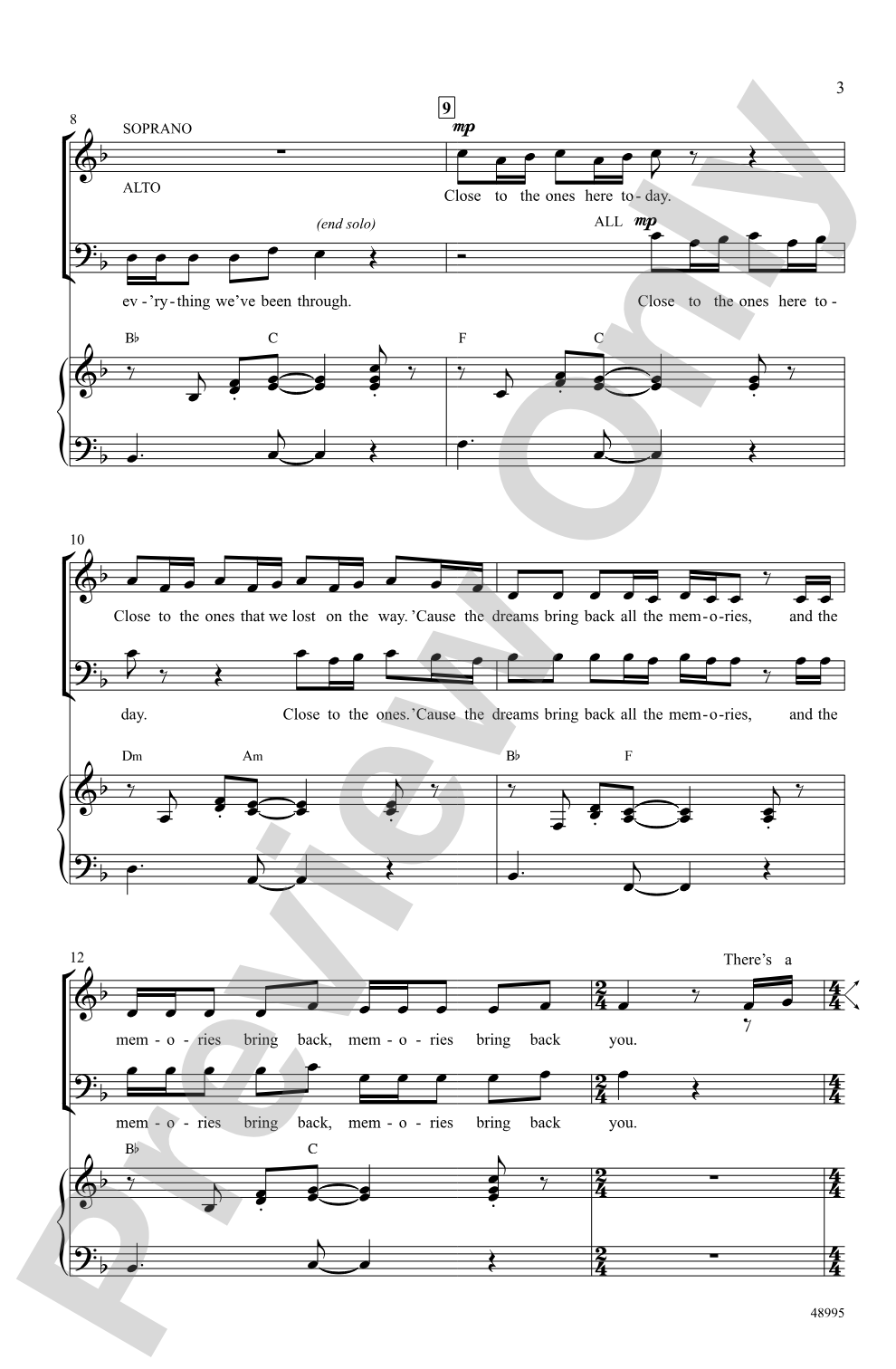
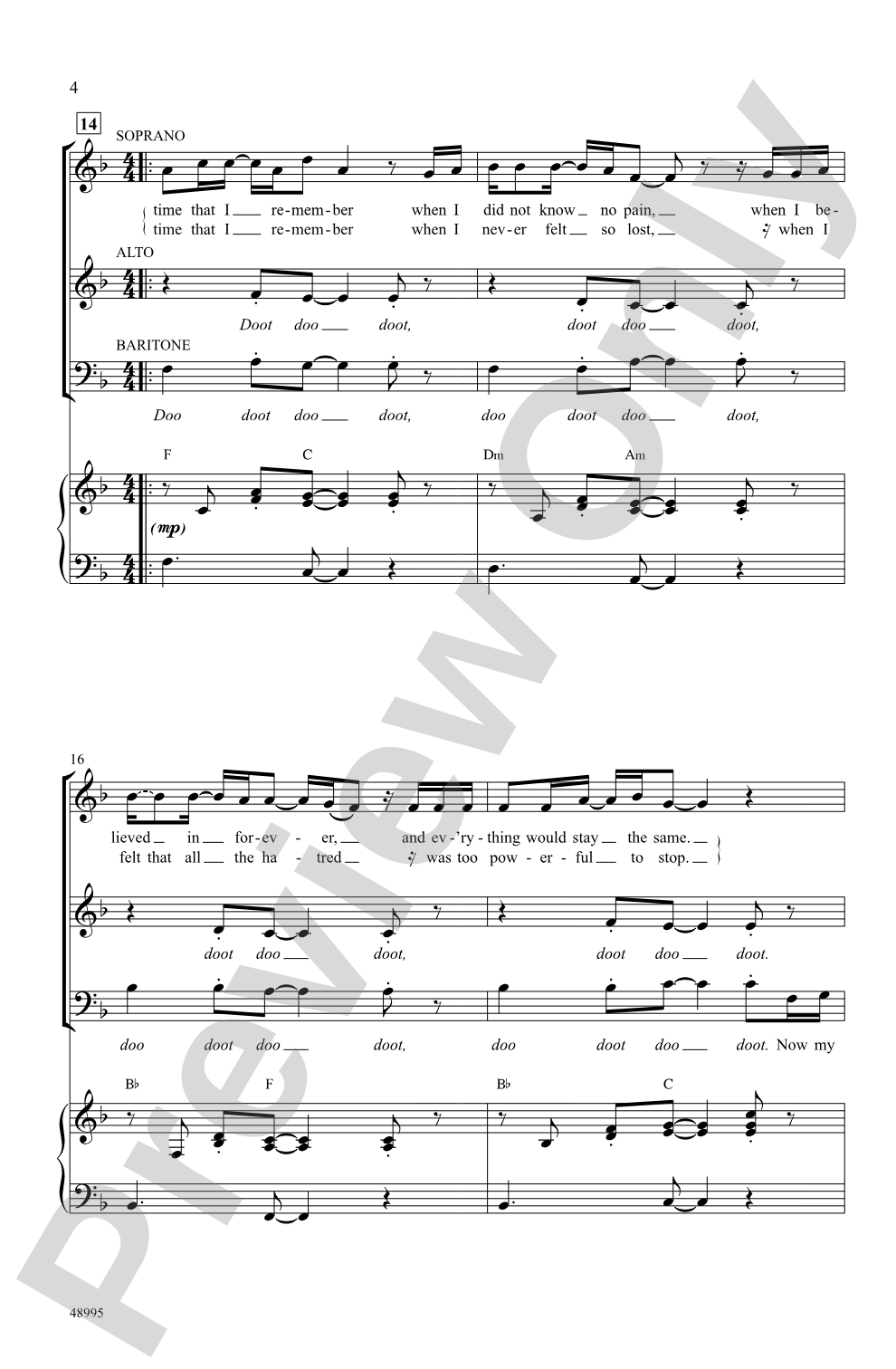

Memories: SAB Choral Octavo
Words and music by Michael Pollack, Jordan Kendall Johnson, Vincent Ford, Stefan Johnson, Jonathan Bellion, Jacob Hindlin, and Adam Levine / arr. Andy Beck
Item: 00-PO-0006832

$2.10
Minimum order quantity: 20 copies
One moment…
Related Items
Memories: SoundTrax Digital Audio Download |
$29.99
|
View | |
Memories: SATB Choral Octavo |
$2.10
|
View | |
Memories: TTBB Choral Octavo |
$2.10
|
View | |
Memories: 2-Part Choral Octavo |
$2.10
|
View | |
Memories: SATB Choral Octavo |
$2.10
|
View | |
Memories: SAB Choral Octavo |
$2.10
|
View | |
Memories: TTBB Choral Octavo |
$2.10
|
View | |
Memories: 2-Part Choral Octavo |
$2.10
|
View | |
Memories: Choral Octavo SoundTrax CD |
$29.99
|
View |
Description
Maroon 5 has perfected their pop song template---a catchy tune, memorable hook, and genuine, relatable lyrics. Toss in hints of Pachelbel's "Canon in D" and you have an undeniable hit. This well-crafted arrangement sets a few accompanimental guitar figures in the voices, and offers some subtle text adaptations for all occasions. It's a perfect choice any time, but especially effective for end-of-year events, marking a changing era with heartfelt emotion. Download PartTrax MP3s for all the audio you need to rehearse and perform the SATB and 2-Part voicings. Each PartTrax package includes full performance, accompaniment only, and part-predominant mixes of every voice part. This title is available in MakeMusic Cloud.


Don't just read it, hear it, play along with it, and watch your students grow with it. In MakeMusic Cloud, Memories: SAB Choral Octavo comes alive with professional accompaniment, adjustable tempo, and built-in practice tools that turn solo practice into real progress.
Open in the Player
Jump straight in and assign it today.
Start Your Free Trial
Open this title and explore the full library in minutes.
Sample Audio
1
Audio File
--:--
0:00
0:00
Sample Video
Additional Details
Series:
Alfred Pop Choral Series
Publisher:
Alfred Music
Page Count:
12
SKU:
00-PO-0006832
More about this title
About the Composer: Michael Pollack
Michael Pollack is a composer and arranger whose work spans popular music adaptation and choral writing. His arrangements for the Alfred Pop Choral Series demonstrate a keen ear for translating contemporary hits into singable, engaging voicings that maintain the soul of the original while serving the needs of developing ensembles.
Why we love this
This arrangement captures what makes Maroon 5's original so effective: immediate melodic appeal and emotional authenticity. The subtle integration of Pachelbel's harmonic DNA into a contemporary pop context gives singers something musically substantive to engage with, while the guitar-inspired voice writing keeps the texture fresh and performance-ready without overwhelming a three-part mixed ensemble.
What to expect
Warm and reflective, with an undercurrent of genuine longing. The harmonic language draws from classical anchoring while the pop idiom keeps everything immediate and accessible. There's a poignant quality throughout, making it especially potent for moments marking transition or closure.
Who it's for
Choirs at the intermediate level and above who want to program contemporary music with substance. This works equally well for school choirs, community groups, and church ensembles seeking a piece that engages singers and audiences through both musical craft and emotional resonance.
How to get the most out of it
- Balance the hook carefully across all three parts so the catchiness lands without any voice overpowering the others. This arrangement distributes the memorable moments strategically, so trust the voicing.
- Use the PartTrax accompaniment-only mix in rehearsal to lock the choir's tuning to the guitar figures embedded in the arrangement. The harmonic foundation lives in those voices, not just the accompaniment.
- Shape the lyrics with specificity around the relatable moments. This song works because listeners connect to genuine emotion, so encourage your singers to inhabit the text rather than simply execute the notes.
How to use it
Program this for spring concerts, year-end celebrations, or any event acknowledging change or passage. The emotional landscape pairs well alongside lighter pop arrangements or more serious classical repertoire, and its accessibility makes it a strong closer that resonates with both singers and audience members.
Skills your students will build
- Balancing contemporary pop voicing with classical harmonic structure
- Singing layered melodic figures that include guitar-inspired rhythmic patterns
- Interpreting text with emotional authenticity in a secular context
- Tuning tertian harmonies derived from Baroque progressions