
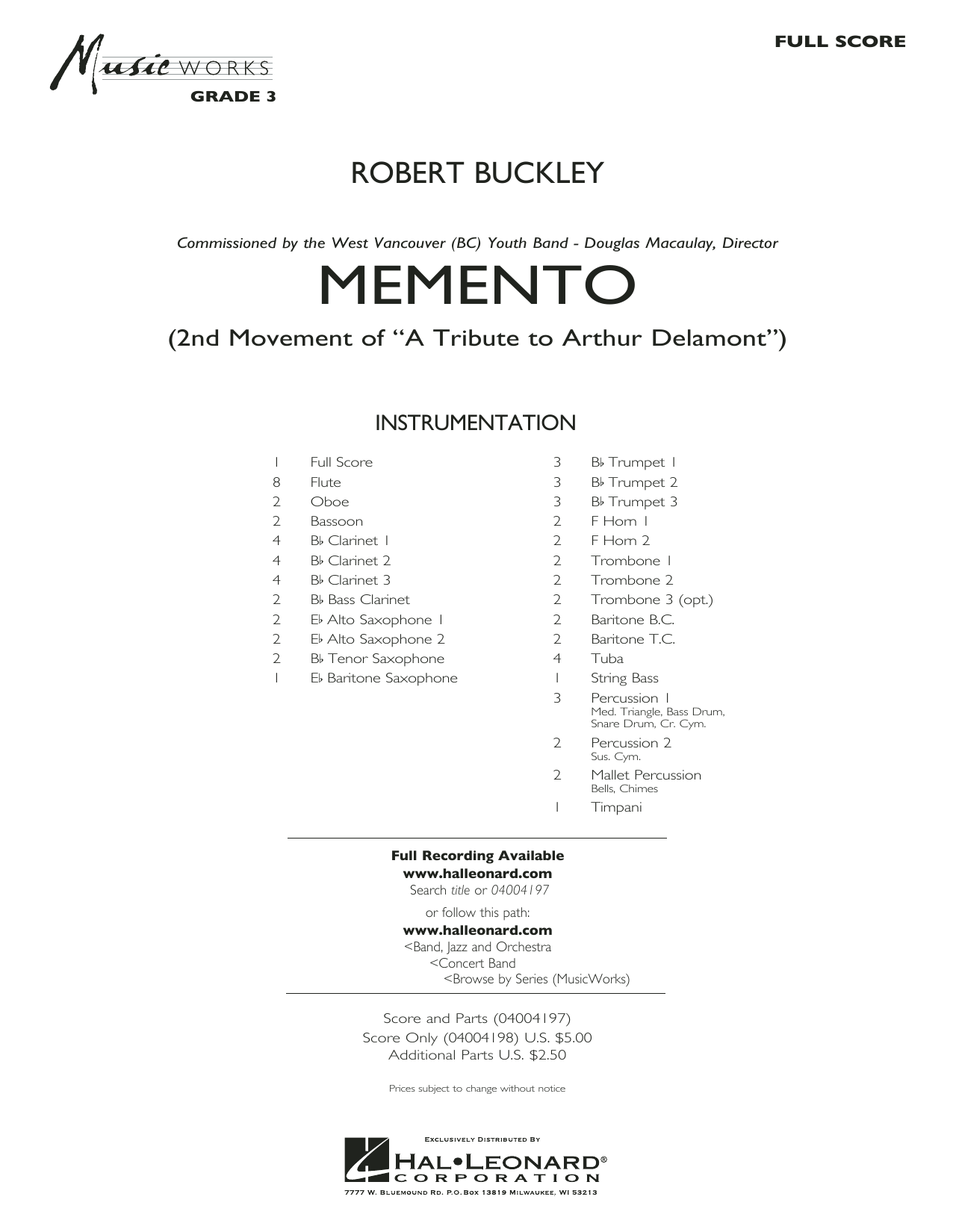

Memento: Concert Band Conductor Score & Parts
By Robert Buckley
Grade: 3
Item: 35-PK00306804
$65.00
Pickup currently not available
Buy Extra Parts (Digital PDF Download)
| Product | Price | Quantity |
|---|---|---|
| Memento - Conductor Score (Full Score) | $6.00 | |
| Memento - Flute | $6.00 | |
| Memento - Oboe | $6.00 | |
| Memento - Bassoon | $6.00 | |
| Memento - Bb Clarinet 1 | $6.00 | |
| Memento - Bb Clarinet 2 | $6.00 | |
| Memento - Bb Clarinet 3 | $6.00 | |
| Memento - Bb Bass Clarinet | $6.00 | |
| Memento - Eb Alto Saxophone 1 | $6.00 | |
| Memento - Eb Alto Saxophone 2 | $6.00 | |
| Memento - Bb Tenor Saxophone | $6.00 | |
| Memento - Eb Baritone Saxophone | $6.00 | |
| Memento - Bb Trumpet 1 | $6.00 | |
| Memento - Bb Trumpet 2 | $6.00 | |
| Memento - Bb Trumpet 3 | $6.00 | |
| Memento - F Horn 1 | $6.00 | |
| Memento - F Horn 2 | $6.00 | |
| Memento - Trombone 1 | $6.00 | |
| Memento - Trombone 2 | $6.00 | |
| Memento - Trombone 3 | $6.00 | |
| Memento - Baritone B.C. | $6.00 | |
| Memento - Baritone T.C. | $6.00 | |
| Memento - Tuba | $6.00 | |
| Memento - String Bass | $6.00 | |
| Memento - Percussion 1 | $6.00 | |
| Memento - Percussion 2 | $6.00 | |
| Memento - Mallet Percussion | $6.00 | |
| Memento - Timpani | $6.00 |
Parts Added to Cart!
Description
Famed bandmaster Arthur Delamont always programmed a hymn in his concerts and "Memento" is an homage to that proud tradition. Starting with a simple and reverent solo trumpet and introducing other brass instruments one by one, the introduction has the sound of a brass band. The woodwinds join in and, with the use of rich textures and dynamic scoring, the work builds to a powerful climax and then resolves once again with the solo trumpet. Ideal for festival use, "Memento" will give your ensemble an opportunity to explore expression and nuance. The second movement of "A Tribute to Arthur Delamont", "Memento" was commissioned by the West Vancouver Youth Band. Dur: 4:00


Discover MakeMusic Cloud: thousands of interactive titles your students can play along with today.
Sample Audio
No sample audio found.
Sample Video
Additional Details
Publisher:
Hal Leonard
SKU:
35-PK00306804
More about this title
About the Composer: Robert Buckley
Robert Buckley is a Canadian composer whose works for concert band span sacred and secular traditions. His compositions demonstrate a deep respect for band history and pedagogy, often drawing inspiration from the great bandmasters who shaped the ensemble's repertoire. Buckley's commissions for youth ensembles reflect his commitment to creating music that challenges young musicians while remaining accessible and musically rewarding.
Why we love this
Buckley's orchestration here unfolds with real intelligence. Rather than starting thick and loud, he trusts a solo trumpet to establish the emotional foundation, then layers brass and woodwinds deliberately. It's a masterclass in restraint that still builds to something genuinely moving. For festivals, this gives adjudicators something substantial to hear while your ensemble gets to work on the control and balance that separate competent playing from expressive playing.
What to expect
The opening carries the quiet dignity of a brass band tradition, reflective and intimate. As the piece unfolds, it gathers warmth and resonance, culminating in a moment of genuine power before settling into a contemplative close. There's a reverence woven throughout, never sentimental but deeply sincere.
Who it's for
Grade 3 ensembles ready to move beyond note-reading into real musical interpretation. Bands preparing for festival competition or concert programming will find a piece that's legitimate and rewarding without excessive technical demands.
How to get the most out of it
- Shape the opening trumpet solo with a singing tone and clear phrasing; this is the work's emotional anchor, so resist rushing even though it sits alone.
- Balance the brass as each voice enters during the introduction. Each new instrument should emerge clearly without overwhelming the texture that precedes it.
- Attend to the dynamic trajectory from climax back to the final trumpet statement. This resolution requires as much discipline and attention as the build itself.
- Use the full dynamic and articulative range your ensemble can muster in the middle section. This music earns its power through textural variety, not volume alone.
How to use it
This works beautifully as an opening number for a concert, setting a thoughtful tone and giving your ensemble time to settle into ensemble balance before moving into more extroverted repertoire. It also pairs naturally with other works of concert or celebratory character, creating a program that shows range and maturity.
Skills your students will build
- Phrasing and expression in sustained textures
- Balance and blend across brass and woodwind sections
- Dynamic control through a complete arc (quieter opening to climax to resolution)
- Ensemble listening and intonation adjustment as voices layer in
- Solo playing under pressure (trumpet part in opening and closing)