
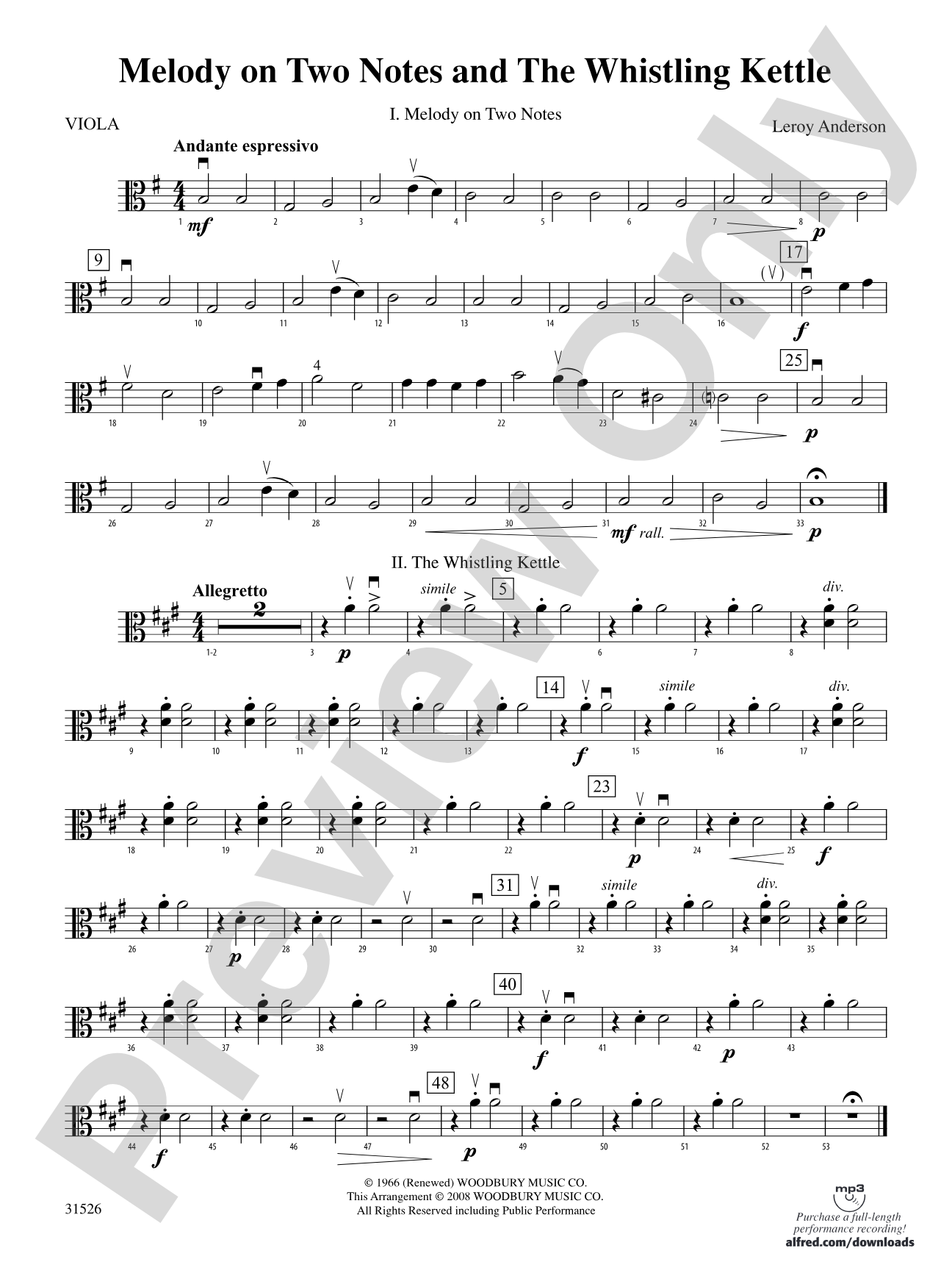

Melody on Two Notes and The Whistling Kettle: Viola
By Leroy Anderson
Grade: 2
Item: 00-PC-0015736_VA1
$5.99
Pickup currently not available
Description
What fun! With typical tongue-in-cheek humor, these two short and easy pieces will become an adorable addition to the school repertoire. Presented here as a two-movement piece, the first tune passes the simple two-note melody between sections, all very easy with a few more challenging notes for the first violins. The second piece also features the first violins and is very playable for second year students. Play them together or individually for a brief but cute interlude!


Don't just read it, hear it, play along with it, and watch your students grow with it. In MakeMusic Cloud, Melody on Two Notes and The Whistling Kettle: Viola comes alive with professional accompaniment, adjustable tempo, and built-in practice tools that turn solo practice into real progress.
Open in the Player
Jump straight in and assign it today.
Start Your Free Trial
Open this title and explore the full library in minutes.
Sample Audio
1
Audio File
--:--
0:00
0:00
Sample Video
No sample videos found.
Additional Details
Series:
Pop Beginning String Orchestra
Publisher:
Alfred Music
Page Count:
104
SKU:
00-PC-0015736_VA1
More about this title
About the Composer: Leroy Anderson
Leroy Anderson (1908-1975) was an American composer and conductor whose gift for orchestration and melodic invention made him one of the most frequently performed composers in school music programs. His works span from full orchestral suites to accessible arrangements for young ensembles, all marked by clever counterpoint, bright harmonic color, and a playful approach to musical storytelling.
Anderson's output for education includes dozens of pieces that challenge students without overwhelming them. His writing for strings is particularly valued because it sits squarely in the sweet spot between fun and musical substance. Teachers and conductors return to his catalog year after year because the music teaches while it entertains.
Why we love this
Anderson delivers genuine charm without condescension here. These two pieces work equally well as standalone moments or as a complete mini-suite, giving you flexible programming options for a short concert slot. The orchestration lets every section shine while keeping the technical demands aligned with what second-year students can actually handle.
What to expect
The first movement has a sprightly, conversational quality as the melody bounces between sections like a friendly game of musical catch. 'The Whistling Kettle' brings a whimsical, almost nostalgic warmth, with the first violins carrying a tuneful line that feels both simple and genuinely singable. Together, these pieces create a brief but satisfying musical vignette that leaves audiences smiling.
Who it's for
String orchestra directors working with Grade 2 ensembles who want material that engages students without requiring advanced technique. This package works for teachers seeking short, complete pieces for concert programming or festival play, and for ensembles looking to build confidence through charming, musically coherent repertoire.
How to get the most out of it
- Shape the two-note melody in the first movement with attention to which section holds it. Subtle dynamic contouring as the tune passes between violins, violas, and cellos prevents the piece from sounding mechanical.
- In 'The Whistling Kettle,' support the first violins with a warm, singing tone from the lower strings. The accompaniment pattern benefits from consistency in articulation and release.
- Balance the full ensemble carefully so that the simple melodies remain audible. Resist the urge to pile on bow weight when sections double the line.
- Consider the two movements as contrasting moods. Allow a clear breath or brief pause between them so the audience registers the shift.
How to use it
Program these as a paired encore or mid-concert palate cleanser between weightier works. The two-movement format allows you to present them as a complete unit or to split them across different concerts if your spring schedule is tight. They work particularly well in contexts calling for short, accessible pieces that demonstrate student progress without demanding a full rehearsal period.
Skills your students will build
- Melodic phrasing and shaping across section changes
- Balanced ensemble playing with simple two-note material
- Articulation consistency in repeated accompaniment patterns
- Reading in first and second positions (early first violin material)
- Listening and responding to dynamic and tonal cues from other sections