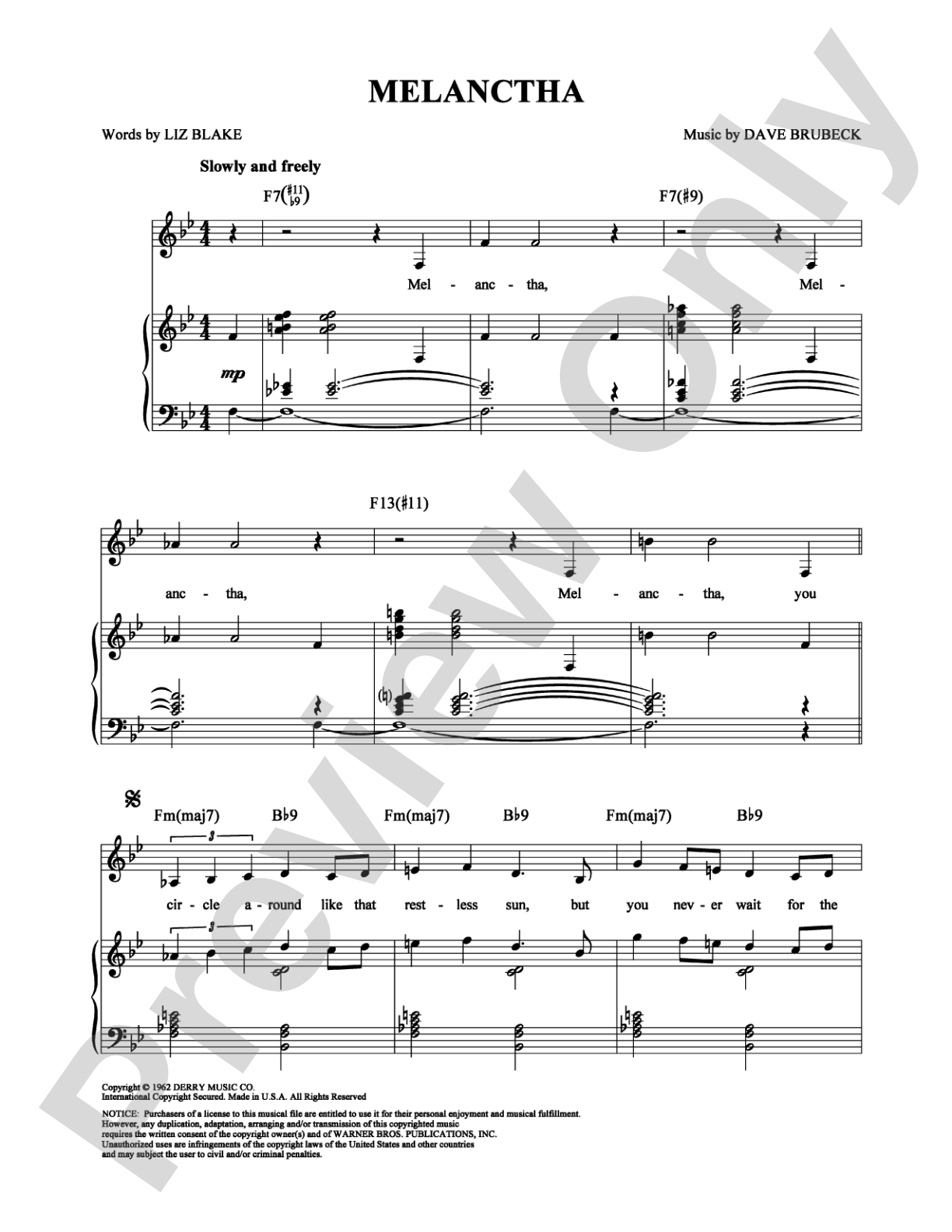
Melanctha: Piano/Vocal/Chords Digital Sheet Music

Melanctha: Piano/Vocal/Chords Digital Sheet Music

Dave Brubeck

Item: 00-PS-0000805

Digital Download
$3.99
Description

Melanctha: Piano/Vocal/Chords Digital Sheet Music isn't in MakeMusic Cloud just yet...but it could be. Let us know you'd like to see it, and you'll help shape what comes next. In the meantime, start a free trial and dive into thousands of interactive titles your students can play along with today.

Sample Audio
No sample audio found.
Sample Video
Additional Details
SKU: 00-PS-0000805

More about this title

About the Artist: Dave Brubeck

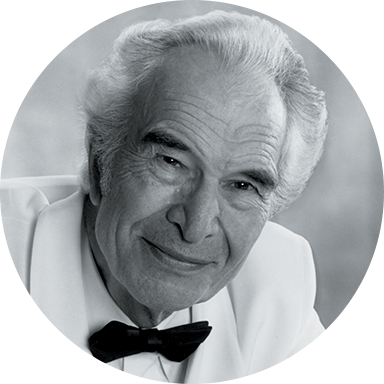
Dave Brubeck

Dave Brubeck was a pianist whose compositions bridged jazz idiom and classical forms with equal fluency. Beyond his improvisational gifts, he crafted a vast catalog spanning choral works, orchestral pieces, chamber music, and solo compositions. His album "Time Out" became the first jazz record to reach a million in sales, and "Take Five" remains an enduring standard.

Brubeck studied composition with Darius Milhaud after World War II, absorbing both modernist technique and an encouragement to synthesize jazz language into concert music. His sacred works, including the mass "To Hope!" and oratorios recorded by the London Symphony Orchestra, have circulated globally. Beyond music, Brubeck's integrated ensembles and public advocacy helped dismantle racial barriers in American jazz during the mid-twentieth century. He received the Presidential Medal of the Arts and a Grammy Lifetime Achievement Award.

Why we love this

Brubeck's vocal writing balances jazz sophistication with genuine singability, and "Melanctha" exemplifies his gift for weaving complex harmonies into melodies that don't feel overwrought. The chord symbols invite pianists to interpret and embellish, making every performance feel fresh while the notated melody keeps singers grounded. It's a piece that respects both the classical tradition and the improvisatory spirit.

What to expect

"Melanctha" carries a reflective, melancholic mood that unfolds with understated sophistication. The harmonic language suggests sadness without sentimentality, using the chromatic flexibility of jazz to color emotional depth and create moments of subtle tension and release.

Who it's for

Singers who want to explore jazz repertoire beyond standards, pianists comfortable with chord-symbol notation and jazz voicing, and performers seeking a thoughtful, introspective addition to a recital or vocal program. This works for intermediate to advanced singers with jazz sensibility.

How to get the most out of it

  • Treat the chord symbols as harmonic guideposts rather than fixed voicings; Brubeck's jazz roots mean you have interpretive freedom in how you voice the accompaniment.
  • Balance the singer's emotional line with sensitive comping; this is a ballad-like piece that needs space and breath, not constant harmonic activity.
  • Explore rubato in the vocal phrasing without rushing the underlying harmonic progression; the piano should support gentle time flexibility from the voice.

How to use it

Program this alongside other jazz standards or vocal jazz arrangements for a set that highlights the intersection of composition and improvisation. It also pairs well with classical vocal repertoire in a recital that explores how twentieth-century composers bridged genres, offering a compelling contrast to art song or operatic selections.

Skills your students will build

  • Jazz harmonic interpretation from chord symbols
  • Phrasing and rubato within a jazz context
  • Balancing notated melody with improvisatory style
  • Collaboration between vocalist and pianist in jazz idiom

You May Also Like