
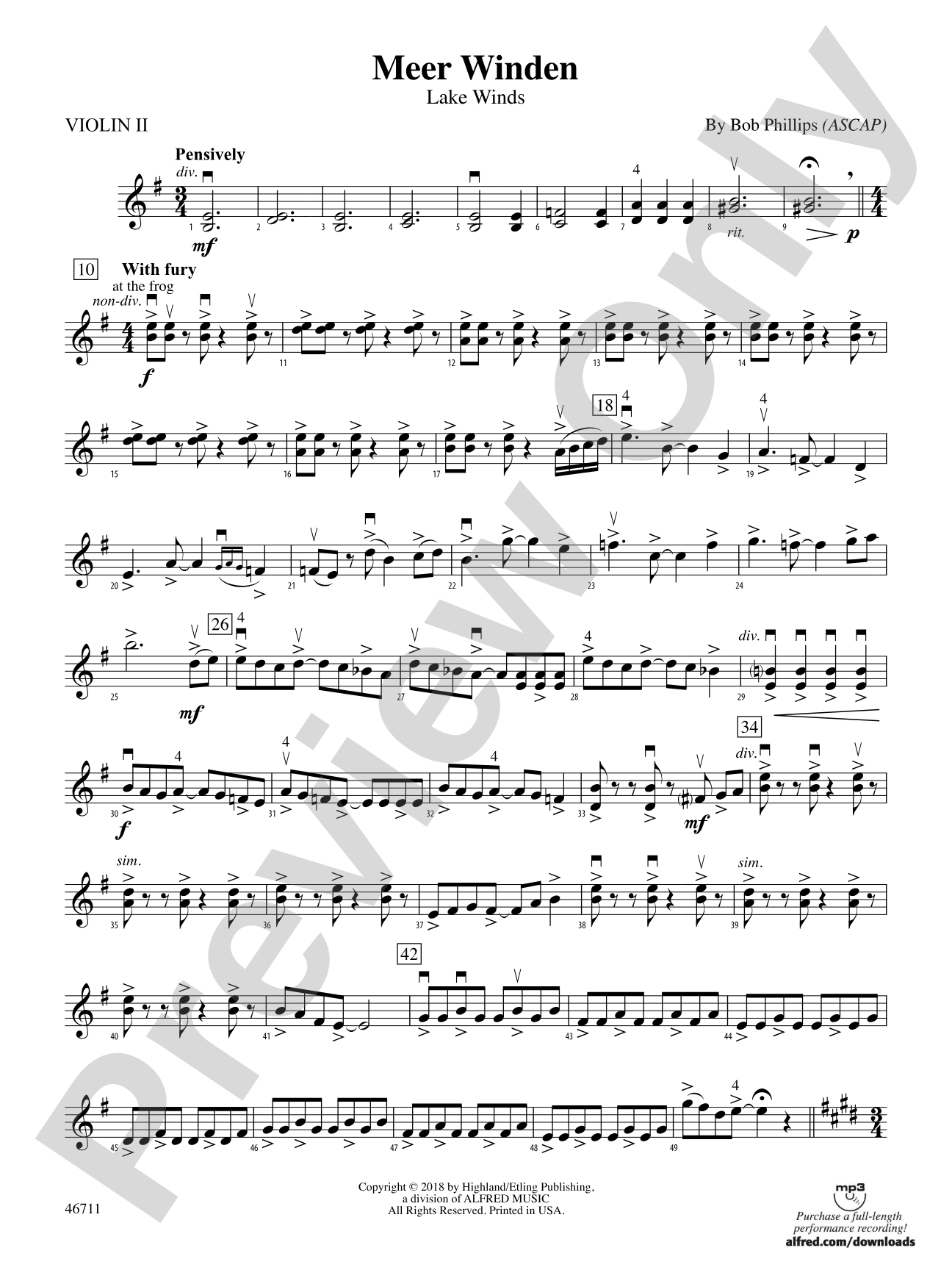

Meer Winden: 2nd Violin
Lake Winds
By Bob Phillips
Grade: 3
Item: 00-PC-0017846_VN2
$5.99
Pickup currently not available
Description
Reflecting the energy and drive of the furious winds of November on Lake Michigan, this original work will resonate with anyone ever caught in a storm. The strong Dutch heritage of West Michigan bestows the name Meer Winden, "lake winds" in Dutch, and provides a story to the technical and musical elements of the piece. All sections play the melody and the driving accompaniments. Violins and violas use third position; violas and cellos use fourth position. "Meer Winden," by Bob Phillips, provides ample opportunity for working on tone within the ensemble.


Don't just read it, hear it, play along with it, and watch your students grow with it. In MakeMusic Cloud, Meer Winden: 2nd Violin comes alive with professional accompaniment, adjustable tempo, and built-in practice tools that turn solo practice into real progress.
Open in the Player
Jump straight in and assign it today.
Start Your Free Trial
Open this title and explore the full library in minutes.
Sample Audio
1
Audio File
--:--
0:00
0:00
Sample Video
Additional Details
Series:
Highland/Etling String Orchestra
Publisher:
Alfred Music
Page Count:
124
SKU:
00-PC-0017846_VN2
More about this title
About the Composer: Bob Phillips

Bob Phillips (b. 1953) has shaped string education through decades of conducting, composing, and pedagogical innovation. A former director of the Saline string program, which grew to over 700 students and became a national model, Phillips has published more than 200 works for orchestra and band while authoring the widely adopted Sound Innovations series and eclectic style collections including Jazz Philharmonic, Rock Philharmonic, and Mariachi Philharmonic. His work has earned ASCAP recognition and regular performances at the Midwest Clinic.
Phillips founded the Saline Fiddlers Philharmonic, an ensemble that performed internationally and at the White House, and has conducted at youth symphonies and all-state orchestras across the country. His instructional DVDs and clinics have reached thousands of teachers, cementing his reputation as one of today's most influential voices in string pedagogy.
Why we love this
Meer Winden uses a compelling program (the violent November storms that sweep Lake Michigan) to justify every technical demand, so students understand exactly why they're working on third and fourth positions rather than tackling them in isolation. The shared melody across all sections builds ensemble cohesion while the layered accompaniments create genuine musical texture; conductors find that students listen across parts naturally because the writing demands it.
What to expect
Raw energy channeled through controlled technique. The piece captures the relentless power of a November squall, with all sections driving forward together, each voice contributing to the storm's mounting intensity. Tone and ensemble balance emerge as musical priorities rather than technical exercises, making the work feel urgent and alive.
Who it's for
String orchestras at the Grade 3 level ready to consolidate higher positions and blend multiple voices into a unified sound. This work suits ensembles looking for programmatic material that motivates technical work through storytelling and creates a natural showpiece for contests or concert closers.
How to get the most out of it
- Establish a clear pulse before rehearsal that reflects the relentless, driving nature of the wind; students will anchor their phrasing and dynamics to that tempo.
- Work the transitions between positions slowly with the full ensemble, addressing intonation adjustments together so the shift feels seamless rather than tentative.
- Balance the melody across all sections carefully; because everyone plays it at different points, rotating which section leads will prevent any one line from dominating.
- Shape the accompaniment patterns dynamically to suggest movement and turbulence; the technical work pays off when the turbulence sounds intentional.
How to use it
Open a concert with this piece to establish energy and focus from the first moments, or close one with its dramatic arc and full orchestral sound. Its programmatic strength and technical currency make it a natural fit for festival and contest settings where judges reward both musicianship and student growth.
Skills your students will build
- Shifting to and maintaining third position on violins and violas
- Shifting to and maintaining fourth position on violas and cellos
- Blending multiple melodic lines across the orchestra
- Dynamic control and phrasing in tutti passages
- Intonation accuracy during position transitions