
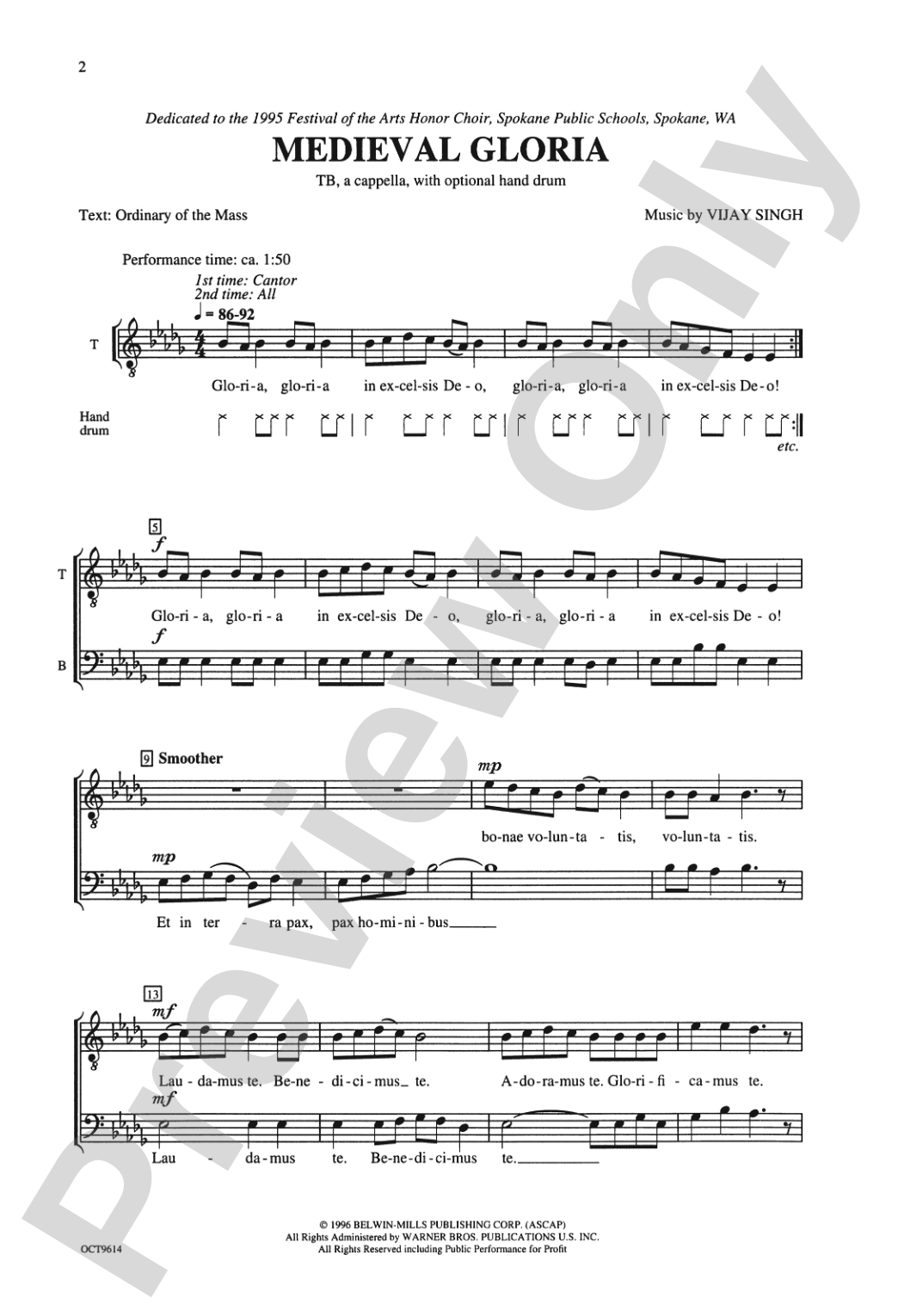

Medieval Gloria: TB, a cappella Choral Octavo
By Vijay Singh
Level: Moderate
Item: 00-PO-0002700
$2.00
Minimum order quantity: 20 copies
Pickup currently not available
Description
Ideally suited as a festival opener, processional or concert piece, this two-part work is available for either men's or treble ensemble. The polyphonic vocal lines combine with the use of an optional hand drum to add true medieval character. This piece adds a bit of programming variety to any concert!


Medieval Gloria: TB, a cappella Choral Octavo isn't in MakeMusic Cloud just yet...but it could be. Let us know you'd like to see it, and you'll help shape what comes next. In the meantime, start a free trial and dive into thousands of interactive titles your students can play along with today.
Request This Title
Tell us you want it.
Start Your Free Trial
Explore everything that's ready to play right now.
Sample Audio
1
Audio File
--:--
0:00
0:00
Sample Video
No sample videos found.
Additional Details
Series:
Belwin Festival Series
Publisher:
Alfred Music
Page Count:
4
SKU:
00-PO-0002700
Instrumentation:
Opt. Hand Drum
More about this title
Why we love this
Singh writes for real choirs, and this piece proves it. The polyphonic lines sit naturally for two-part singing without sacrificing musical substance, and the optional hand drum gives you a genuine medieval flavor without requiring percussion expertise from your ensemble. It's the kind of piece that sounds more complex than it is to learn, which means your singers stay engaged and your audiences hear something genuinely distinctive.
What to expect
Medieval Gloria captures the timeless quality of sacred vocal music without requiring complex harmony or extended vocal ranges. The polyphonic writing creates a sense of spiritual elevation, and when performed with the optional hand drum, the piece transports the listener to a different era entirely. It's contemplative and stately, yet approachable enough that young singers find joy in the execution.
Who it's for
Directors leading treble or men's choirs who want a substantial yet manageable contest or festival piece. The moderate difficulty level and four-page length make this accessible for singers aged 14 and up, whether you're preparing for a specific festival slot or adding variety to a mixed repertoire concert.
How to get the most out of it
- Balance the two vocal lines as equal voices rather than melody and accompaniment. Both parts deserve clear articulation and projection.
- If you include the hand drum, establish a steady pulse in rehearsal before the ensemble begins singing. The rhythm needs to lock in early so singers can anchor to it.
- Approach the polyphonic passages with attention to where each voice breathes. Mark breath points together to maintain phrase integrity across both lines.
- Let the a cappella texture create space and resonance. Avoid rushing; the piece's medieval character emerges from deliberate phrasing and thoughtful dynamics.
How to use it
Open a festival or concert with this piece to establish an elegant, thoughtful tone for the program. Its processional quality makes it equally effective as an entrance piece or as a bridge between contrasting sections of your concert. The liturgical character pairs well with other sacred repertoire or works exploring historical vocal traditions.
Skills your students will build
- Reading and balancing polyphonic lines in two-part texture
- Sustaining independence while listening to another vocal line
- Articulating early music style and historical context through performance
- Coordinating with optional percussion while maintaining a cappella integrity