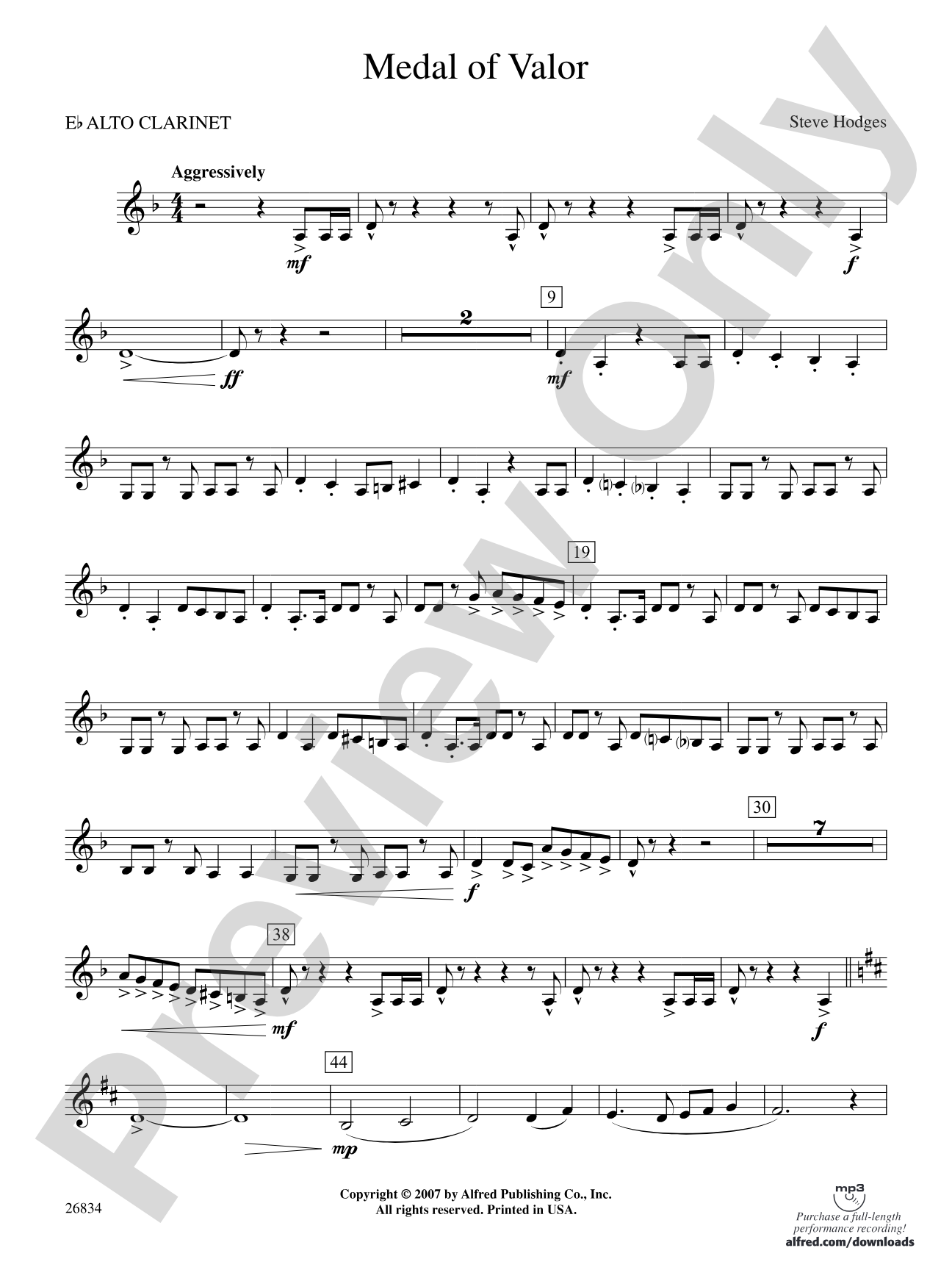
Medal of Valor: E-flat Alto Clarinet Sheet Music Preview

Medal of Valor: E-flat Alto Clarinet

By Steve Hodges

Grade: 3 (Medium)

Item: 00-PC-0001272_AC1

Digital Download
$3.00
Description
This dynamic march begins with a strong motif by the trumpets, accented by the woodwinds and low brass. The aggressive minor melody is passed from section to section and is supported by an active rhythmic accompaniment. The trio section provides a smooth, effective contrast before the piece transitions into an exciting 'dogfight' treatment of the opening trumpet motif. A modulation into the final presentation of the melody brings the march to a dramatic conclusion. An outstanding choice for concert or contest! This title is available in MakeMusic Cloud.

Don't just read it, hear it, play along with it, and watch your students grow with it. In MakeMusic Cloud, Medal of Valor: E-flat Alto Clarinet comes alive with professional accompaniment, adjustable tempo, and built-in practice tools that turn solo practice into real progress.

Sample Audio
0:00
0:00
Sample Video
Additional Details
Series: Alfred Concert Band
Publisher: Alfred Music
Page Count: 125
SKU: 00-PC-0001272_AC1

More about this title

About the Composer: Steve Hodges

Steve Hodges

Steve Hodges studied music education at Western Oregon University and Central Washington University, earning both Bachelor of Science and Master of Music Education degrees. He spent four decades directing bands, choirs, and small ensembles across public school levels before retiring from full-time teaching.

Since 1986, Hodges has composed and published over 120 concert band works through Alfred Music, establishing himself as a prolific voice in band literature. His music has appeared at state conventions and festivals worldwide, been commissioned by honor bands and schools from Virginia to British Columbia, and aired on TBS and ESPN. He holds membership in the American Society of Composers, Authors and Publishers (ASCAP) and continues to engage with community music in his home of The Dalles, Oregon.

Why we love this

Hodges understands what makes a march stick with students and audiences alike: clear melodic identity, strategic sectional writing, and genuine contrast that doesn't sacrifice forward motion. The 'dogfight' treatment in the final section gives your band a chance to play with real energy and urgency without becoming unmusical, and the trio provides that crucial breath before the climax.

What to expect

Medal of Valor opens with swagger: aggressive minor tonality and driving rhythm establish a martial attitude immediately. The trio shifts into calmer waters with its smooth melodic line before the 'dogfight' yanks you back into the action, building toward a final statement that feels earned rather than rushed.

Who it's for

Grade 3 bands preparing for concert or contest performance. This piece works equally well for groups looking for a strong march with contemporary energy or for ensembles building confidence with sectional independence and ensemble blend.

How to get the most out of it

  • Establish the trumpet motif with crisp articulation and confidence in the opening; this becomes your musical anchor throughout the entire piece, and clarity here makes every subsequent section land harder.
  • Balance the 'dogfight' section carefully so that all voices remain audible. The intensity comes from precision and rhythmic lock, not volume.
  • Shape the trio's smooth melody with long lines and warm tone; this section earns its contrast by offering genuine repose rather than simply playing softer.

How to use it

Place this in the second or third slot of a concert to establish your band's musicality and technical command without burning energy needed for longer works later in the program. It also makes a strong closer for contests, where a clear, energetic march with strong contrasts leaves an impression.

Skills your students will build

  • Balanced melodic line in the trio section through attention to phrase shape and dynamic arch
  • Sectional independence and rhythmic clarity within active accompaniment figures
  • Dynamic control in the 'dogfight' section where intensity requires precision, not just volume
  • Sectional transitions and passing of thematic material between instrumental groups
  • Minor key harmonic vocabulary and march form structure (exposition, trio, final statement)

You May Also Like