
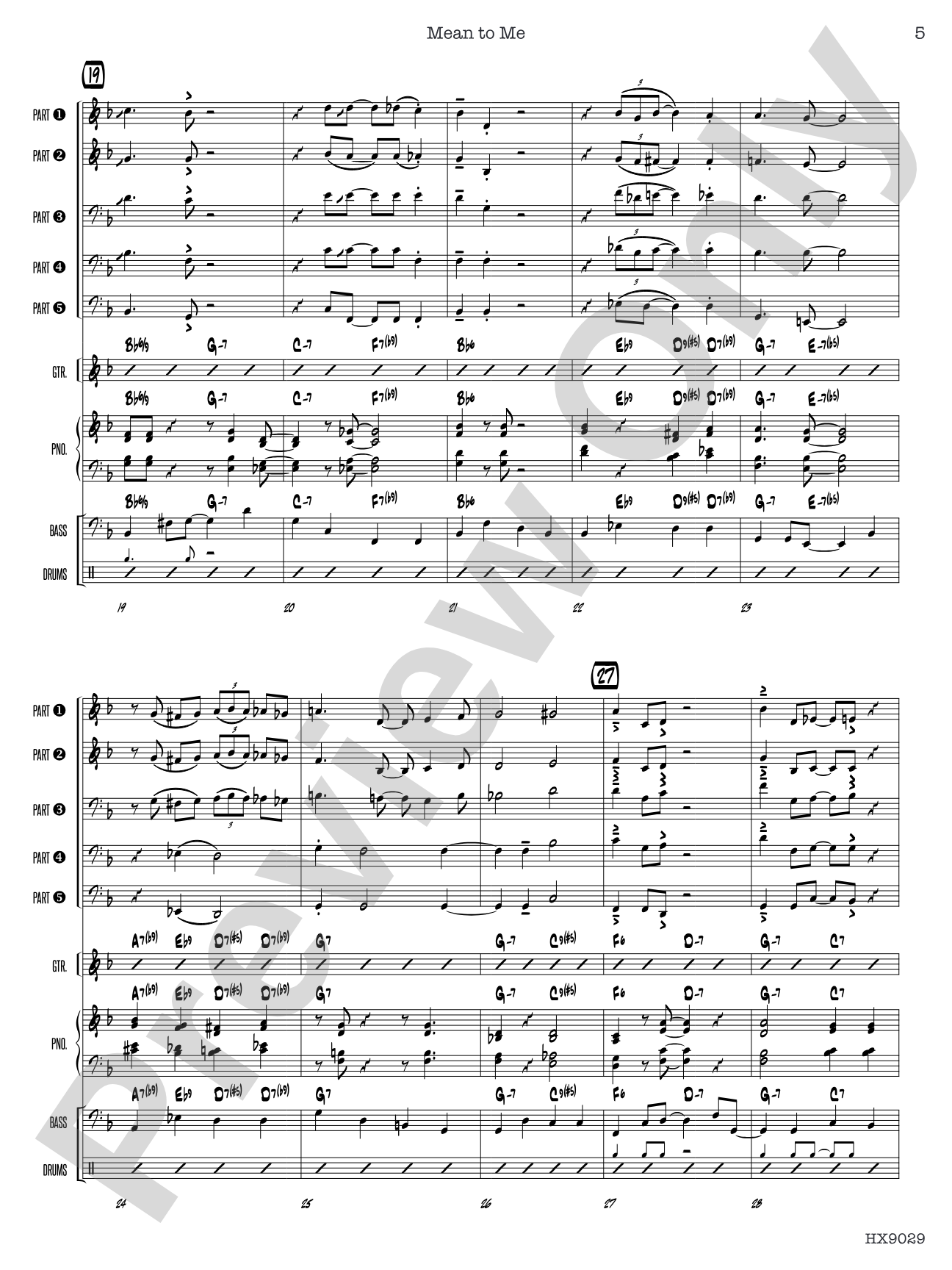
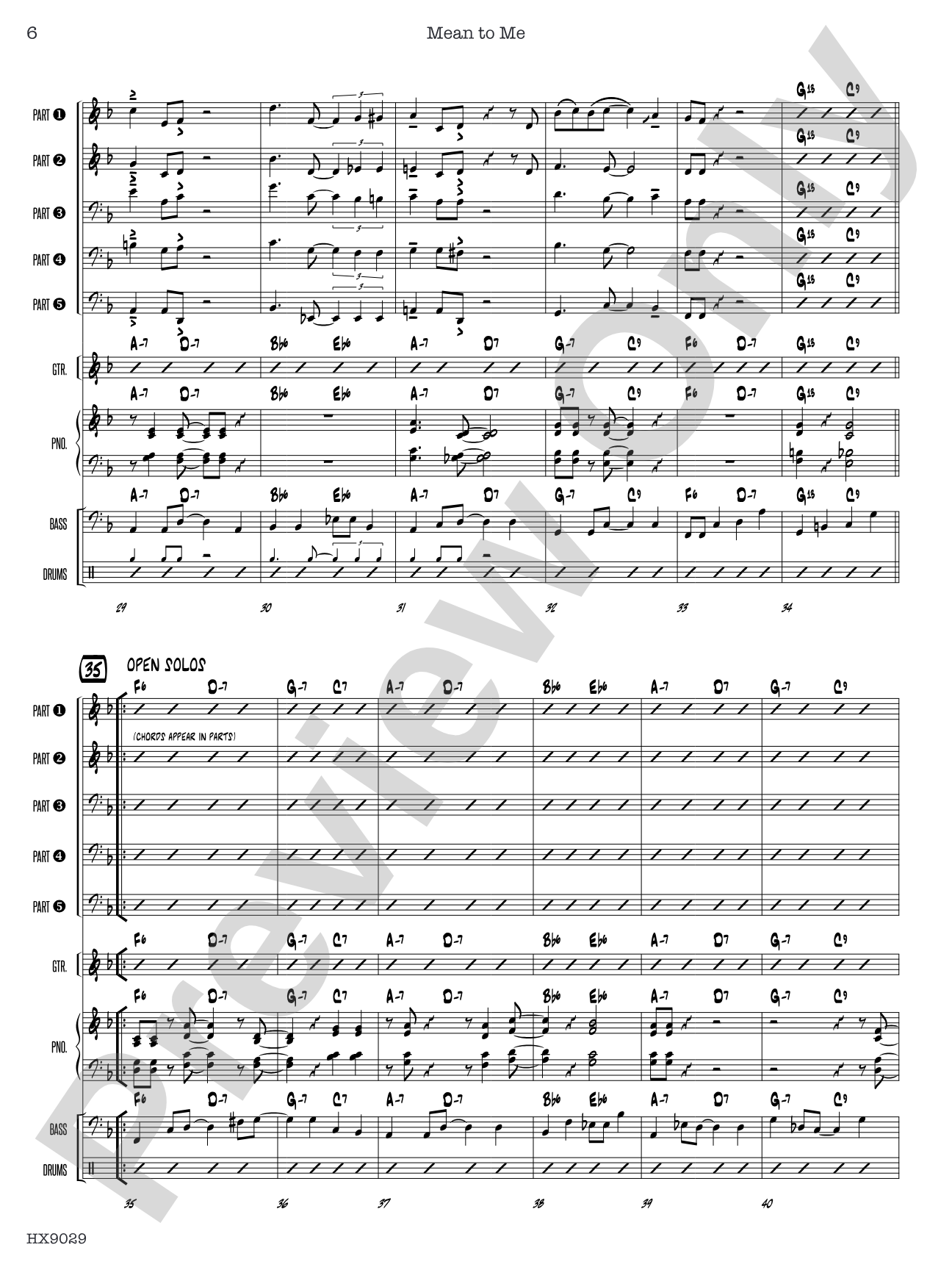
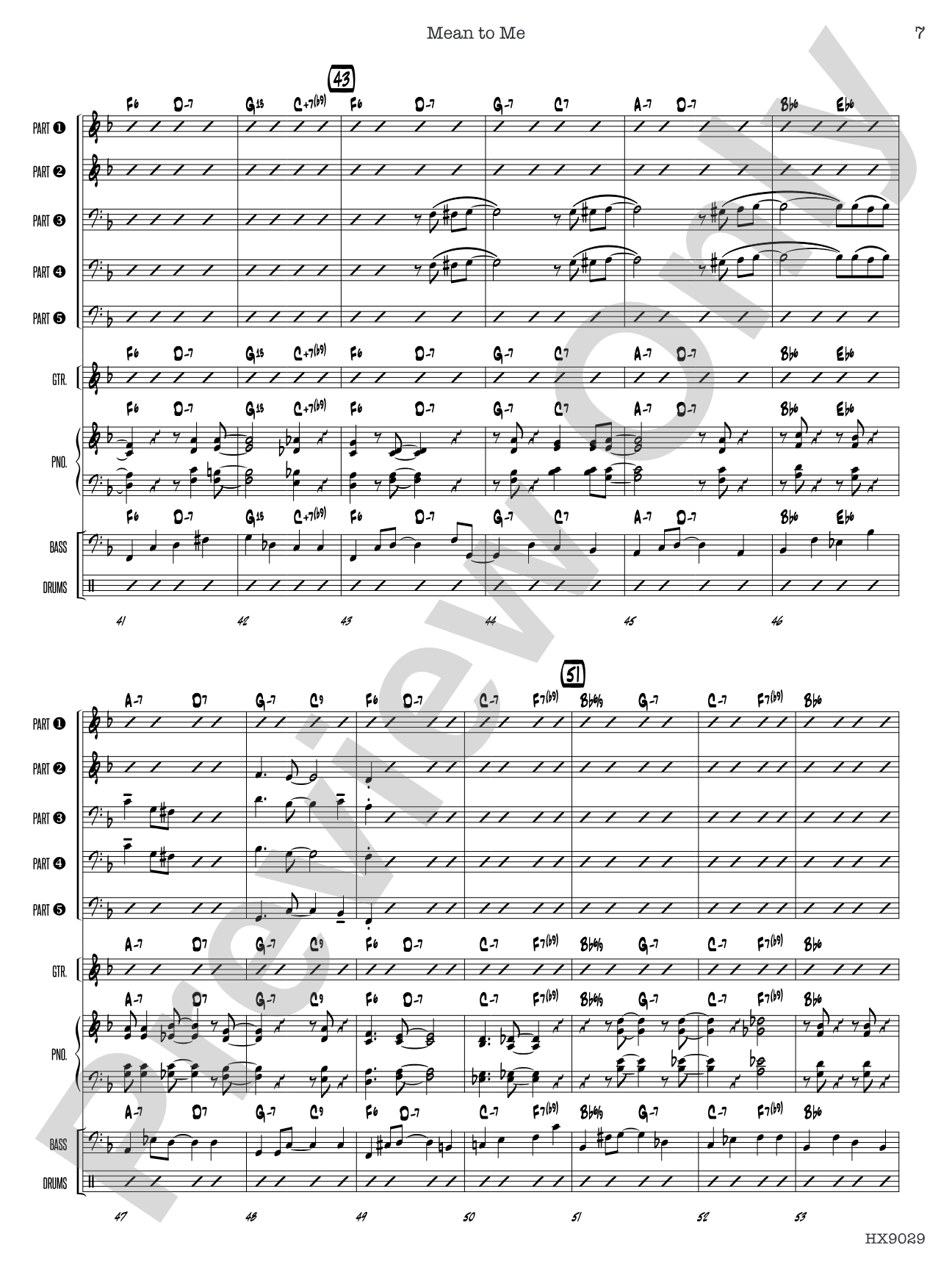
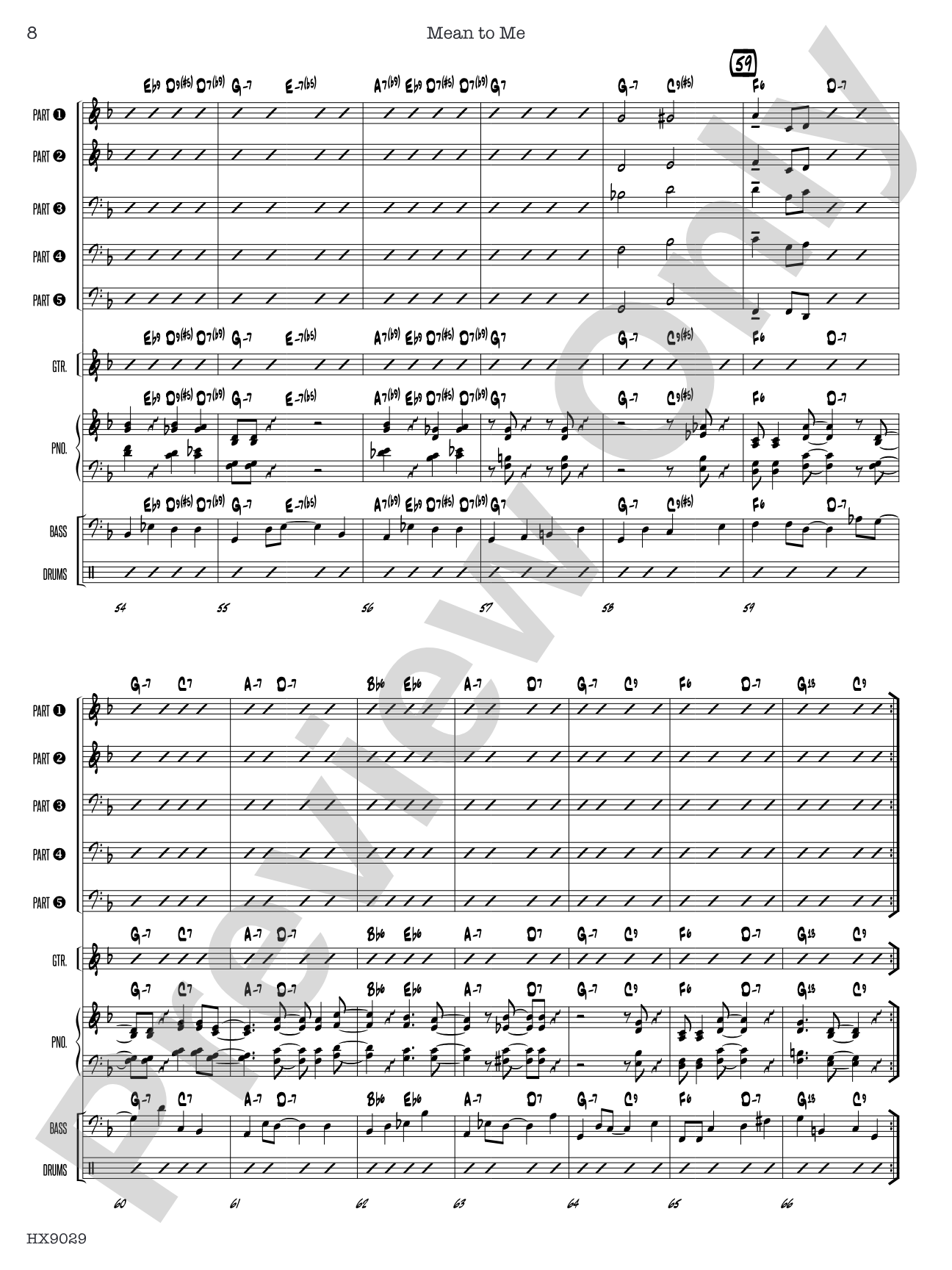

Mean to Me: Jazz Ensemble Conductor Score & Parts
Words and music by Roy Turk and Fred E. Ahlert / arr. Ryan Fraley
Item: 98-DHX9029
$50.00
One moment…
Description
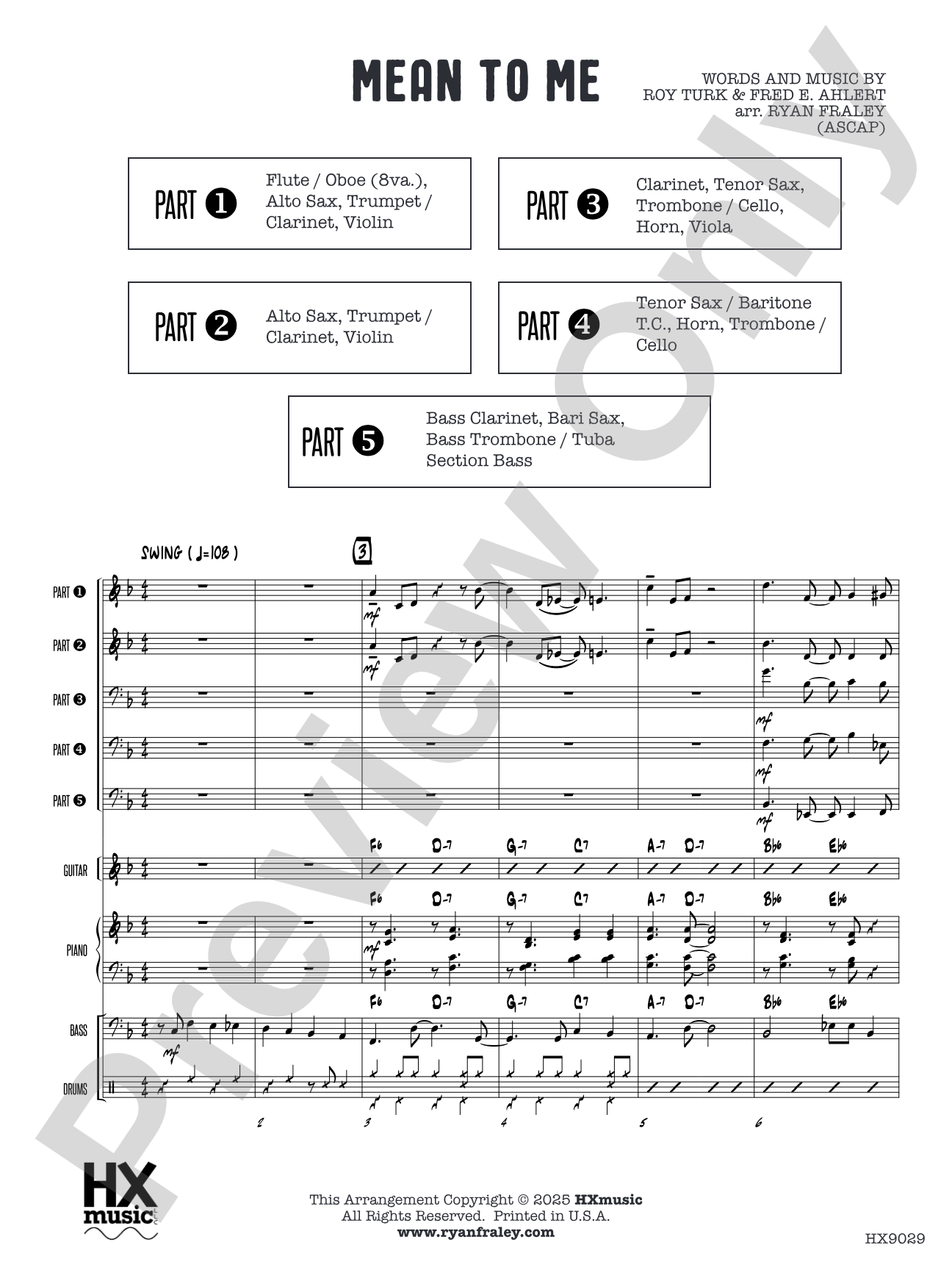
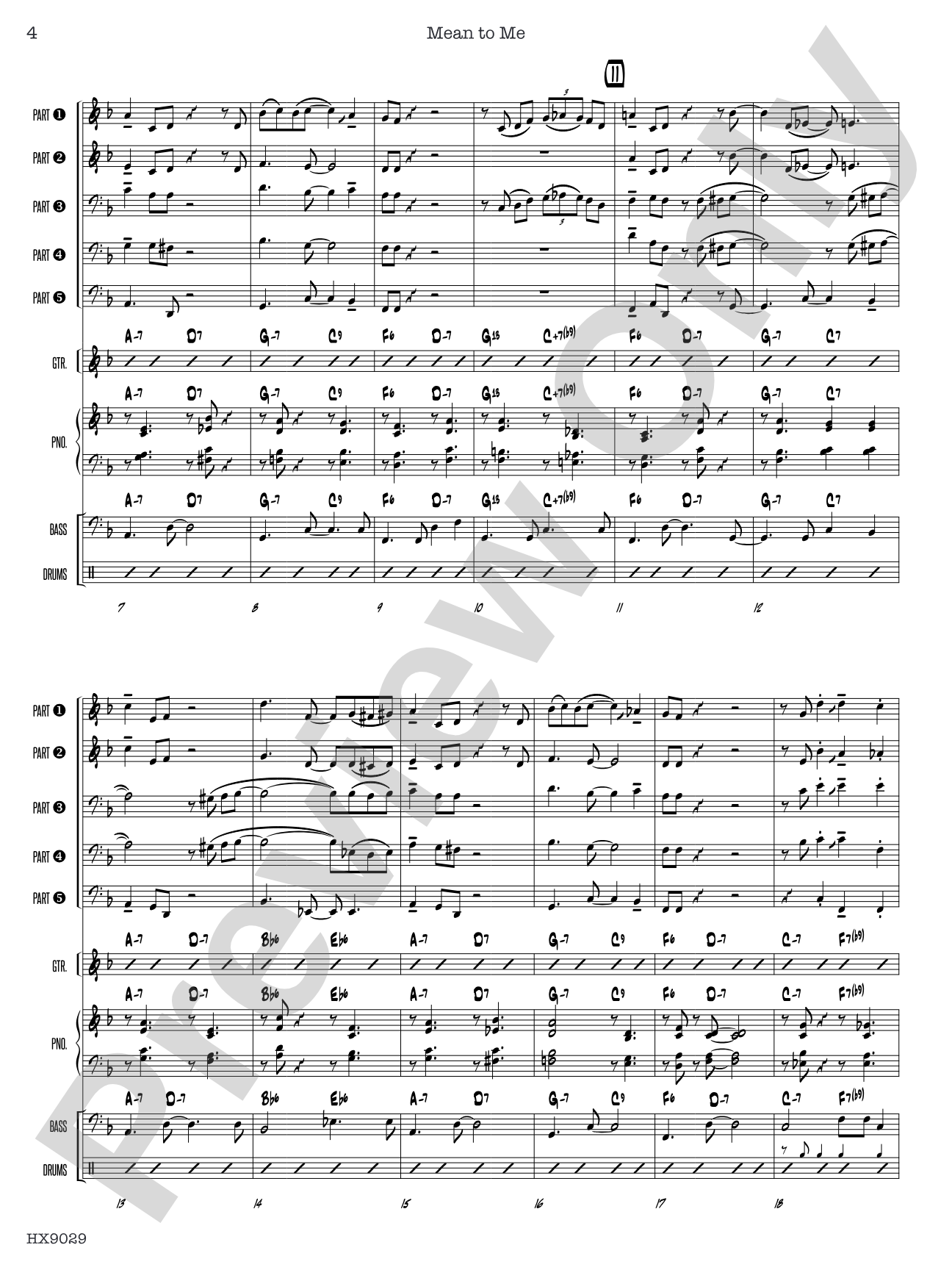
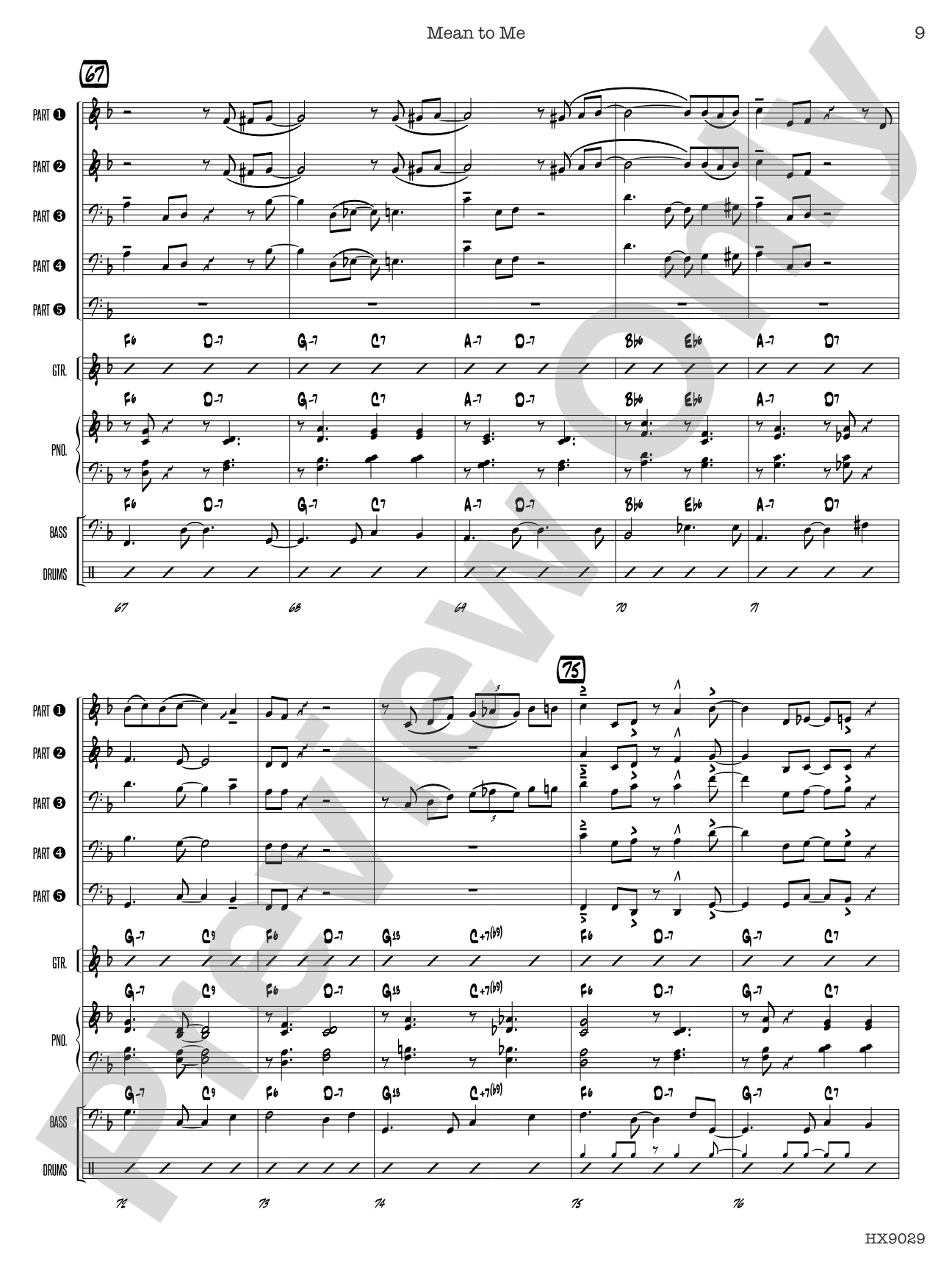
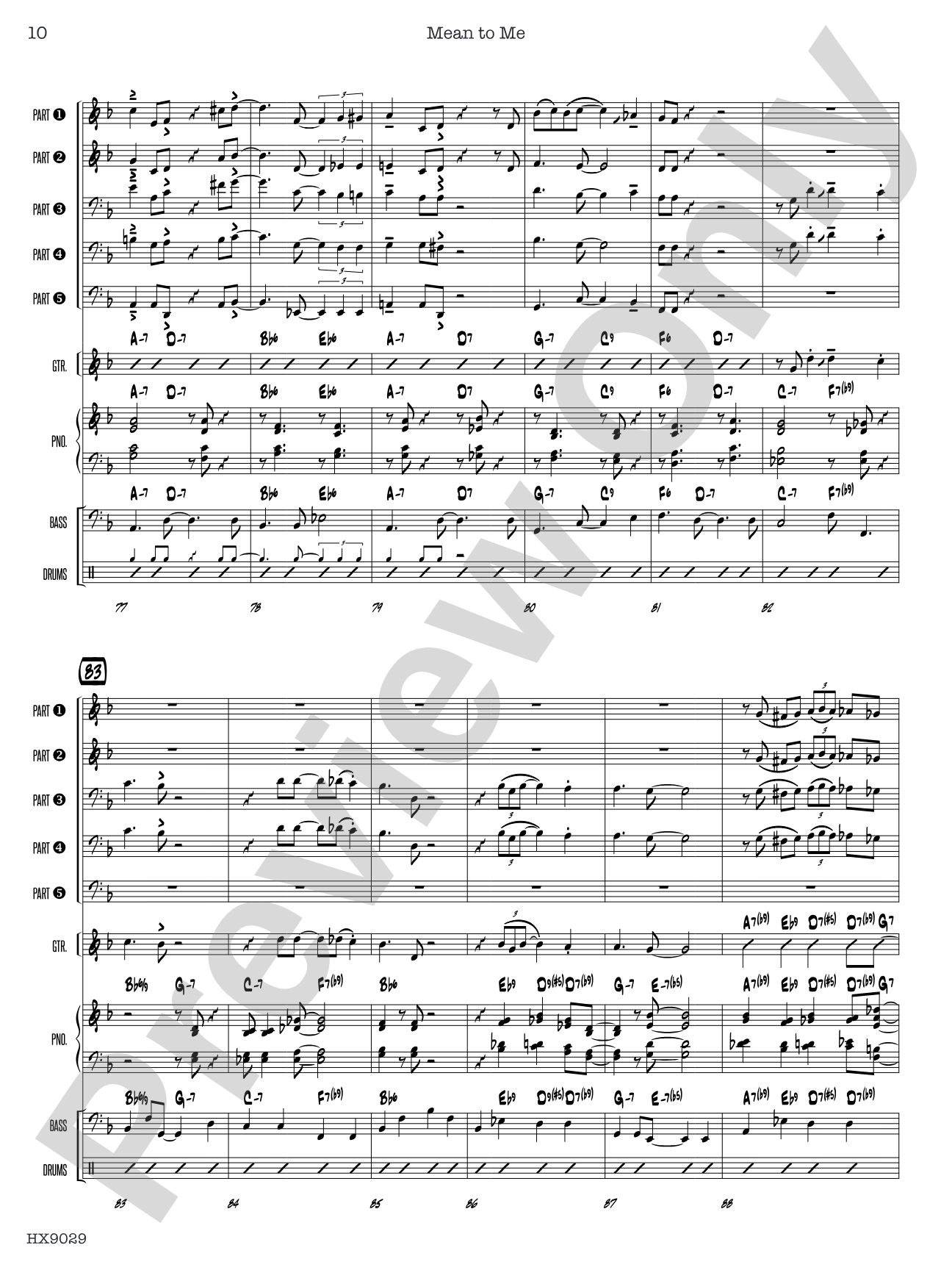
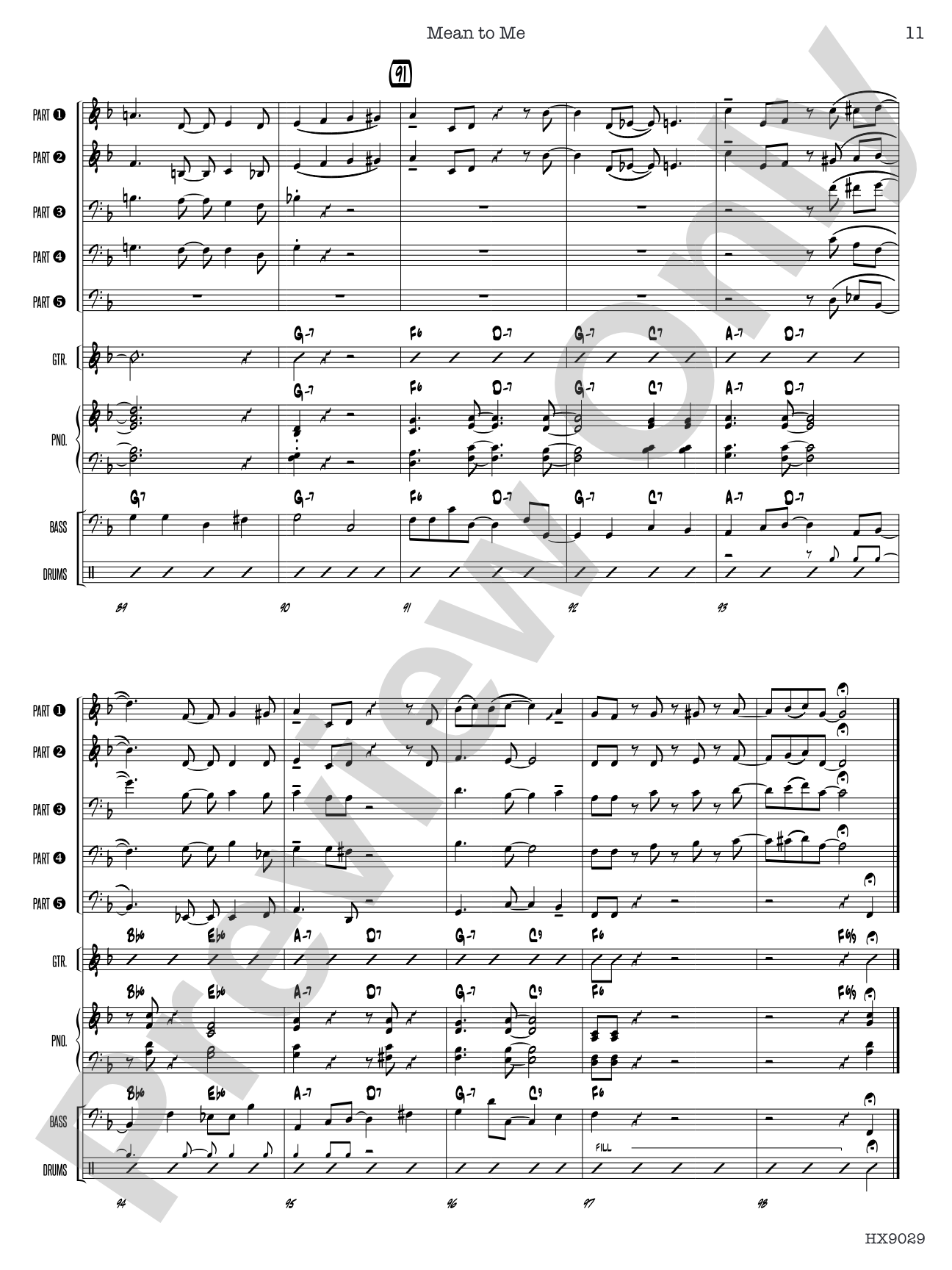
A timeless jazz standard with an irresistible melody built on a rising sequence, this fully flexible arrangement works with as few as five players plus rhythm, or a full ensemble---winds, strings, or any combination. Ranges are limited, and a transcribed solo (plus an easier version) is included for all instruments. Piano and bass parts feature notated comping to support the youngest players. A versatile, accessible, and endlessly playable chart.
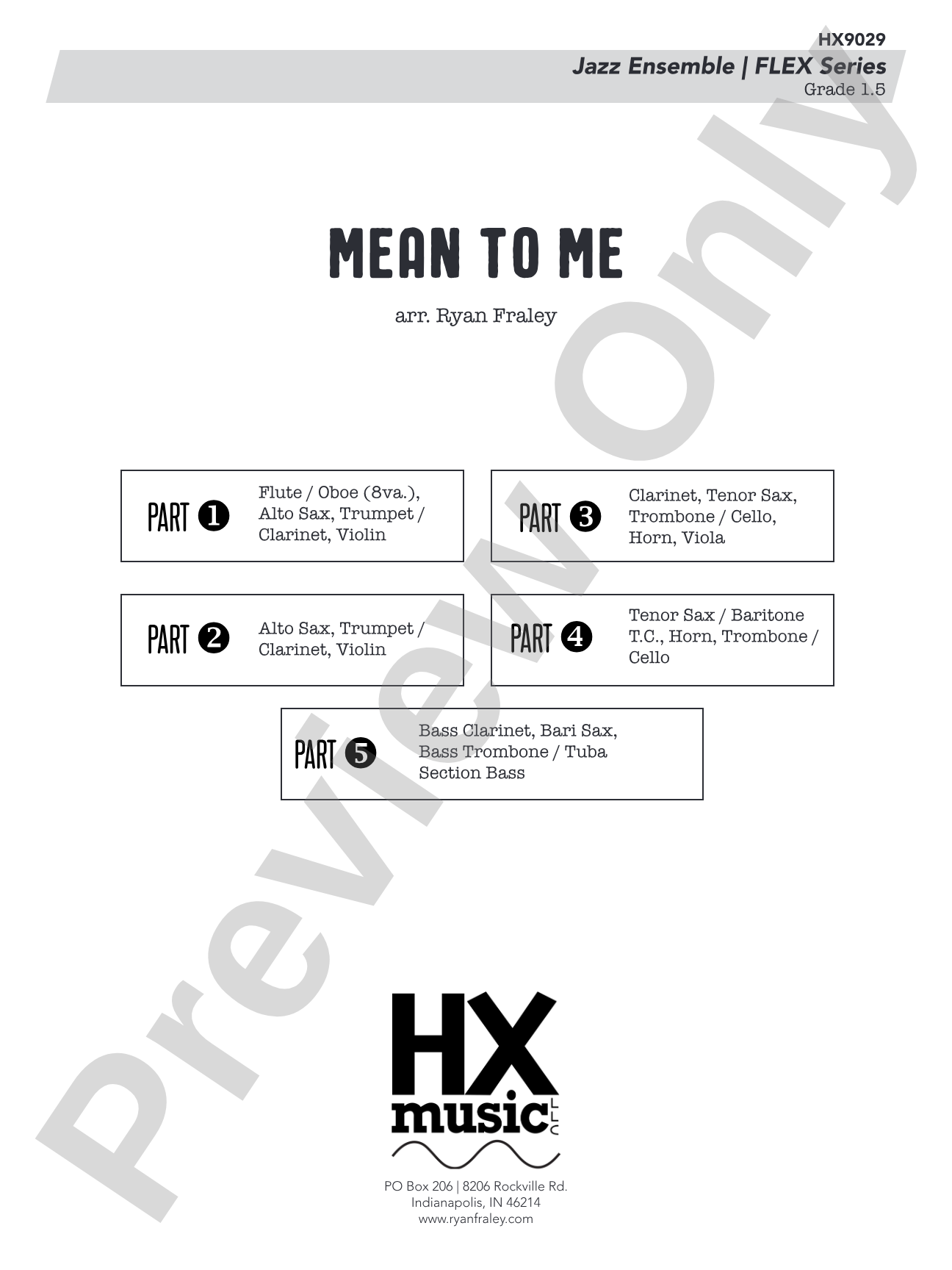
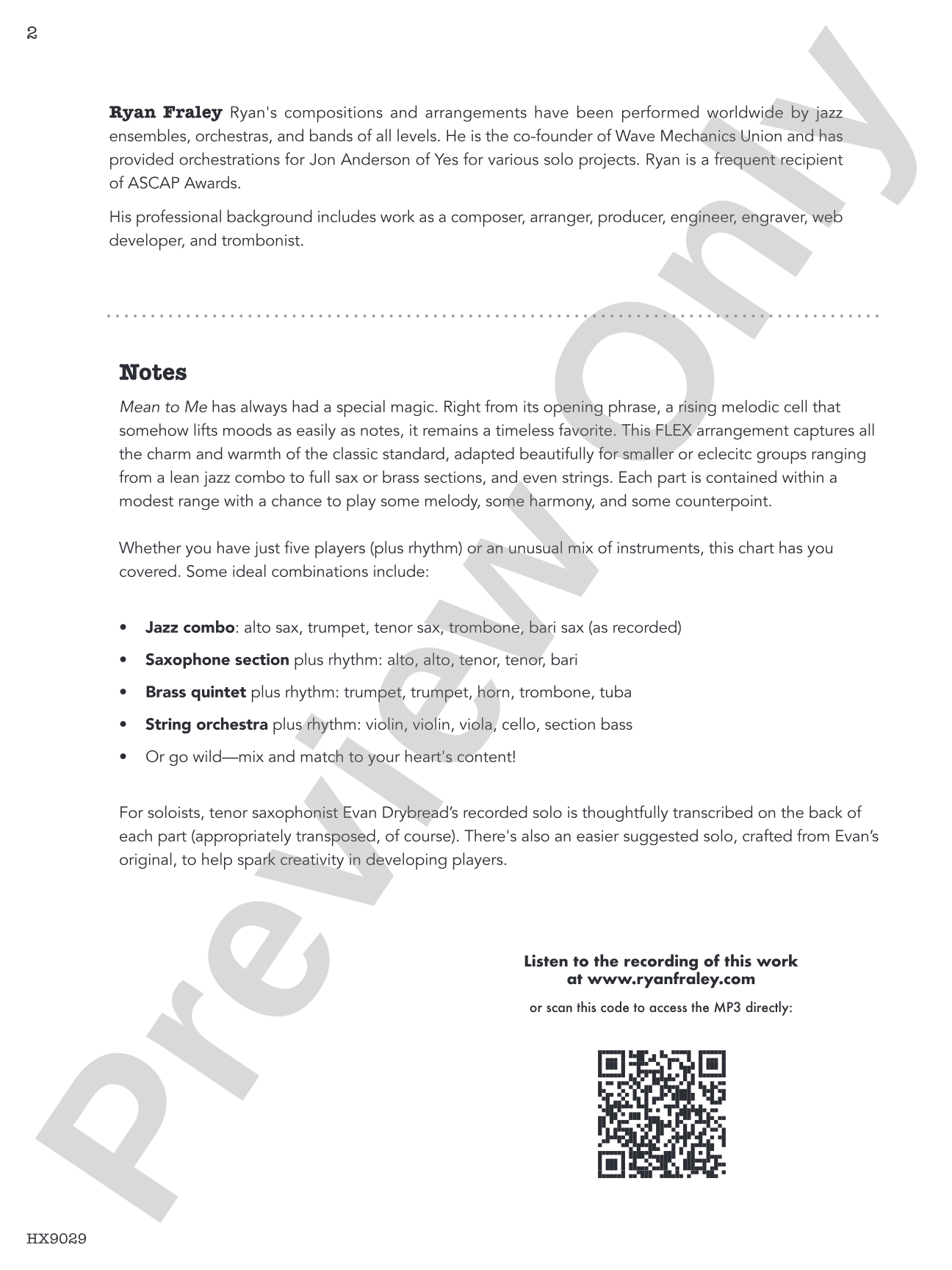
Whether you have just five players (plus rhythm) or an unusual mix of instruments, this chart has you covered. Some ideal combinations include:
- Jazz Combo: alto sax, trumpet, tenor sax, trombone, bari sax, and rhythm section (as recorded)
- Saxophone section: alto, alto, tenor, tenor, bari, and rhythm section
- Brass quintet: trumpet, trumpet, horn, trombone, tuba, and rhythm section
- String orchestra: violin, violin, viola, cello, section bass, and rhythm section
- Or go wild--mix and match to your heart's content
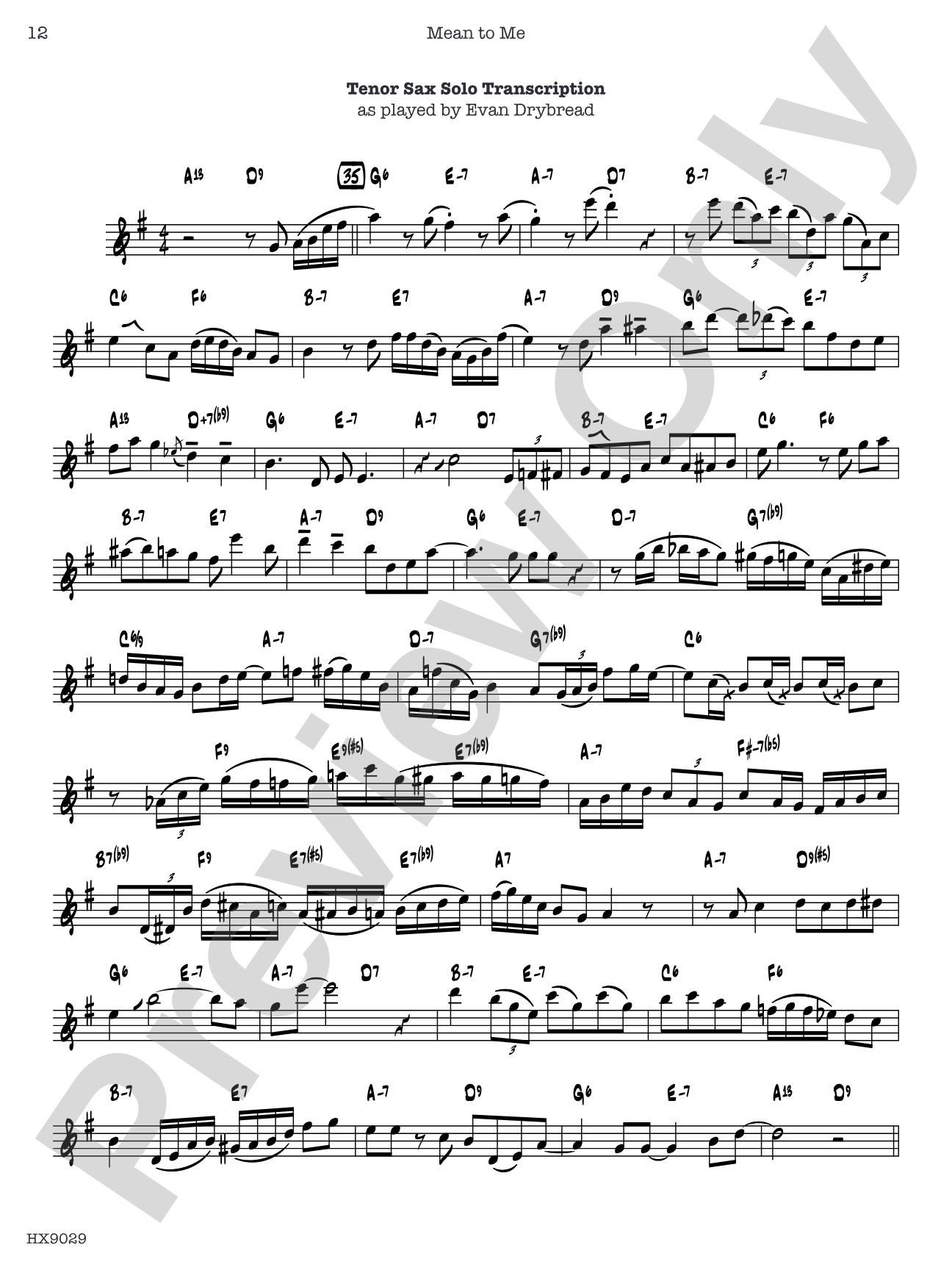
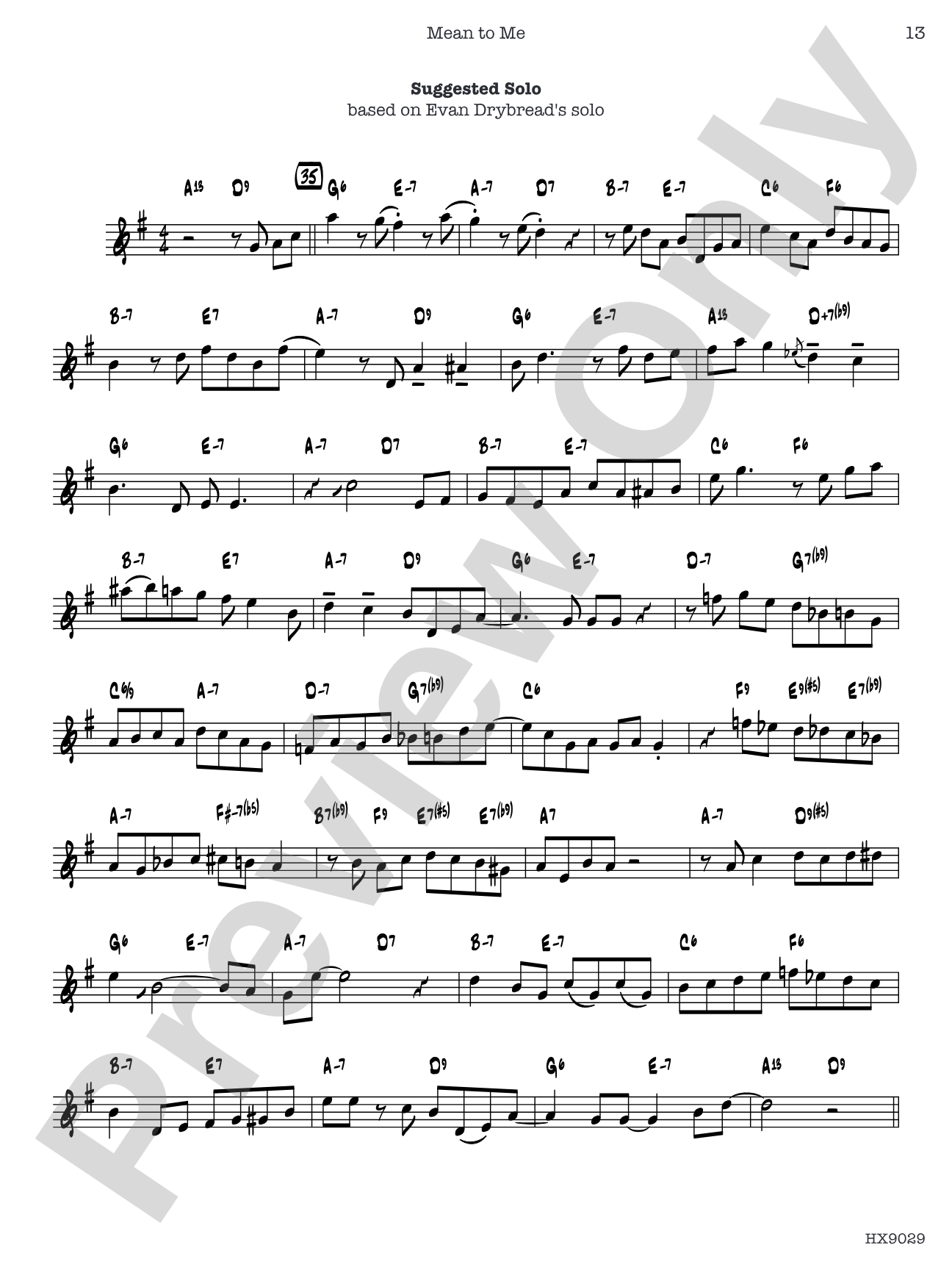
For soloists, tenor saxophonist Evan Drybread's recorded solo is thoughtfully transcribed on the back of each part (appropriately transposed, of course). There's also an easier suggested solo, crafted from Evan's original, to spark creativity in developing players.


Discover MakeMusic Cloud: thousands of interactive titles your students can play along with today.
Sample Audio
1
Audio File
--:--
0:00
0:00
Sample Video
No sample videos found.
Additional Details
Series:
HXmusic
Publisher:
HXmusic
SKU:
98-DHX9029
More about this title
About the Composer: Roy Turk
Roy Turk was a prolific lyricist and composer who shaped the Great American Songbook alongside partners like Fred Ahlert. Working primarily in the 1920s through 1940s, Turk crafted melodies and lyrics that became standards in jazz, pop, and musical theater, often collaborating with skilled composers to create enduring material. His work remains central to jazz repertoire because the songs themselves are musically intelligent, built on strong harmonic progressions and memorable hooks that reward both ensemble players and soloists.
Why we love this
Ryan Fraley's arrangement captures everything that makes a jazz standard sing while refusing to demand impossible resources. The rising melodic sequence that gives the tune its character stays clear and present whether you're reading with a full ensemble or improvising your way through an unexpected instrumentation crisis, and the included solos (both pro transcription and a simplified version) mean your players get to actually solo rather than sit through someone else's turn.
What to expect
Sophisticated without pretense. The tune swings with warmth and an almost conversational ease, built on changes that invite playful interaction between sections. There's real pleasure in how the melody climbs through its sequence, and the arrangement respects that beauty while keeping the whole thing grounded and human-scaled.
Who it's for
Directors with small ensembles who need standards that don't require a full big band, teachers building a jazz curriculum with mixed-level players, and programs where ensemble roster changes mid-year. The limited ranges and notated comp parts keep younger or less experienced readers engaged without holding back the musicians who can stretch.
How to get the most out of it
- Balance the melody line against the rhythm section so the rising sequence stays audible. In smaller combos especially, piano comp and bass need space to breathe around the horn line.
- The transcribed solo is a teaching moment, not a requirement. Let developing soloists study Evan Drybread's phrasing and choices, then encourage them to make their own path through the changes rather than reproduce every note.
- Experiment with which instruments carry the theme on repeated sections. Passing the melody between saxophone and trumpet colors the performance and holds audience attention through what could otherwise feel repetitive.
How to use it
Slot this into a jazz concert as a crowd-pleasing opener or closer that appeals to classical musicians and jazz purists alike. It works equally well as a recurring feature in a semester-long combo workshop, where you can cycle through different instrumentations and give each player a chance to hear the tune from a new angle. The accessibility and flexibility make it ideal for a spring showcase where enrollment has shifted or instrumentation has become unpredictable.
Skills your students will build
- Reading and playing from lead sheets with chord changes
- Comping on piano and bass to support ensemble colleagues
- Crafting solos within a set harmonic structure
- Balancing written melody with flexible instrumentation
- Listening across ensemble sections to maintain groove and time feel
- Interpreting jazz articulation and style conventions