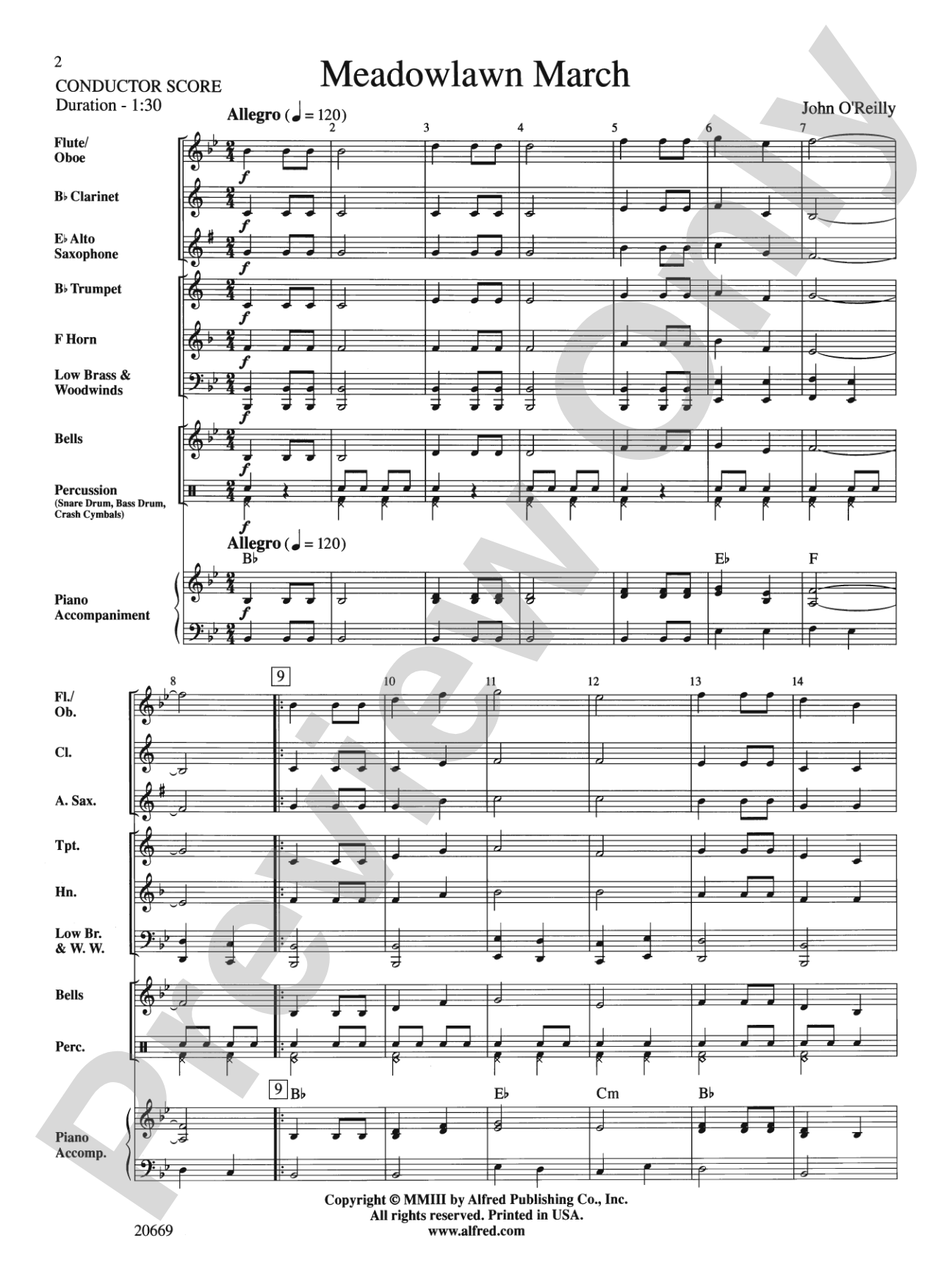
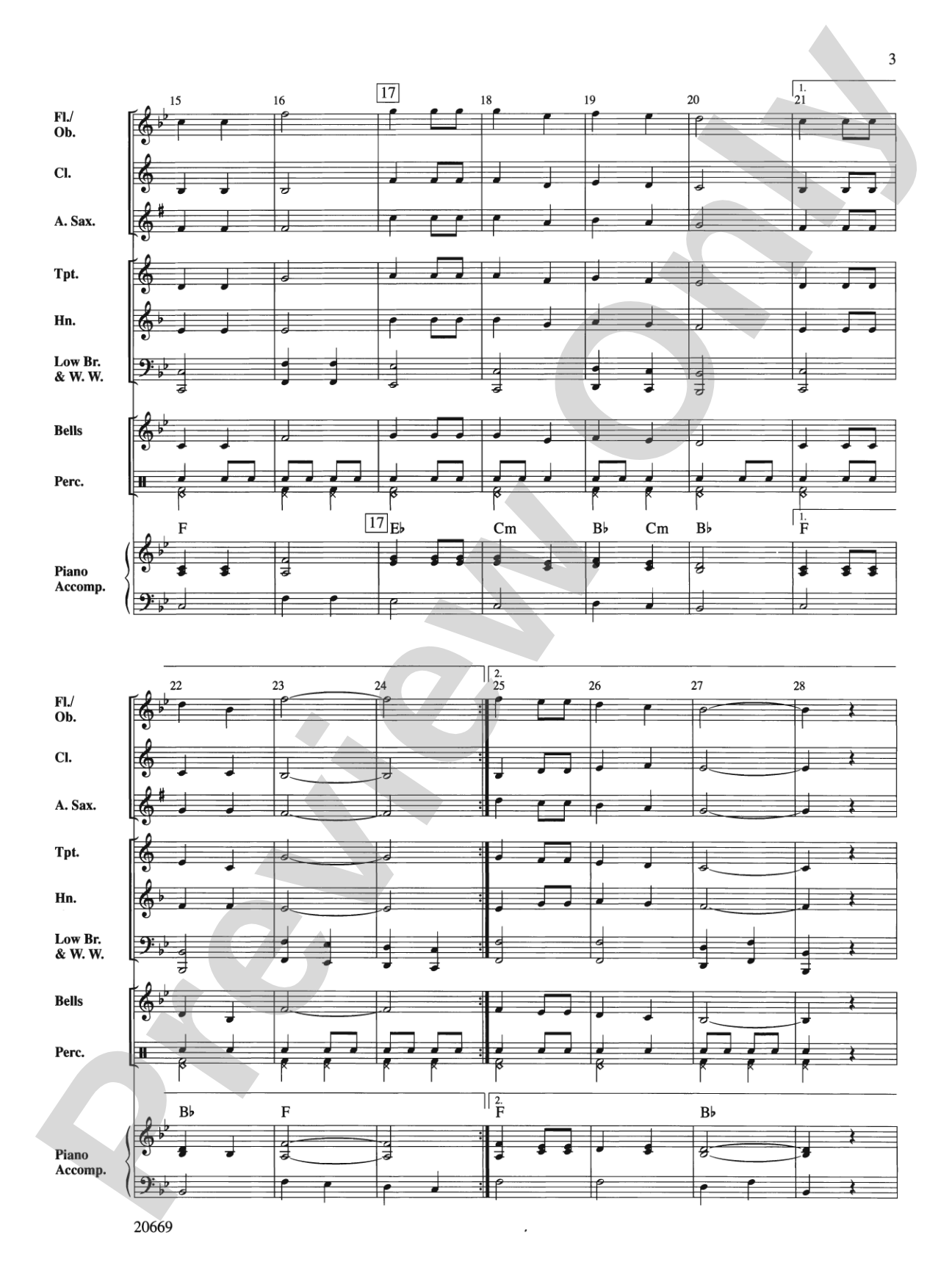
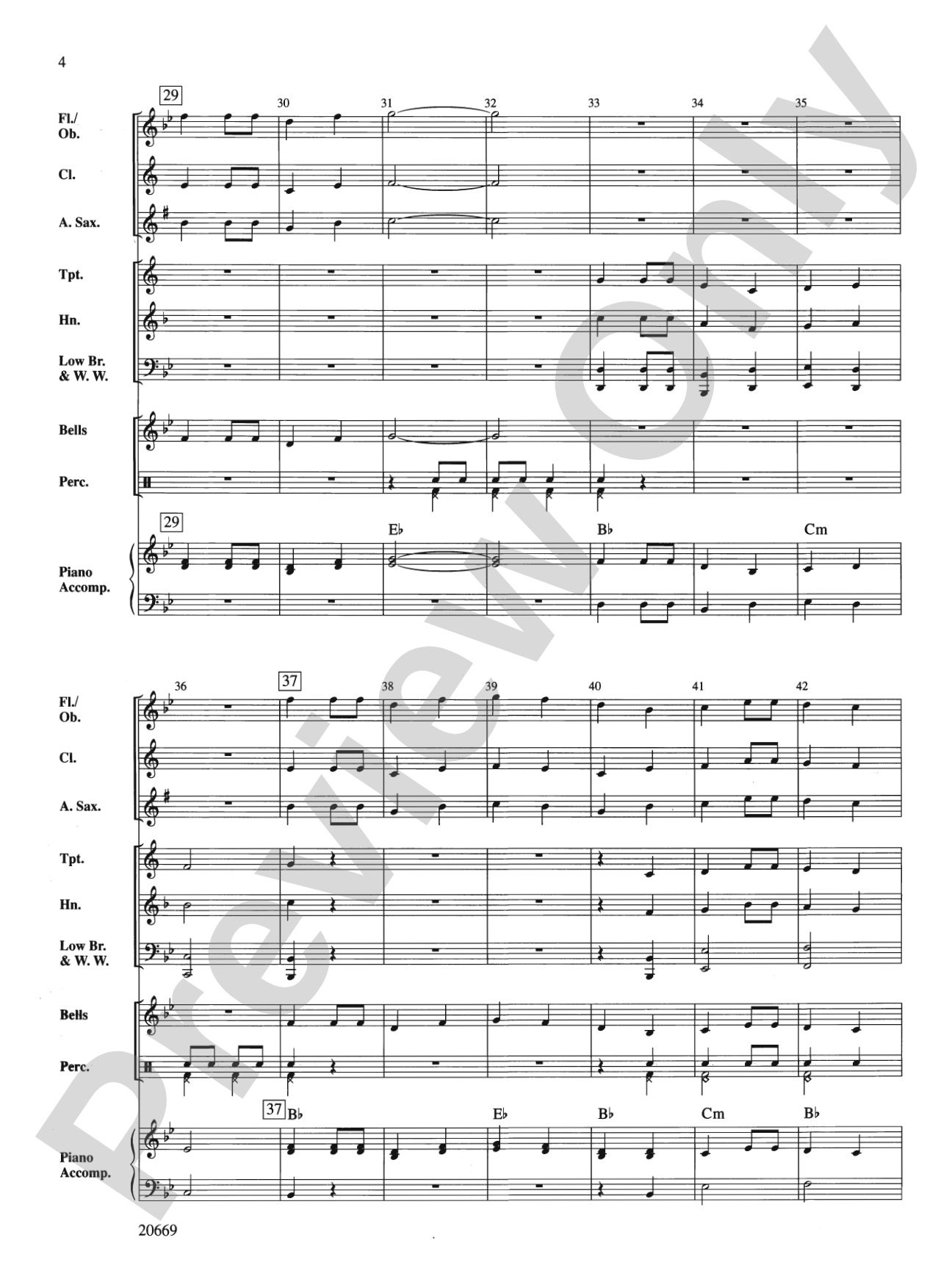
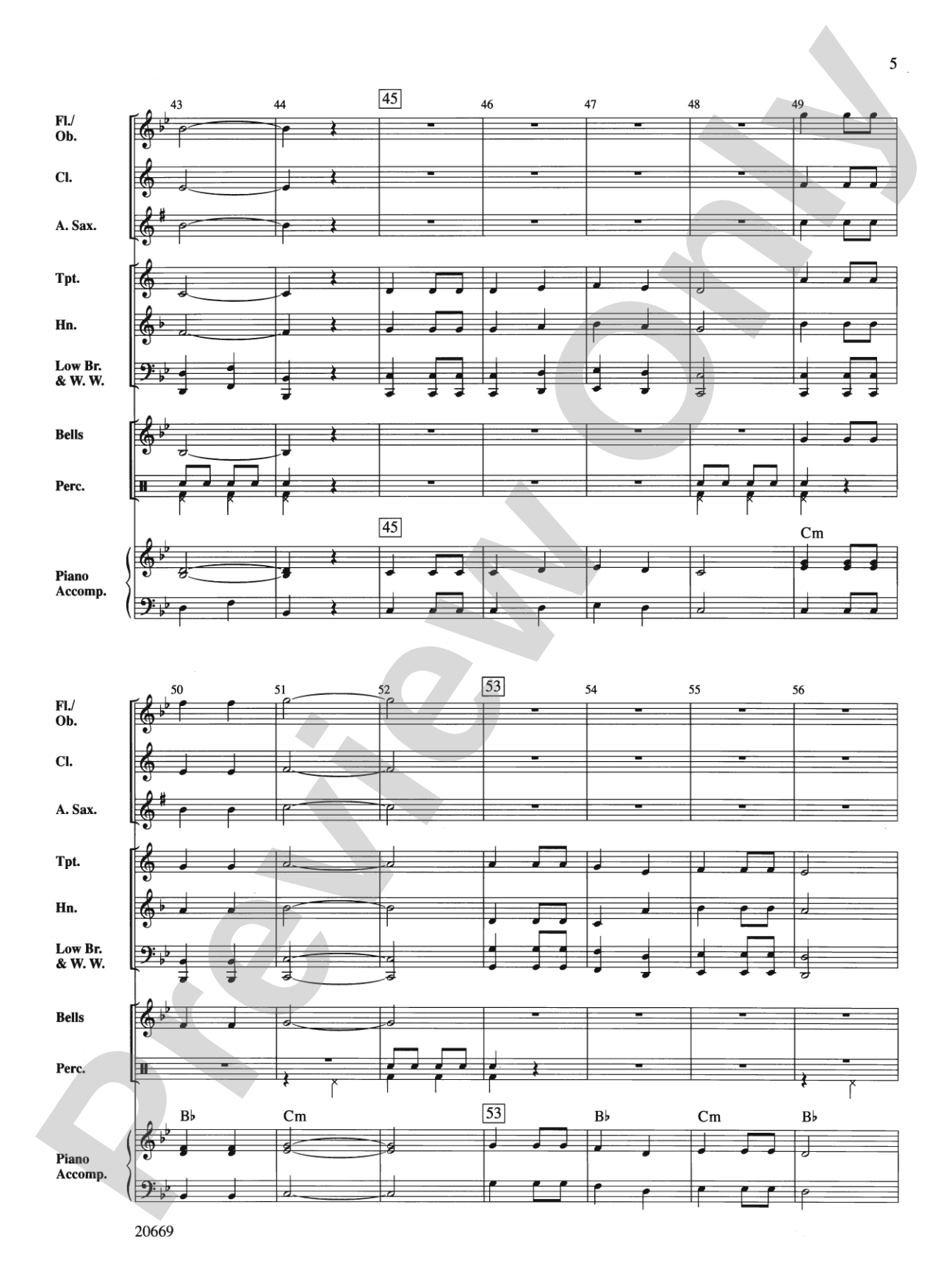
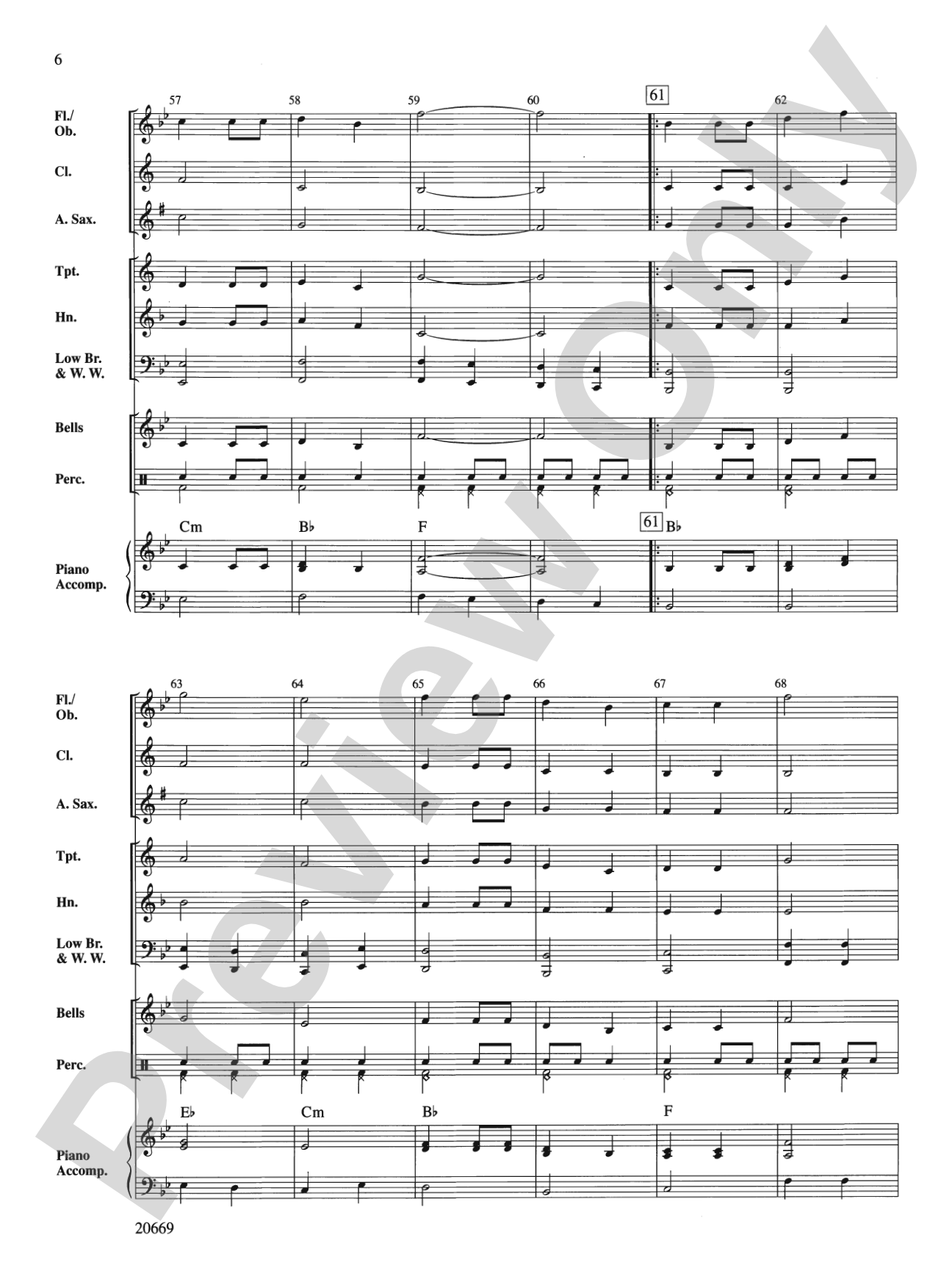
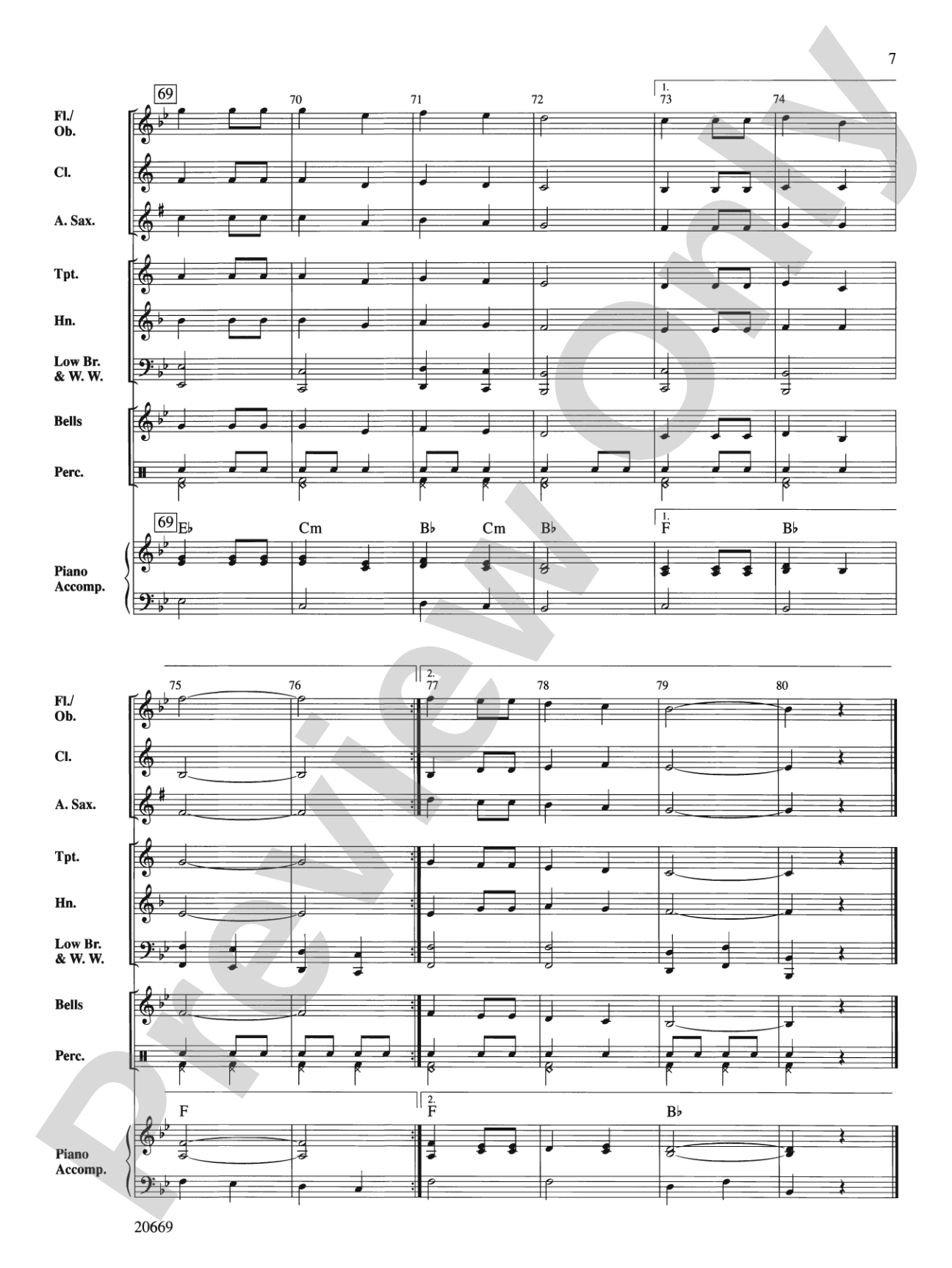
Meadowlawn March: Score Sheet Music Preview

Meadowlawn March: Score

By John O'Reilly

Grade: 1 (Very Easy)

Item: 00-PR-0003115

Digital Download
$7.00
Description
Finally, a grade 1 march that is fun to play while still taking the needs of the young band into consideration. Perfect ranges, rhythms, and scoring make for the ideal march from the pen of John O'Reilly.

Don't just read it, hear it, play along with it, and watch your students grow with it. In MakeMusic Cloud, Meadowlawn March: Score comes alive with professional accompaniment, adjustable tempo, and built-in practice tools that turn solo practice into real progress.

Sample Audio
0:00
0:00
Sample Video
Additional Details
Series: Yamaha Band Series
Publisher: Alfred Music
Page Count: 118
SKU: 00-PR-0003115

More about this title

About the Composer: John O'Reilly

John O'Reilly is a composer and educator whose writing for young bands demonstrates a clear understanding of developing musicians and ensemble capabilities. His approach to grade 1 repertoire prioritizes musical substance without overwhelming inexperienced players, earning him recognition as a trusted voice in early-level band literature.

Why we love this

O'Reilly nails what makes a march work for beginners: strong melodic identity, logical harmonic movement, and ranges that don't frustrate players still building their chops. Young bands sound and feel accomplished playing this, which matters as much as the music itself.

What to expect

Bright and straightforward, with the ceremonial confidence marches carry even at their most modest. The writing breathes naturally, giving young musicians space to settle into their parts while maintaining forward motion and clear form.

Who it's for

Beginning concert bands and grade 1 ensembles looking for approachable march repertoire that still demands musicianship. Directors need a piece that allows all section members to participate meaningfully without getting stranded in extreme ranges or complex rhythms.

How to get the most out of it

  • Shape the melodic line with gentle dynamics; avoid the temptation to play everything uniformly loud just because it's a march.
  • Bring out the countermelody voices in the lower sections so the texture feels full and the ensemble hears itself as a complete musical texture.
  • Establish a steady tempo early in rehearsal and maintain it without rushing, especially through the ensemble transitions.

How to use it

Open a concert with this to set an energetic, confident tone while your developing ensemble builds ensemble sound and tuning. It also serves well as a festival or contest piece where straightforward execution and musical clarity demonstrate progress.

Skills your students will build

  • Maintaining steady tempo in a metric, march-style context
  • Balancing melodic and accompaniment roles within an ensemble
  • Playing within appropriate range and register for grade 1 instrumentation
  • Responding to basic dynamic and articulation shaping across the band

You May Also Like