

Meadowlark: 2-Part Choral Octavo
Words and music by Andy Beck
Item: 00-PO-0007304
$2.20
Minimum order quantity: 20 copies
Pickup currently not available
Related Items
Meadowlark: PartTrax Digital Audio Download |
$49.99
|
View |
Description
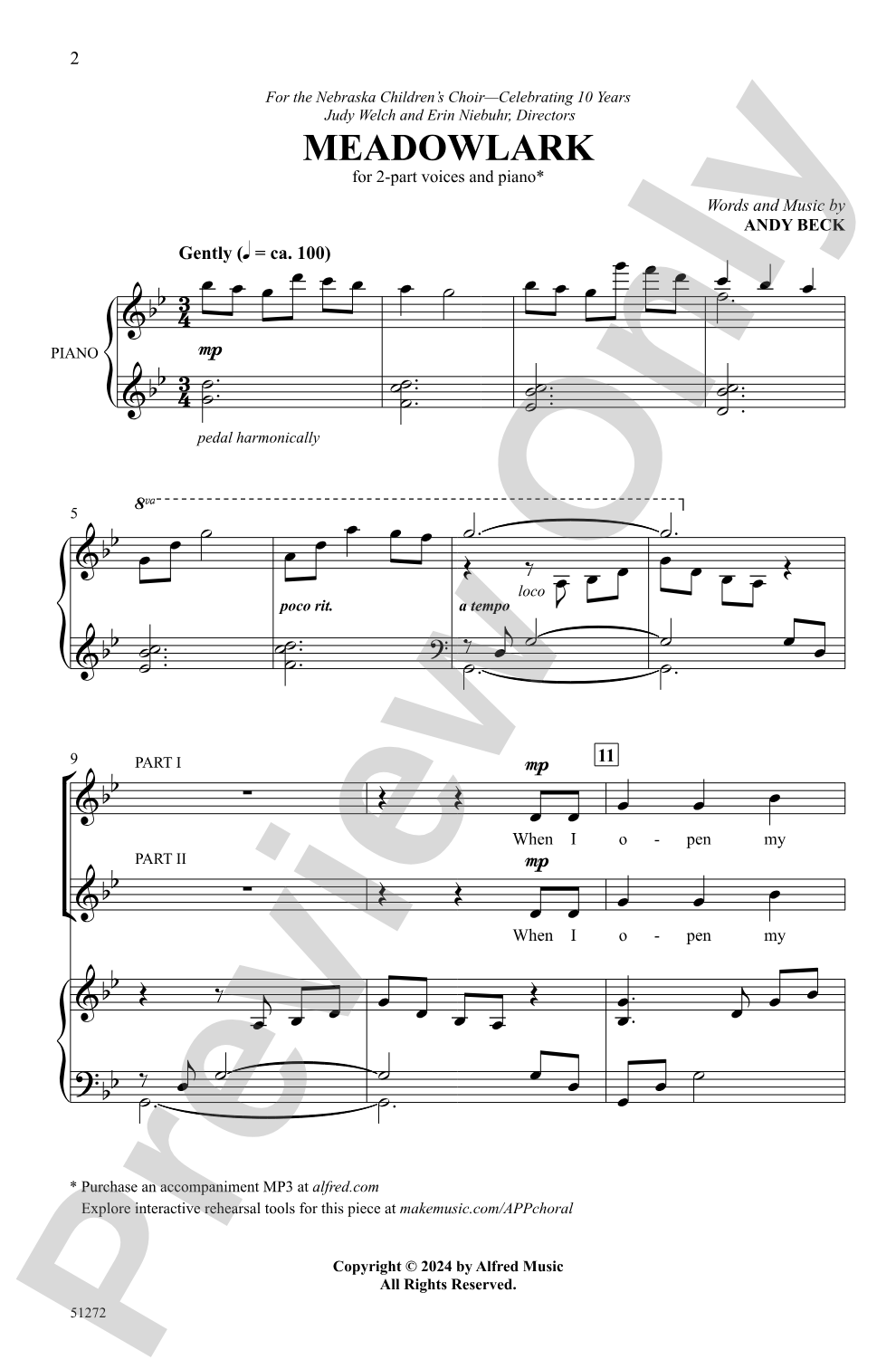
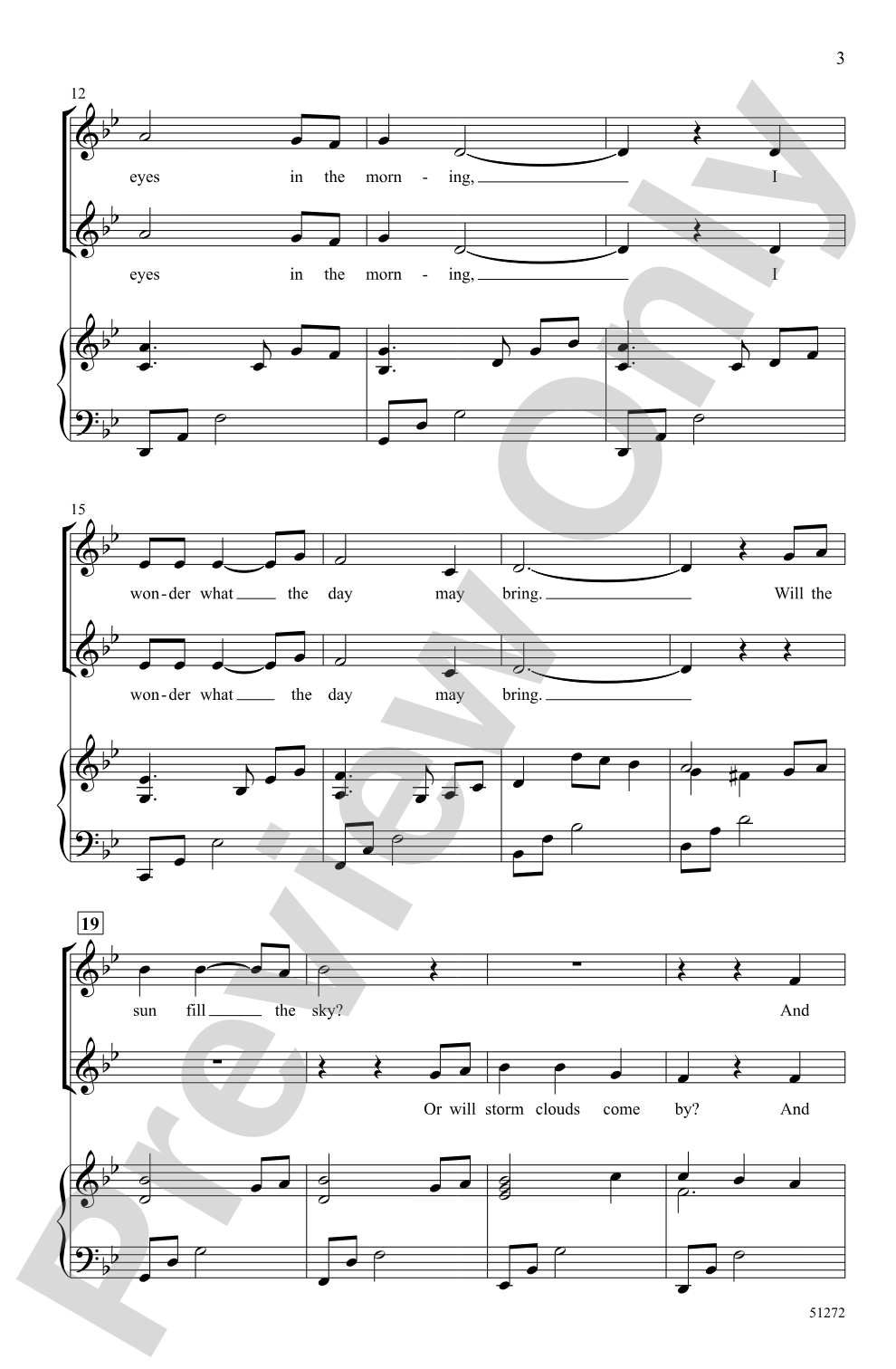
The haunting hook at the tail end of each flowing refrain lingers long after the conclusion of this nature-inspired charmer. Singers implore the symbolic bird to "bring a message of hope and peace." Easy to learn, with well-crafted minor-key harmonies that surprise with a Picardy third at the end.
The PerformancePlus+ series is an innovative addition to the ever-expanding MakeMusic Cloud interactive library. These engaging selections are presented with educational resources designed to enrich the rehearsal process and create outstanding performances. Including:


The PerformancePlus+ series is an innovative addition to the ever-expanding MakeMusic Cloud interactive library. These engaging selections are presented with educational resources designed to enrich the rehearsal process and create outstanding performances. Including:
- Assignment, recording, and assessment tools within MakeMusic Cloud
- Part-predominant and accompaniment tracks
- Printable sheet music (with a standard MakeMusic Cloud subscription)
- Correlated rehearsal guides and performance notes
- Rights to perform in a live or virtual setting
Meadowlark: 2-Part Choral Octavo isn't in MakeMusic Cloud just yet...but it could be. Let us know you'd like to see it, and you'll help shape what comes next. In the meantime, start a free trial and dive into thousands of interactive titles your students can play along with today.
Request This Title
Tell us you want it.
Start Your Free Trial
Explore everything that's ready to play right now.
Sample Audio
1
Audio File
--:--
0:00
0:00
Sample Video
Additional Details
Series:
Alfred Choral - PerformancePlus+
Page Count:
8
SKU:
00-PO-0007304
More about this title
About the Composer: Andy Beck

Andy Beck leads Alfred Music's choral publications department and has established himself as one of today's most performed choral composers, with over 450 works in active circulation. His influence extends across multiple areas of music education: he has authored foundational sight-singing resources (Sing at First Sight, Foundations in Choral Sight Singing) and technique-focused warm-up collections (Vocalize! 45 Vocal Warm-Ups That Teach Technique) that are standard tools in many rehearsal rooms.
Beyond his publishing work, Beck maintains an active presence as a guest conductor, clinician, and adjudicator at honor choirs and all-state festivals throughout the country. A trained tenor with a Bachelor's degree from Ithaca College and a Master's from Northwest Missouri State University, he brings both pedagogical rigor and performance experience to everything he writes. His dual commitment to choral literacy and artistic integrity shows clearly in the catalog he stewards at Alfred Music.
Why we love this
Beck writes music that teaches while it engages, and Meadowlark is a clean example of that philosophy. The minor-key harmonies sit naturally for young voices, yet the Picardy third surprise at the close gives singers and audiences a genuine harmonic moment to savor. The PerformancePlus+ platform transforms this piece from a standalone octavo into a complete learning system, with built-in tools that let you assign, assess, and refine the piece without scrambling across multiple platforms.
What to expect
Meadowlark unfolds like a gentle conversation between singers and the natural world. The flowing, lyrical lines feel conversational rather than showy, with that memorable hook creating a sense of ritual as it returns again and again. The Picardy third arrival breaks the spell deliberately, leaving both performers and listeners with something unexpected to carry away.
Who it's for
This works beautifully for middle school and high school choirs looking for repertoire that challenges without overwhelming. The 2-part voicing keeps it accessible, while Beck's harmonic language gives singers real musicianship to discover.
How to get the most out of it
- Shape each phrase toward the hook at the refrain's end. That repeating melodic gesture is memorable precisely because it's shaped with clear intention; singers should feel the arch that leads into it.
- The minor key creates a contemplative mood that will serve you well if you emphasize the textual weight of 'bring a message of hope and peace.' Avoid letting it drift toward minor-key melancholy; this is supplication, not sorrow.
- Use the part-predominant track during early rehearsals to lock parts independently, then shift to the full accompaniment track to integrate the harmony with the piano texture.
- Reserve the Picardy third for maximum surprise. It lands best when the rest of the piece has been performed with stillness and restraint; resist the urge to telegraph the shift.
How to use it
Program this as a centerpiece in a nature-themed concert or pair it with other thematically cohesive pieces that explore symbolism and imagery. Its gentle character also makes it an effective opener or closer for an all-ages performance, since the emotional content is immediate and universal without requiring technical virtuosity.
Skills your students will build
- Singing sustained minor-key progressions with emotional intention
- Recognizing and executing modal mixture (Picardy third) in context
- Shaping phrases toward a specific melodic gesture
- Blending two-part harmony while maintaining textual clarity