

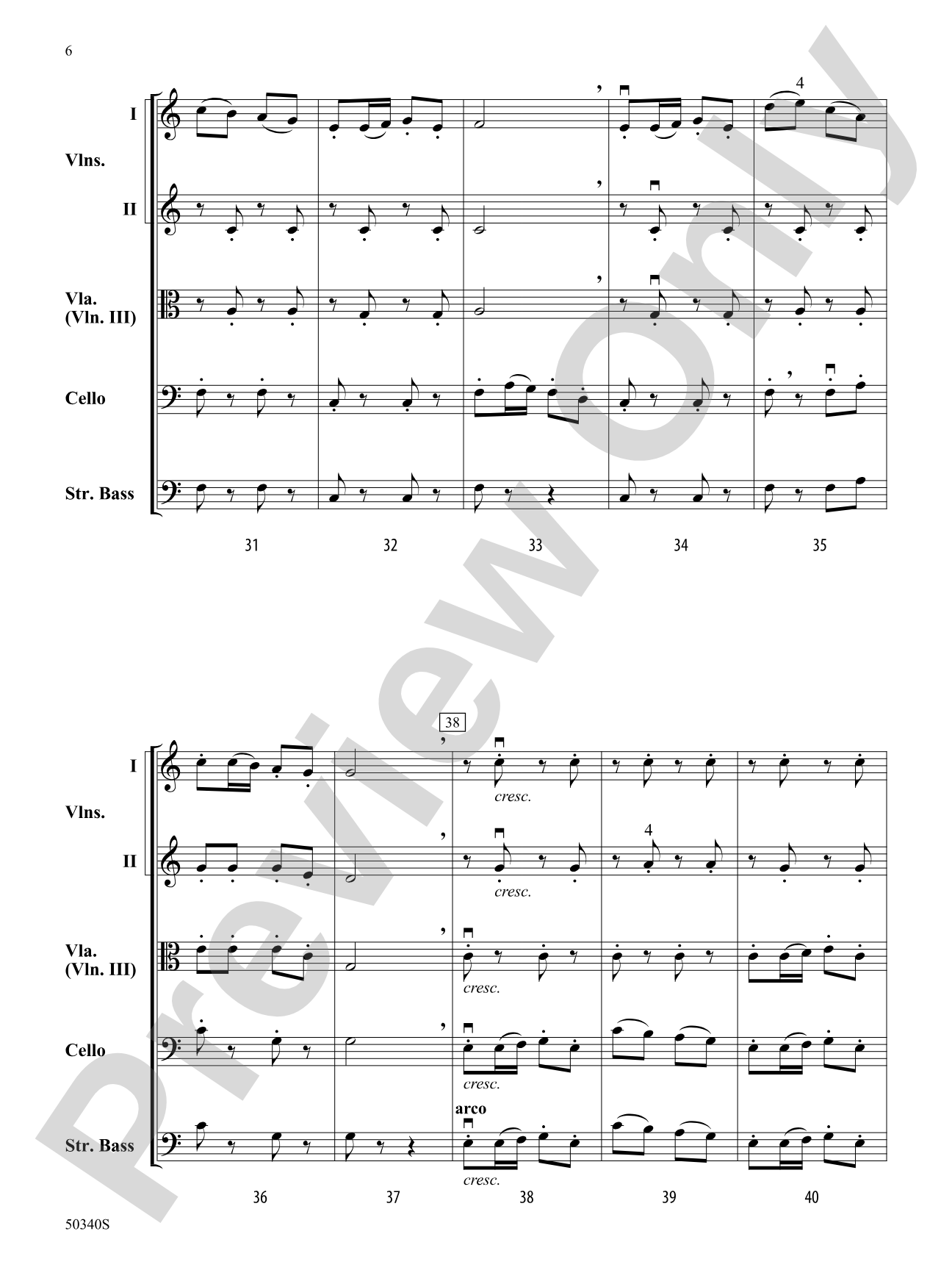
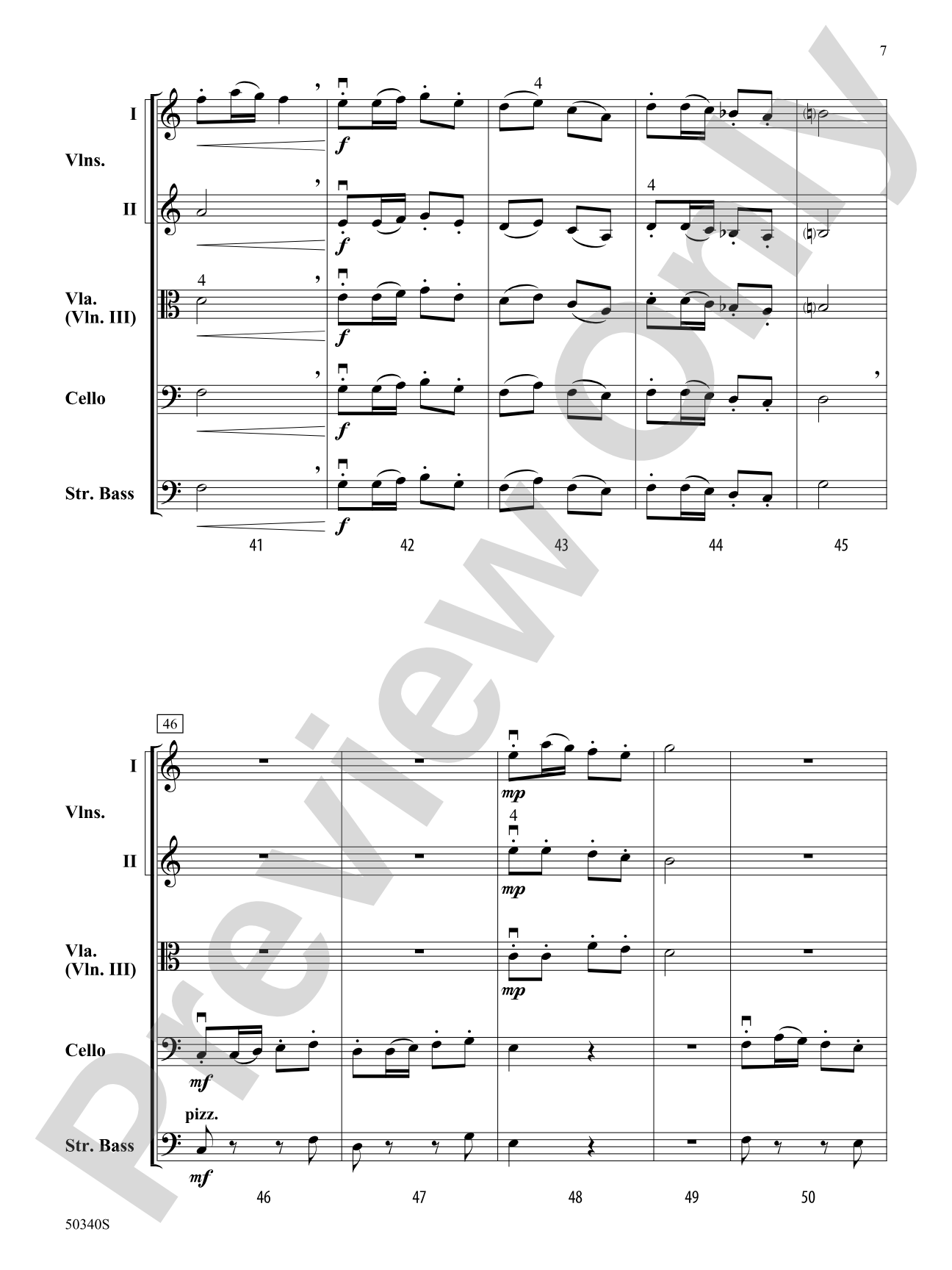
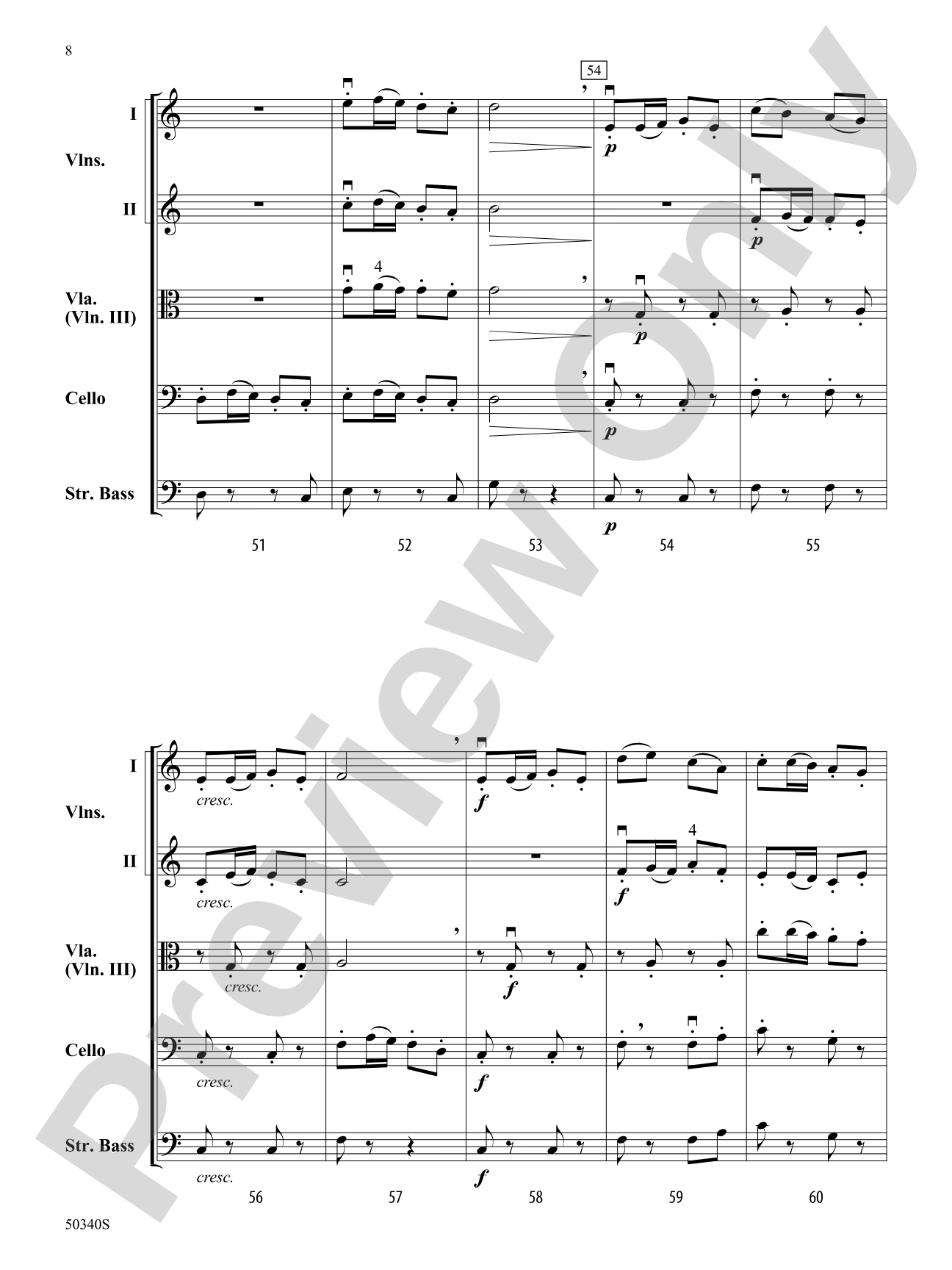
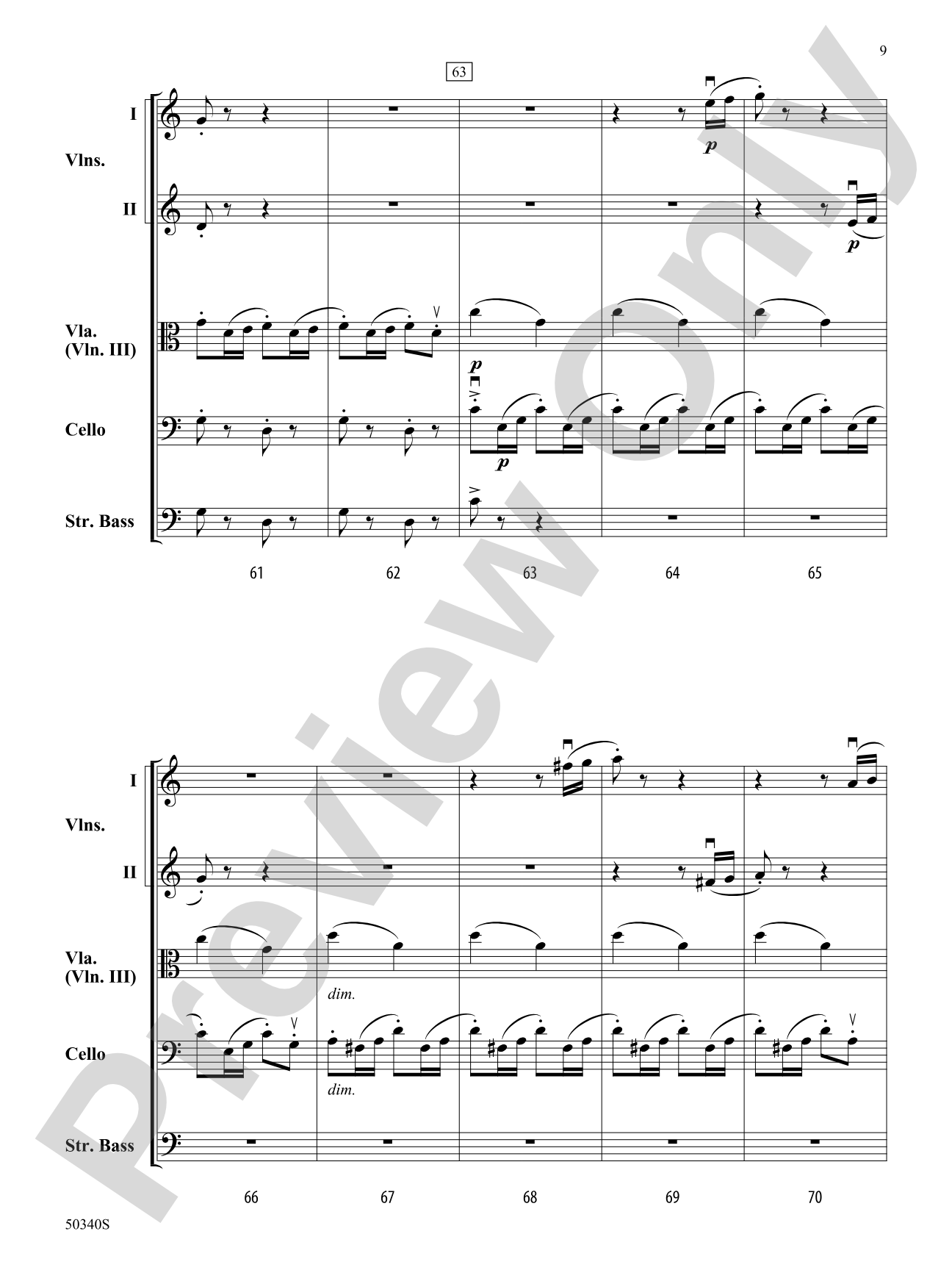
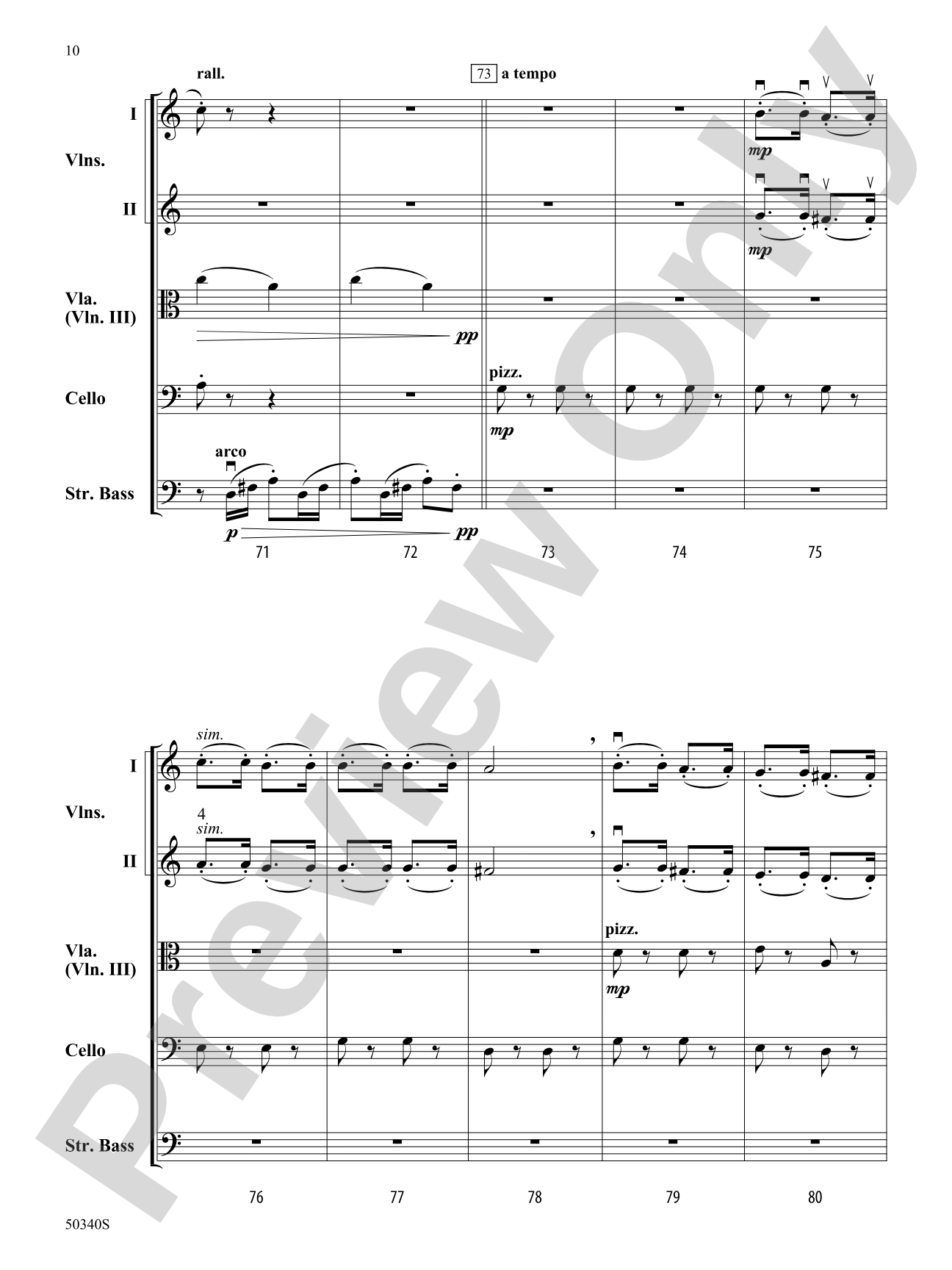
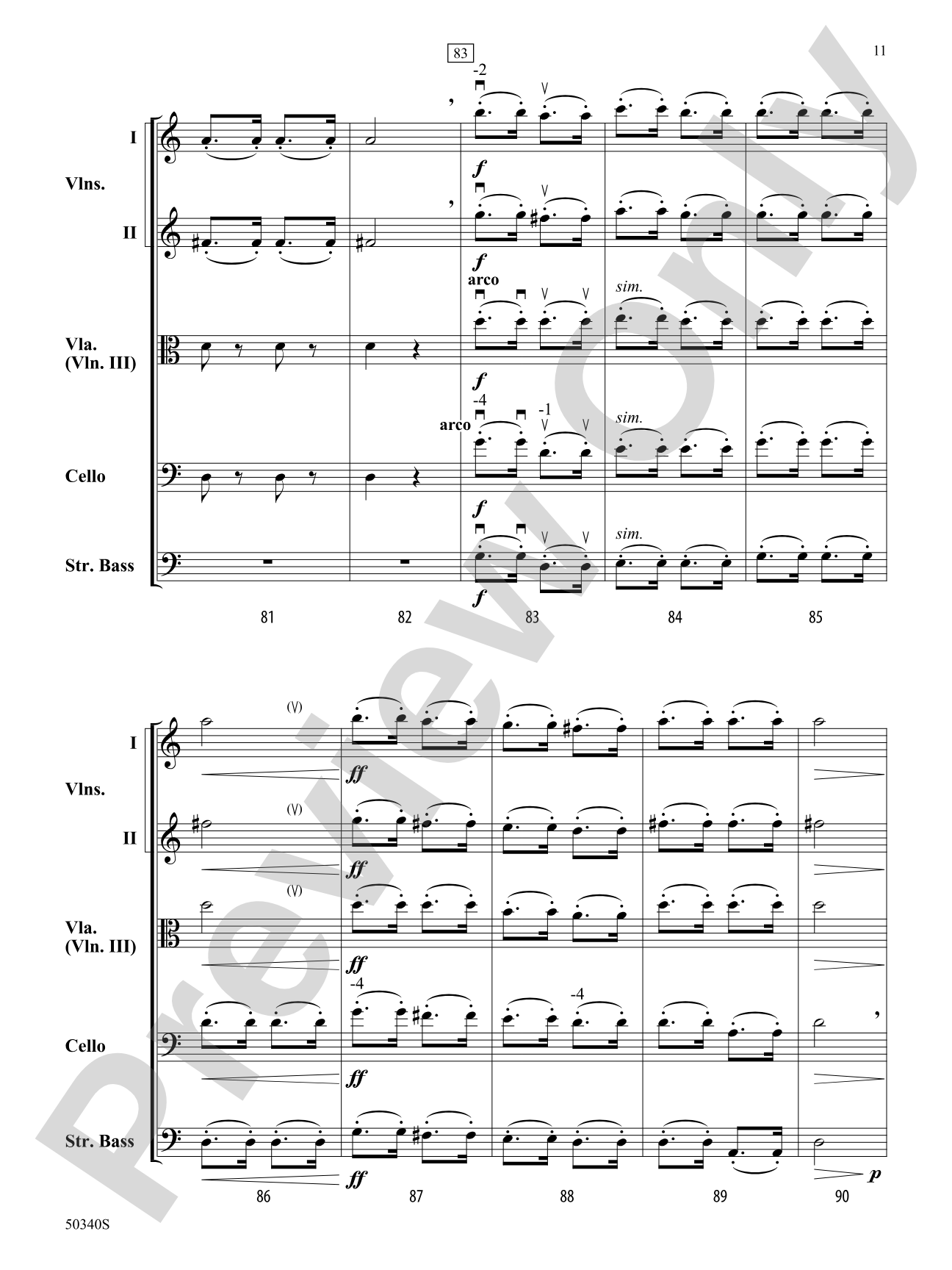
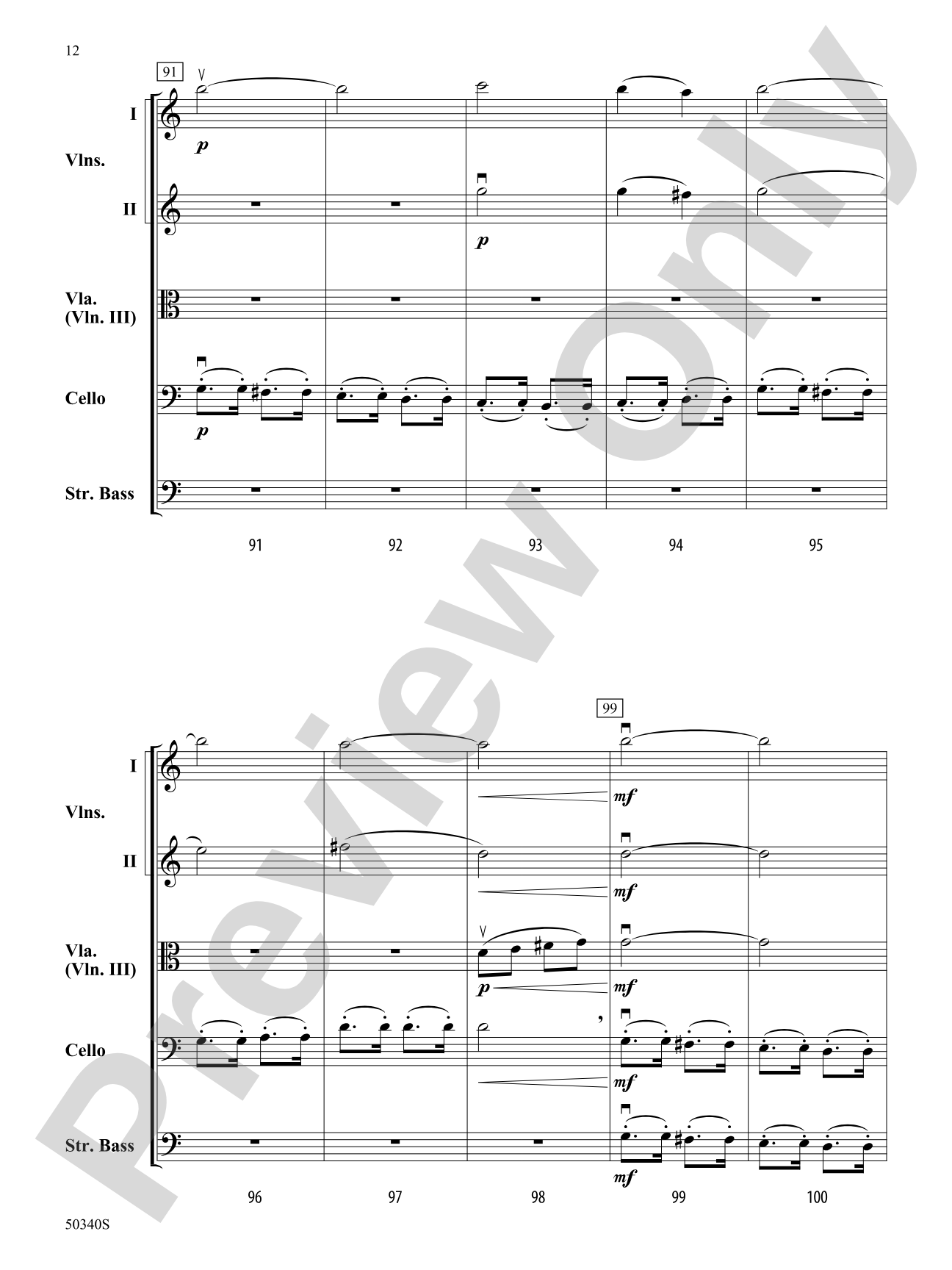
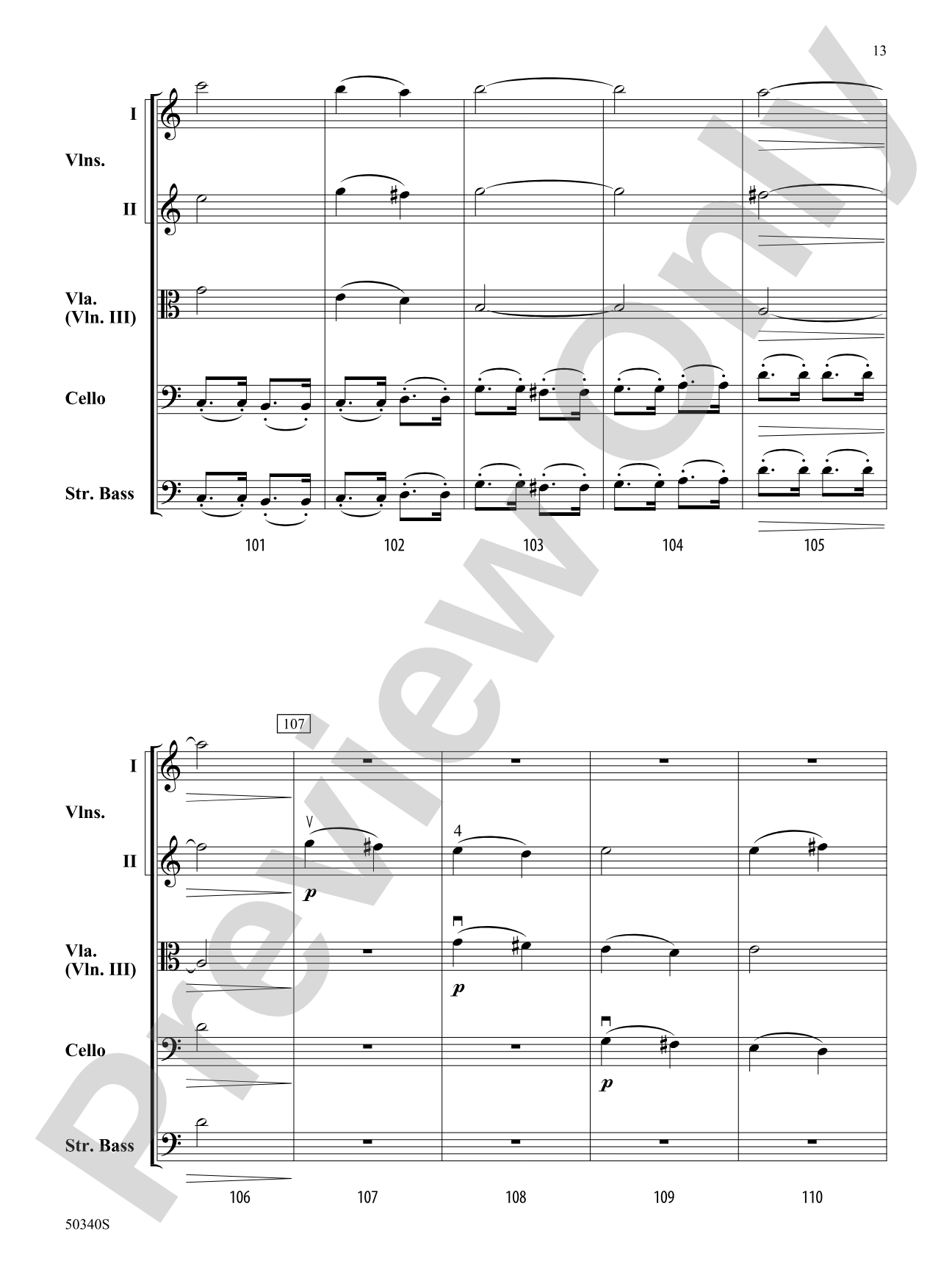
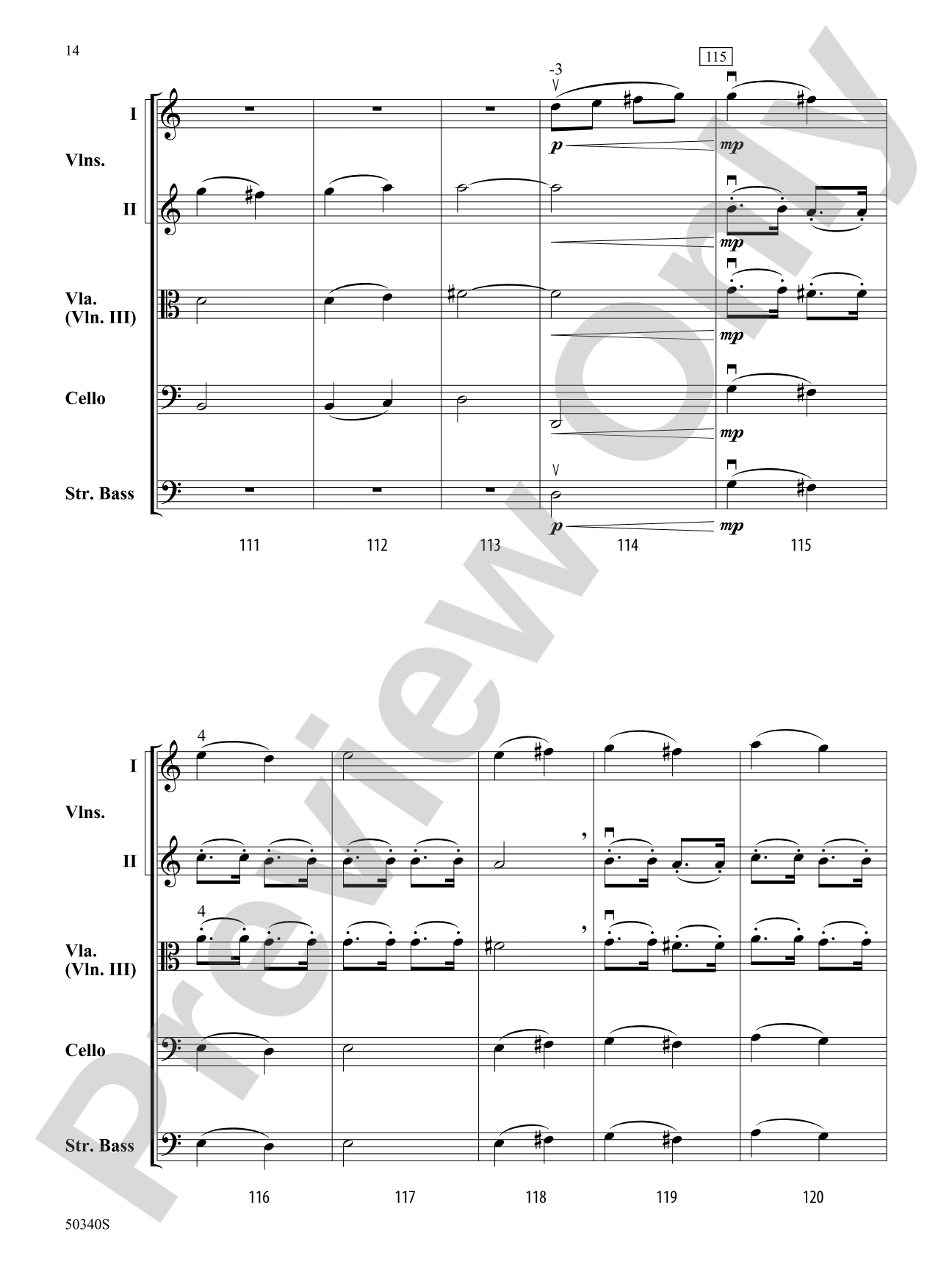
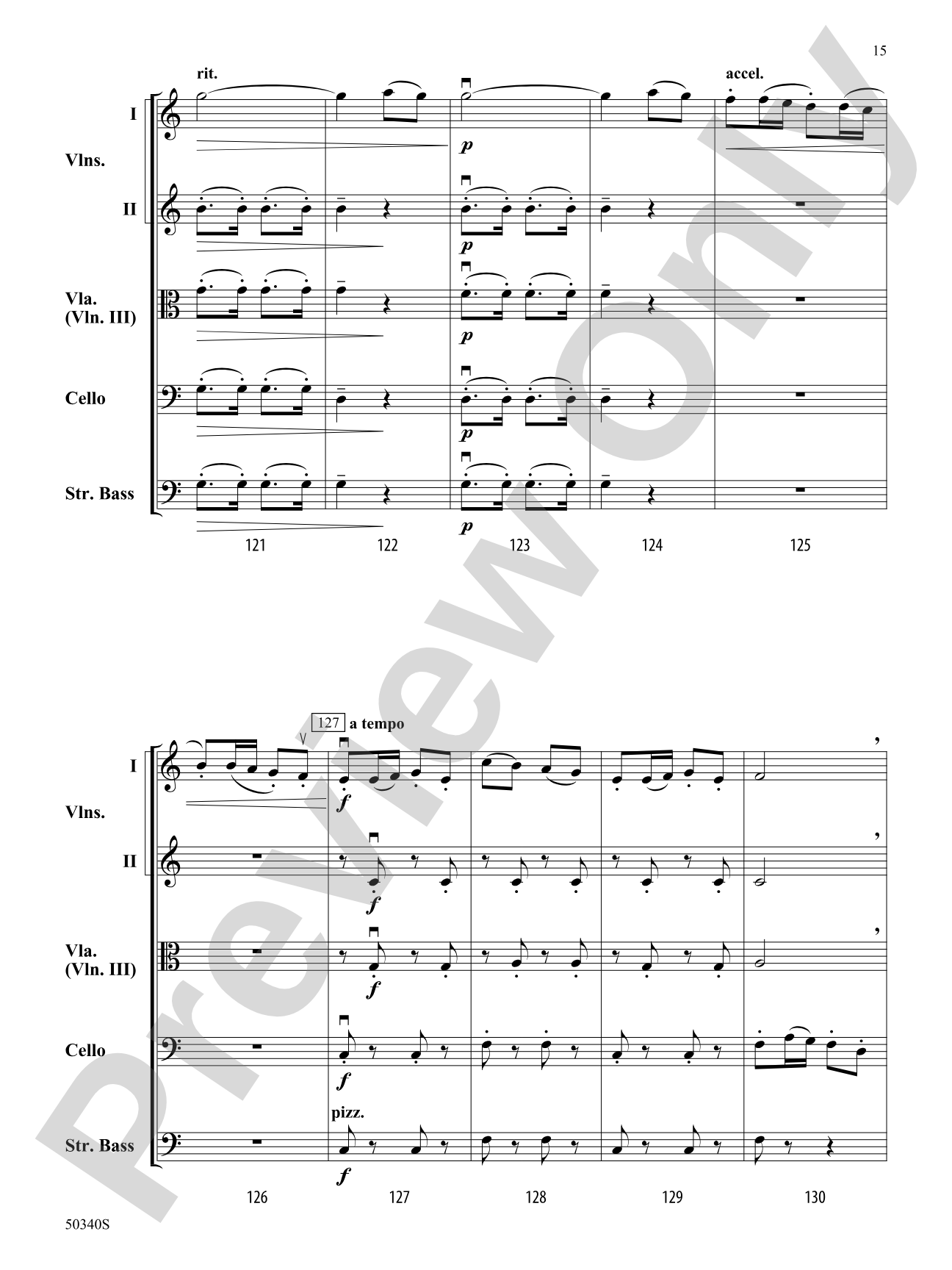
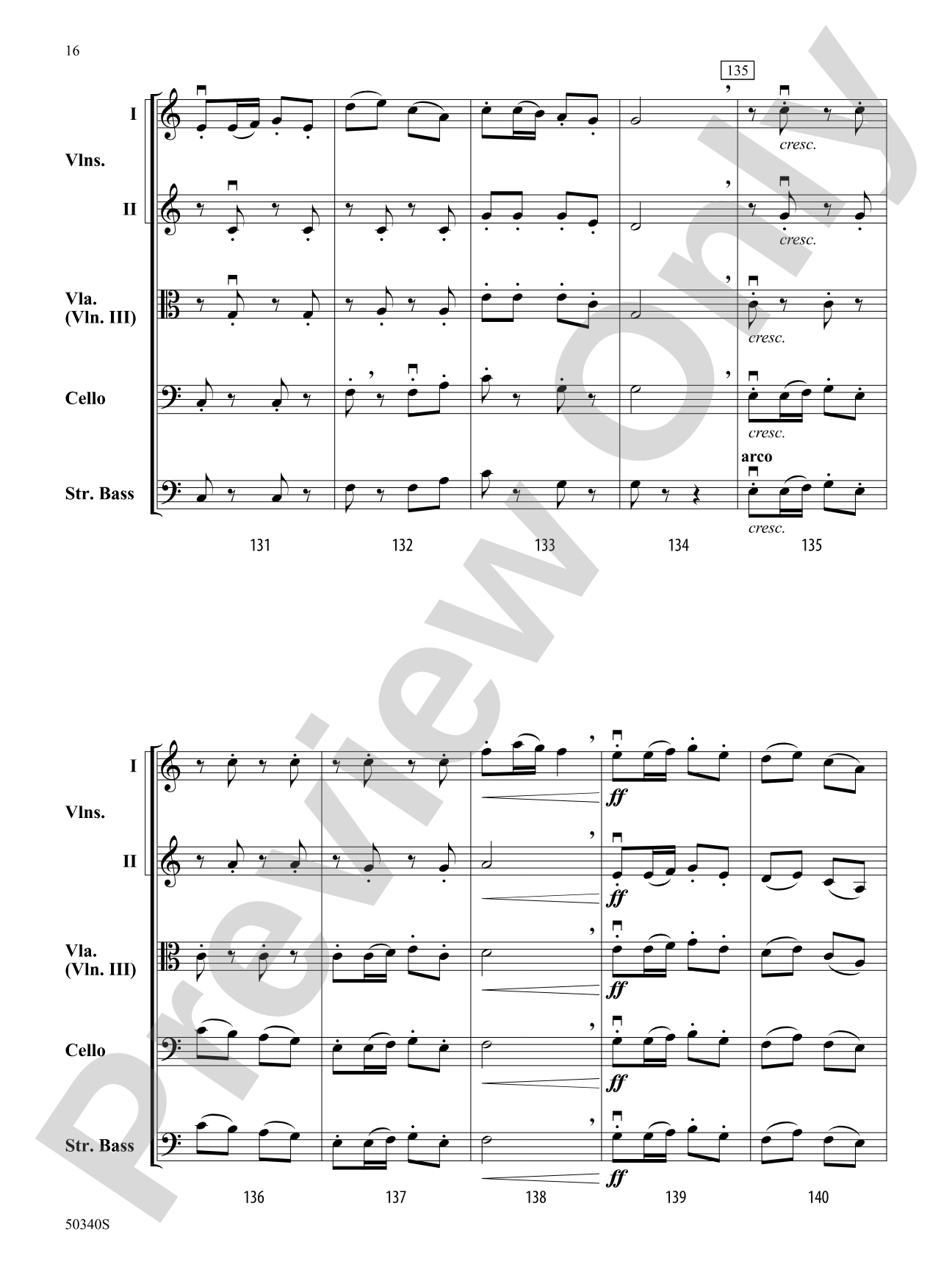
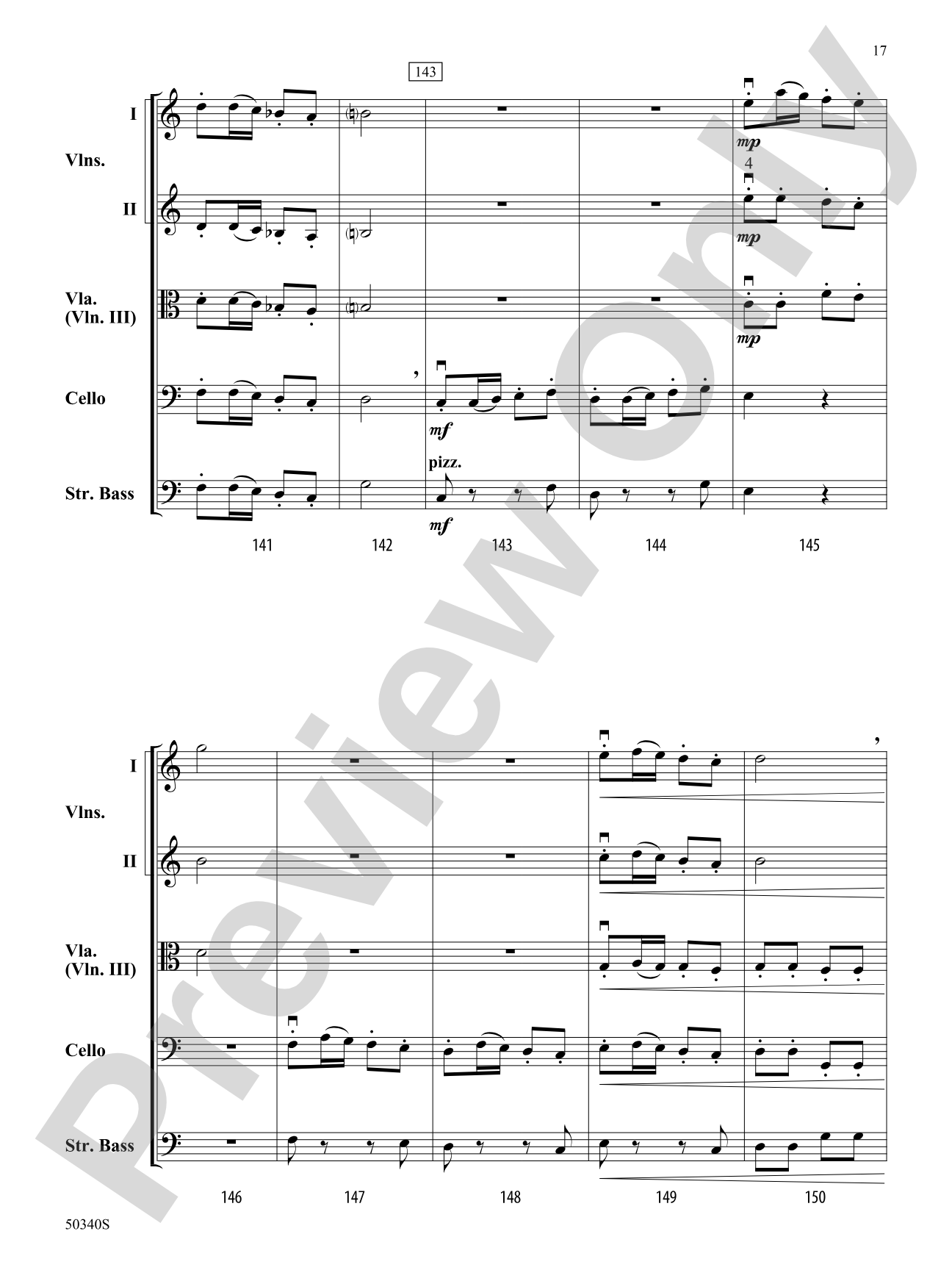
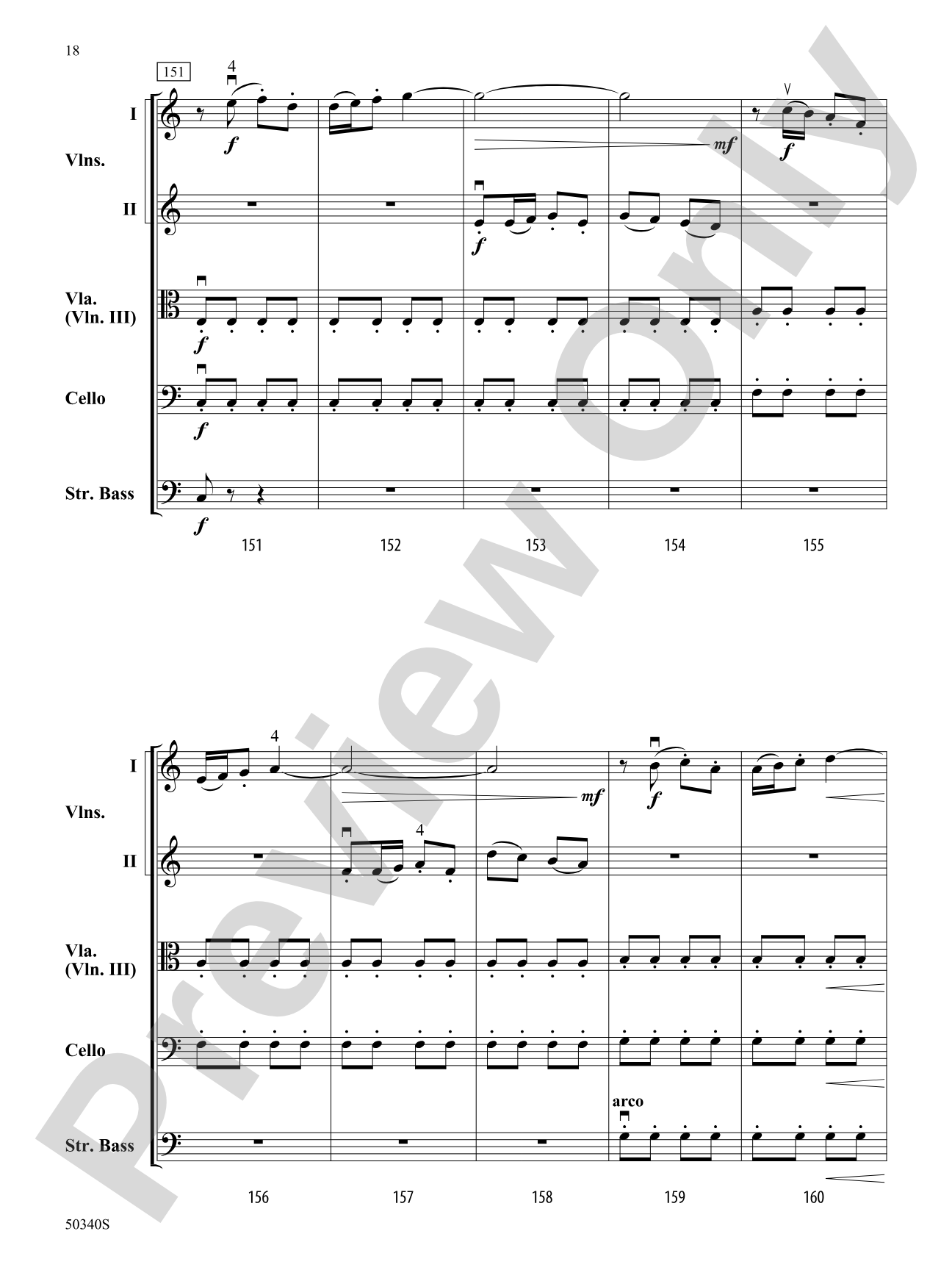
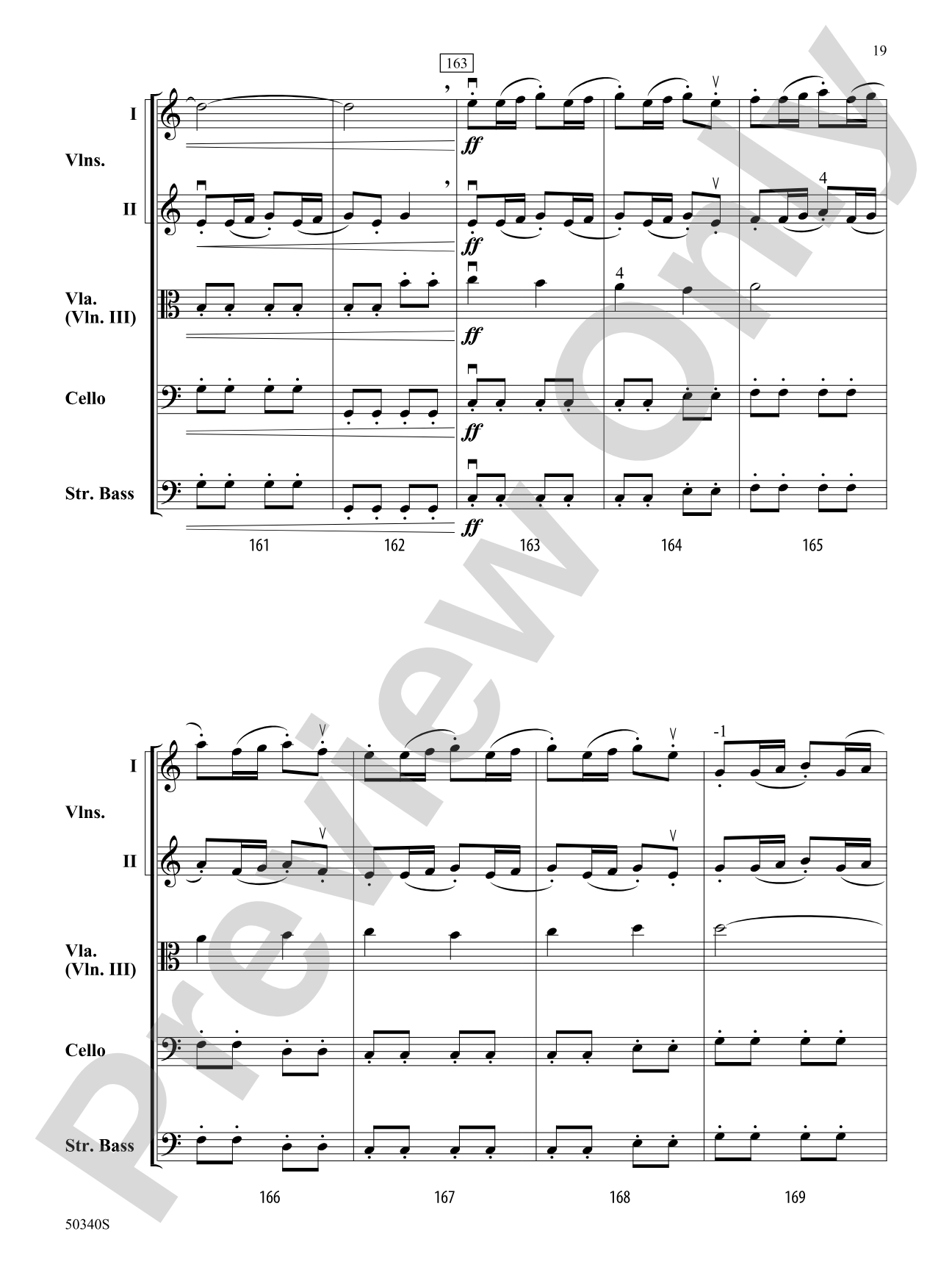
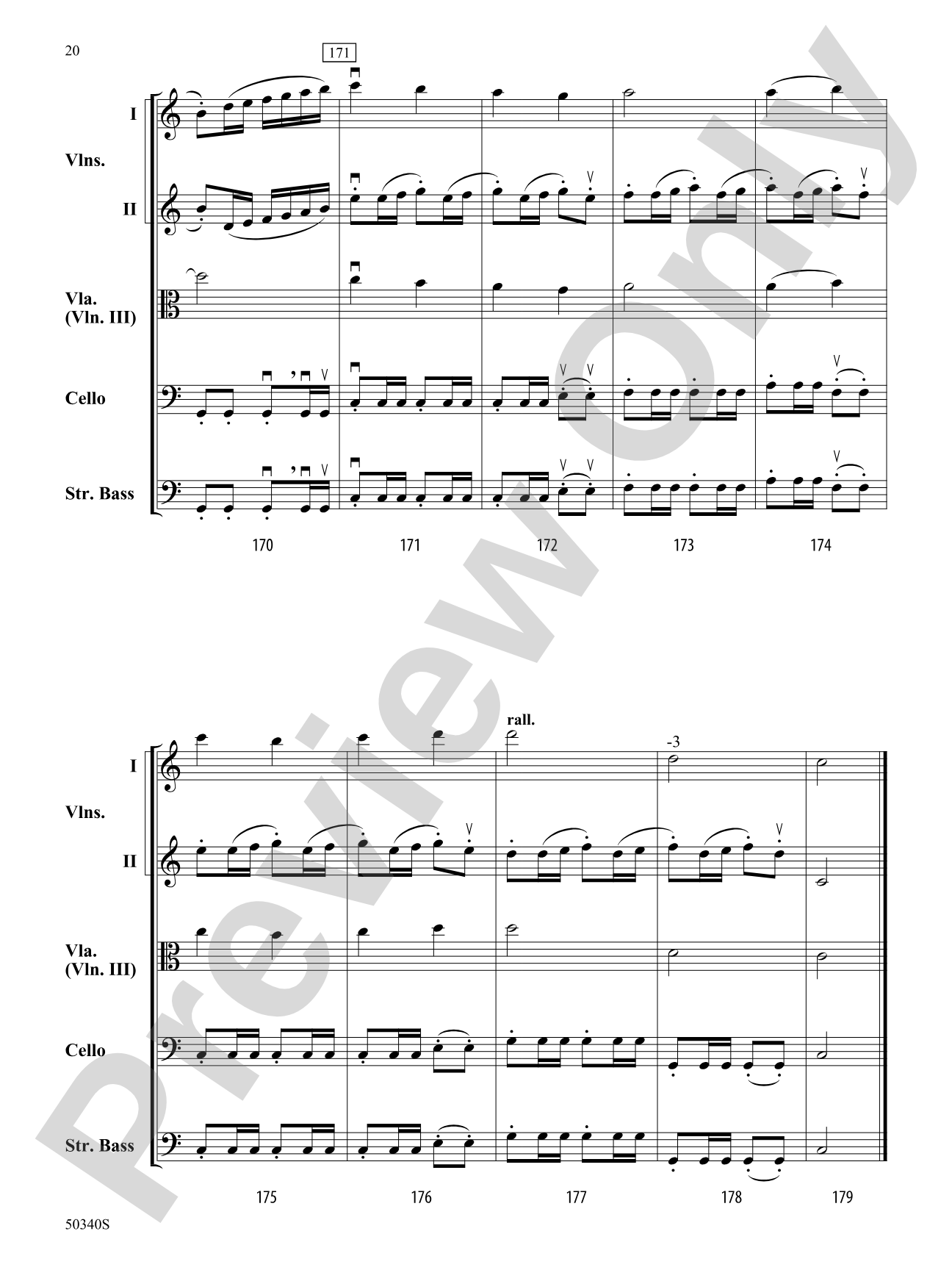

Meadow Dance: String Orchestra Conductor's Score & Parts
By Nathan Jacklin
Grade: 3
Item: 00-PK-0009409
$75.00
Pickup currently not available
Buy Extra Parts (Digital PDF Download)
| Product | Price | Quantity |
|---|---|---|
| Meadow Dance: Score | $12.00 | |
| Meadow Dance: 1st Violin | $3.00 | |
| Meadow Dance: 2nd Violin | $3.00 | |
| Meadow Dance: 3rd Violin (Viola [TC]) | $3.00 | |
| Meadow Dance: Viola | $3.00 | |
| Meadow Dance: Cello | $3.00 | |
| Meadow Dance: String Bass | $3.00 |
Parts Added to Cart!
Description
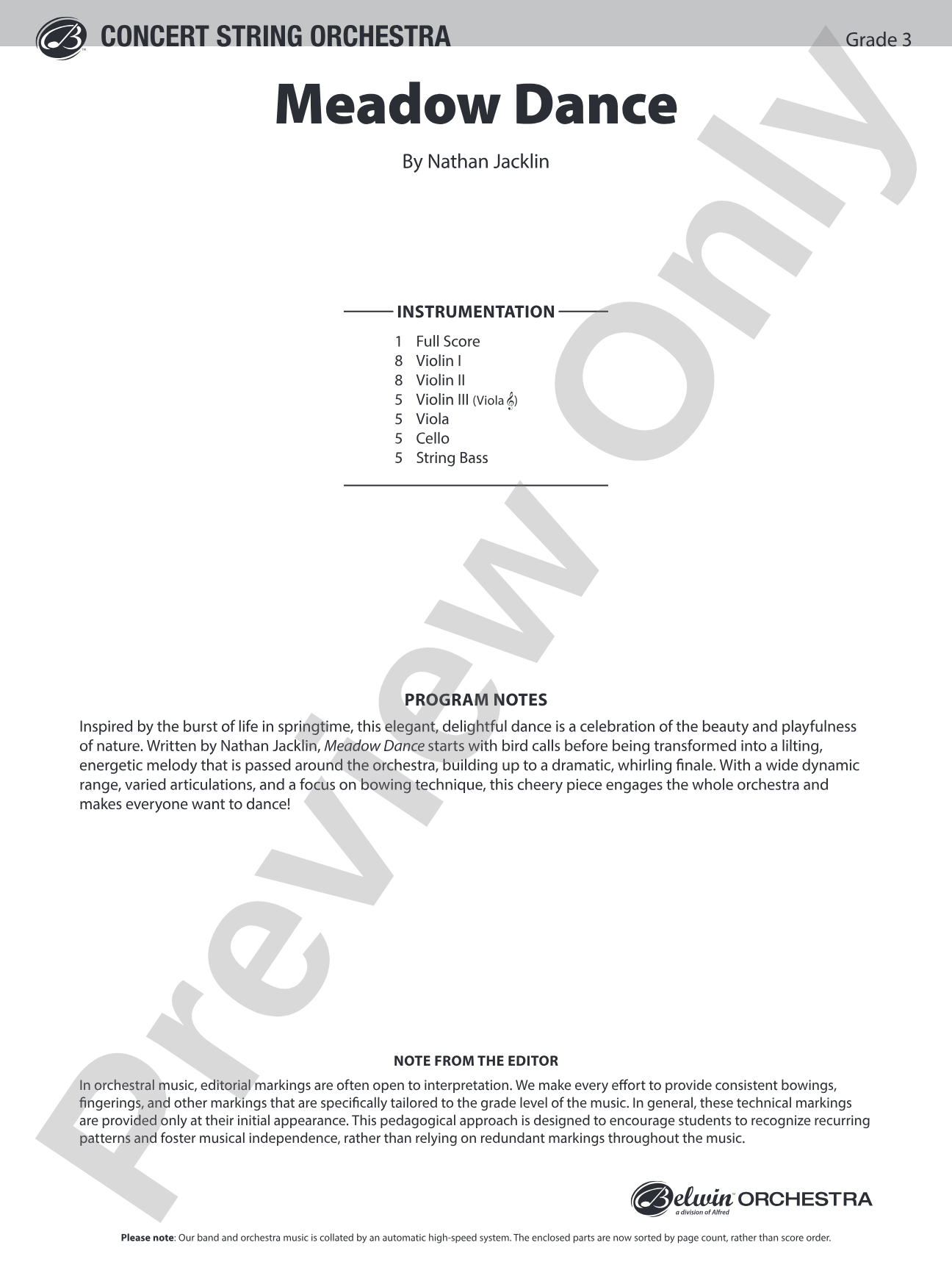
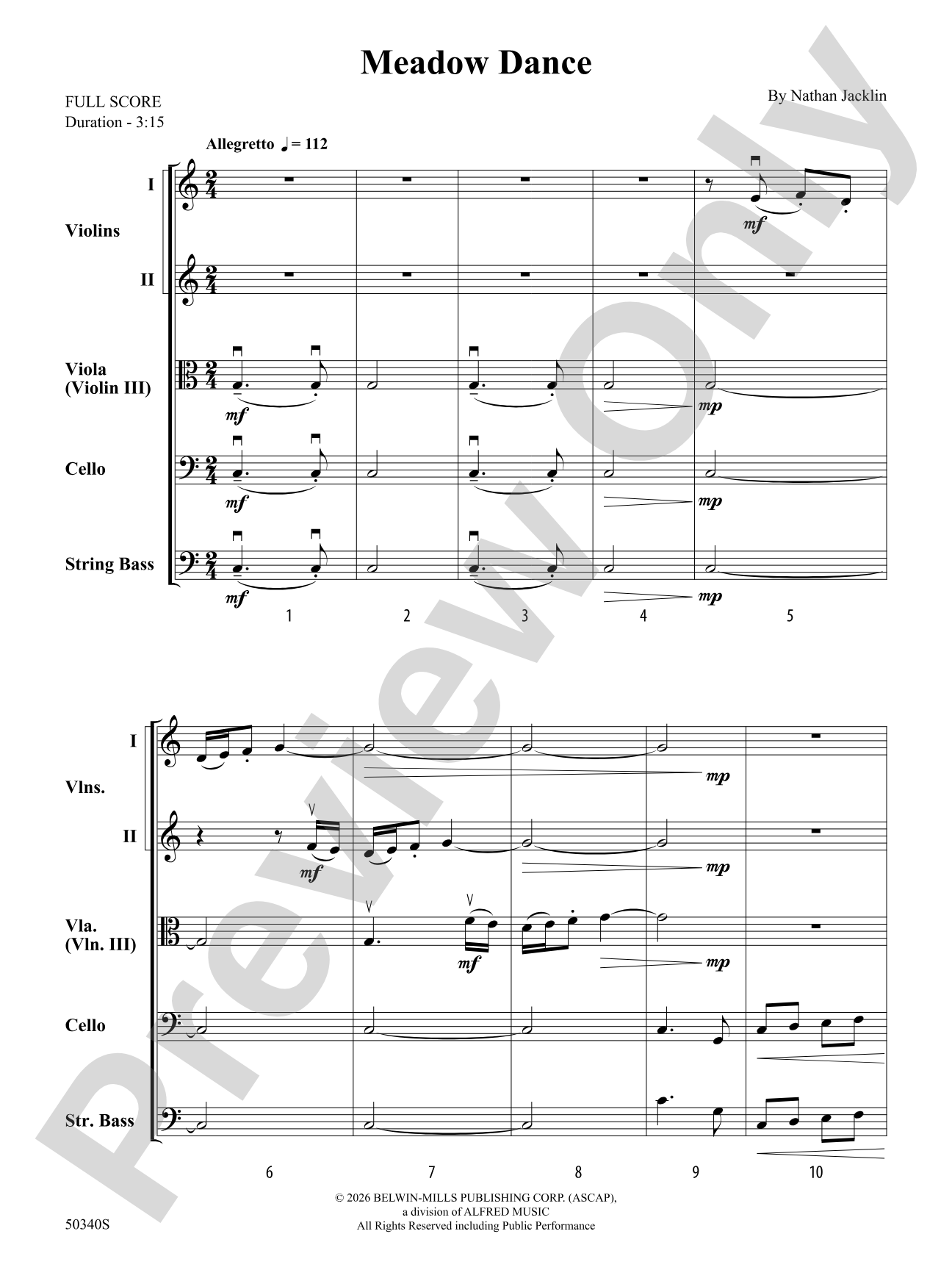
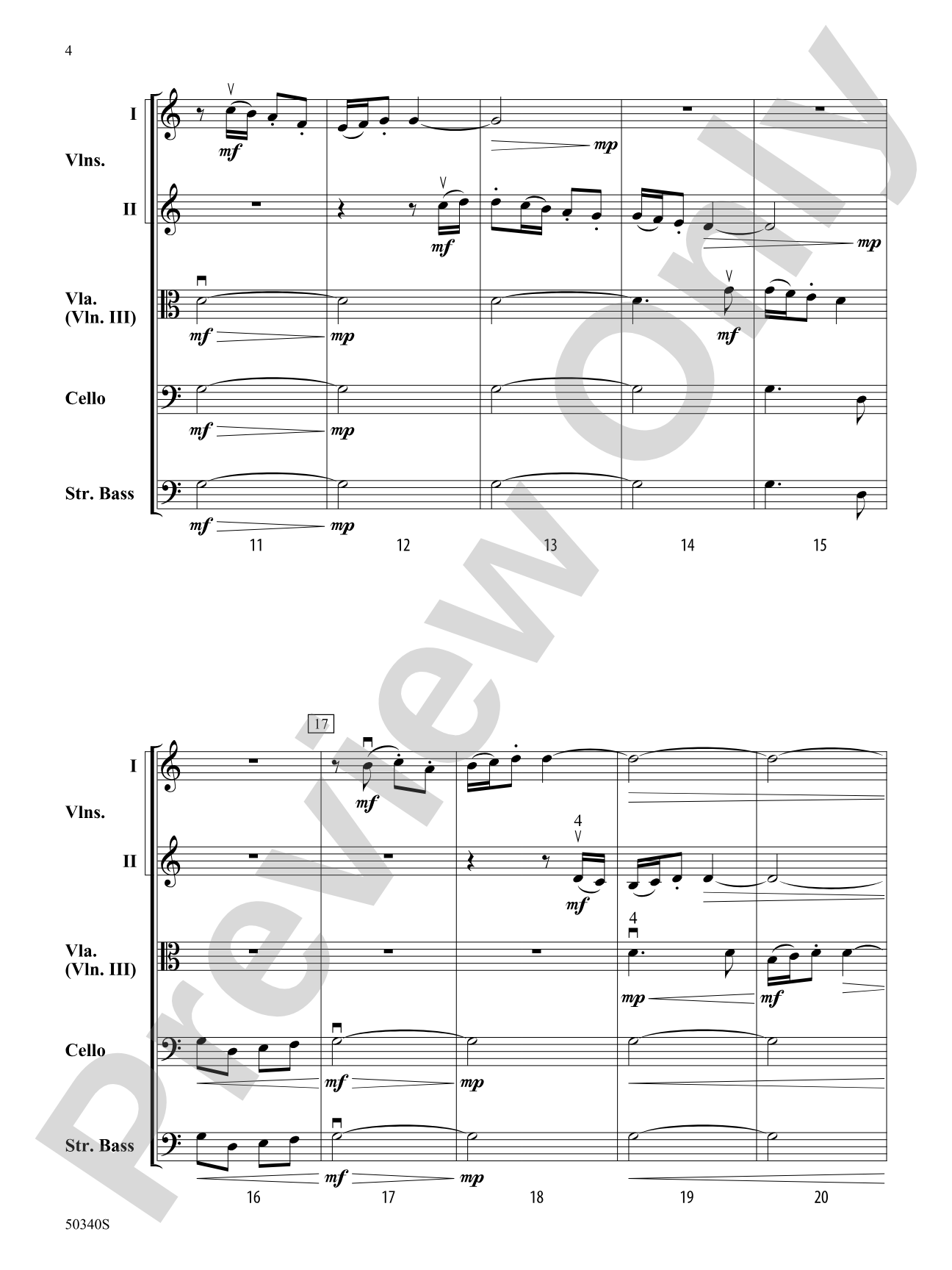
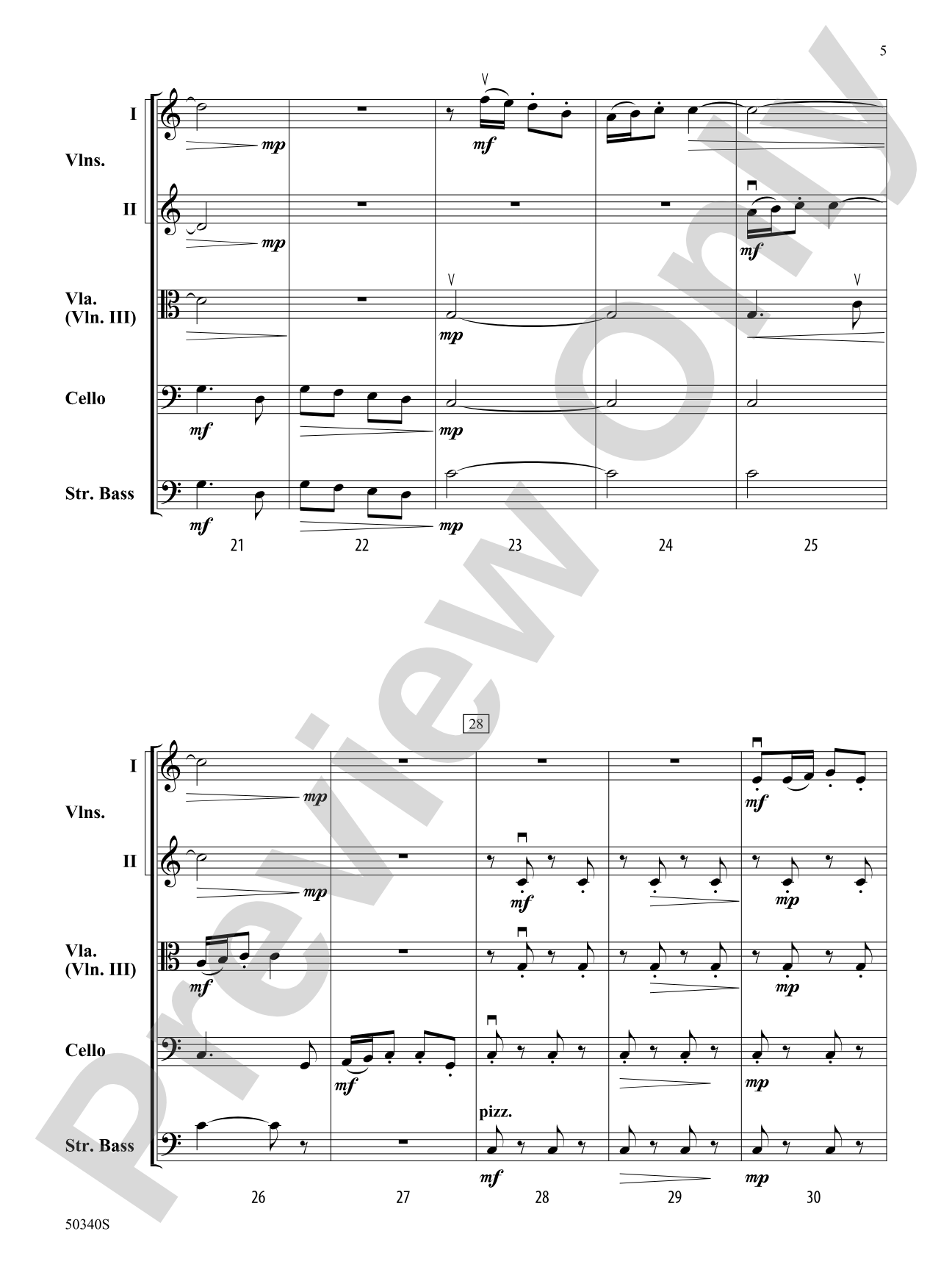
Inspired by the burst of life in springtime, this elegant, delightful dance is a celebration of the beauty and playfulness of nature. Written by Nathan Jacklin, Meadow Dance starts with bird calls before being transformed into a lilting, energetic melody that is passed around the orchestra, building up to a dramatic, whirling finale. With a wide dynamic range, varied articulations, and a focus on bowing technique, this cheery piece engages the whole orchestra and makes everyone want to dance!


Meadow Dance: String Orchestra Conductor's Score & Parts isn't in MakeMusic Cloud just yet...but it could be. Let us know you'd like to see it, and you'll help shape what comes next. In the meantime, start a free trial and dive into thousands of interactive titles your students can play along with today.
Request This Title
Tell us you want it.
Start Your Free Trial
Explore everything that's ready to play right now.
Sample Audio
1
Audio File
--:--
0:00
0:00
Sample Video
Additional Details
Series:
Belwin Beginning String Orchestra
Publisher:
Alfred Music
SKU:
00-PK-0009409
More about this title
About the Composer: Nathan Jacklin

Nathan Jacklin balances composition with an active career as a cellist, conductor, and educator across Europe and North America. His orchestral and band works have been performed by ensembles in Switzerland and Canada, reflecting a compositional voice grounded in practical knowledge of instrumental writing and ensemble dynamics.
Currently the Music Director for Musikgesellshaft Niederhasli and principal cellist with Orchestergesellschaft Zürich, Jacklin brings deep experience from his previous roles leading orchestras in British Columbia and his six years directing strings and orchestra at Oak Bay Secondary School. He continues supporting music education as a clinician and adjudicator while performing regularly with chamber orchestras in Zürich.
Why we love this
Meadow Dance captures the energy of young players discovering what their instruments can do together. The piece moves intelligently through contrasting textures, from impressionistic bird calls to a melody that travels through the section, so every student feels the arc and takes ownership of a moment. At this level, it's rare to find writing that asks for genuine bowing nuance and dynamic shape without becoming fussy or retreating into accompaniment patterns.
What to expect
Spring arrives with personality. The opening is crisp and full of wonder, the middle section dances with a lilting grace that invites your body to sway, and the finale whirls with genuine exuberance. This is music that sounds joyful without asking to be taken lightly.
Who it's for
String orchestra directors at the Grade 3 level who want a piece that feels celebratory without veering into saccharine territory. Ensembles ready to handle a wider dynamic and articulation palette will find this piece rewarding; it challenges players to think musically about color and phrasing, not just note-reading.
How to get the most out of it
- Shape the opening bird calls with clarity and space between phrases; this quiet moment sets up the energy that follows and gives the audience something to listen for.
- Pass the main melody smoothly between sections (violins to cellos to violas) by having the receiving section slightly lean into the entrance while the departing section tapers gracefully.
- Vary bow speed and pressure during the dynamic range shifts to avoid a thin sound at softer moments; Grade 3 players often back off intensity rather than refining their tone.
- Build the whirling finale gradually by tightening ensemble precision in the last ten measures; small rhythmic adjustments create the illusion of acceleration without changing the actual tempo.
How to use it
Pair this with other spring or nature-inspired works for a thematic concert, or use it as a bright contrast to a more serious piece in the same program. The cheery, energetic character makes it an ideal closer for a rehearsal concert or a mid-program mood-lifter at a larger festival performance.
Skills your students will build
- Dynamic contrast and tone control across a wide range (pianissimo to forte)
- Bowing technique including varied articulations and bow distribution
- Melodic passing between sections with clean hand-offs and balance
- Rhythmic precision in energetic, syncopated passages
- Listening and responding to the shape of phrases rather than playing measure-by-measure