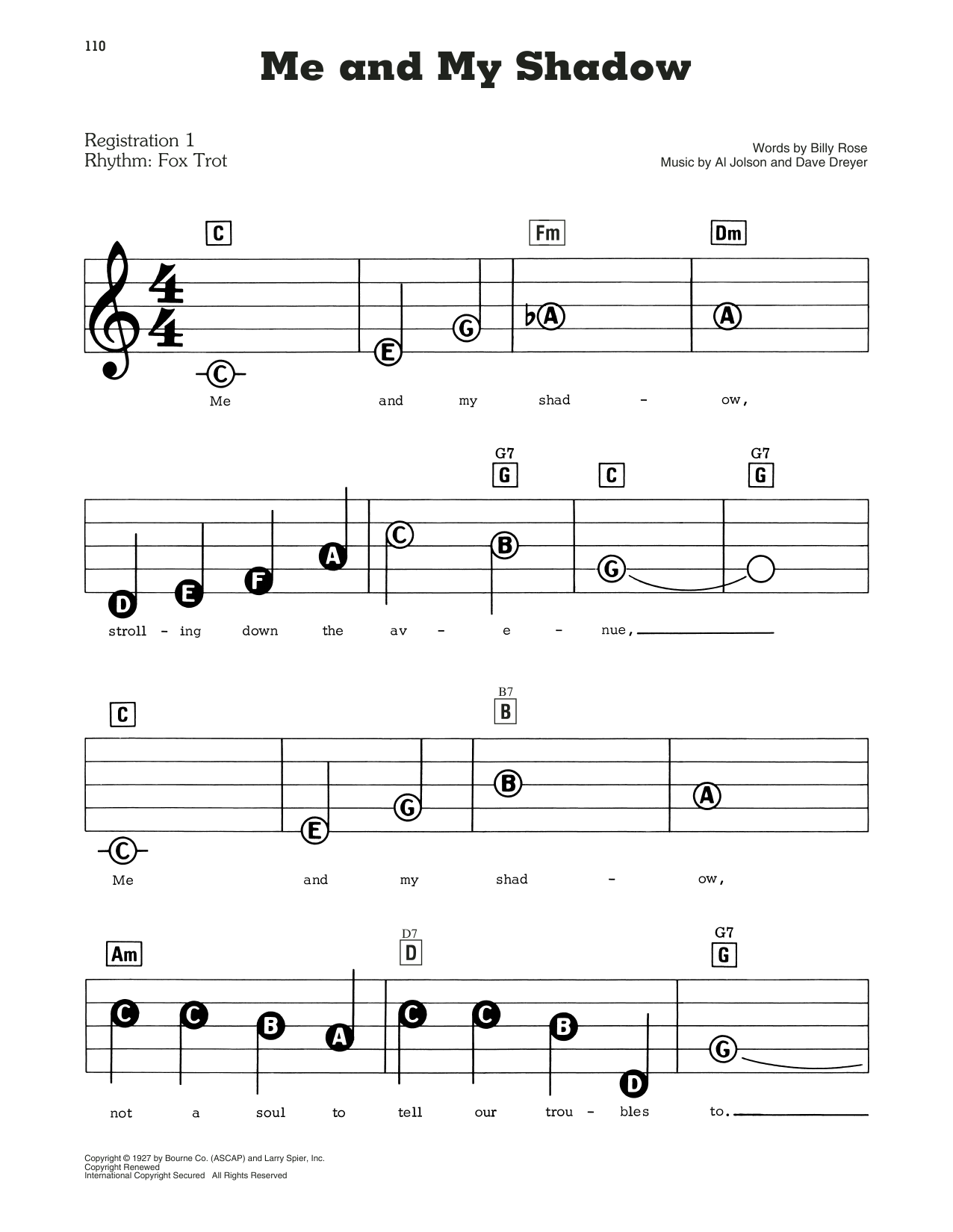
Me And My Shadow Sheet Music Preview

Me And My Shadow: E-Z Play Today

As performed by Frank Sinatra / As performed by Dean Martin / As performed by Ted Lewis / As performed by Sammy Davis, Jr.

Item: 35-DS01228784

Digital Download
$4.99
Description

Me And My Shadow: E-Z Play Today isn't in MakeMusic Cloud just yet...but it could be. Let us know you'd like to see it, and you'll help shape what comes next. In the meantime, start a free trial and dive into thousands of interactive titles your students can play along with today.

Sample Audio
No sample audio found.
Sample Video
Additional Details
Publisher: Hal Leonard
Page Count: 2
SKU: 35-DS01228784

More about this title

About the Artist: Frank Sinatra

Frank Sinatra defined American popular song through his phrasing, interpretive depth, and technical command of the microphone. His approach to melody and rhythm became the standard for generations of jazz singers, emphasizing storytelling and emotional authenticity over vocal display. Sinatra's influence extends beyond performance into the pedagogical realm; his recordings serve as masterclasses in how to shape a phrase, negotiate a lyric, and interact with a rhythm section.

Why we love this

This standard showcases the classic interplay between voice and piano that defines mid-century jazz piano. The arrangement sits comfortably under the hands while preserving the sophisticated harmonic language that made this tune a favorite for Sinatra, Martin, Lewis, and Davis Jr., making it ideal for students learning to voice jazz chords with elegance and restraint.

What to expect

Warm and intimate, like a late-night club set where the piano provides the emotional foundation for a story being told. The harmony moves with a gentle sophistication, never hurried, inviting the player to explore the spaces between the notes.

Who it's for

Jazz pianists at the intermediate level who want to develop their accompanying voice and learn how to comp behind a vocalist or soloist. This also works well for students studying the American Songbook and seeking a two-page reference that balances playability with authenticity.

How to get the most out of it

  • Listen closely to how the recorded artists shape the melody; their timing sits slightly behind or ahead of the beat in ways that communicate personality. Experiment with placement rather than locking rigidly to the click.
  • Voice the left hand to support the melody without competing for attention. Keep tenths and thick voicings sparse, letting the right hand sing.
  • Find the story in the lyric even as an instrumentalist. Play as though you're accompanying someone who's about to walk in and sing.

How to use it

Pair this with a vocal student or saxophone player for a chamber jazz recital. It also works as a teaching tool in a jazz history unit focused on the Great American Songbook, offering students concrete exposure to how pianists of that era supported singers.

Skills your students will build

  • Jazz voicing and comping in a standard song form
  • Balancing melody and accompaniment on a single instrument
  • Phrasing and rhythmic flexibility in jazz idiom
  • Reading and realizing lead sheet symbols in context
  • Understanding the relationship between piano and vocalist

You May Also Like