
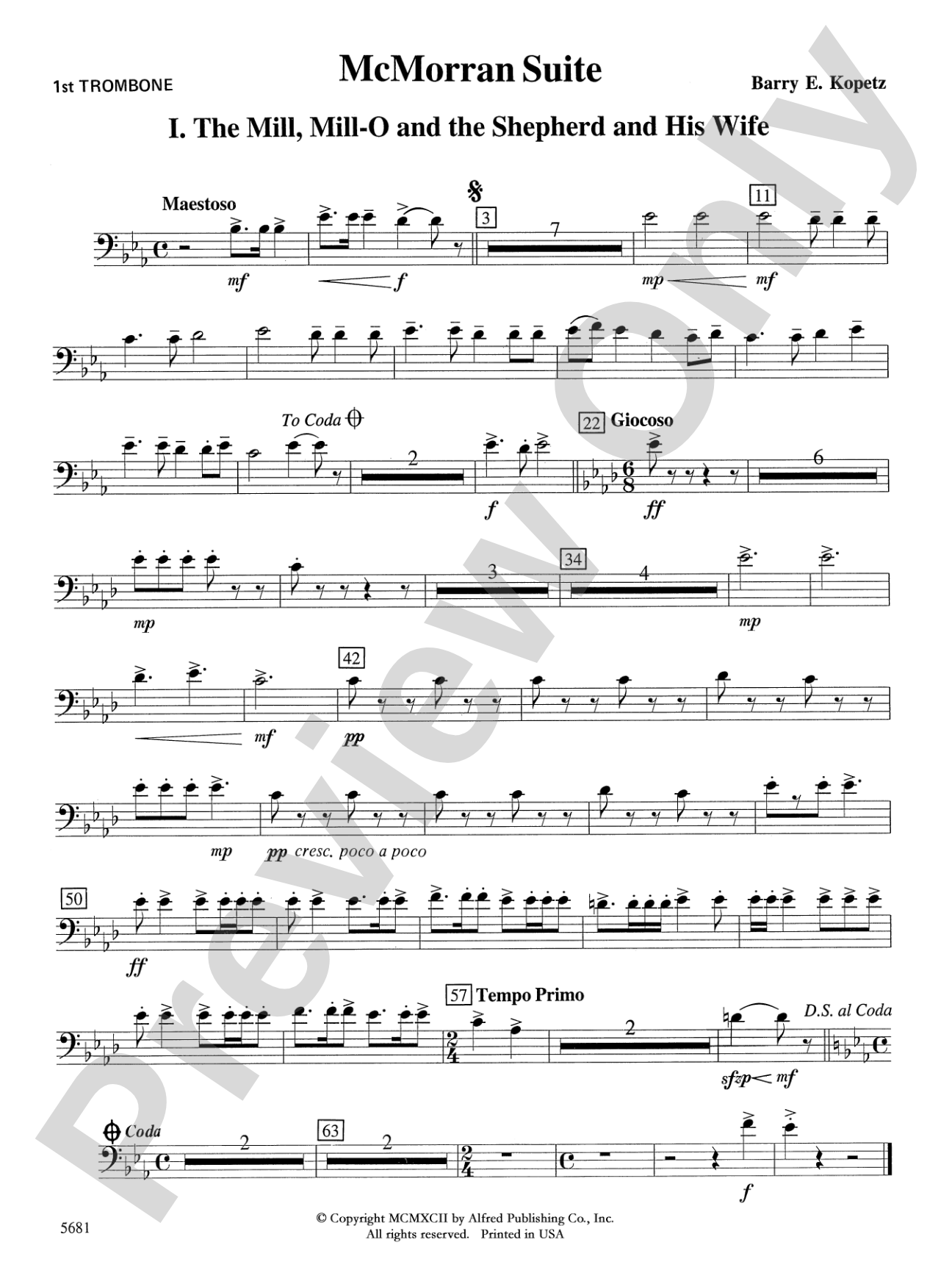

McMorran Suite: 1st Trombone
Music by Barry E. Kopetz
Grade: 4 (Medium Difficult)
Item: 00-PC-0001911_TN1
$3.00
Pickup currently not available
Description
Commissioned to honor Robert McMorran for 31 years of dedicated service (Circle Pines, Minnesota), this adventurous suite features three movements with themes based on five Scottish folk songs. Expressive melodies, rollicking dance rhythms and clever bagpipe effects make this beautifully orchestrated work the perfect showcase for the mature, versatile concert band. (Grade 4)


Don't just read it, hear it, play along with it, and watch your students grow with it. In MakeMusic Cloud, McMorran Suite: 1st Trombone comes alive with professional accompaniment, adjustable tempo, and built-in practice tools that turn solo practice into real progress.
Open in the Player
Jump straight in and assign it today.
Start Your Free Trial
Open this title and explore the full library in minutes.
Sample Audio
1
Audio File
--:--
0:00
0:00
Sample Video
No sample videos found.
Additional Details
Series:
Alfred Concert Band
Publisher:
Alfred Music
Page Count:
3
SKU:
00-PC-0001911_TN1
More about this title
About the Composer: Barry E. Kopetz
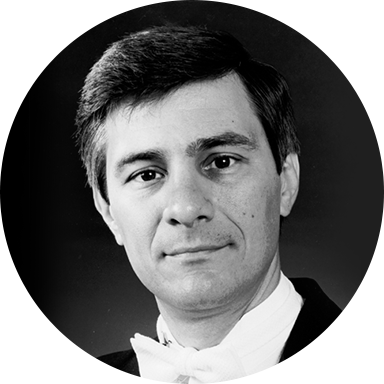
Barry E. Kopetz has taught conducting, arranging, and wind repertoire at multiple universities including Capital University (where he directs the Wind Symphony and Chamber Winds), the University of Utah, the University of Minnesota, and Bowling Green State University. His academic preparation includes bachelor's and master's degrees from Ohio State University and a doctorate with distinction from Indiana University's School of Music, where his conducting studies shaped a career marked by guest conducting appearances and adjudication work across the United States and Australia.
As a composer and arranger, Kopetz has created more than 50 published works for band and wind ensemble. He brings this same craftsmanship to his writing for Instrumentalist magazine, where he regularly analyzes works from the standard concert band repertoire. His creative reach extends beyond the concert hall into orchestration for television and film, and he holds membership in the American Bandmasters Association, elected in 1998.
Why we love this
Kopetz crafts a suite that honors its subject while delivering genuine musical substance. The integration of Scottish folk song themes across three movements gives the work structural coherence and programmatic appeal, while the Grade 4 orchestration never sacrifices sophistication for accessibility. Bagpipe effects and dance rhythms keep players engaged and audiences entertained, making this an ideal choice for a concert that celebrates both community and musical craft.
What to expect
The McMorran Suite straddles beauty and exuberance. Scottish melodies weave through orchestrations that range from intimate and song-like to vibrant and full of character, with bagpipe colors adding regional authenticity without ever feeling gimmicky. The work celebrates both the honoree and the versatility of a mature concert band.
Who it's for
Concert bands seeking a mature, audience-friendly suite that balances entertainment with musical substance. This works well for groups comfortable with Grade 4 technical demands who want a multi-movement work that highlights both delicate lyrical playing and rhythmic precision.
How to get the most out of it
- Highlight the distinctiveness of each movement by adjusting articulation and phrase shape. The folk song melodies need room to sing, especially in passages marked expressively.
- Balance the bagpipe effects so they enhance rather than overwhelm the melodic material. These colors work best when orchestrated clearly across the band.
- Keep the rollicking dance sections propulsive without rushing. Establish a strong rhythmic foundation in the lower voices and let the ensemble lock in before adding lyrical details.
- Pay attention to dynamic contrasts between movements. Moving smoothly from one character to the next will showcase the suite's range and maintain listener engagement.
How to use it
Program this suite as the centerpiece of a concert honoring someone special or to open a concert that needs an accessible but substantive first piece. Its three-movement structure also makes it suitable as a palate-cleanser mid-program between heavier symphonic works.
Skills your students will build
- Sustaining warm, singing tone in melodic passages
- Executing bagpipe effects and Scottish folk idioms with accuracy
- Balancing expression with rhythmic precision in dance sections
- Transitioning smoothly between contrasting musical characters
- Orchestral listening and blend across three-movement form