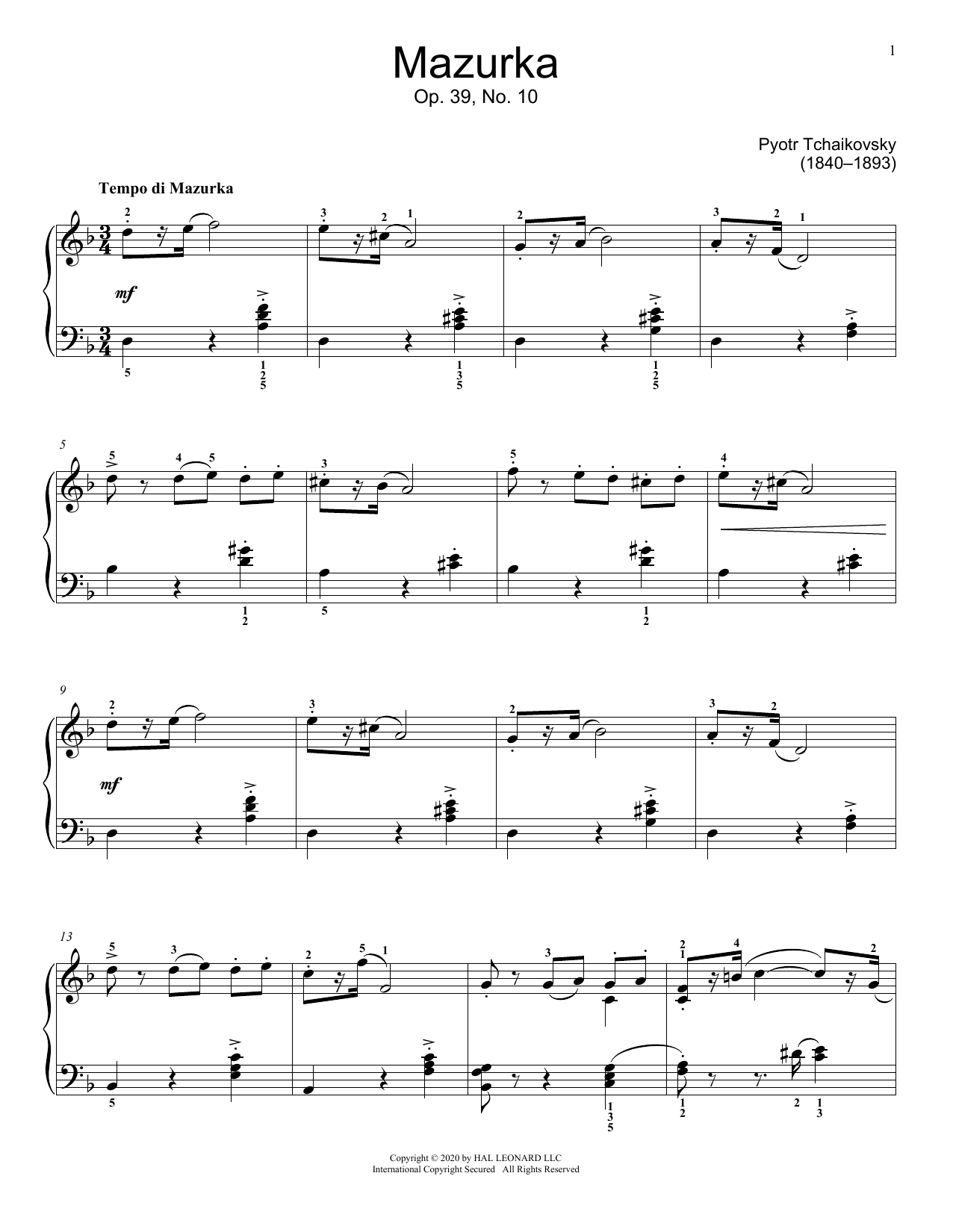
Mazurka In D Minor, Op. 39, No. 10 Sheet Music Preview

Mazurka In D Minor, Op. 39, No. 10: Educational Piano

Edited by Jennifer Linn

Item: 35-DS00457881

Digital Download
$4.99
Description

Discover MakeMusic Cloud: thousands of interactive titles your students can play along with today.

Sample Audio
No sample audio found.
Sample Video
Additional Details
Publisher: Hal Leonard
Page Count: 3
SKU: 35-DS00457881

More about this title

About the Creator: Frédéric Chopin

Frédéric Chopin stands as one of the nineteenth century's most influential composers for the keyboard. His output, though modest in volume, fundamentally transformed what pianists could express through the instrument, blending virtuosic figuration with profound harmonic innovation and a gift for melody that rivals any songwriter.

Chopin's mazurkas represent some of his most personal work. Written throughout his career, these pieces draw on the rhythms and character of Polish dance music while achieving a sophistication and emotional depth that transcends their folk origins. The Op. 39 collection, published in 1840, shows the composer at full maturity, crafting miniatures of remarkable density and beauty.

Why we love this

Chopin's mazurkas occupy a sweet spot for serious piano students: challenging enough to demand real interpretive choices and technical refinement, yet short enough to allow for deep study without overwhelming the learner. This D minor work carries genuine emotional substance that rewards careful practice, and its three-page length makes it realistic for students preparing recitals or examinations without consuming an entire practice semester.

What to expect

The D minor tonality gives this mazurka a pensive, introspective character that sets it apart from Chopin's brighter examples of the form. The piece unfolds with a kind of conversational intimacy, moving between moments of reflection and subtle passion, with harmonic turns that catch the ear and invite listeners into the composer's private world.

Who it's for

Intermediate to advanced piano students ready to explore the nineteenth century Romantic sound and the technical demands that come with it. Teachers seeking elegant repertoire for recitals, competitions, or examinations will find this piece both musically rewarding and achievable within a reasonable timeframe.

How to get the most out of it

  • Shape the characteristic dotted rhythms with clarity rather than rushing; they define the mazurka's dance character and shouldn't collapse into the accompaniment figures.
  • Balance the melody against the supportive harmonies in your left hand so that the shape of each phrase emerges without the piece sounding thick or muddy.
  • Lean into the chromatic passing tones and altered harmonies Chopin uses, as these moments of harmonic color are crucial to the work's emotional arc.
  • Find your own tempo by listening carefully to how the rubato sits; Chopin expects flexibility and breathing, not metronomic precision.

How to use it

This works beautifully as a solo recital piece or as part of a Romantic era grouping. Pair it with other Chopin mazurkas or nocturnes to create a thematic evening, or program it alongside contemporary Romantic works to give students exposure to the stylistic landscape of nineteenth century salon music.

Skills your students will build

  • Chopin-style rubato and interpretive phrasing
  • Voicing chords to highlight harmonic movement
  • Executing dotted rhythms with precision and character
  • Left hand independence and accompaniment texture control
  • Pedal management in minor key harmony
  • Reading and performing chromatic voice leading

You May Also Like