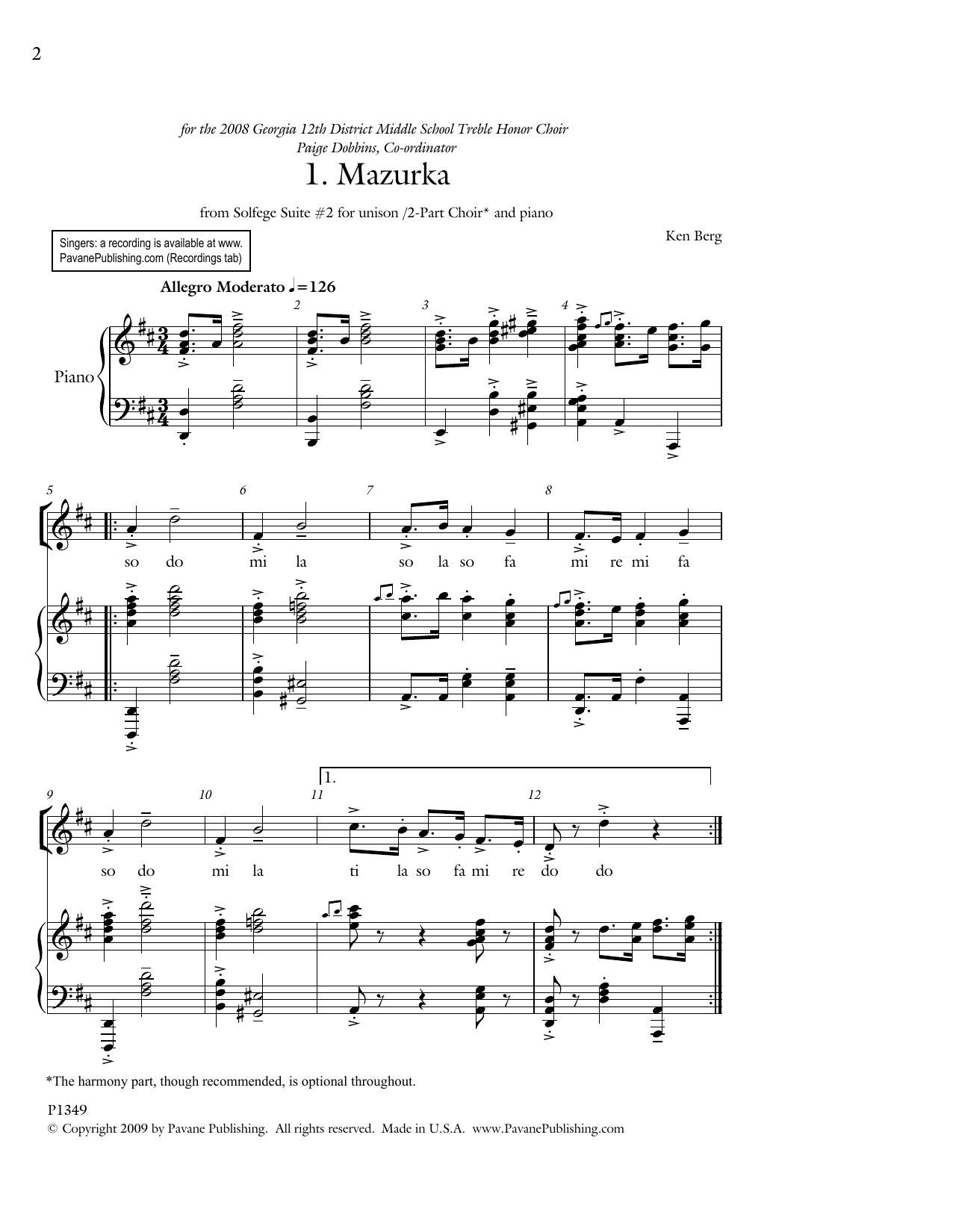
Ken Berg writes unison music that respects young singers' voices while giving them genuinely musical material to perform. The Mazurka sits comfortably in an accessible range, but the folk character and rhythmic vitality mean your choir stays engaged rather than simply singing an exercise.
What to expect
The Mazurka captures the spirit of a traditional folk dance: rhythmically supple, buoyant, with an almost conversational quality. Despite its simplicity, it carries genuine character and invites singers to inhabit a musical world beyond the page.
Who it's for
Beginning and developing choirs benefit from this unison setting's accessibility and lack of part coordination demands. Solo repertoire development, festival participation, and informal performance contexts all suit this piece well.
How to get the most out of it
Establish the mazurka's characteristic rhythm early in rehearsal by clapping the accompaniment pattern separately; this trains ears to lock into the dance meter before voices enter.
Shape phrases as if telling a folk story rather than delivering a choral exercise. Singers should feel forward momentum, not cautious precision.
Balance clarity of text with the lilt of the melody; unison work is an opportunity to refine diction as a unified ensemble rather than manage part independence.
How to use it
Program this alongside other folk arrangements to create a thematic set, or place it in a lighter section of your concert to shift the energy and mood. The seven pages mean it works as a complete shorter piece or a confident opener for less experienced ensembles.
Skills your students will build
Rhythmic independence in mazurka meter and folk dance styles
Unison singing with unified tone and phrasing
Text clarity and diction at a moderate tempo
Understanding of folk music traditions and stylistic expression
You May Also Like
Scan to Complete Your Purchase
Use your phone's camera to scan the code below
You'll log in on your phone and the order will be added to your account