
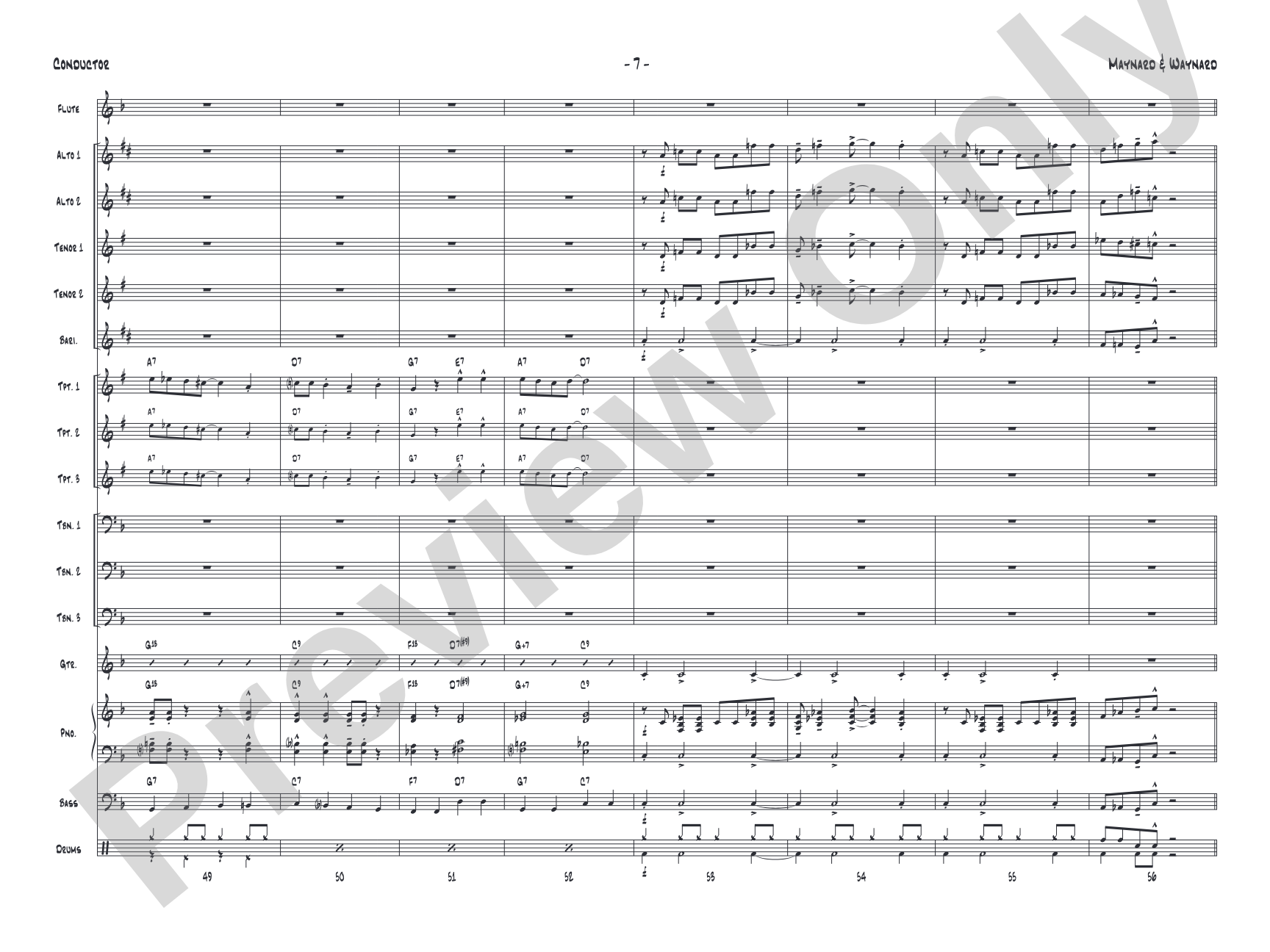
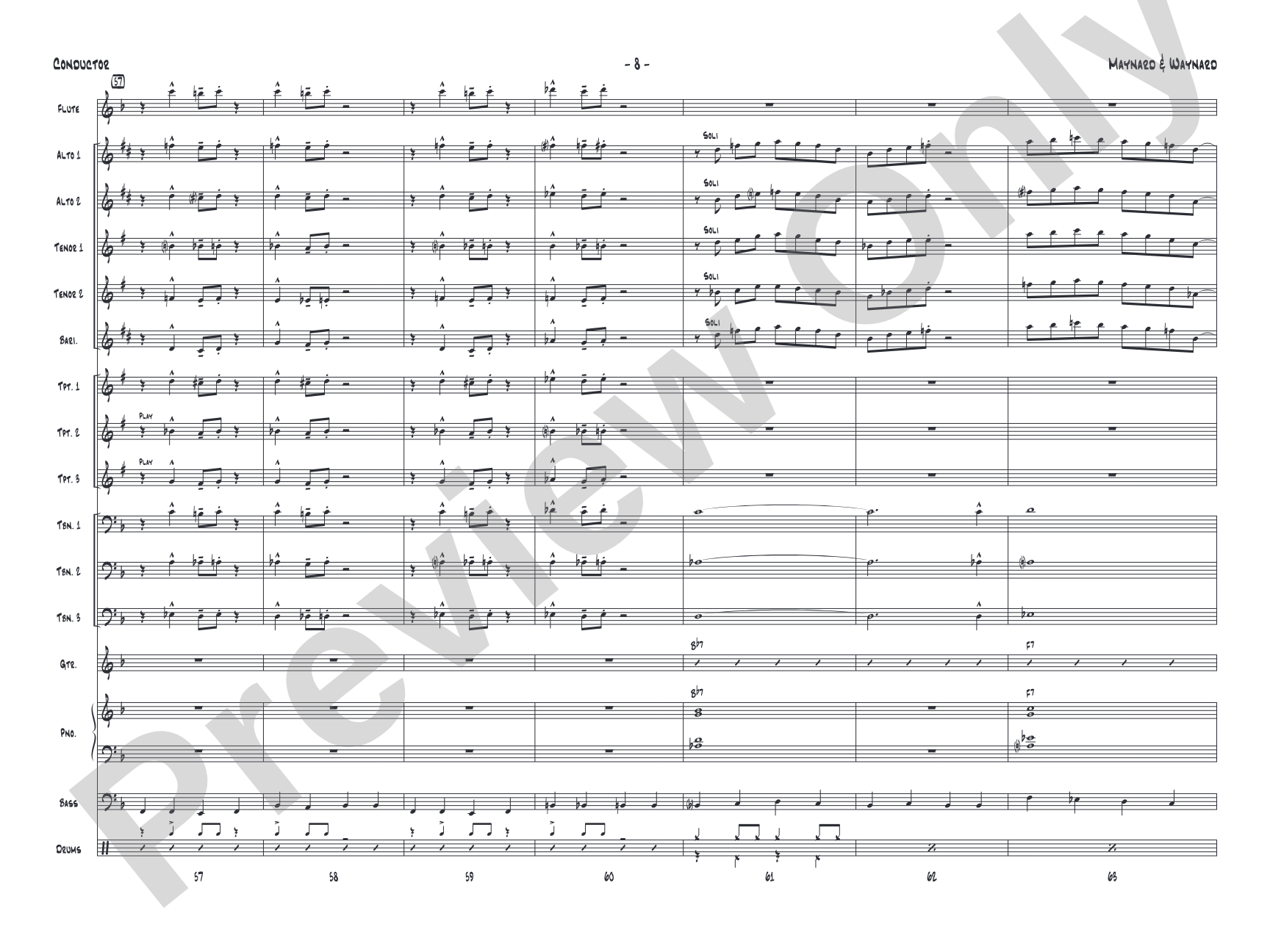
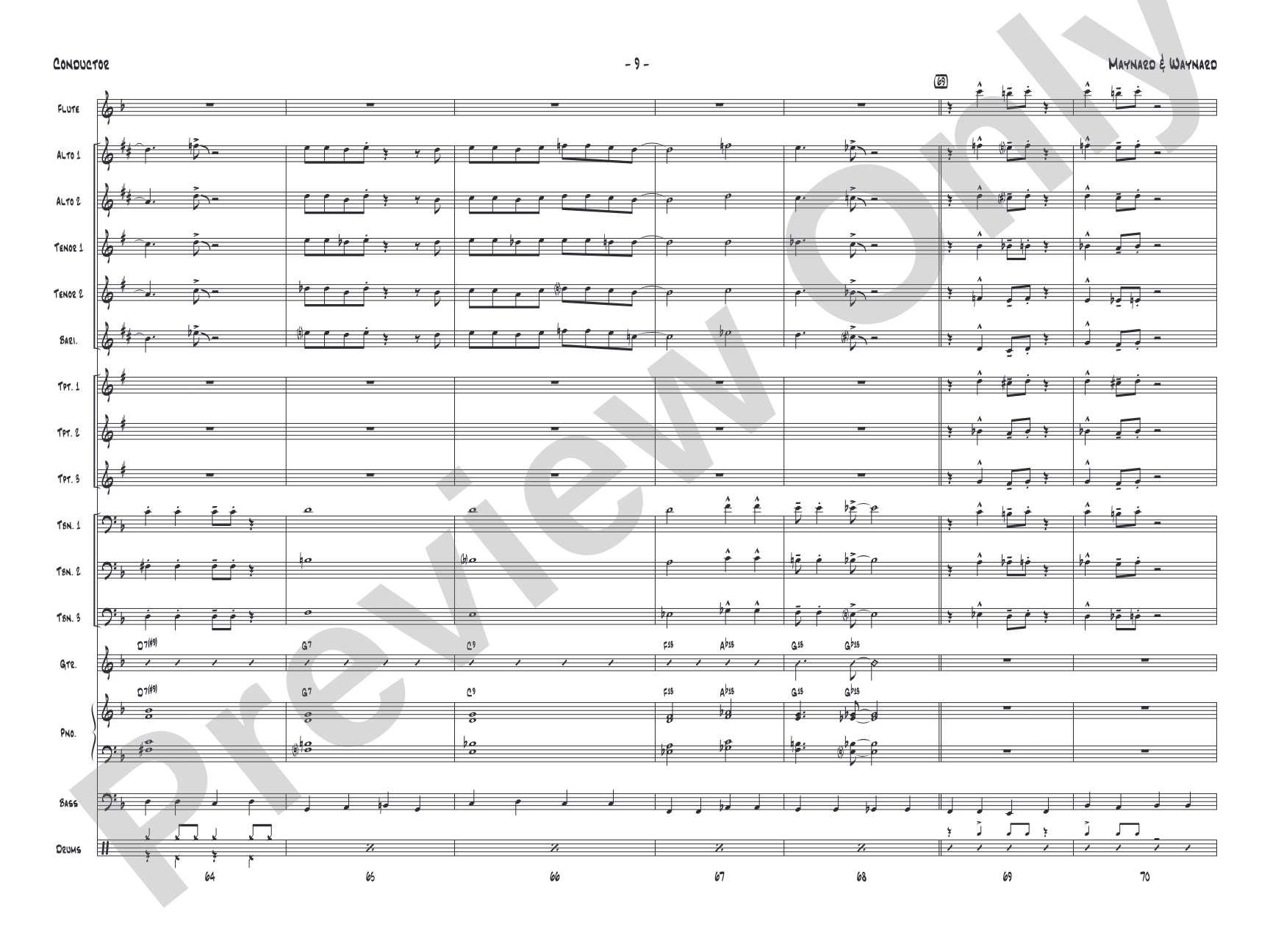
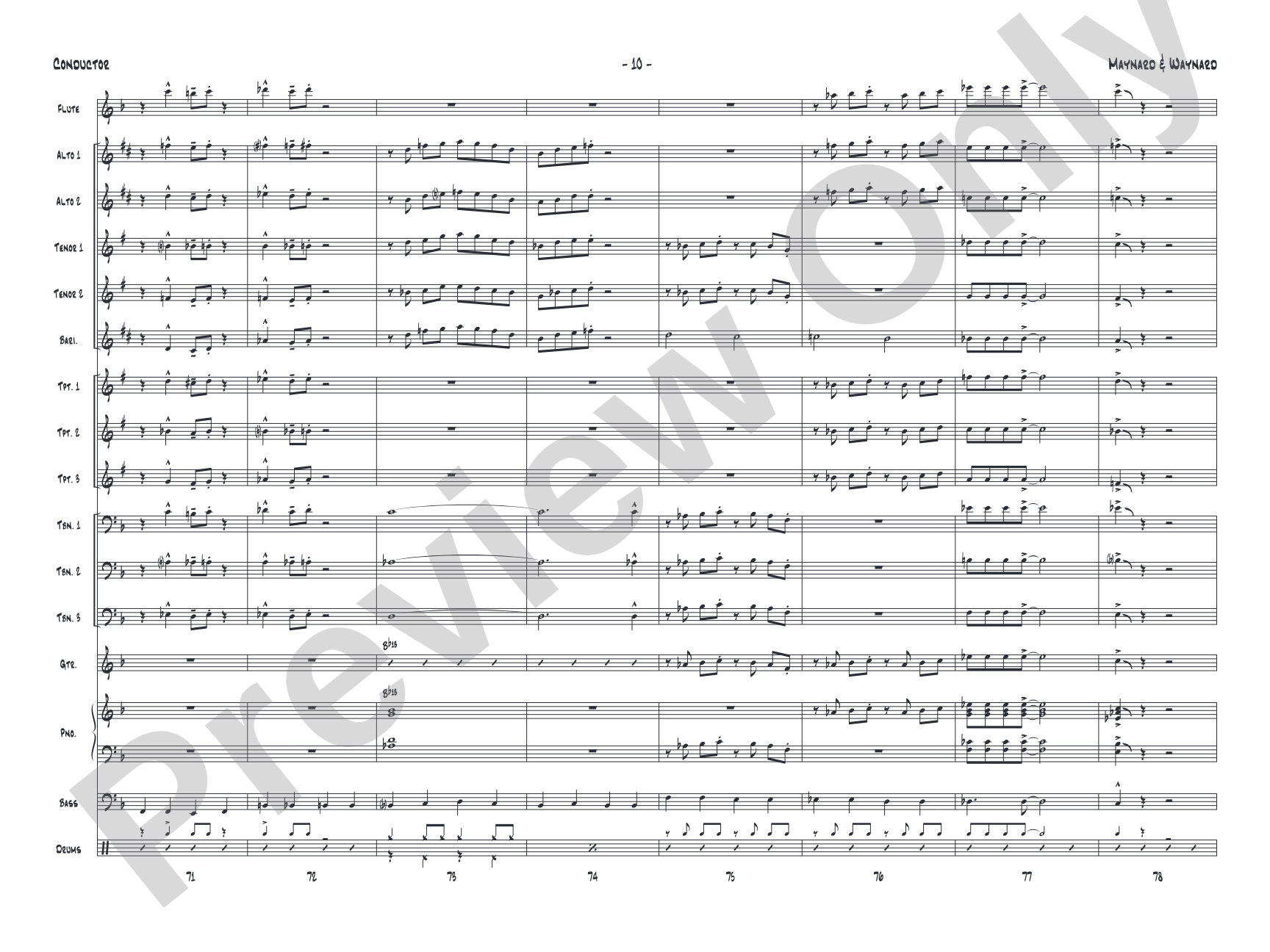
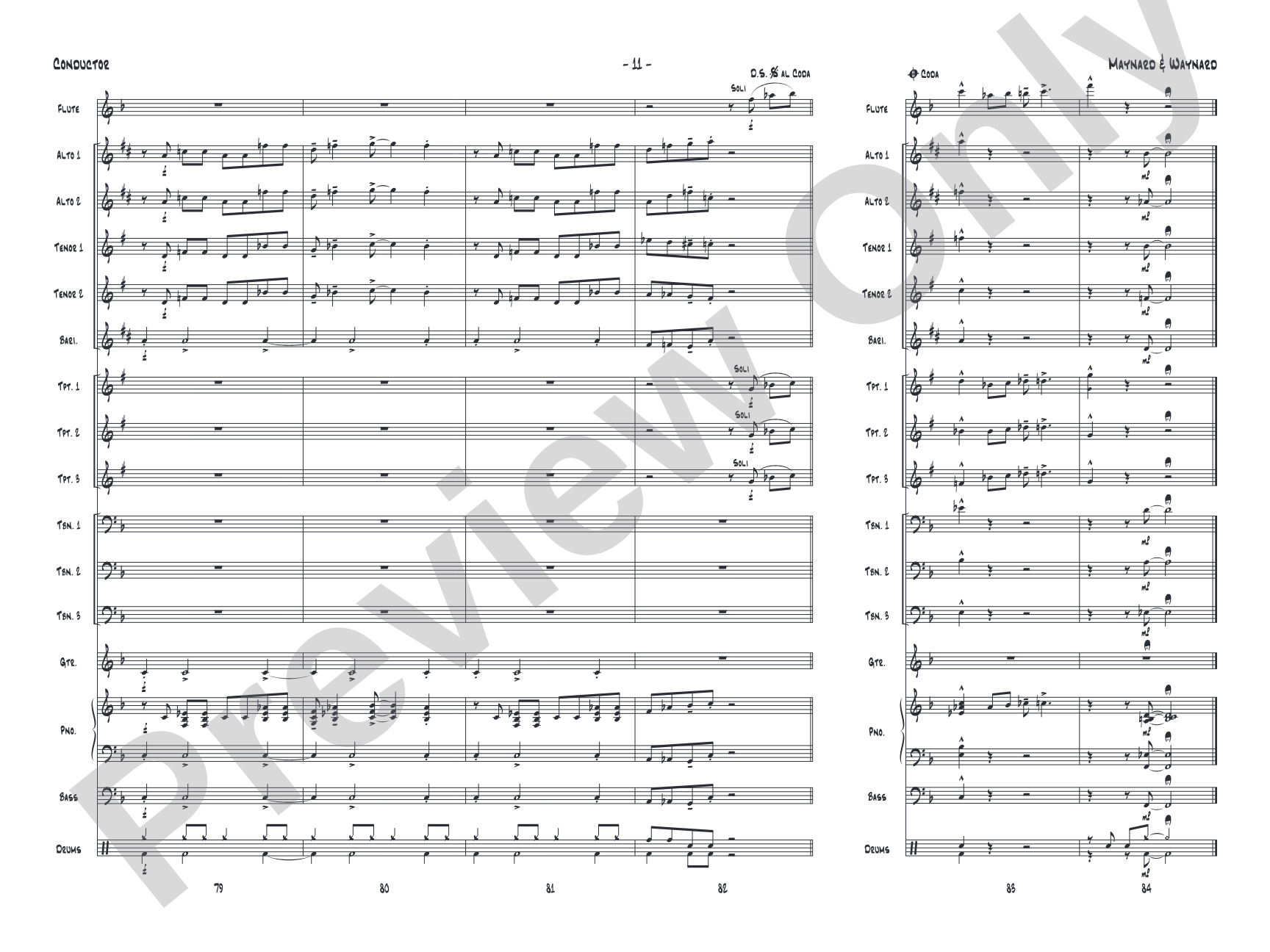

Maynard & Waynard: Score
By Gordon Goodwin / arr. Peter Blair
Grade: 1 (Easy)
Item: 00-PR-0005495
$7.00
Pickup currently not available
Description
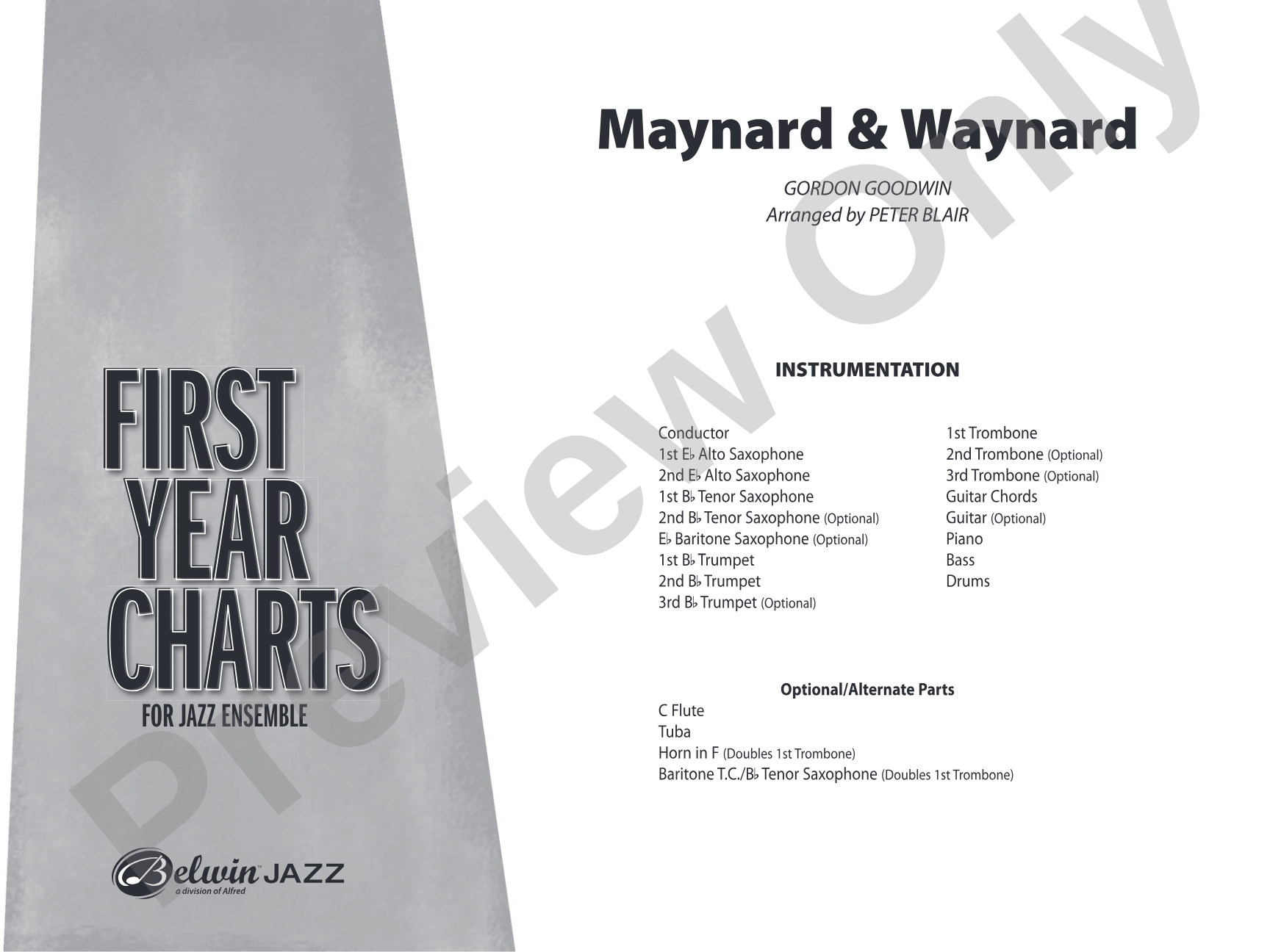
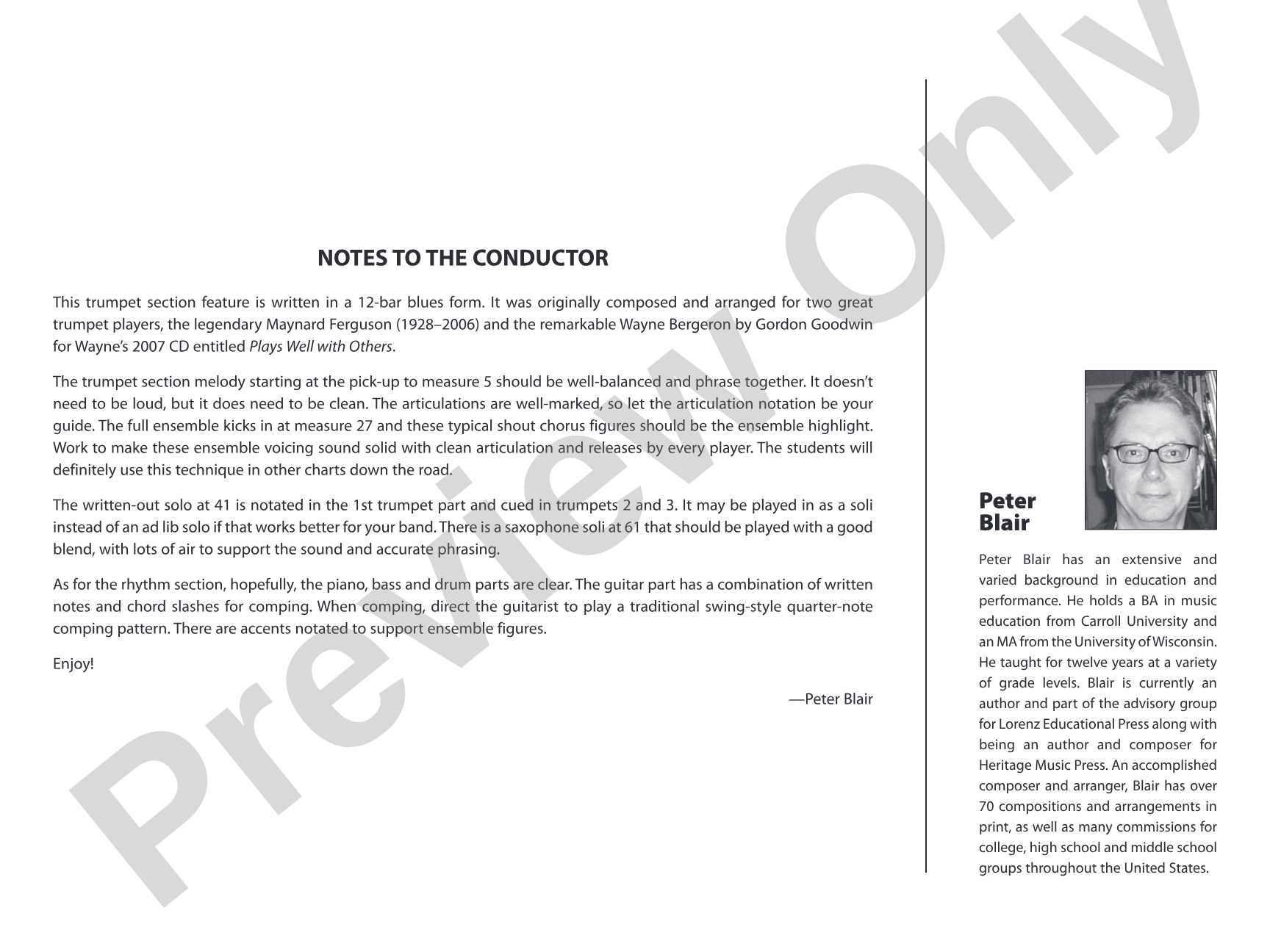
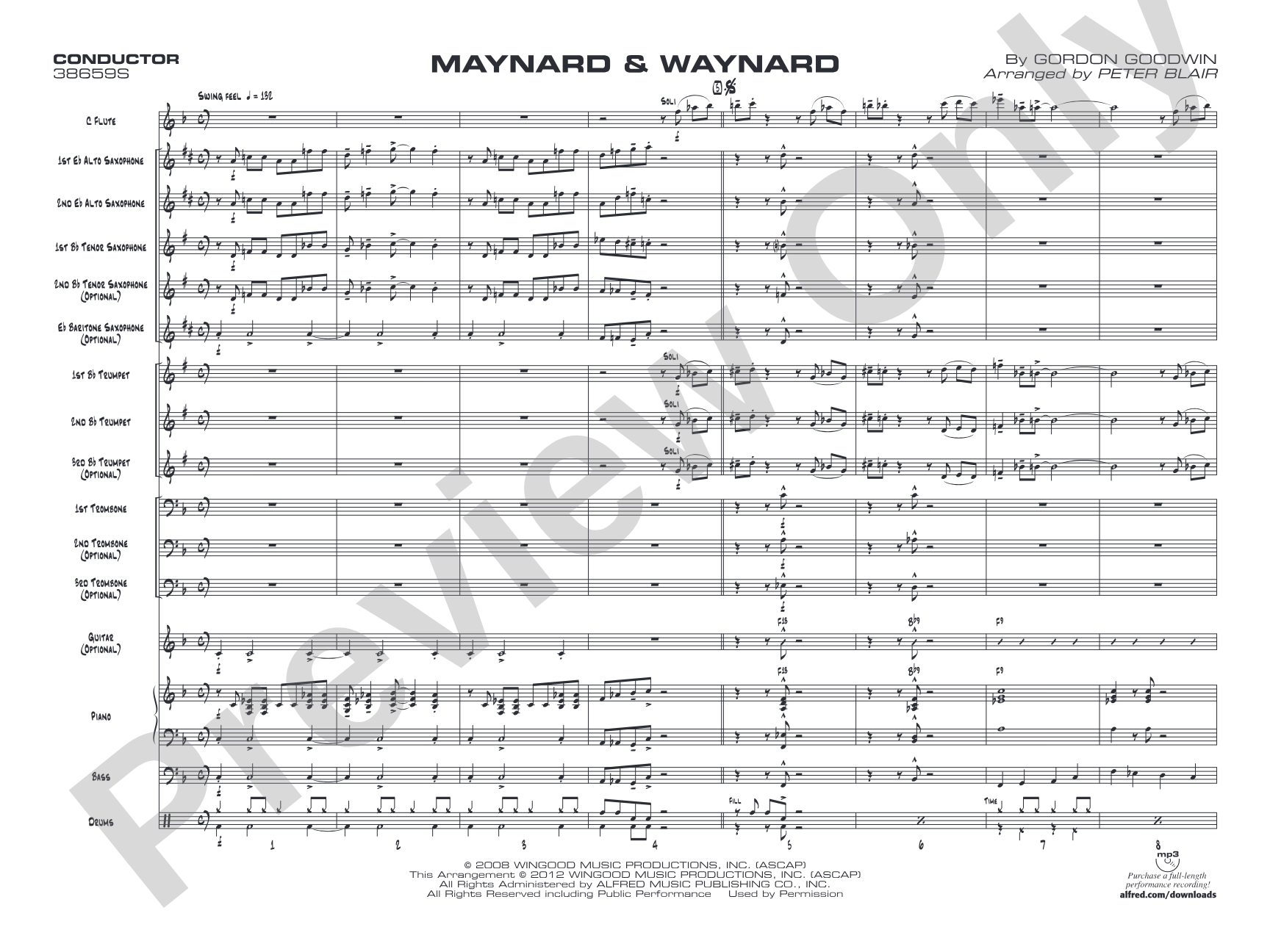
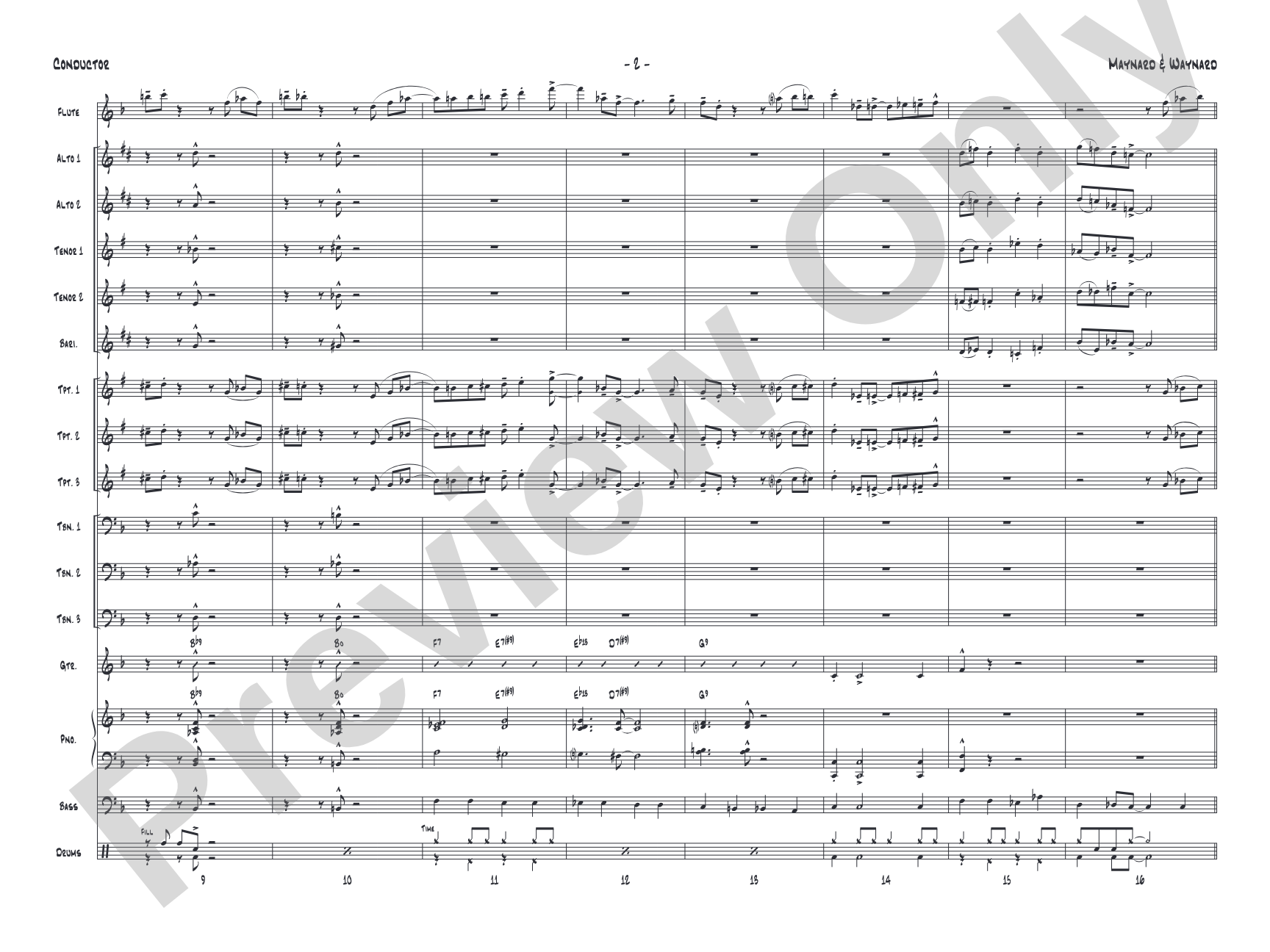
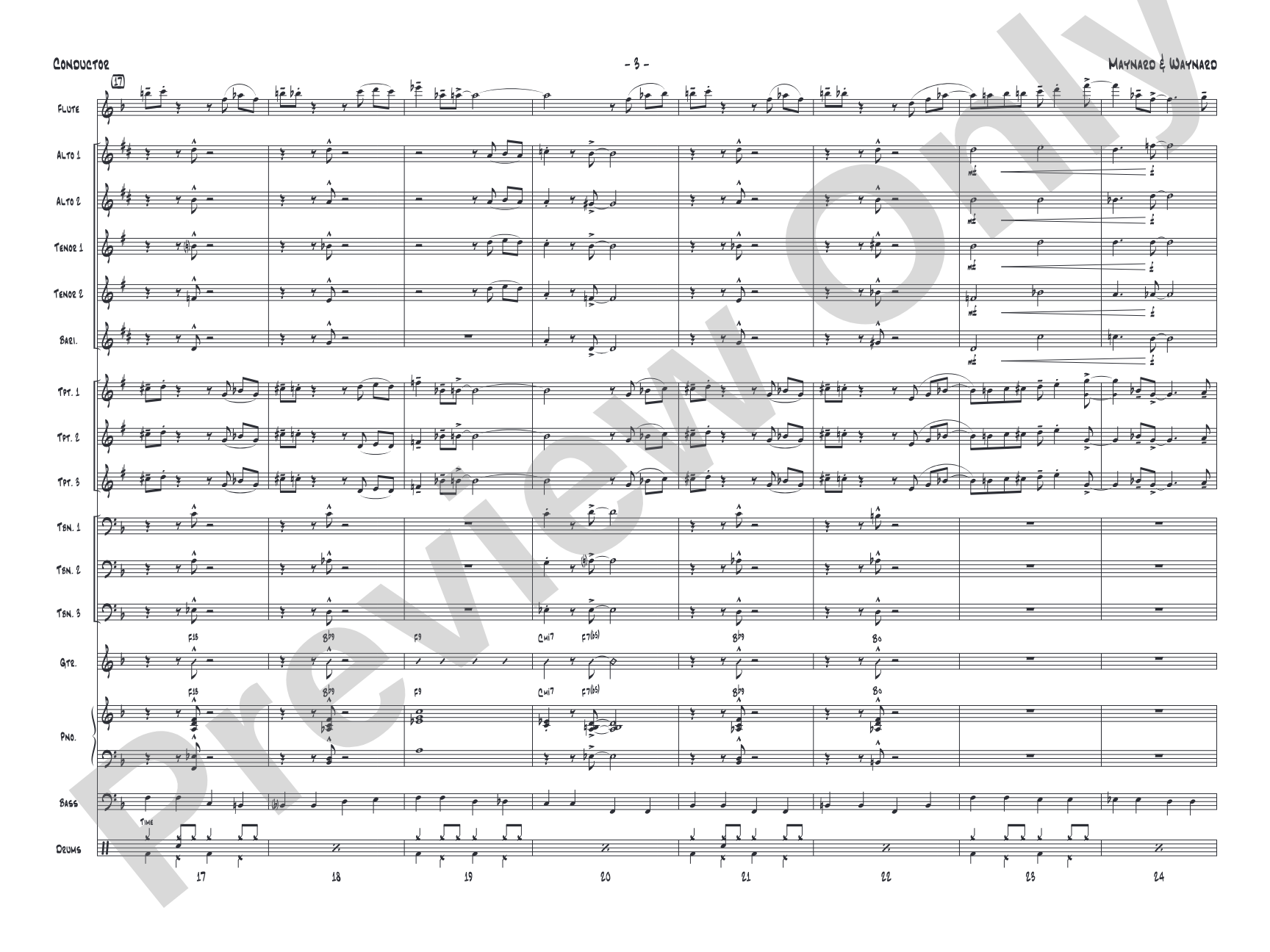
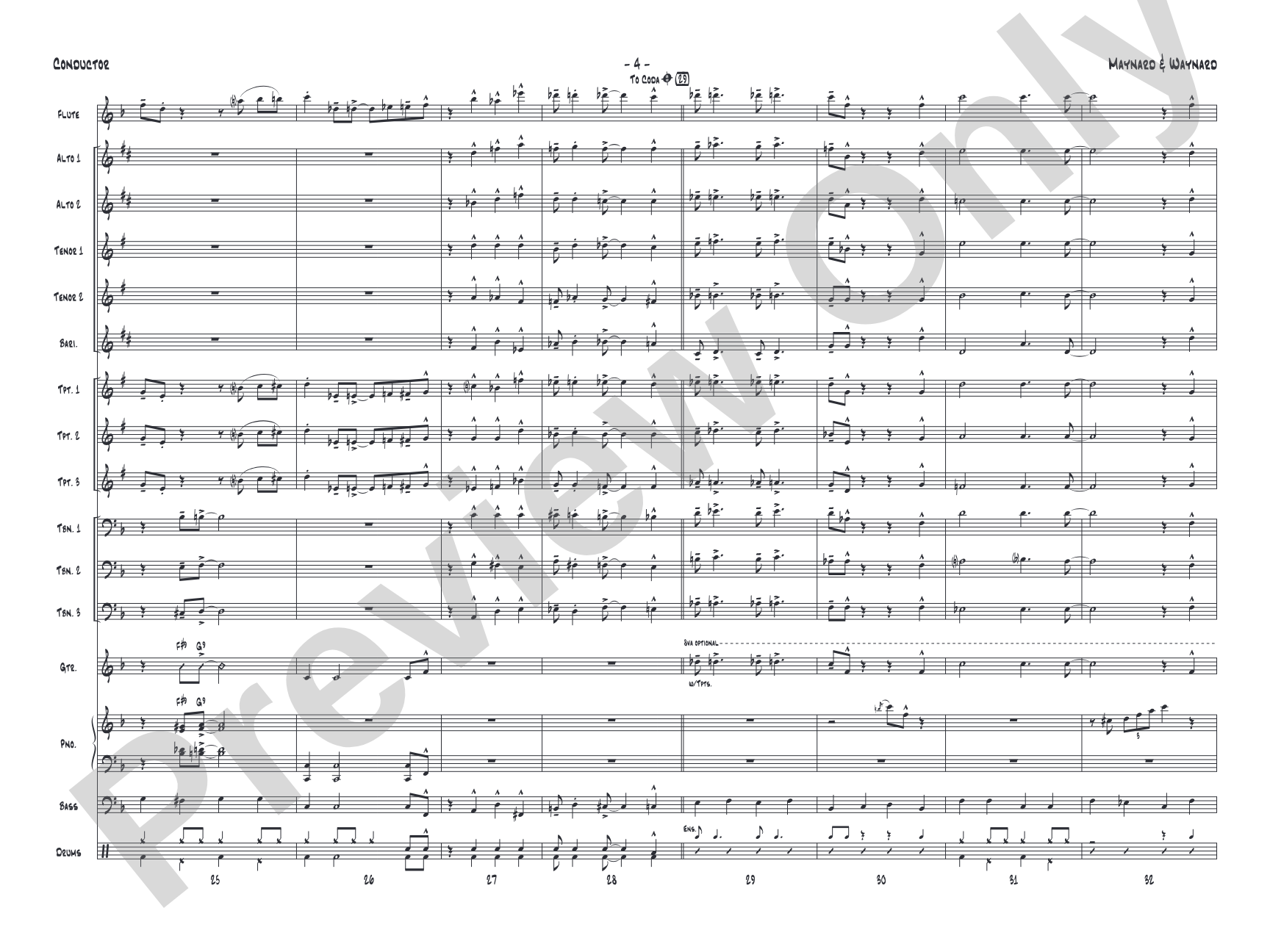
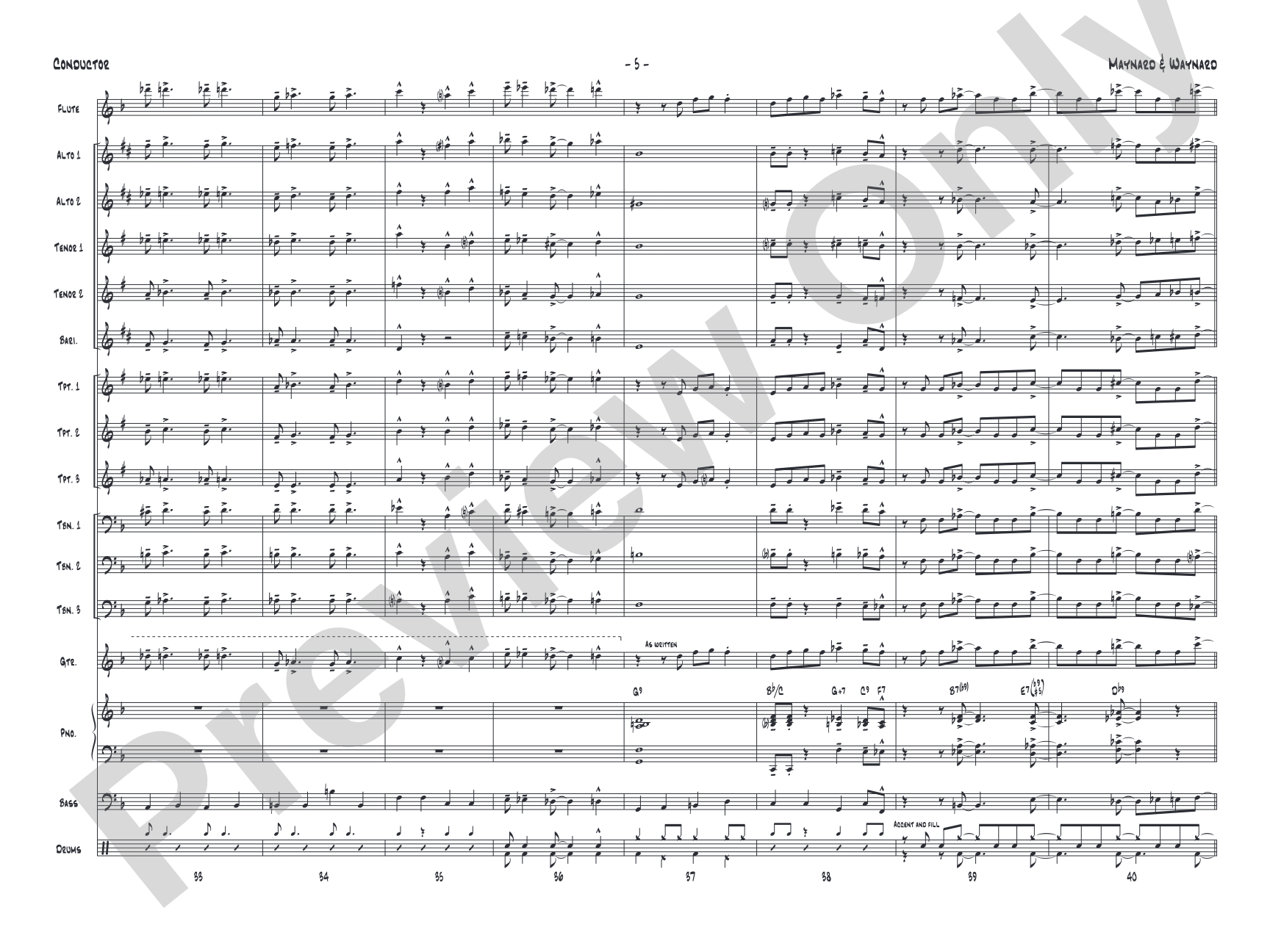
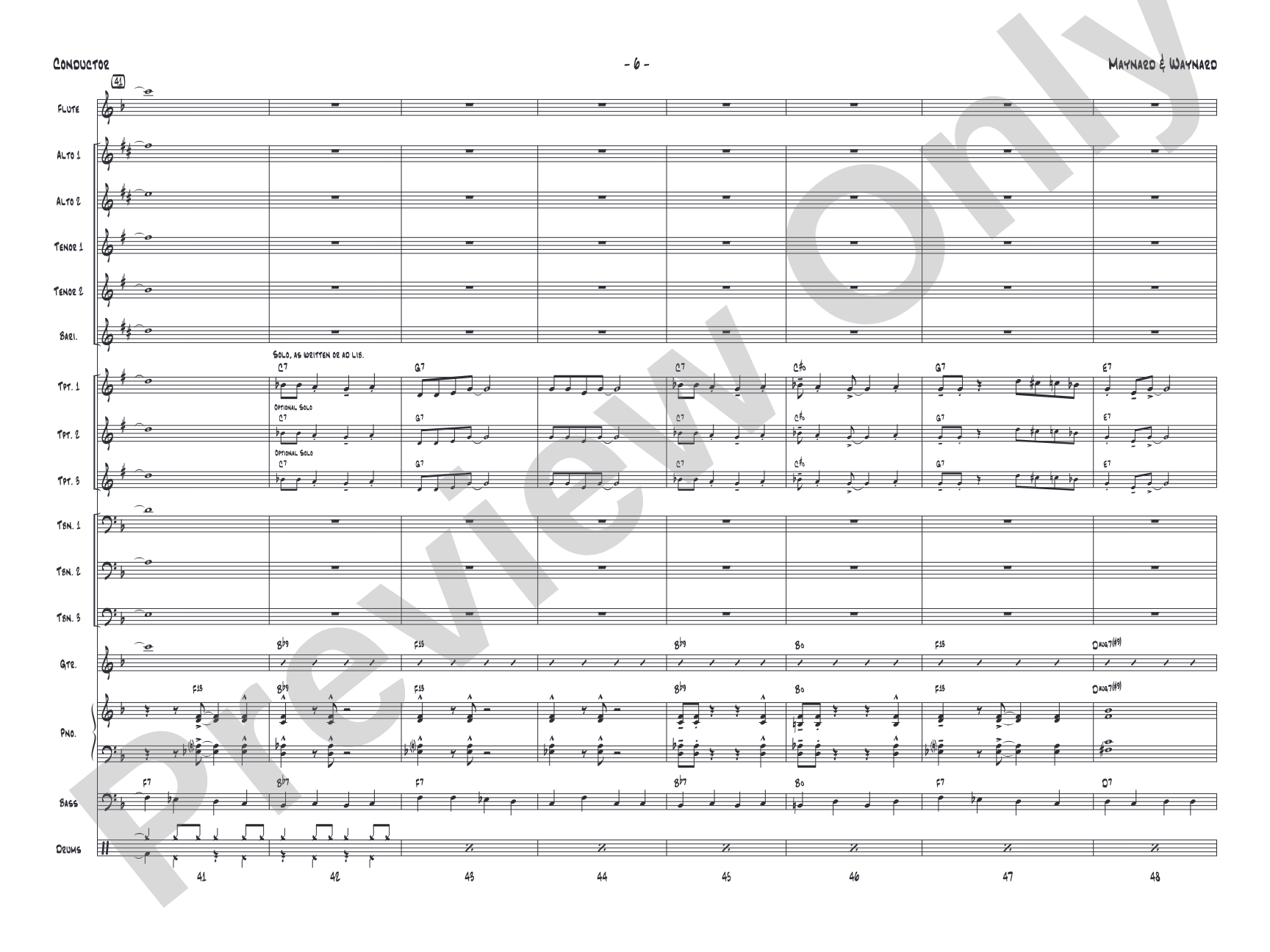
An accessible and swingin' version of Gordon Goodwin's Big Phat Band chart scored for young players. There is a nice sax soli and 1st trumpet range is to written G on top of the staff. A 12-bar written-out trumpet solo is notated for all three trumpet parts for flexibility. Optional parts included. This title is available in MakeMusic Cloud.


Don't just read it, hear it, play along with it, and watch your students grow with it. In MakeMusic Cloud, Maynard & Waynard: Score comes alive with professional accompaniment, adjustable tempo, and built-in practice tools that turn solo practice into real progress.
Open in the Player
Jump straight in and assign it today.
Start Your Free Trial
Open this title and explore the full library in minutes.
Sample Audio
1
Audio File
--:--
0:00
0:00
Sample Video
No sample videos found.
Additional Details
Series:
First Year Charts for Jazz Ensemble
Publisher:
Alfred Music
Page Count:
80
SKU:
00-PR-0005495
More about this title
About the Composer: Gordon Goodwin

Gordon Goodwin began composing at age five, writing complete pieces rather than fragments from the start. His big band charts caught attention early, and by thirteen he had already written his first significant work, Hang Loose. This early mastery eventually led him to scoring for television and film, earning three Emmy Awards and multiple Grammy nominations for work on movies including Bad Boys II, Con Air, Gone in 60 Seconds, and Remember the Titans.
Beyond Hollywood, Goodwin has written for and performed alongside major artists including Christina Aguilera, Quincy Jones, Ray Charles, and Toni Braxton. Since founding Gordon Goodwin's Big Phat Band in 2000, he has established himself as a bandleader, arranger, and conductor working with major symphony orchestras across North America and Europe. His albums have consistently earned Grammy recognition, cementing his reputation as one of contemporary jazz's most prolific and accomplished voices.
Why we love this
This arrangement captures the energy and sophistication of Goodwin's Big Phat Band sound while staying firmly within the reach of young players. The written-out trumpet solo that functions across all three parts gives your section creative flexibility, and the optional parts mean you can adapt to your ensemble's size without sacrificing balance or impact.
What to expect
Bright and infectious, with the swagger of a professional big band scaled down to student-friendly ranges and rhythmic complexity. The piece swings with purpose, delivering that satisfying sense of groove that makes young musicians understand why jazz matters.
Who it's for
First-year jazz ensembles and younger students encountering big band writing for the first time. The Grade 1 difficulty level keeps technical demands manageable while introducing authentic jazz vocabulary and ensemble balance work that typically appears in more advanced charts.
How to get the most out of it
- Balance the sax soli carefully against the ensemble; this section should sing with clarity but remain part of the overall groove rather than sitting on top of it.
- Treat the 12-bar trumpet solo as an ensemble moment, not a spotlight feature. All three parts playing together maintains the swing feel and keeps younger players from feeling isolated.
- Lock the rhythm section into a steady swing eighth-note feel early in rehearsal. Once that pocket is solid, everything else falls into place naturally.
- Pay attention to articulation consistency across the brass section, especially on the backbeats where jazz phrasing matters most.
How to use it
Program this early in your jazz ensemble season to build confidence and demonstrate what the band can accomplish together. It works equally well as a concert opener or festival entry; the accessibility means students will execute it cleanly while the compositional craft keeps audiences engaged.
Skills your students will build
- Reading and executing swing eighth-note articulation
- Balancing melody and rhythm section in a jazz context
- Coordinating ensemble soli across multiple parts
- Understanding big band voicing and sectional independence
- Playing written-out solos with ensemble awareness rather than spotlight mentality