Maybe Your Baby's Got the Blues: Lead Sheet Digital Sheet Music

Maybe Your Baby's Got the Blues: Lead Sheet Digital Sheet Music

Graham Lyle, Troy Seals, The Judds

Item: 00-PS-0009280

Digital Download
$1.99
Description

Maybe Your Baby's Got the Blues: Lead Sheet Digital Sheet Music isn't in MakeMusic Cloud just yet...but it could be. Let us know you'd like to see it, and you'll help shape what comes next. In the meantime, start a free trial and dive into thousands of interactive titles your students can play along with today.

Sample Audio
No sample audio found.
Sample Video
Additional Details
SKU: 00-PS-0009280

More about this title

About the Artist: The Judds

The Judds, the mother-daughter duo of Naomi and Wynonna Judd, became one of country music's most successful acts during the 1980s and 1990s. Their harmonies defined a generation of country radio, blending traditional bluegrass sensibilities with contemporary production and storytelling that resonated across audiences. Both performers brought distinctive vocal qualities to their arrangements: Naomi's steady, grounded alto and Wynonna's soaring, expressive soprano created a signature sound that influenced countless country artists who followed.

For music educators, The Judds' catalog offers accessible entry points into country vocal literature and harmony writing. Their songs often feature clear melodic lines, straightforward harmonic progressions, and lyrical themes that engage student performers. Lead sheets from their repertoire work well in choir classes studying genre diversity, jazz/pop ensembles exploring country-inflected phrasing, and solo vocal study for singers developing interpretive skills across multiple musical styles.

Why we love this

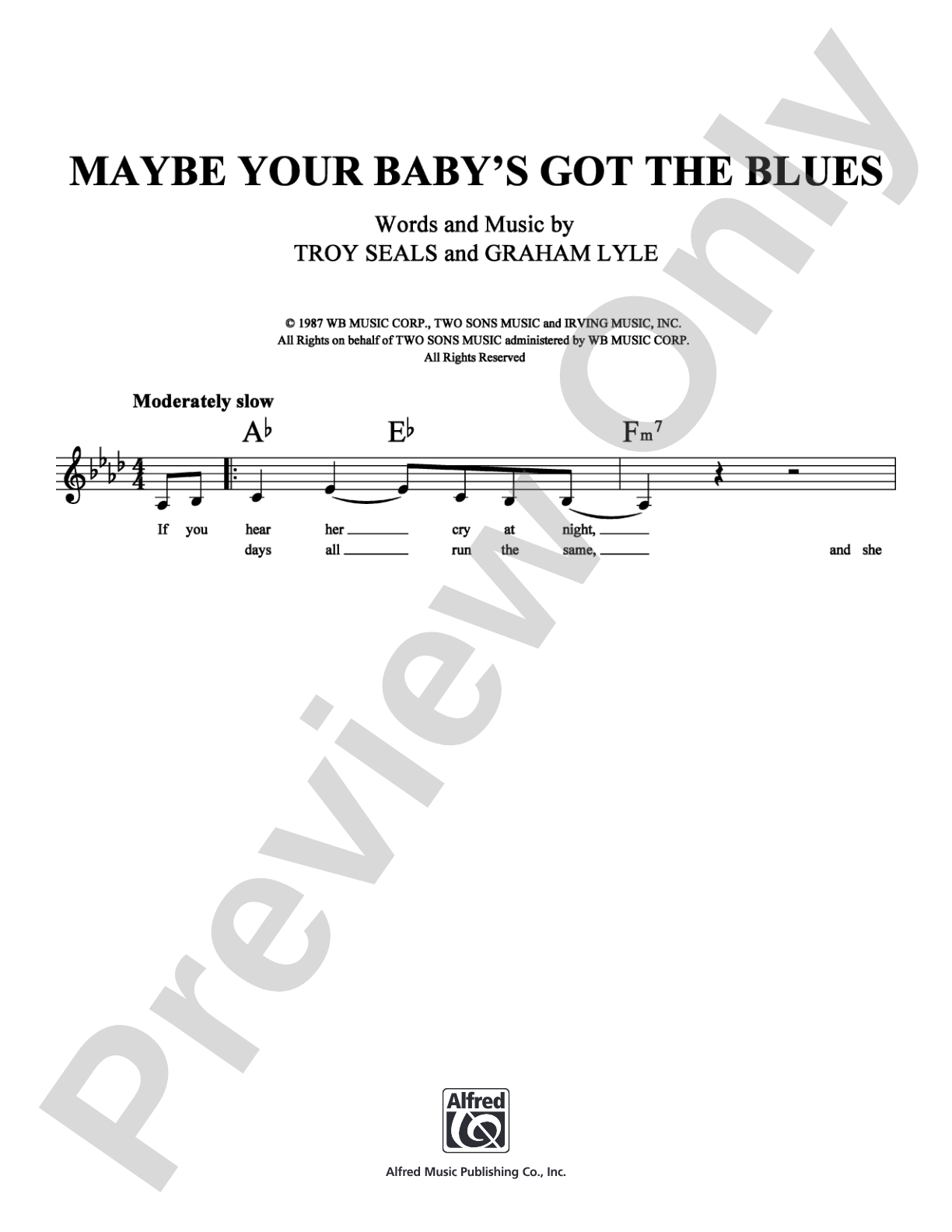
This lead sheet captures a song with genuine country character, making it valuable for singers and musicians studying how melody, lyrics, and harmonic language work together in country songwriting. It's an accessible entry point for jazz or pop ensemble rehearsals wanting to explore authentic country phrasing and ornamentation without requiring full arrangement resources.

What to expect

The song evokes the emotional directness that defines country music at its best, with a melody that feels conversational yet memorable and lyrics grounded in lived experience. There's a blend of accessibility and authenticity that makes it inviting for performers while respecting the depth of the original recording.

Who it's for

This lead sheet serves singers developing interpretive skills in country music, jazz or popular music ensembles looking to expand their stylistic range, and pianists or guitarists seeking authentic country material for accompanying lessons or small ensemble settings. It also works well for music theory classes studying genre-specific melodic and harmonic characteristics.

How to get the most out of it

  • Shape the melody with subtle pulls and relaxations around the beat to capture country phrasing; lead sheets often notate straight rhythm that benefits from expressive timing in actual performance
  • Explore different rhythmic feels if accompanying on guitar or piano; country grooves shift between straight eighth notes and light swing depending on tempo and context
  • Build familiarity with the lyrical content before learning the tune; country songs reward singers who understand the story and emotional arc, which naturally influences phrasing choices
  • Use the lead sheet as a starting point for harmonic exploration; add passing chords, secondary dominants, or modal interchange if you're arranging for a small ensemble or solo with accompaniment

How to use it

Incorporate this into a jazz or popular music ensemble's genre study unit, pairing it with other country classics to explore regional American musical traditions. It also works as a solo vehicle for singers in advanced choir wanting to develop stylistic versatility, or as repertoire for a music theory or songwriting class examining how country songforms and harmonic language function.

Skills your students will build

  • Reading and interpreting lead sheet notation (melody, chord symbols, form)
  • Developing country phrasing and ornamentation choices based on minimal notation
  • Understanding country vocal production and expressive techniques
  • Harmonizing melody with jazz-influenced or country-appropriate chord voicings
  • Connecting lyrical content to interpretive and rhythmic choices

You May Also Like