

May the Season Never End: SATB Choral Octavo
Words by Tom Durley and Jay Althouse, music by Jay Althouse
Item: 00-PO-0000959
$1.80
Minimum order quantity: 20 copies
Pickup currently not available
Related Items
May the Season Never End: SoundTrax Digital Audio Download |
$26.99
|
View | |
May the Season Never End: SAB Choral Octavo |
$1.80
|
View | |
May the Season Never End: Choral SoundPax |
$25.00
|
View | |
May the Season Never End: SATB Choral Octavo |
$1.80
|
View | |
May the Season Never End: SAB Choral Octavo |
$1.80
|
View | |
May the Season Never End: Choral Octavo SoundTrax CD |
$26.99
|
View | |
May the Season Never End: Choral SoundPax |
$25.00
|
View |
Description
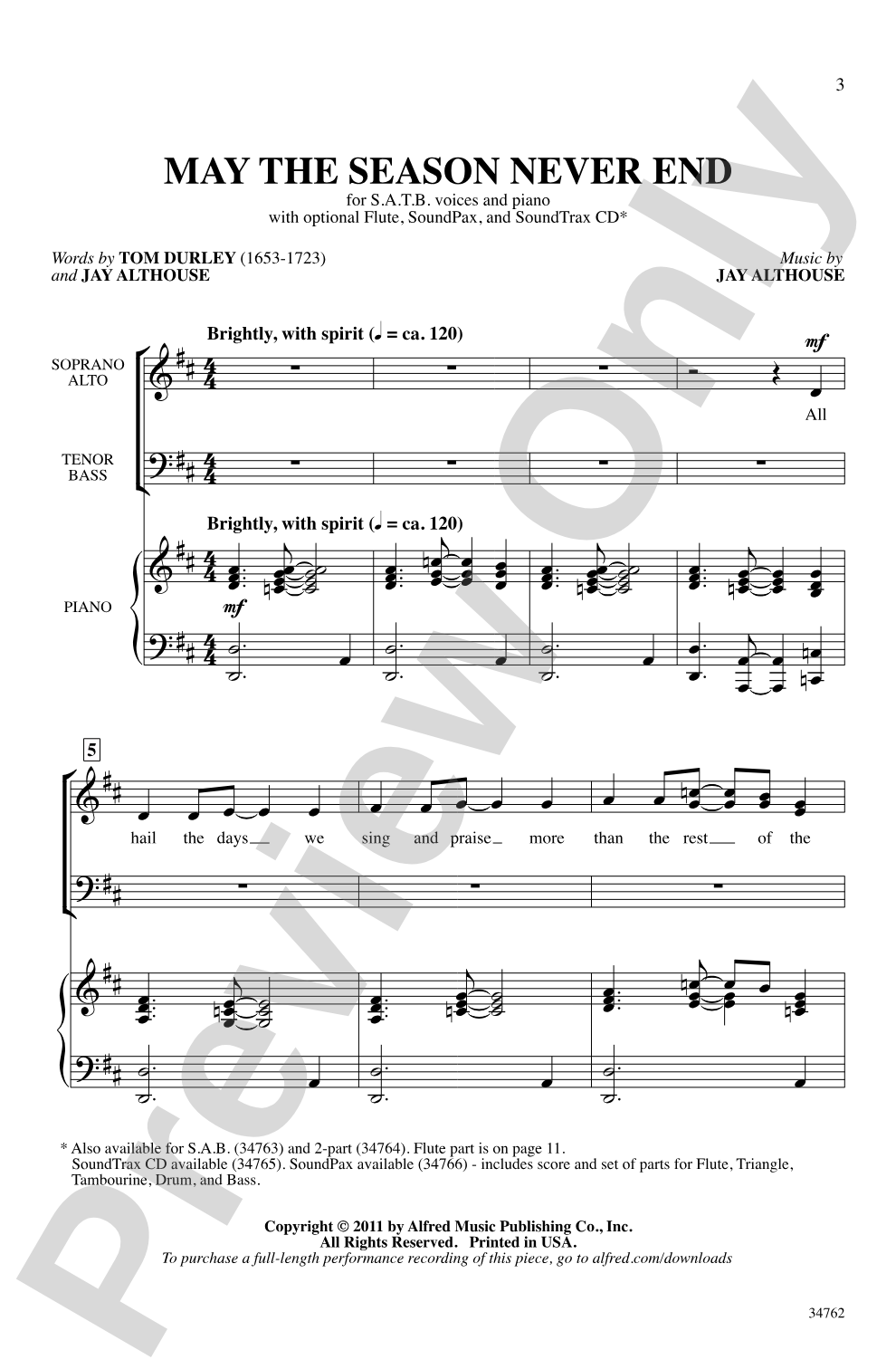
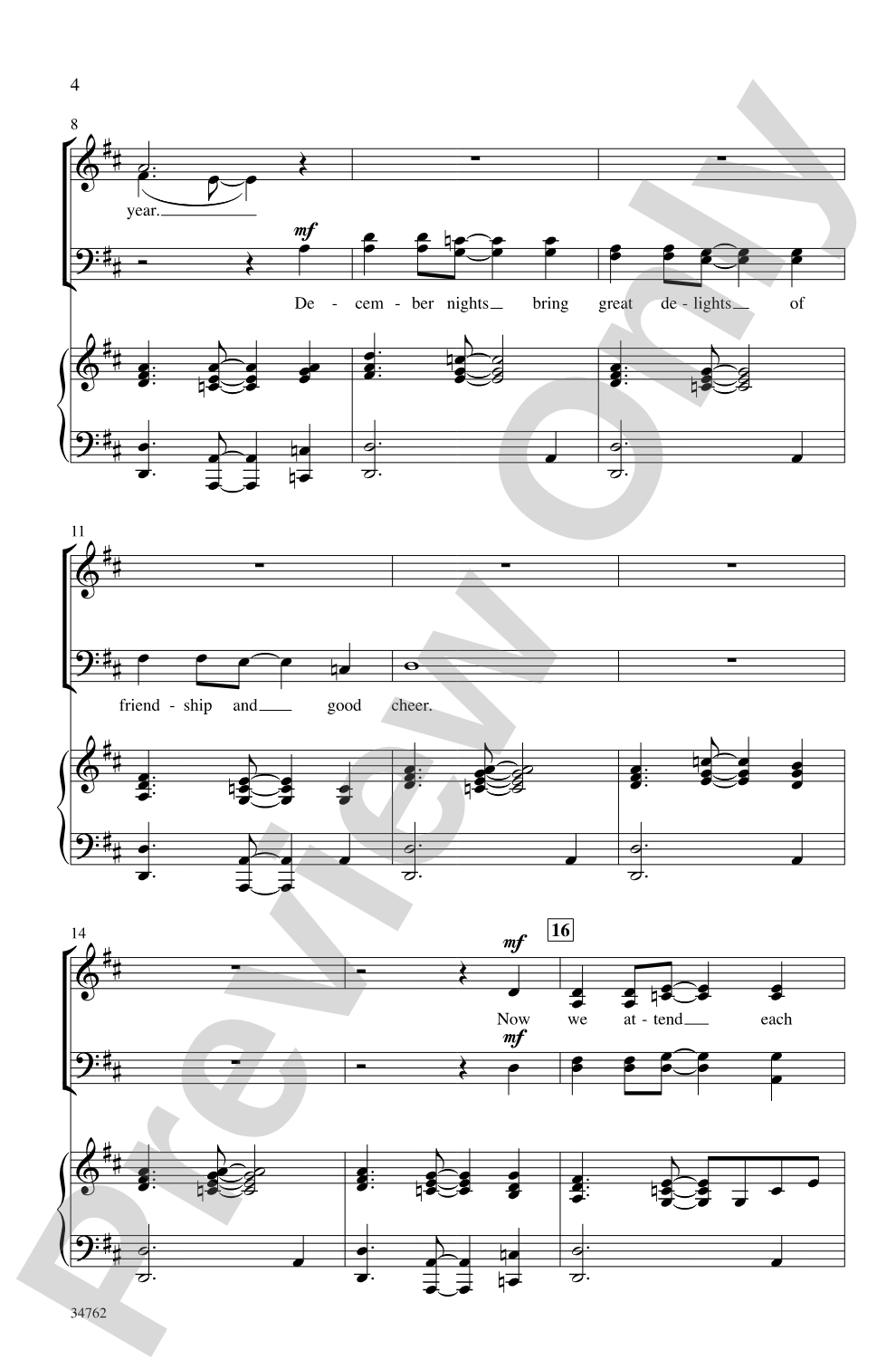
"December nights bring great delights of friendship and good cheer." Celebrate the joys of the holiday season with this delightful contemporary madrigal-like choral. Perfect as a festive processional or during a madrigal feast.


May the Season Never End: SATB Choral Octavo isn't in MakeMusic Cloud just yet...but it could be. Let us know you'd like to see it, and you'll help shape what comes next. In the meantime, start a free trial and dive into thousands of interactive titles your students can play along with today.
Request This Title
Tell us you want it.
Start Your Free Trial
Explore everything that's ready to play right now.
Sample Audio
1
Audio File
--:--
0:00
0:00
Sample Video
No sample videos found.
Additional Details
Series:
Alfred Choral Designs
Publisher:
Alfred Music
Page Count:
12
SKU:
00-PO-0000959
More about this title
About the Composer: Jay Althouse

Jay Althouse earned his B.S. in Music Education and M.Ed. in Music from Indiana University of Pennsylvania, where he later received the Distinguished Alumni award. He spent eight years in music publishing, administering rights and licenses while serving a term on the Executive Board of the Music Publishers Association of America.
As a composer, Althouse has created more than 800 choral works performed regularly across the English-speaking world. His contributions to choral music have earned him recognition as a writer member of ASCAP and multiple Special Awards for composition. Beyond his prolific output as a composer, he has co-written children's musicals with Sally K. Albrecht, edited vocal solo collections, co-authored The Complete Choral Warm-up Book and Accent on Composers, and created classroom resources including Ready to Read Music and One-Page Composer Bios. He served on the board of the North Carolina Master Chorale and currently serves on the National Advisory Board of the Folk Art Society of America.
Why we love this
Althouse crafts this piece with the elegance and narrative flow of a madrigal without demanding the specialized techniques that can intimidate singers new to the form. The text carries genuine warmth about community and celebration, so your singers will feel the emotional truth they're conveying rather than executing a technical exercise. It's the rare contemporary seasonal piece that works equally well as a concert opener, a processional, or nestled into a madrigal dinner program.
What to expect
Festive and intimate at once, this piece captures the particular joy of gathering together when days are shortest. The contemporary madrigal texture creates movement and social energy while the harmonies remain warm and grounded, evoking gatherings where friendship and tradition matter most.
Who it's for
SATB choirs with modest to intermediate singing experience will find this piece accessible and rewarding. The madrigal style invites singers to think about text and character without requiring advanced musicianship, making it ideal for high school or community choirs preparing a winter concert.
How to get the most out of it
- Attend to the text's conversational quality by varying dynamics within phrases rather than holding long swells; let individual lines breathe and overlap naturally as friends would speak over one another
- Balance upper and lower voices carefully during the homophonic sections so the part-writing clarity doesn't get buried, especially if you're adding instruments from the available parts
- Shape the piece with the processional application in mind if that's your performance context, using slight tempo flexibility at key cadences to create natural pauses for movement
- Record a sectional or two with the accompaniment available so your singers develop security with the harmonic language before ensemble rehearsals begin
How to use it
Open your winter concert with this piece as a processional or seasonal welcome, setting a tone of fellowship before heavier repertoire. It also pairs beautifully in a madrigal dinner context where you can move the singers into the audience, or include it in a lighter second half that balances more serious choral works.
Skills your students will build
- Part independence within homophonic and light polyphonic textures
- Text expression and character development in secular choral writing
- Stylistic awareness of the madrigal form in contemporary settings
- Balance and blend in mixed-voice ensemble singing
- Interpretive choices around phrasing and tempo in a non-metric musical context