May Night Sheet Music Preview

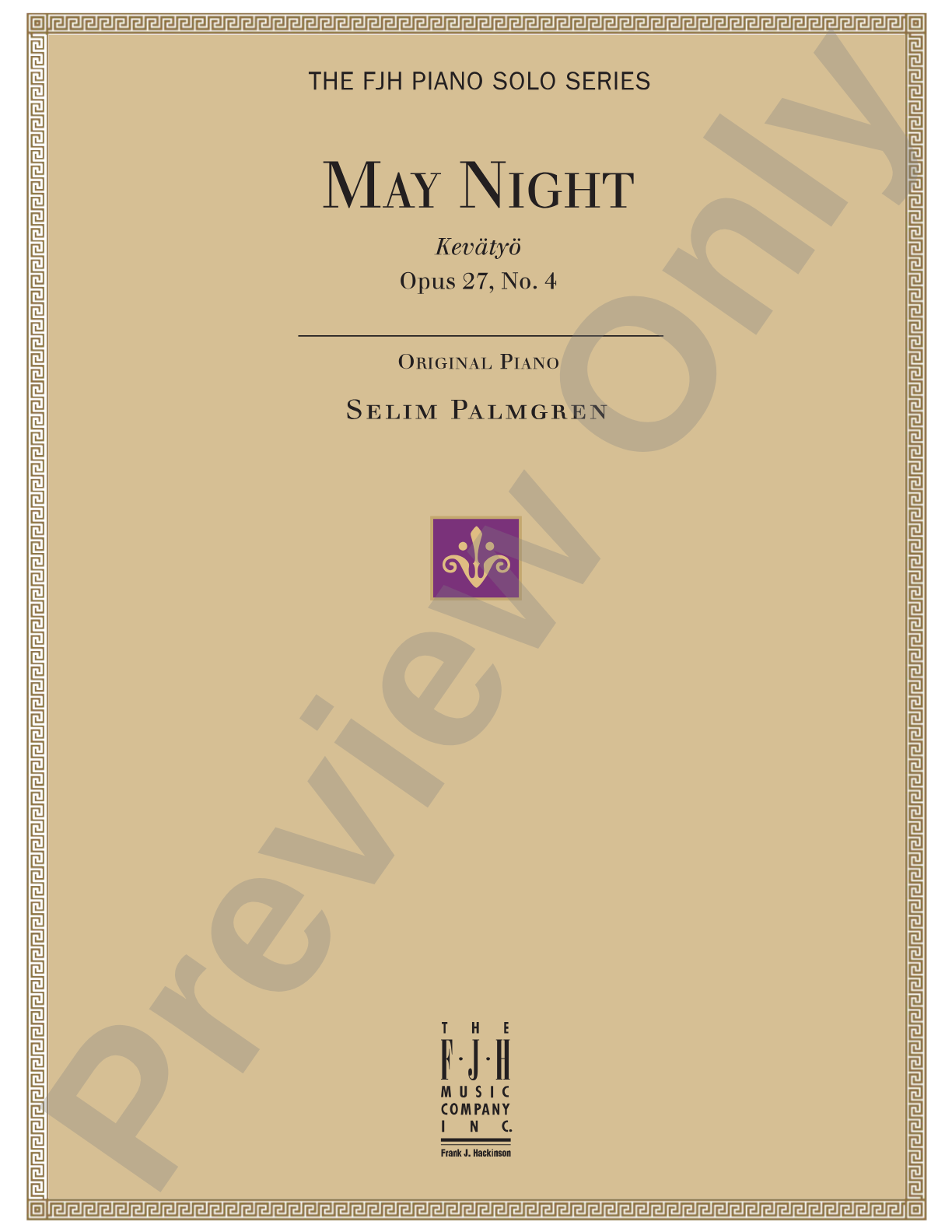
May Night: Piano

By Salim Palmgren / ed. Edwin McLean

Item: 98-DPS1029

Digital Download
$3.50
Description
One of the best-known works by Palmgren, this Impressionistic piece requires the L.H. to project the melody even when it crosses over the R.H. The pedal is notated throughout, creating atmospheric effects. This short piece (36 measures) is a perfect introduction to Impressionism for the Intermediate/Late Intermediate student featuring thick sonorities, parallelism and rolled chords.

May Night: Piano isn't in MakeMusic Cloud just yet...but it could be. Let us know you'd like to see it, and you'll help shape what comes next. In the meantime, start a free trial and dive into thousands of interactive titles your students can play along with today.

Sample Audio
No sample audio found.
Sample Video
Additional Details
Series: The FJH Piano Solo Series
Publisher: The FJH Music Company, Inc.
SKU: 98-DPS1029

More about this title

About the Composer: Salim Palmgren

Selim Palmgren (1878–1951) was a Finnish composer and pianist whose works bridged Romanticism and early modernism. His piano compositions earned him recognition throughout Europe, and he spent significant time teaching and performing internationally, bringing Finnish musical sensibilities to wider audiences.

Why we love this

May Night distills Impressionistic color into a compact, teachable form without sacrificing musical depth. The notated pedal and crossed-hand textures give intermediate pianists genuine artistic challenges while remaining within their technical reach, and the piece rewards careful listening to balance voices and shape atmosphere.

What to expect

May Night evokes twilight stillness and quiet contemplation. Thick, shimmering sonorities float above delicate rhythmic figures, creating an impressionistic haze that shifts subtly with each harmonic color and carefully placed pedal change.

Who it's for

Intermediate to Late Intermediate pianists ready to engage with Impressionistic harmony and pedal technique. Students should have solid hand independence and be comfortable with moderate texture density.

How to get the most out of it

  • Voice the left-hand melody with intention even when it moves above the right hand; resist the temptation to let accompaniment figures dominate the texture.
  • Follow the pedal markings precisely to build the piece's shimmering quality, but release and rechange at each indicated point rather than holding continuously.
  • Explore the rolled chords as an expressive tool; vary their speed slightly to suggest movement and depth rather than executing them mechanically.
  • Control the overall dynamic shape across the full 36 measures so individual sonorities blend into a cohesive atmospheric arc rather than reading as isolated moments.

How to use it

This works beautifully as a solo recital piece for students exploring early 20th-century piano literature, or paired with other nationalist or Impressionistic works on a concert devoted to that era. Its compact length also makes it suitable for student showcases or informal recitals where you want to feature a complete, polished work.

Skills your students will build

  • Left-hand melody projection in crossed-hand textures
  • Pedal control and notation reading for atmospheric effect
  • Impressionistic harmony and parallel voicing
  • Rolled chord execution and timing
  • Dynamic balance between melody and accompaniment across register

You May Also Like