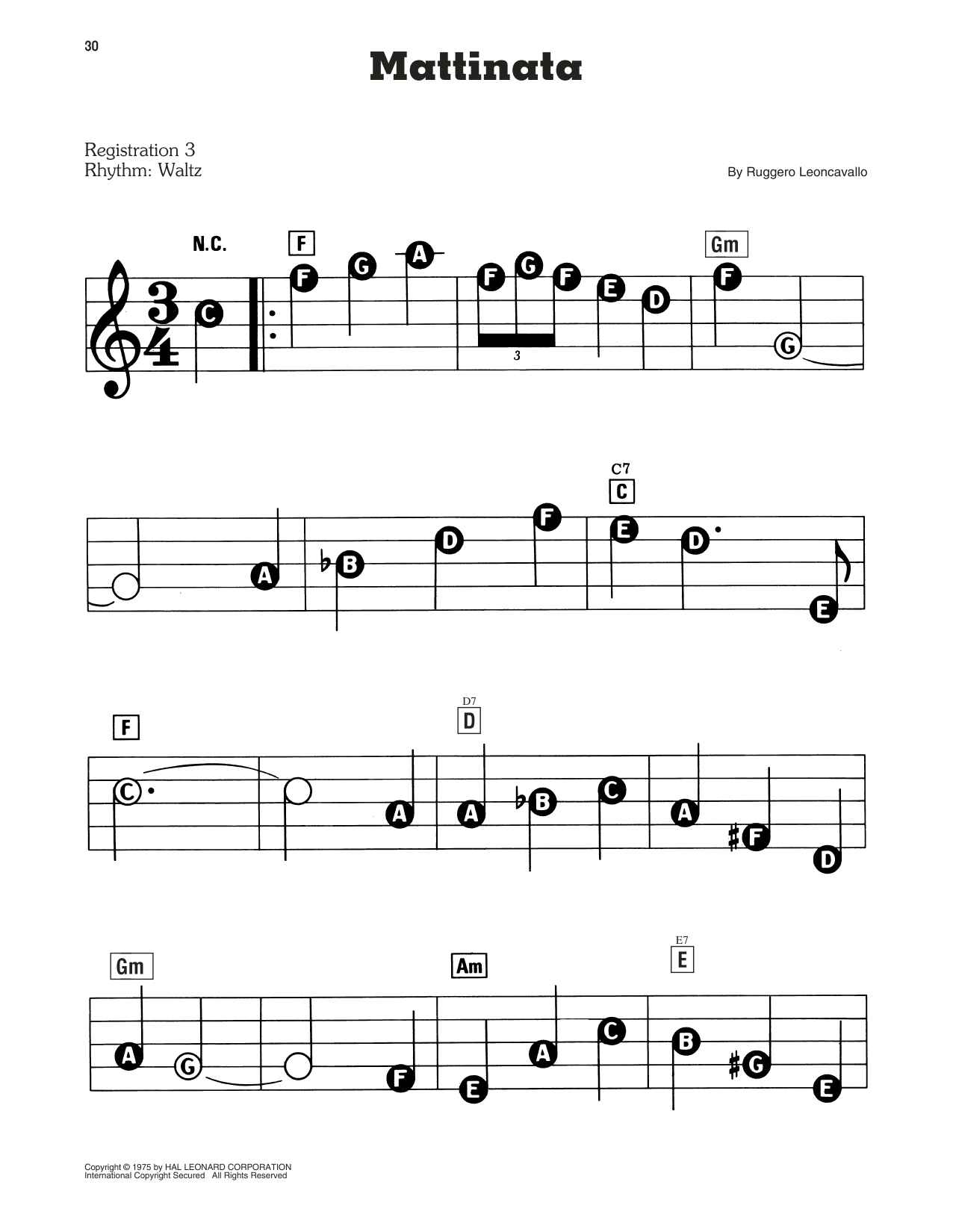
Mattinata Sheet Music Preview

Mattinata: E-Z Play Today

Item: 35-DS00521983

Digital Download
$4.99
Description

Mattinata: E-Z Play Today isn't in MakeMusic Cloud just yet...but it could be. Let us know you'd like to see it, and you'll help shape what comes next. In the meantime, start a free trial and dive into thousands of interactive titles your students can play along with today.

Sample Audio
No sample audio found.
Sample Video
Additional Details
Publisher: Hal Leonard
Page Count: 2
SKU: 35-DS00521983

More about this title

About the Creator: Ruggero Leoncavallo

Ruggero Leoncavallo (1857–1919) was an Italian composer whose gift for melody made him a fixture in opera houses across Europe and beyond. While he's best remembered for Pagliacci, his theatrical instincts and lyrical sophistication shaped everything he wrote, from grand opera to intimate vocal works.

Leonacavllo composed Mattinata as a song for tenor voice, but its soaring, songlike quality has made it a natural choice for pianists and other instrumentalists. The piece captures the bittersweet beauty of an Italian morning serenade, with all the warmth and expressiveness you'd expect from a composer steeped in operatic tradition.

Why we love this

This E-Z Play arrangement makes one of opera's most beloved melodies accessible to early intermediate pianists without sacrificing the emotional heart of the original. The simplified voicing lets students focus on phrasing and tone rather than wrestling with technical complexity, which means they can actually sing through the piece instead of just playing notes.

What to expect

Mattinata unfolds like a lover's song delivered at daybreak. Tender, slightly longing, with an underlying warmth, it invites performers to linger over each phrase and let the melody speak. There's a gentleness here that rewards sensitive playing.

Who it's for

This arrangement suits pianists roughly two to three years into their studies who are ready to explore melody and rubato but don't yet have the technical facility for concert grand arrangements. It's equally valuable for adult learners seeking beautiful, accessible repertoire with genuine artistic weight.

How to get the most out of it

  • Shape each phrase as if you were singing it; let the melody breathe naturally rather than treating every measure equally.
  • Pedal sparingly in the opening to keep the texture clear, then add more resonance as the piece builds emotional intensity.
  • Take time with any ritardandos marked in the score. The ending gains power from a gradual, unhurried approach.

How to use it

Pair this with other short piano pieces in a student or adult recital, or feature it as an intermission solo at a school or community concert. Its intimate scale makes it work beautifully in more casual settings where a full concerto might feel heavy.

Skills your students will build

  • Singing phrasing at the piano (understanding where to breathe and how to shape a long melodic line)
  • Pedal control and timing
  • Expressive rubato and tempo flexibility
  • Balancing melody and accompaniment without technique overwhelm

You May Also Like