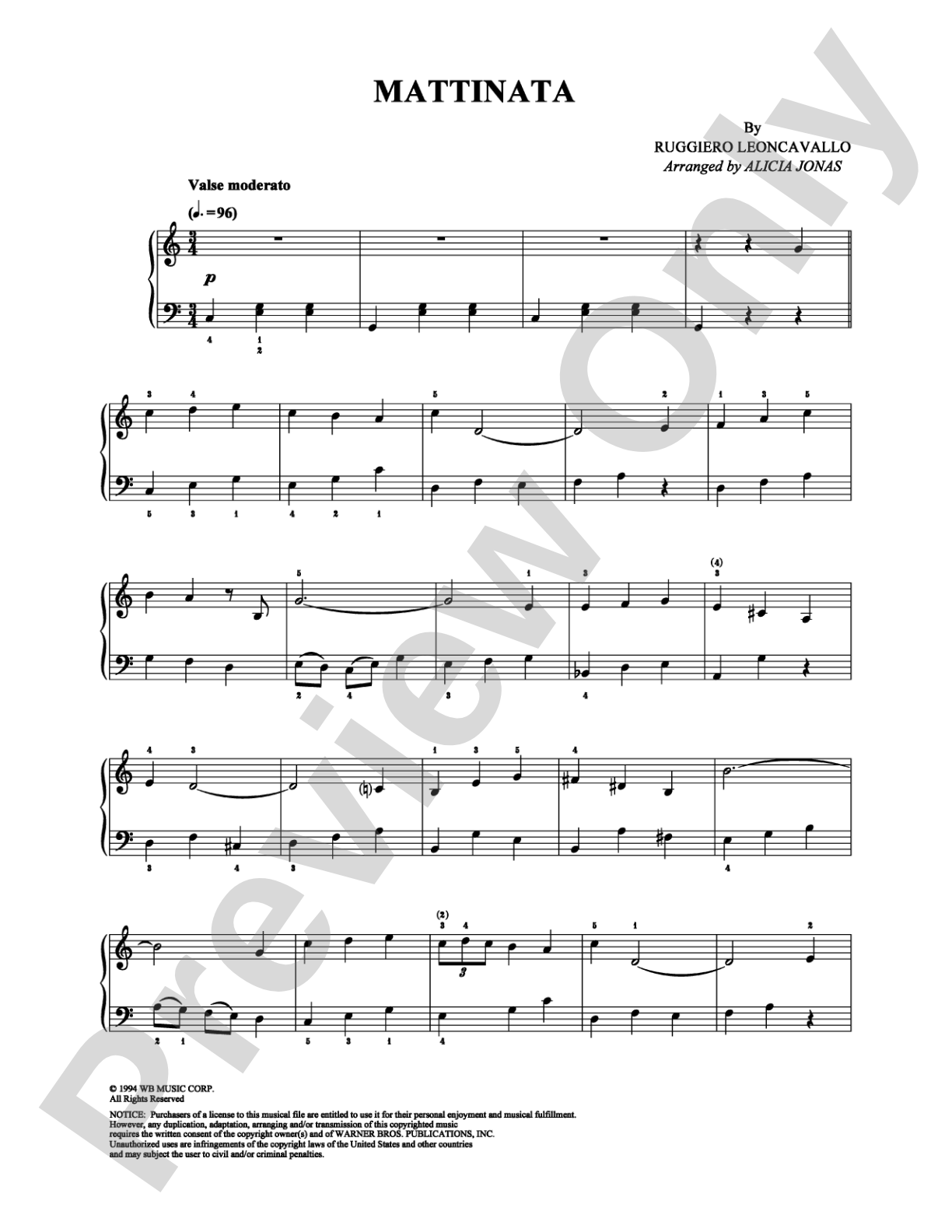
Mattinata: Piano Digital Sheet Music

Mattinata: Piano Digital Sheet Music

Ruggiero Leoncavallo

Item: 00-PS-0006784

Digital Download
$3.99
Description

Mattinata: Piano Digital Sheet Music isn't in MakeMusic Cloud just yet...but it could be. Let us know you'd like to see it, and you'll help shape what comes next. In the meantime, start a free trial and dive into thousands of interactive titles your students can play along with today.

Sample Audio
No sample audio found.
Sample Video
Additional Details
SKU: 00-PS-0006784

More about this title

About the Creator: Ruggero Leoncavallo

Ruggero Leoncavallo (1857-1919) was an Italian composer who made his mark writing operas that captured human emotion with direct melodic appeal. Though best remembered for Pagliacci, he composed prolifically across multiple genres, including songs, orchestral works, and piano pieces that showcase his gift for memorable melody and harmonic warmth.

Why we love this

Mattinata strikes that rare balance between accessibility and genuine musicality. Students encounter real harmonic color and rubato possibilities without wrestling through thick compositional complexity, making it ideal for intermediate pianists ready to explore expression beyond technical mechanics.

What to expect

Mattinata unfolds like a morning serenade, warm and intimate. The piece evokes sunlight and longing in equal measure, with gentle figurations that accompany a singing melody line.

Who it's for

Pianists drawn to early 20th-century Italian song repertoire will find this piece accessible yet musically rewarding. Intermediate to advanced players looking to expand beyond standard classical fare will connect with its lyrical, vocal-inspired writing.

How to get the most out of it

  • Shape the opening phrase with gentle forward motion in the right hand; Leoncavallo's melody begs for singing tone, not mechanical evenness.
  • Allow yourself flexibility with tempo in the lyrical sections. This piece rewards a player who breathes with the melody rather than adheres rigidly to the clock.
  • Balance the accompaniment so it supports rather than competes with the vocal line; the left hand should feel like it exists in a slightly softer dynamic plane.

How to use it

This work fits naturally into recitals pairing piano transcriptions with original compositions, or as a lighter interlude between weightier classical works. Its brevity and immediate appeal make it an excellent encore choice.

Skills your students will build

  • Sustaining a vocal-quality melodic line while maintaining rhythmic independence in the accompaniment
  • Balancing lyrical phrasing with harmonic color changes typical of early 20th-century writing
  • Pedal control to create resonance without muddying the transparent texture

You May Also Like