
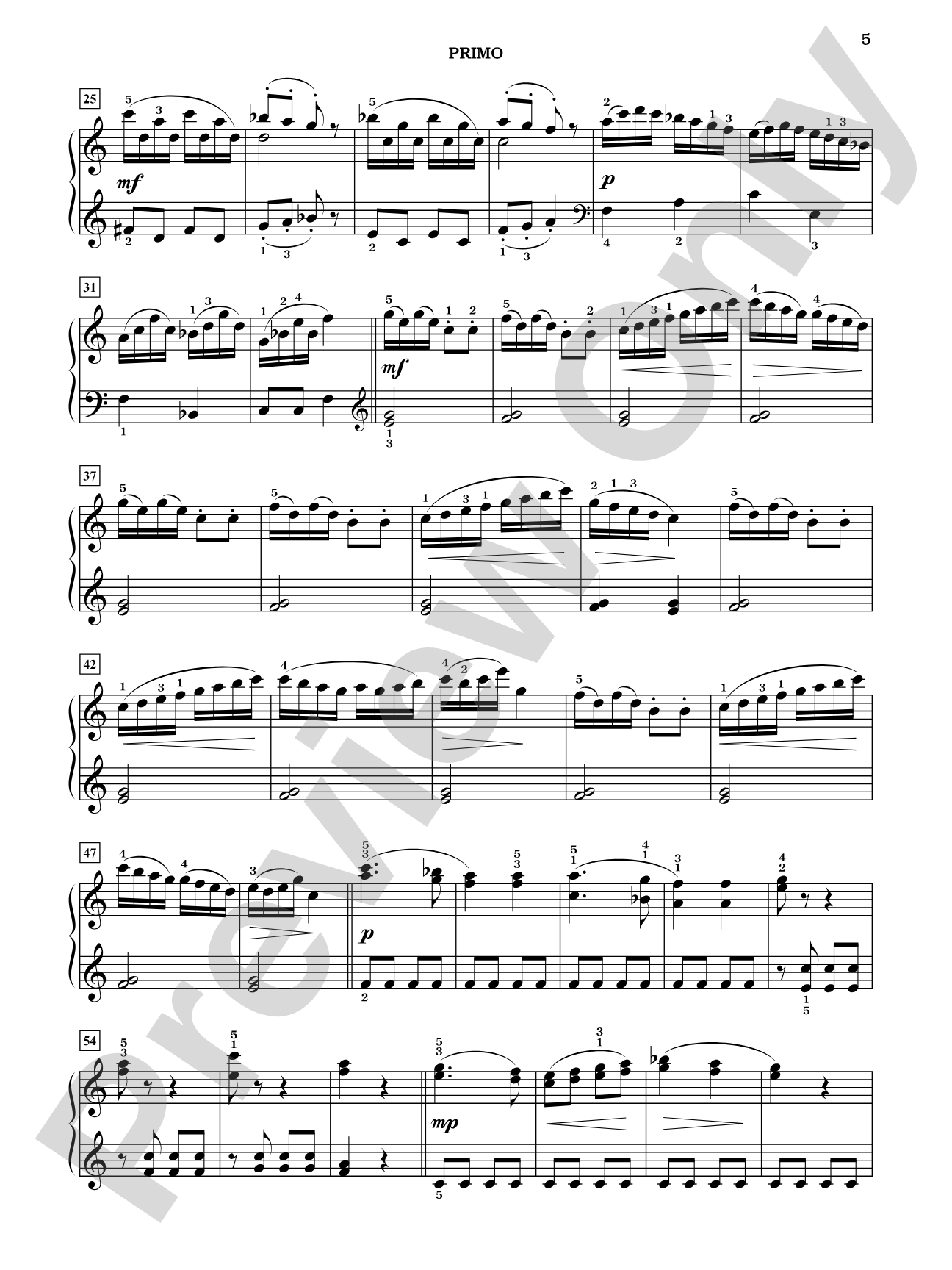
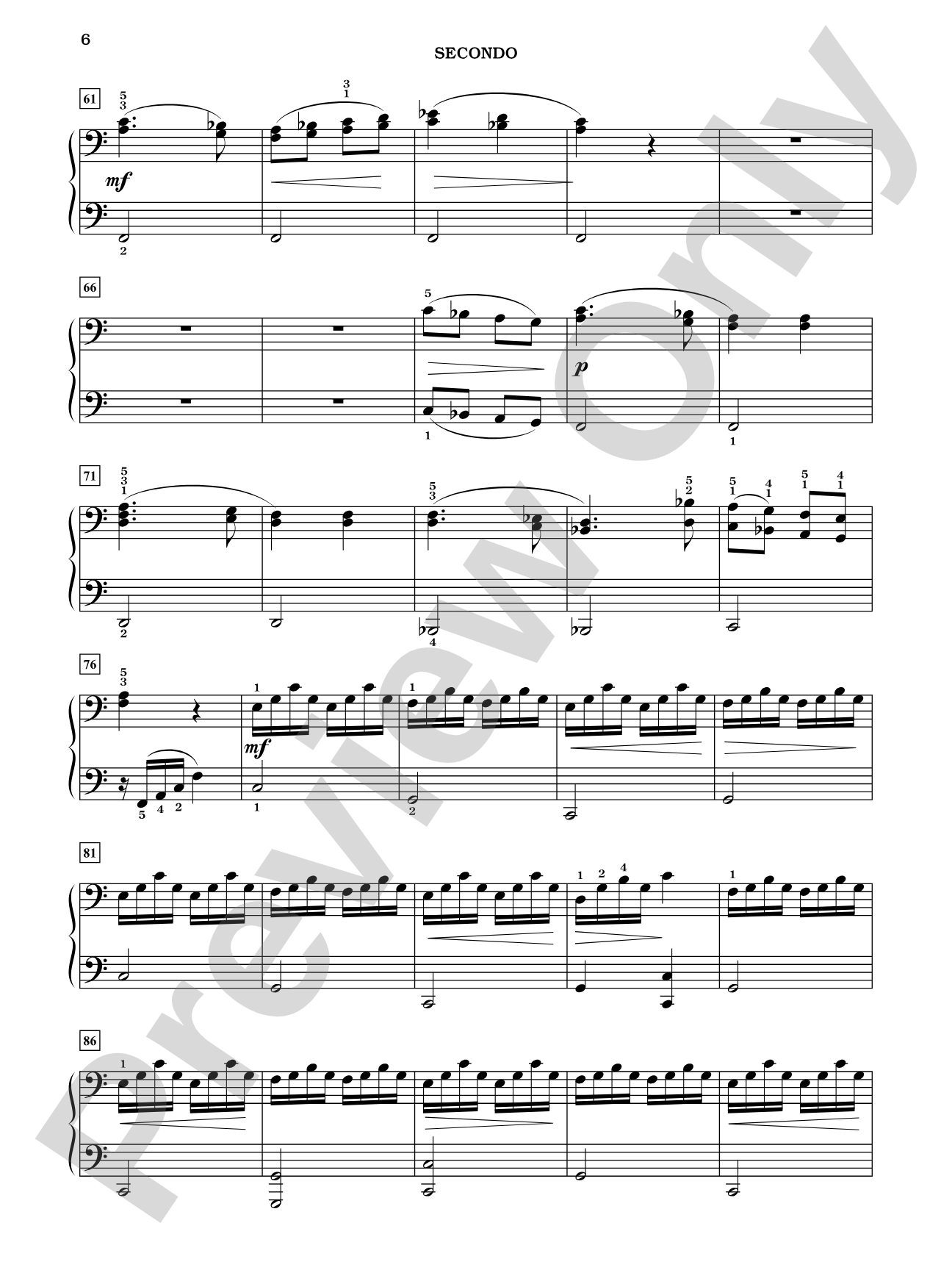
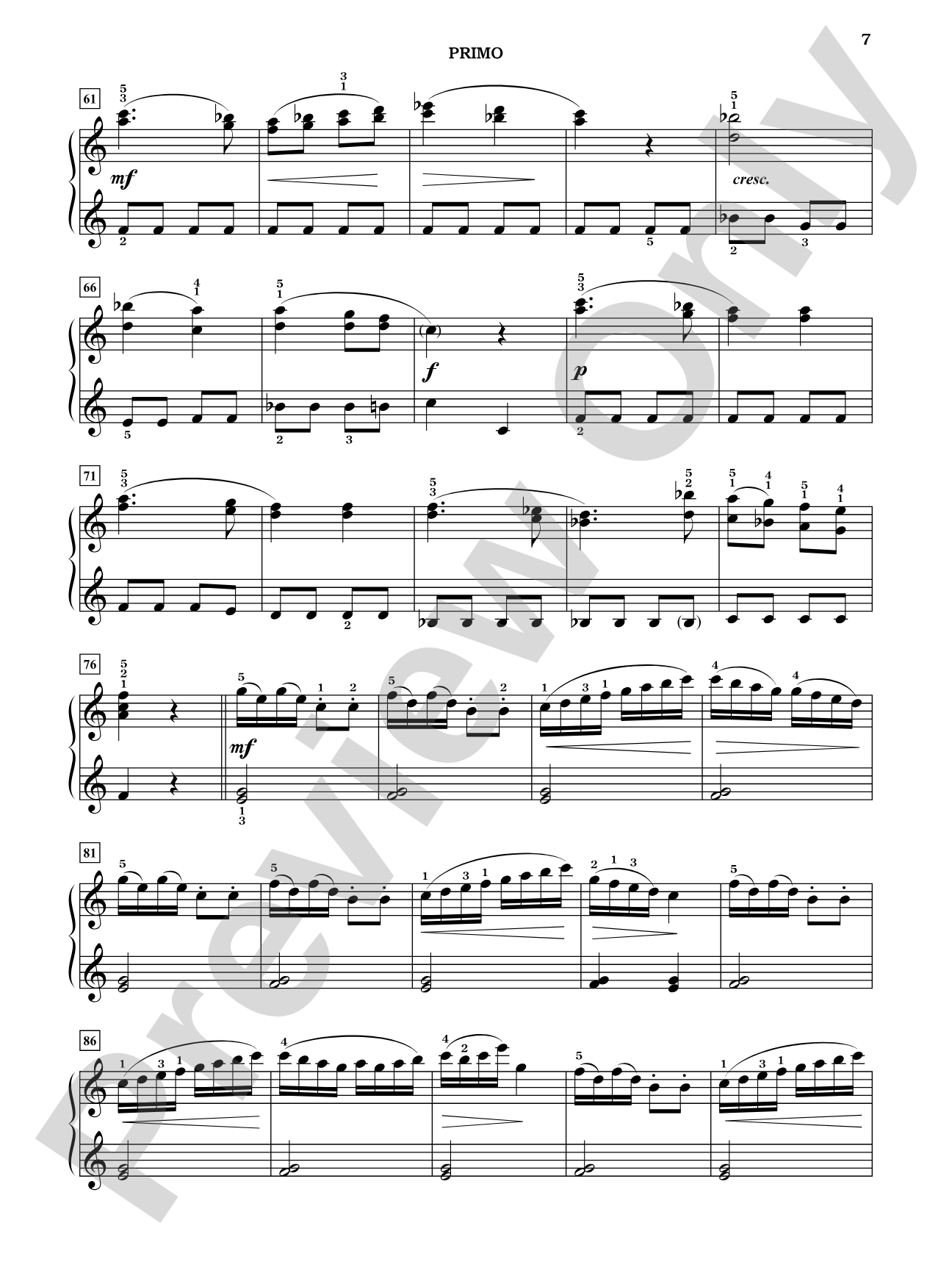
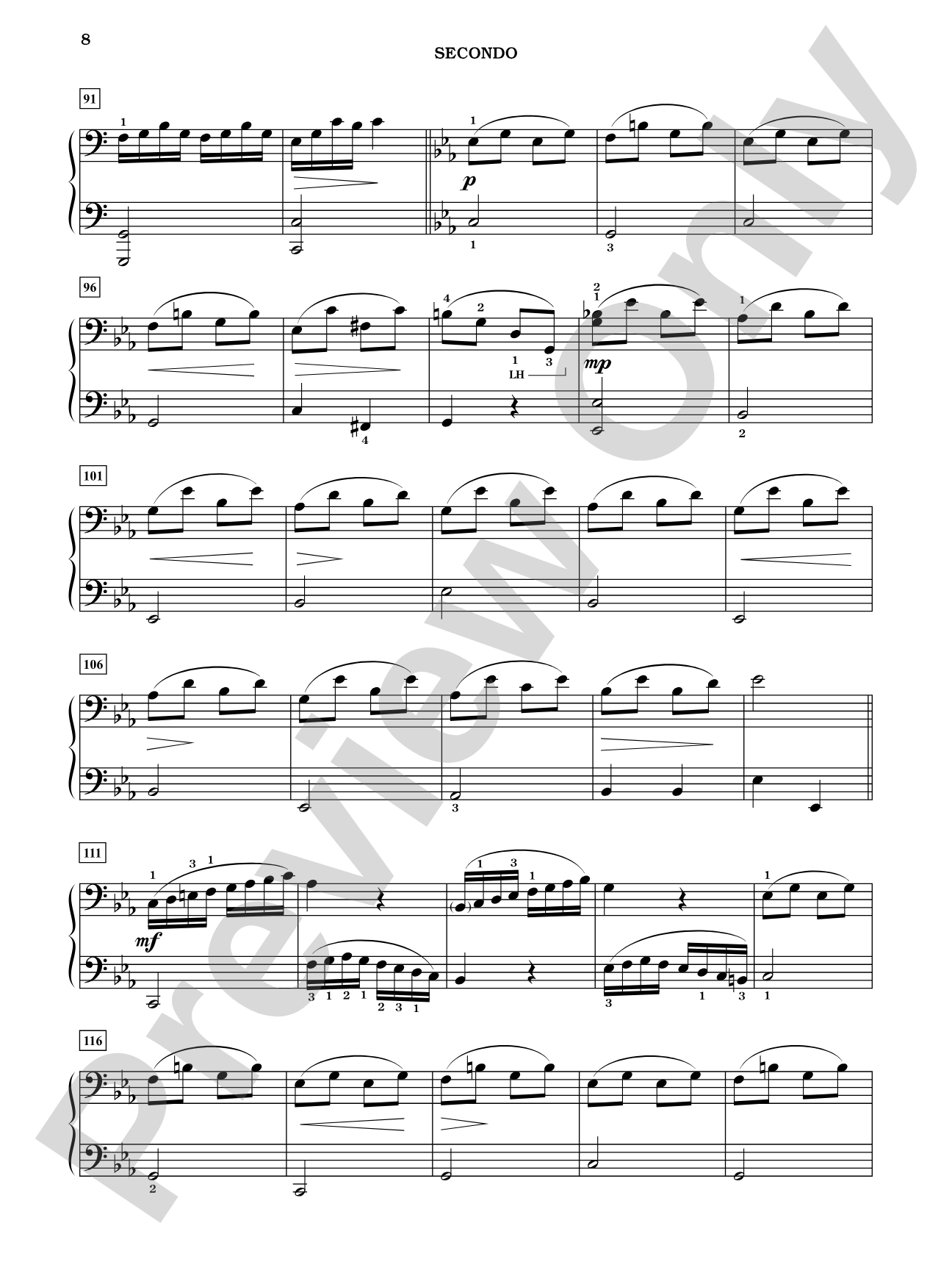

Masterwork Classics Duets, Level 5: A Graded Collection of Piano Duets by Master Composers: Piano Duets & Four Hands
A Graded Collection of Piano Duets by Master Composers
Ed. Gayle Kowalchyk, E. L. Lancaster, and Jane Magrath
Level: Intermediate
Item: 00-PB-0000624
$9.50
Pickup currently not available
Related Items
Masterwork Classics Duets, Level 5: Piano Duet (1 Piano, 4 Hands) Book |
$9.50
|
View |
Description
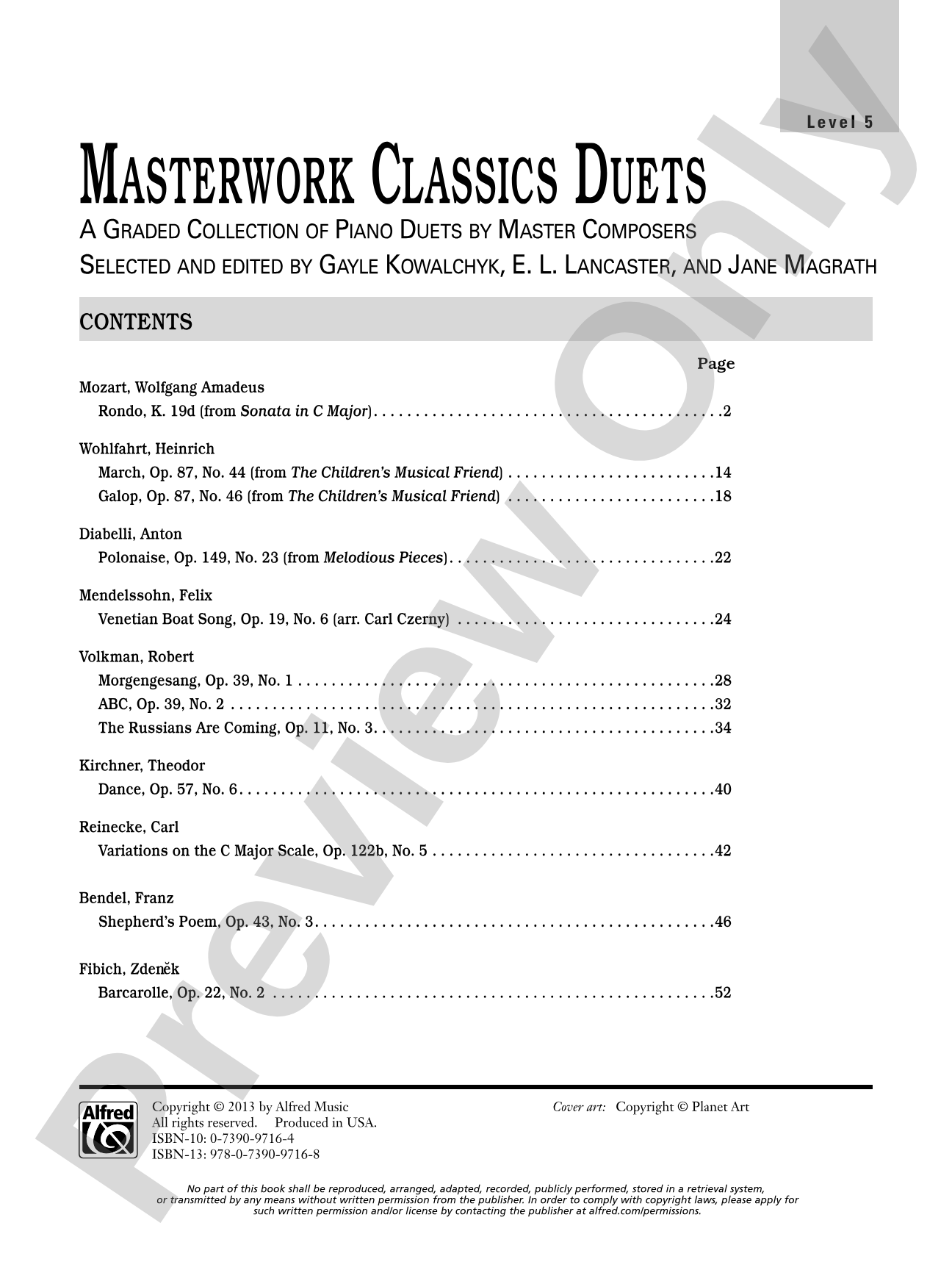
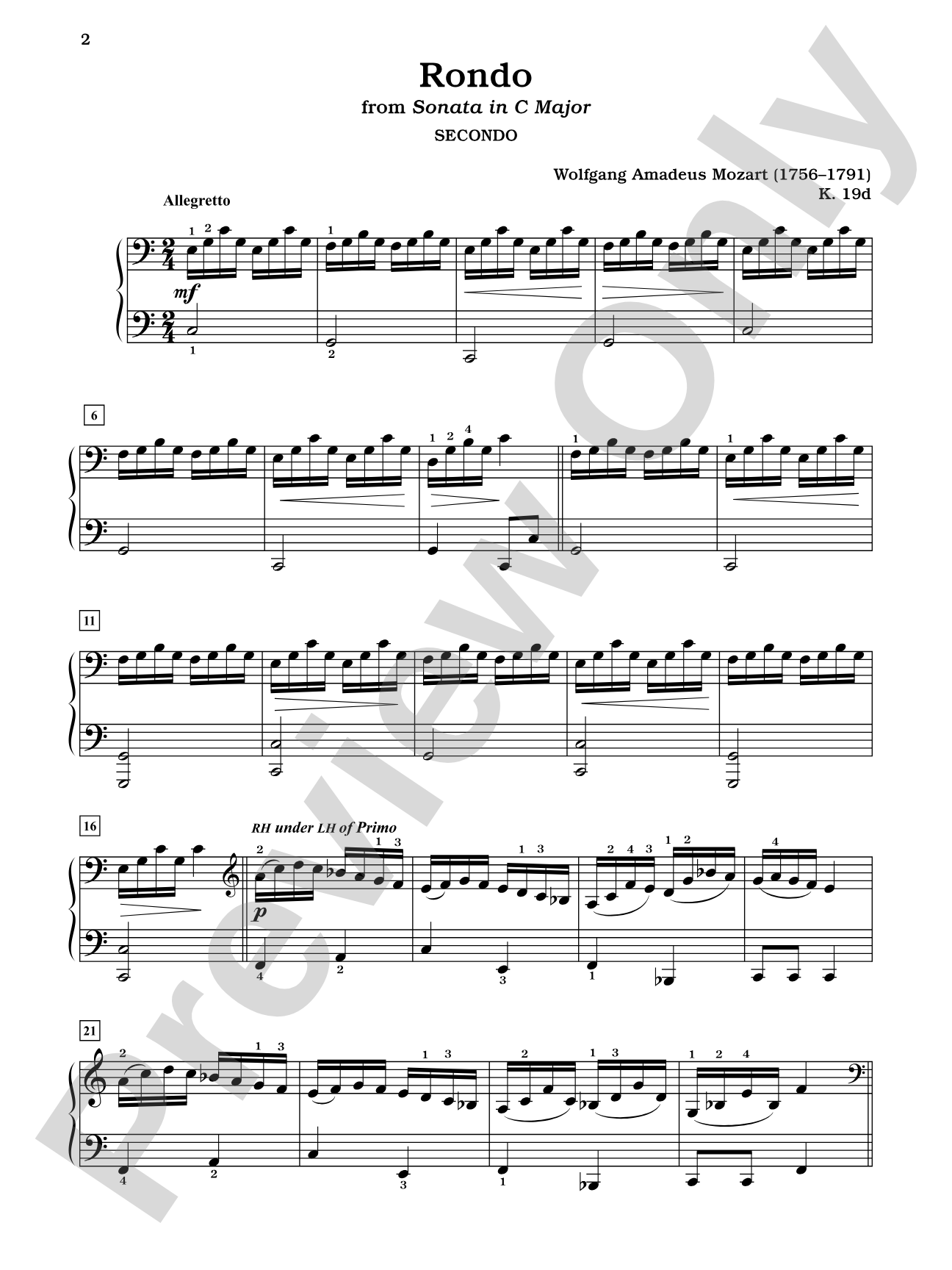
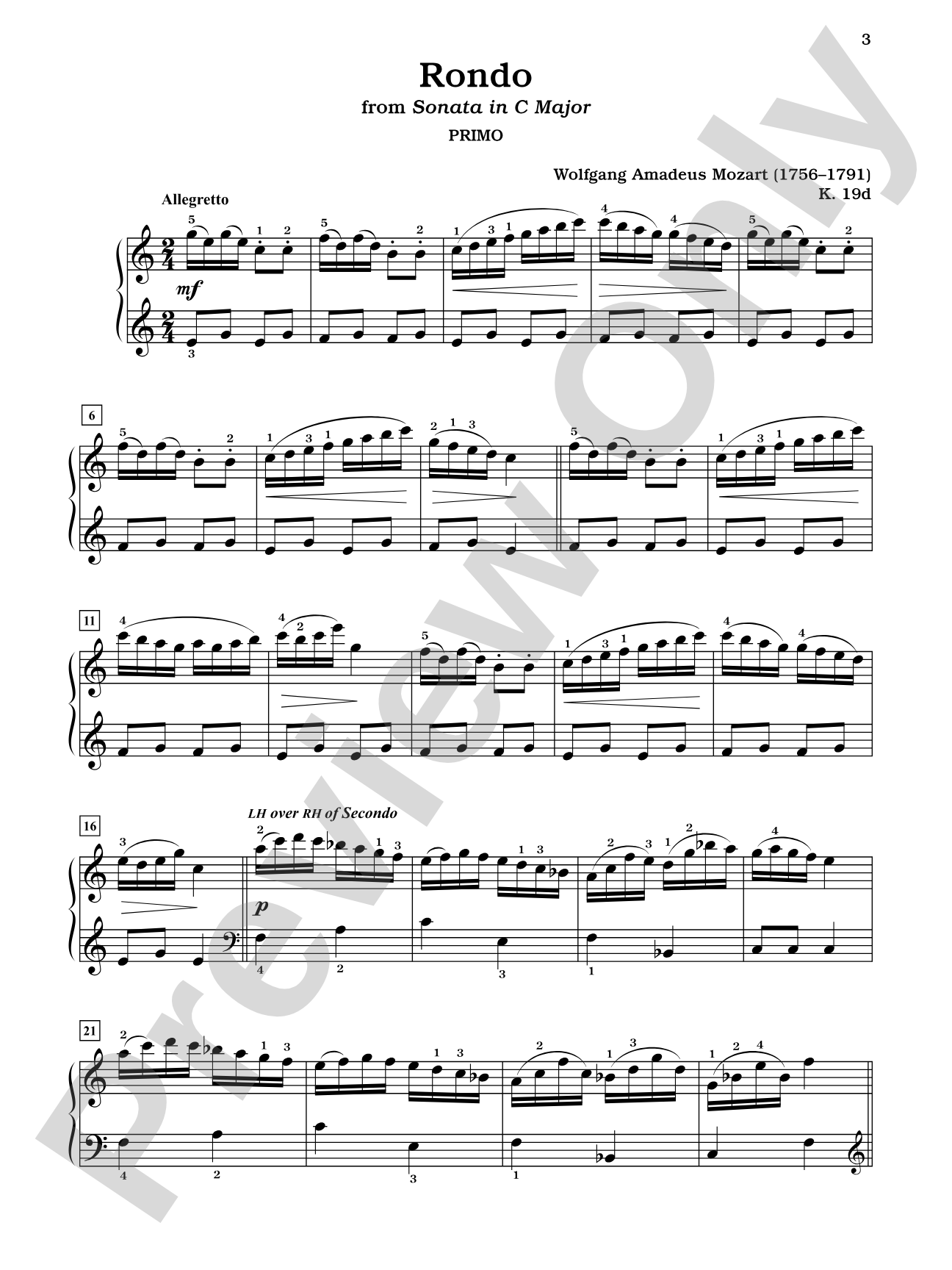
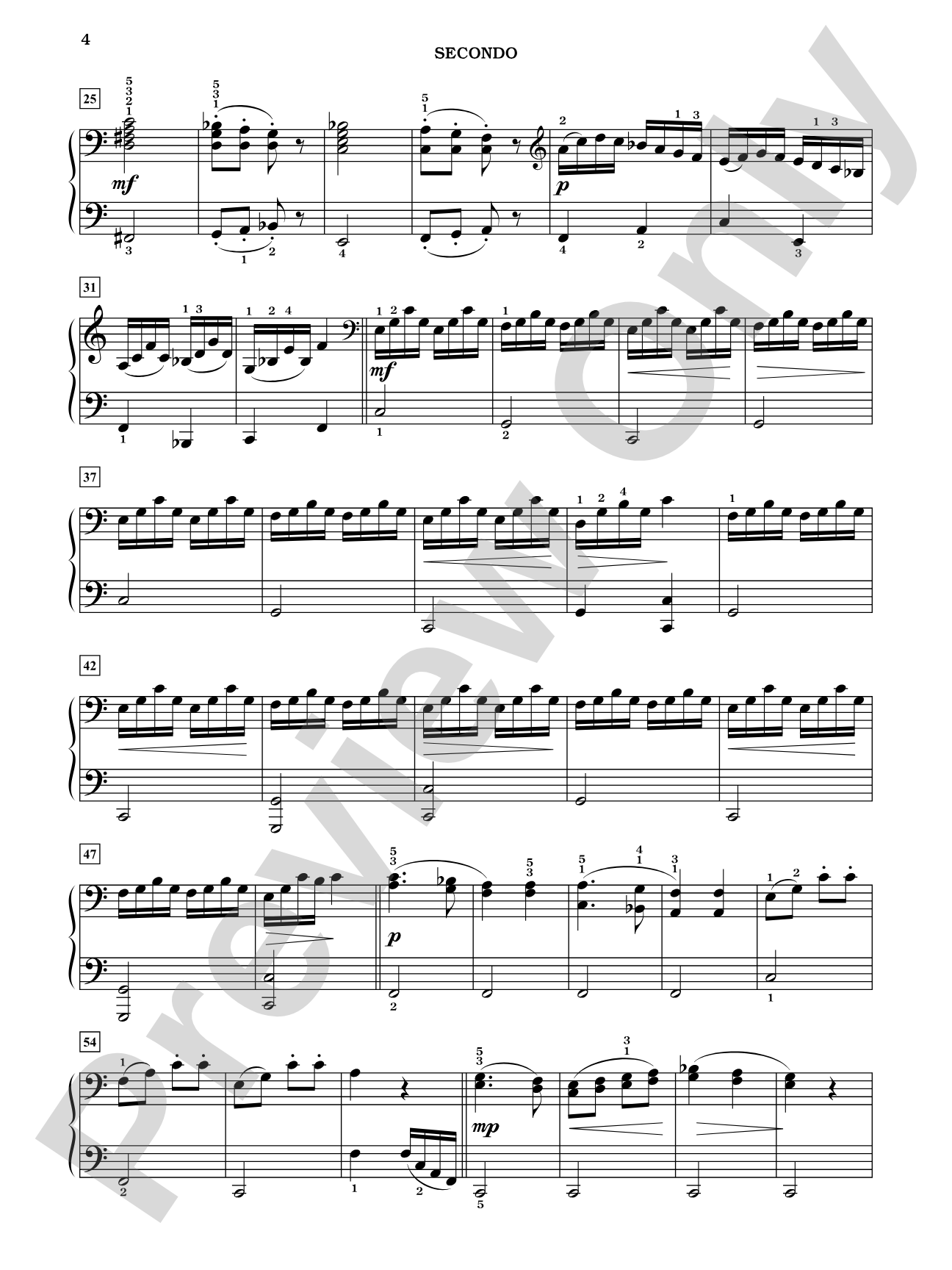
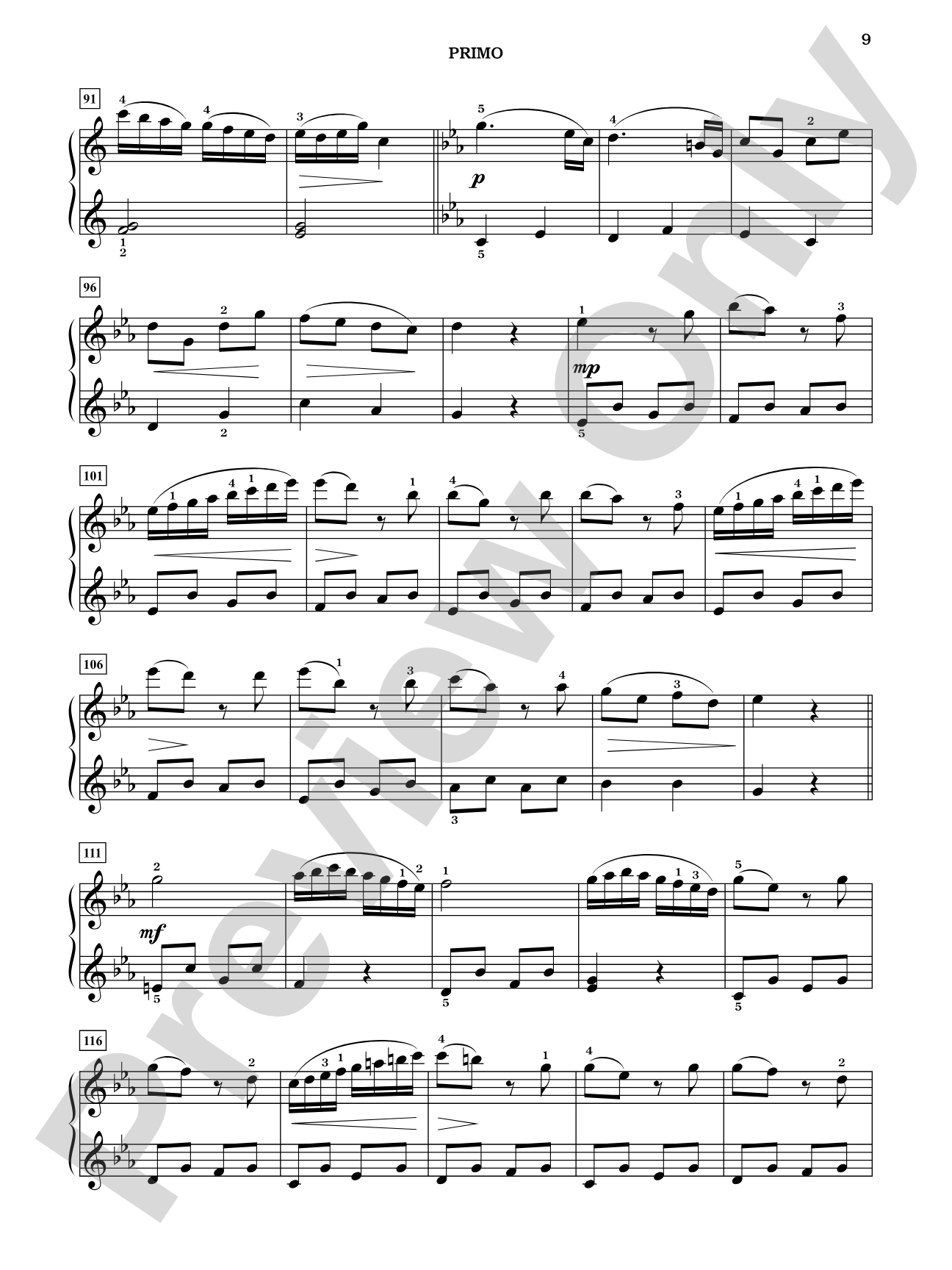
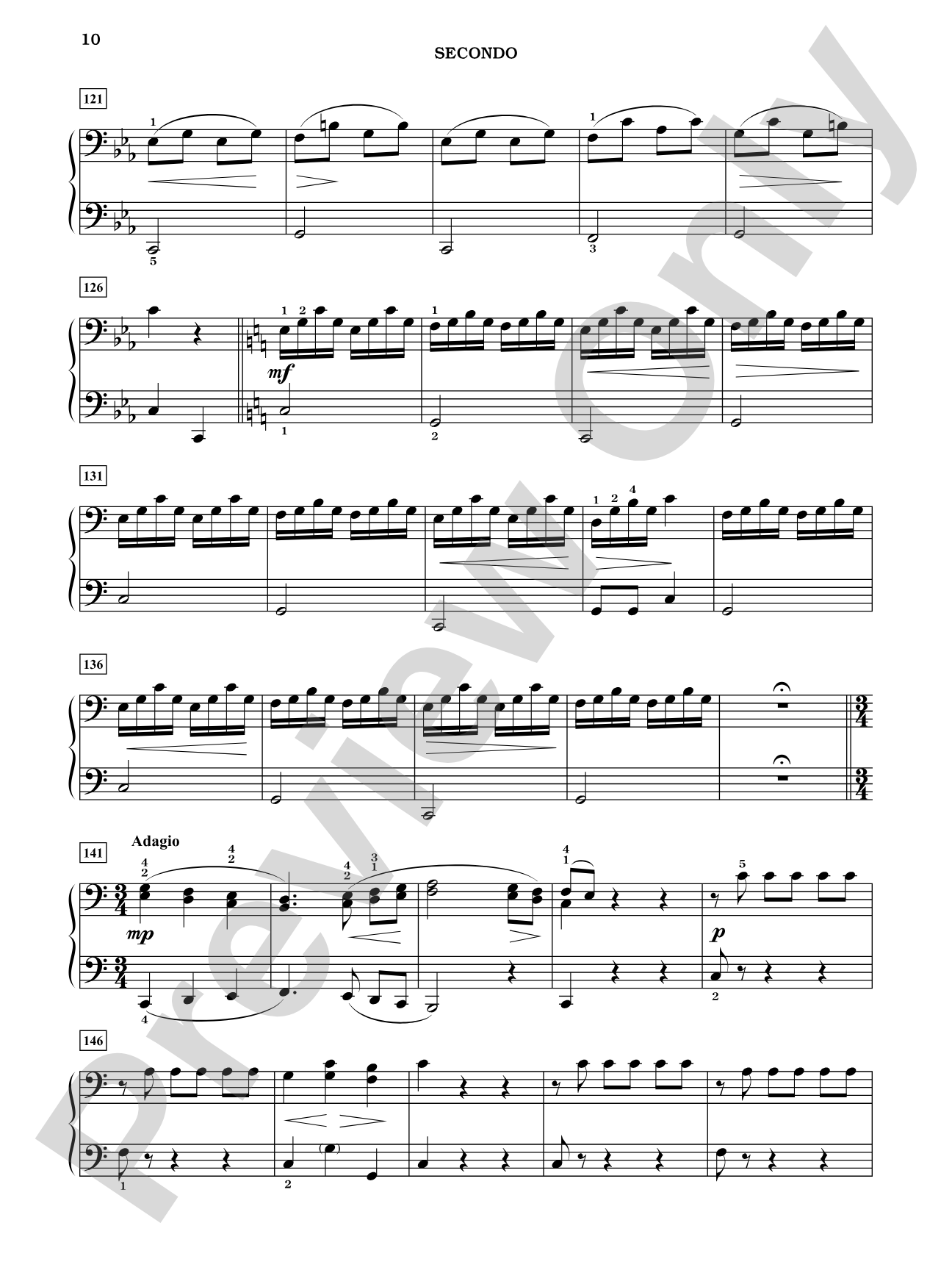
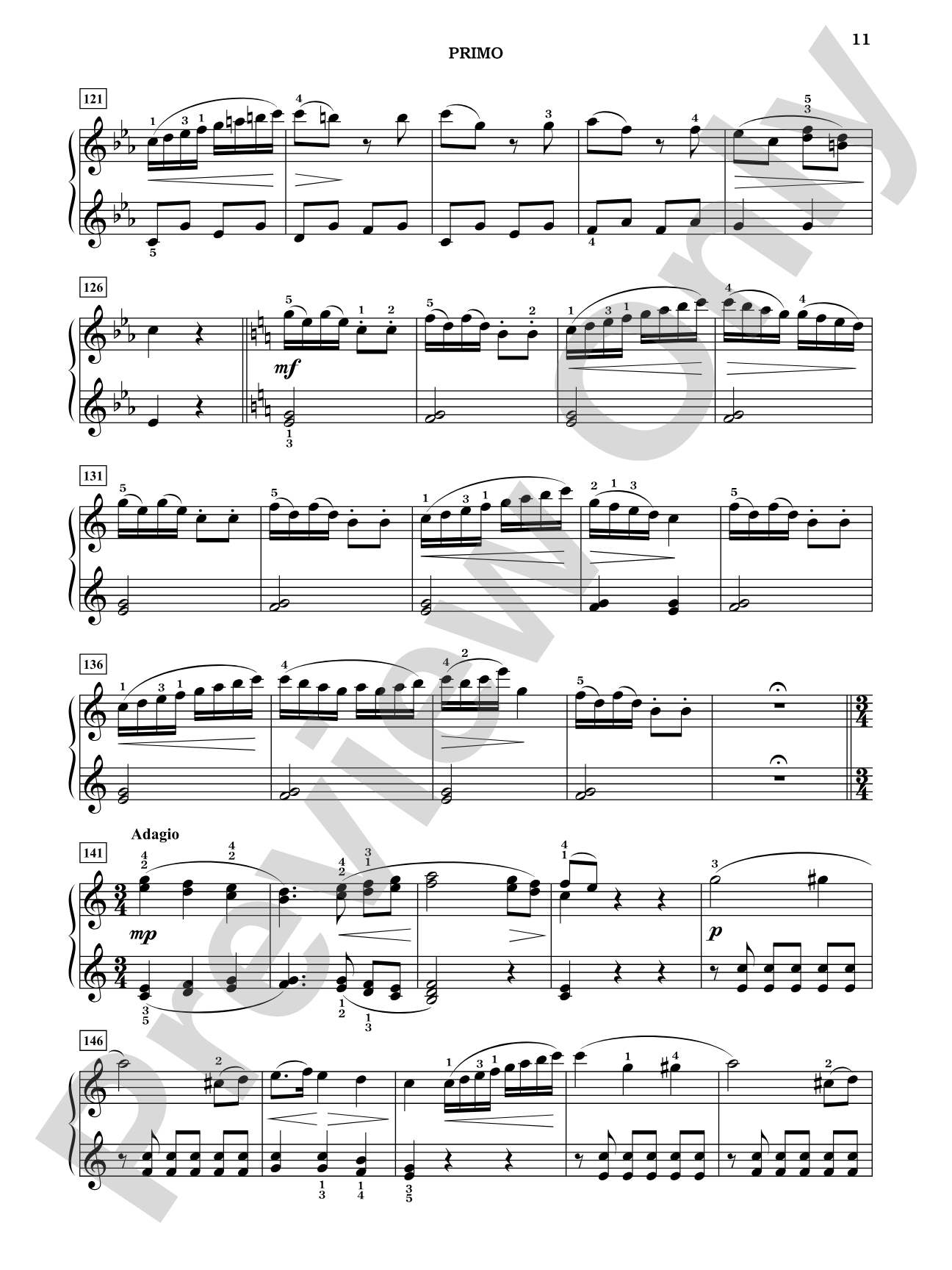
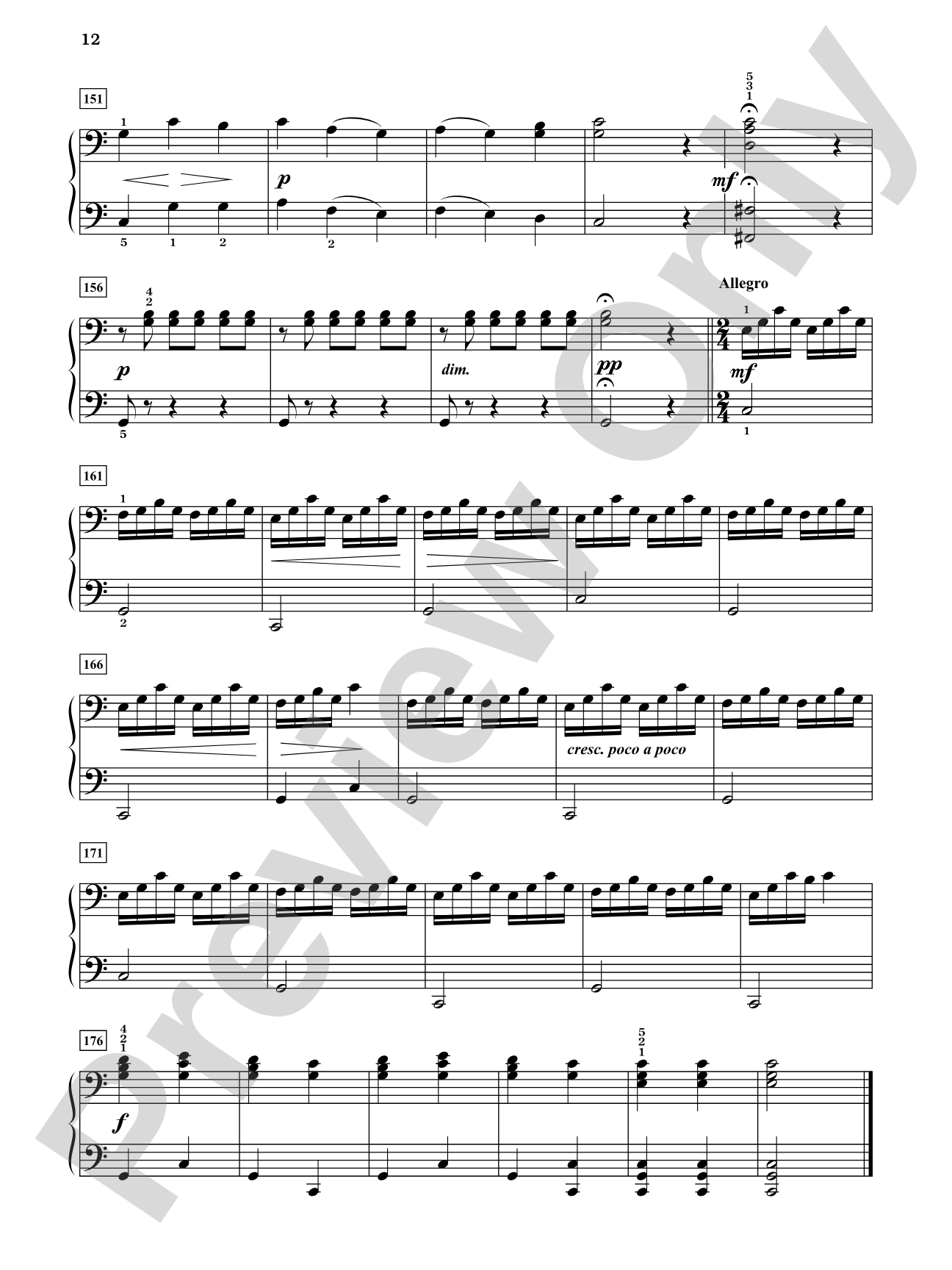
These graded collections of piano duets by master composers are among the best literature available at respective levels. Each duet, written by composers who lived in the 18th, 19th, and 20th century, has been carefully edited and fingered for performance ease. Titles: Rondo, K. 19d (from Sonata in C Major) (Mozart) * March, Op. 87, No. 44 (from The Children's Musical Friend) (Wohlfahrt) * Galop, Op. 87, No. 46 (from The Children's Musical Friend) (Wohlfahrt) * Polonaise, Op. 149, No. 23 (from Melodious Pieces) (Diabelli) * Venetian Boat Song, Op. 19, No. 6 (Mendelssohn-Czerny) * Morgengesang, Op. 39, No. 1 (Volkman) * ABC, Op. 39, No. 2 (Volkman) * The Russians Are Coming, Op. 11, No. 3 (Volkman) * Dance, Op. 57, No. 6 (Kirchner) * Variations on the C Major Scale, Op. 122b, No. 5 (Reinecke) * Shepherd's Poem, Op. 43, No. 3 (Bendel) * Barcarolle, Op. 22, No. 2 (Fibich). "Galop, Op. 87, No. 46" and "The Russians Are Coming, Op. 11, No. 3" are Federation Festivals 2016-2020 selections. A Federation Festivals 2020-2024 selection.


Masterwork Classics Duets, Level 5: A Graded Collection of Piano Duets by Master Composers: Piano Duets & Four Hands isn't in MakeMusic Cloud just yet...but it could be. Let us know you'd like to see it, and you'll help shape what comes next. In the meantime, start a free trial and dive into thousands of interactive titles your students can play along with today.
Request This Title
Tell us you want it.
Start Your Free Trial
Explore everything that's ready to play right now.
Sample Audio
No sample audio found.
Sample Video
No sample videos found.
Additional Details
Series:
Masterwork Classics Duets
Publisher:
Alfred Music
Page Count:
56
SKU:
00-PB-0000624
More about this title
Why we love this
This collection spans a century of pedagogical duet writing, pulling pieces that teachers have relied on for generations to build confidence in intermediate pianists. The breadth of character pieces, from Mozart's elegant rondo to Volkman's character studies, means you'll find genuine musical substance alongside technical progression, not just exercises dressed up as compositions. Two selections appear on Federation Festivals lists, giving students tangible performance goals beyond the studio.
What to expect
A journey through drawing rooms and concert halls of the Classical and Romantic eras. These pieces breathe with elegance and modest storytelling, boat songs that ripple, dances that move with purpose, character sketches painted in bright, straightforward language. The ensemble experience itself is intimate and rewarding, with both players fully engaged rather than relegated to accompaniment.
Who it's for
Intermediate pianists working toward greater independence between hands and comfort with period style. Students preparing for festival or recital performance will benefit from the variety of character pieces and the two selections recognized by Federation Festivals standards.
How to get the most out of it
- Balance the primo and secondo voices by listening carefully to which hand carries the melody; independence between the two players matters more at this level than perfect rhythmic lock.
- Work the Wohlfahrt and Volkman pieces to establish the personality of each dance and character piece before drilling details, these pieces come alive when the style is clear.
- Treat the ornamentation in Mendelssohn-Czerny's Venetian Boat Song as part of the harmonic color, not as an afterthought; it defines the lyrical character.
- Start the variations and technically demanding passages (Reinecke, Kirchner) slowly enough that both players can track hand independence without tension.
How to use it
Use individual pieces as recital vehicles throughout the year, or program several together to showcase the evolution of the duet genre across centuries. The shorter character pieces (Wohlfahrt, Volkman, Bendel) work well as concert openers or lighter moments between heavier works. Students preparing for festival participation should zero in on the two Federation selections and pair them with standard repertoire.
Skills your students will build
- Hand independence and balance between primo and secondo voices
- Stylistic interpretation of Classical and Romantic period conventions
- Ensemble listening and rhythmic coordination without over-relying on visual cues
- Technical evenness in variations and passage work at intermediate tempo
- Ornamentation and articulation in lyrical melodies