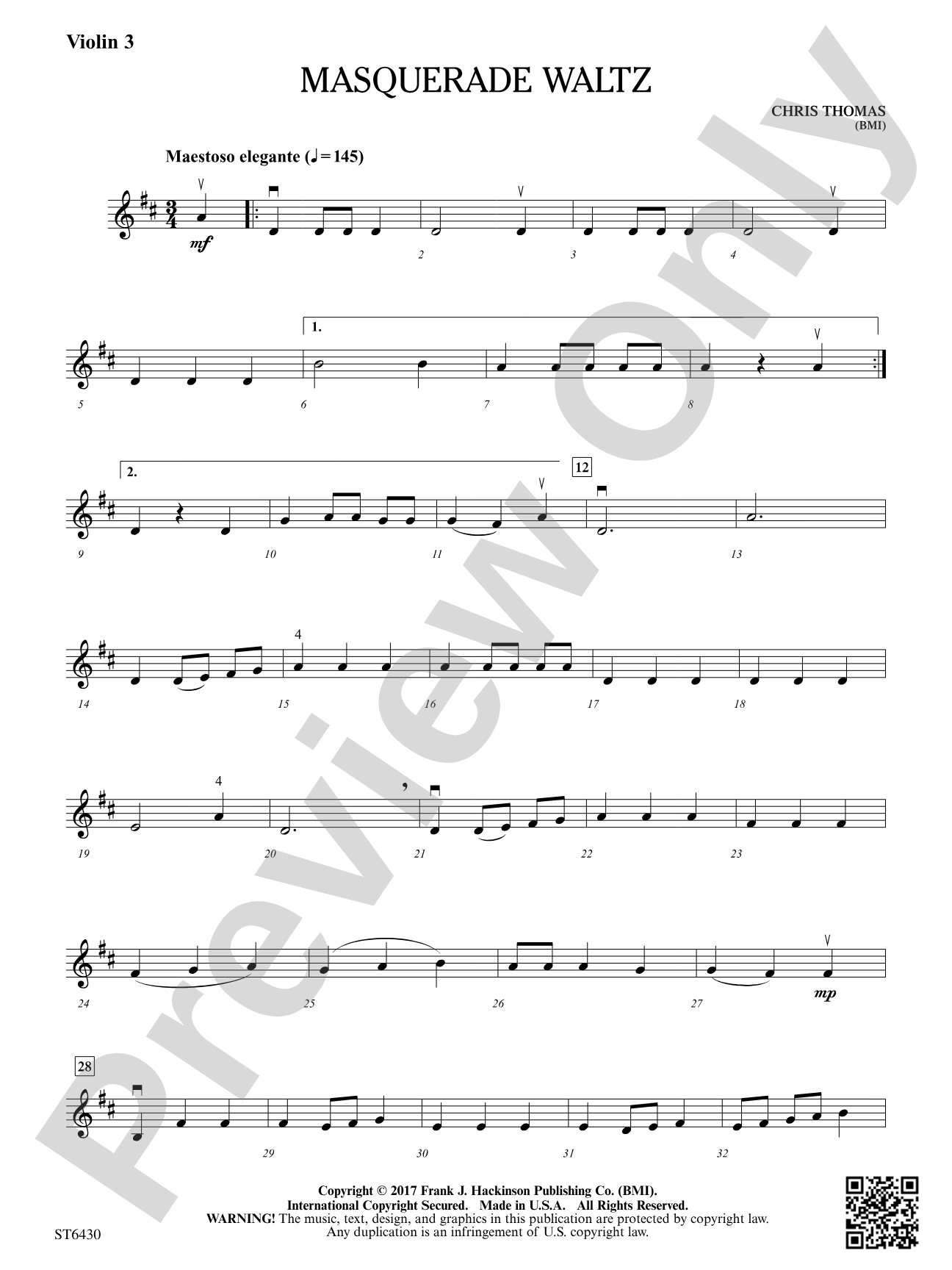
This elegant waltz conjures images of a masquerade ball set in stately 18th century Europe. One can imagine ballroom dancers gliding about as the delightful melody passes throughout the sections in a very organic way. The piece features easy low 1 fingerings and the opportunity to perform in the classical style.
Discover MakeMusic Cloud: thousands of interactive titles your students can play along with today.
Chris Thomas composes across film, television, theme parks, and concert hall settings. His accolades include a Hollywood Music in Media Award, two second-place finishes in the American Prize in Composition, a Global Music Award, and the Gold Medal Prize at the Park City Film Music Festival. His concert works have graced stages including Carnegie Hall, the Sydney Opera House, and the Hollywood Bowl, while his film scores have contributed to Emmy-nominated projects and The Woman Rebel, which earned an Academy Award shortlist nomination.
Beyond his screen and theatrical work, Thomas has created music for some of the world's most recognizable theme parks and attractions, from Evermore Adventure Park and Knott's Berry Farm to international venues in the United Kingdom. His composition for concert band, the Malheur Symphony (Symphony #1), became the centerpiece of his 2019 TED Talk. His multifaceted approach to composition brings the sophistication of professional orchestration directly to educational ensembles.
Why we love this
This waltz captures the refinement of 18th-century ballroom music without requiring advanced technique from young players. Grade 2 orchestras rarely encounter pieces this stylistically authentic while remaining genuinely playable, making it ideal for groups ready to explore classical idioms alongside their technical development.
What to expect
Imagine candlelit ballrooms and masked dancers moving with practiced grace across polished floors. The melody floats above elegant accompaniment patterns, evoking the formality and refinement of 18th-century European courts while remaining warm and accessible.
Who it's for
String orchestras at the Grade 2 level who are ready to explore classical style and character beyond technical studies. This works well for ensembles building confidence with longer forms and developing their ability to shape lyrical material.
How to get the most out of it
Shape the melody line across sections by listening carefully as it moves through first violins, second violins, and violas. This organic transfer of the theme requires singers in each section to carry their phrases as if passing the story forward.
Keep the dance rhythm steady and lilting rather than mechanical. A waltz lives in its subtle rubato; resist the urge to lock into metronomic precision, which drains the ballroom character.
Balance the accompaniment figures against the melody so dancers could actually waltz to your interpretation. The lower strings and violas should support without overwhelming the primary line.
How to use it
Place this near the end of a concert to create a polished, sophisticated closing impression without demanding virtuosity. It pairs well with other classical-period selections in a thematic program exploring ballroom and dance music across centuries.
Skills your students will build
Sustaining lyrical lines through position changes with minimal shift noise
Tracking melody as it transfers between string sections
Executing low first-position fingerings with clean intonation
Maintaining steady accompaniment figures while listening to upper voices
Understanding classical phrasing and style conventions in waltz form
You May Also Like
Scan to Complete Your Purchase
Use your phone's camera to scan the code below
You'll log in on your phone and the order will be added to your account