Marzo Zingaro: 1st Percussion Sheet Music Preview

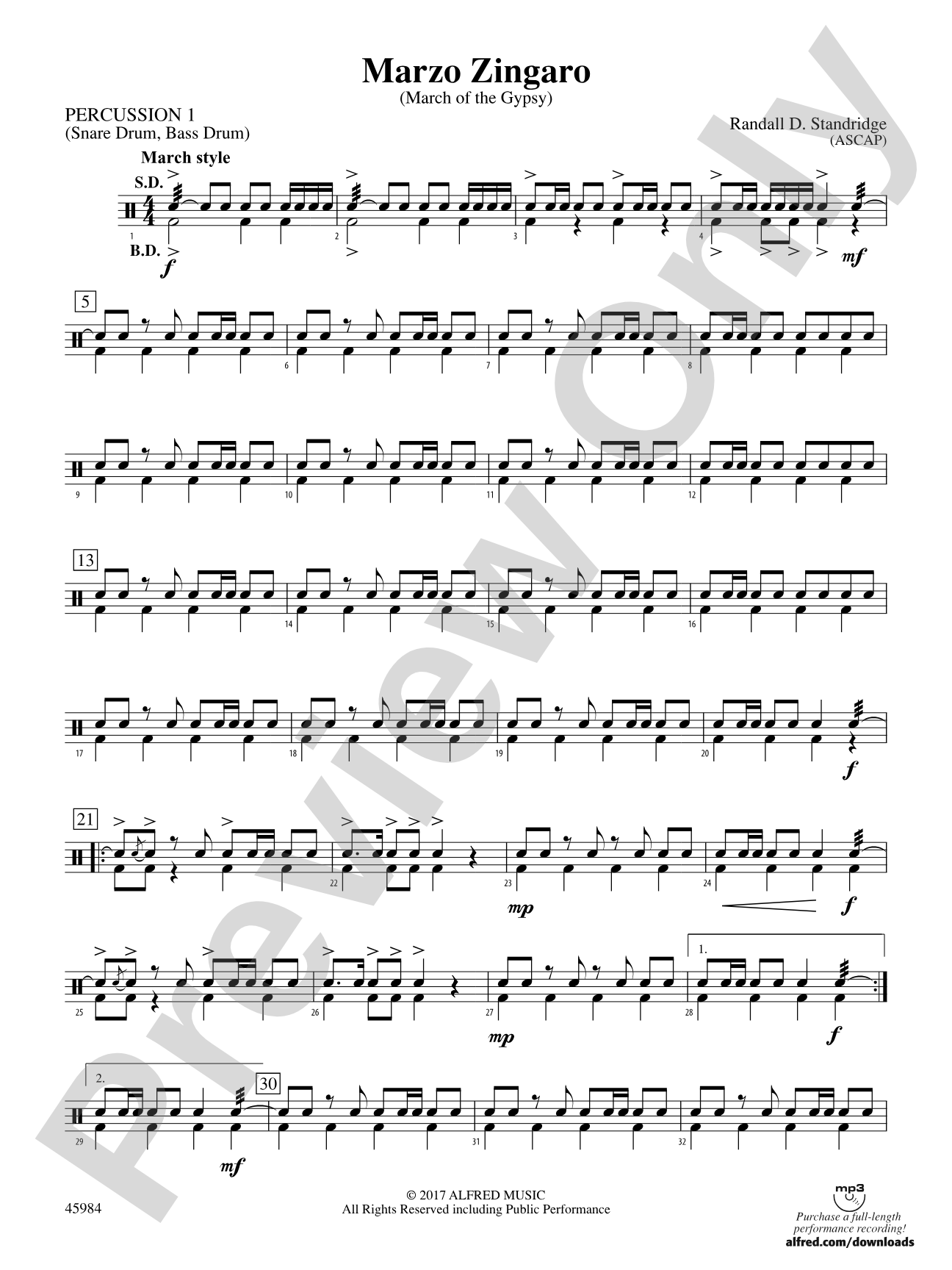
Marzo Zingaro: 1st Percussion

By Randall D. Standridge

Grade: 1.5 (Easy)

Item: 00-PC-0017710_PC1

Digital Download
$3.00
Description
"Marzo Zingaro" by Randall Strandridge seeks to portray the image of a lone wanderer, happily marching across the Italian countryside. The first strain portrays a more daring mood, while the trio and finale portray a happier style. (2:10) This title is available in MakeMusic Cloud.

Don't just read it, hear it, play along with it, and watch your students grow with it. In MakeMusic Cloud, Marzo Zingaro: 1st Percussion comes alive with professional accompaniment, adjustable tempo, and built-in practice tools that turn solo practice into real progress.

Sample Audio
0:00
0:00
Sample Video
Additional Details
Series: Alfred Debut Series
Publisher: Alfred Music
Page Count: 126
SKU: 00-PC-0017710_PC1

More about this title

About the Composer: Randall D. Standridge

Randall D. Standridge is a prolific composer and arranger whose works span concert band, wind ensemble, orchestra, and choral settings. His compositions have become staples in school music programs, known for their accessibility, clear musical intent, and genuine pedagogical value. Standridge brings a gift for memorable melody and orchestration that engages young musicians without patronizing them.

Why we love this

This piece captures a specific character without relying on complexity. Standridge nails the contrast between the assertive opening strain and the warmth of the trio, giving your band two distinct musical moods to explore within a manageable timeframe. At Grade 1.5, it sounds far more sophisticated than its difficulty level suggests, making it an excellent choice for early-season concerts or festivals where you want a polished result without weeks of rehearsal.

What to expect

A traveler's journey through sunlit hills and open roads. The first strain carries the energy of movement and mild adventure, while the trio settles into a gentler, almost reflective moment before the finale returns with renewed warmth and confidence. The whole arc feels complete despite its brevity.

Who it's for

Conductors of beginning to early-intermediate concert bands who want a piece with genuine musical character and programmatic appeal. Works equally well for ensembles preparing for their first festival or for directors seeking a short, impactful opener that holds student attention and audience interest.

How to get the most out of it

  • Shape the melody of the first strain with a slight lean forward; the character calls for forward motion, not rhythmic stiffness. Let younger players feel the march propel itself.
  • Balance the trio carefully. This is where the "happier style" emerges, so lighten the articulation and open up the phrasing compared to the first strain.
  • Use the dynamic contrasts between sections to clarify the form. Let the finale breathe as a logical return and extension of the opening idea.
  • Work the rhythmic precision of the march patterns in small sections before full ensemble rehearsal. Even at this grade level, clarity here pays dividends in performance quality.

How to use it

Open a spring or fall concert with this piece to establish a bright, engaging tone for the audience. Its short duration (2:10) makes it ideal as a pairing with a longer work, or as a standalone opener before a more substantial repertoire item. Festival judges appreciate the clarity of intent and the clean execution it allows younger bands to demonstrate.

Skills your students will build

  • Sustaining lyrical phrasing across phrase lengths appropriate to Grade 1.5
  • Maintaining steady march rhythm and forward motion without dragging
  • Responding to dynamic and style changes between distinct sections
  • Balancing ensemble sound in simple textures with limited doublings
  • Shaping melody with appropriate weight and direction

You May Also Like