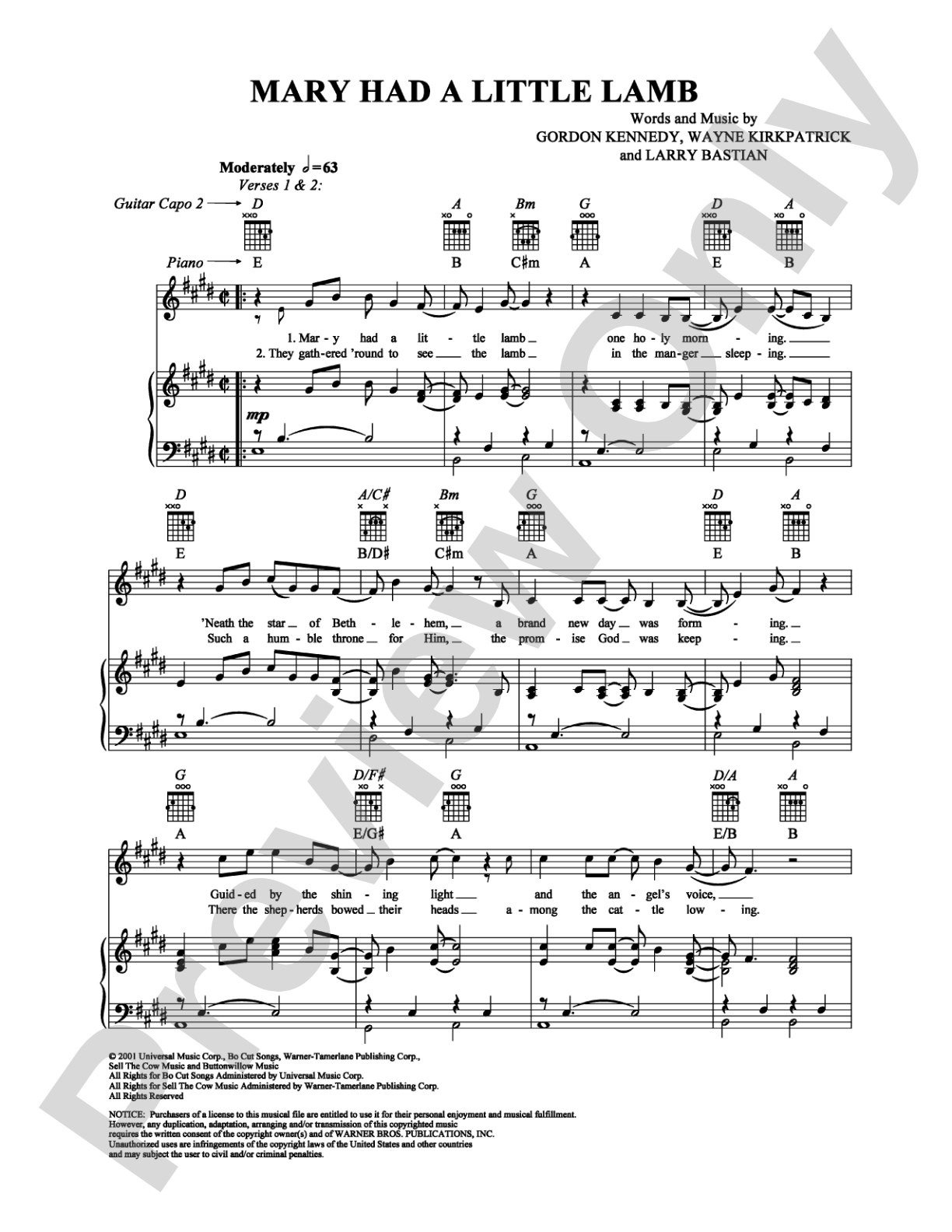
Mary Had a Little Lamb: Piano/Vocal/Chords Digital Sheet Music

Mary Had a Little Lamb: Piano/Vocal/Chords Digital Sheet Music

Garth Brooks, Wayne Kirkpatrick, Larry B. Bastian, Gordon Kennedy

Item: 00-PS-0004288

Digital Download
$3.99
Description

Mary Had a Little Lamb: Piano/Vocal/Chords Digital Sheet Music isn't in MakeMusic Cloud just yet...but it could be. Let us know you'd like to see it, and you'll help shape what comes next. In the meantime, start a free trial and dive into thousands of interactive titles your students can play along with today.

Sample Audio
No sample audio found.
Sample Video
Additional Details
SKU: 00-PS-0004288

More about this title

About the Artist: Garth Brooks

Garth Brooks stands as one of the most commercially successful recording artists in American music history, with a career spanning decades and sales exceeding 200 million albums worldwide. His influence on country music extends beyond performance; his interpretations of both traditional songs and contemporary material have shaped how audiences engage with country repertoire across generations.

Why we love this

This arrangement gives singers and pianists access to a beloved nursery rhyme through the lens of a country music icon, making it ideal for recitals, community performances, or classroom sing-alongs where you want to blend tradition with contemporary artistry. The piano/vocal/chords format means pianists can accompany a vocalist or perform independently, while guitarists can transpose the chords for their instrument.

What to expect

The arrangement carries warmth and directness, stripping the nursery rhyme of cuteness and offering it as genuine musical material. The piano/vocal/chords format invites storytelling; this is a song you can sing to an audience with sincerity, letting the melody speak for itself while harmony supports rather than ornaments.

Who it's for

This resource works well for vocalists preparing recital selections that call for accessible, familiar material with roots in American tradition, and for pianists who want to expand their accompanying or solo repertoire. Teachers and private instructors can also use this arrangement in community settings, benefit concerts, or student recitals where a known melody serves educational or social purposes.

How to get the most out of it

  • Balance vocal warmth with the piano accompaniment; the chords suggest where harmonic support matters most, so let those moments breathe rather than rushing through them.
  • Use the chord chart to explore different voicings on piano that suit your performing space; smaller venues benefit from more intimate, sparse accompaniment, while larger halls may call for fuller harmonic texture.
  • If performing as a duet, establish tempo together before playing; this familiar melody invites a conversational approach, so coordinate phrasing with your accompanist to shape phrases rather than playing mechanically.

How to use it

This arrangement fits naturally into recitals or performances that intentionally mix American folk traditions with contemporary interpretations, or into benefit concerts where familiar, accessible material encourages audience connection. It also serves well as an encore or closing piece that leaves listeners with something they recognize and can carry with them.

Skills your students will build

  • Harmonic reading from chord symbols
  • Coordinating vocal line with keyboard accompaniment
  • Transposing chords for different instruments or vocal ranges
  • Sustaining legit vocal tone on a simple, unadorned melody

You May Also Like