Marriage of Figaro Overture Sheet Music Preview

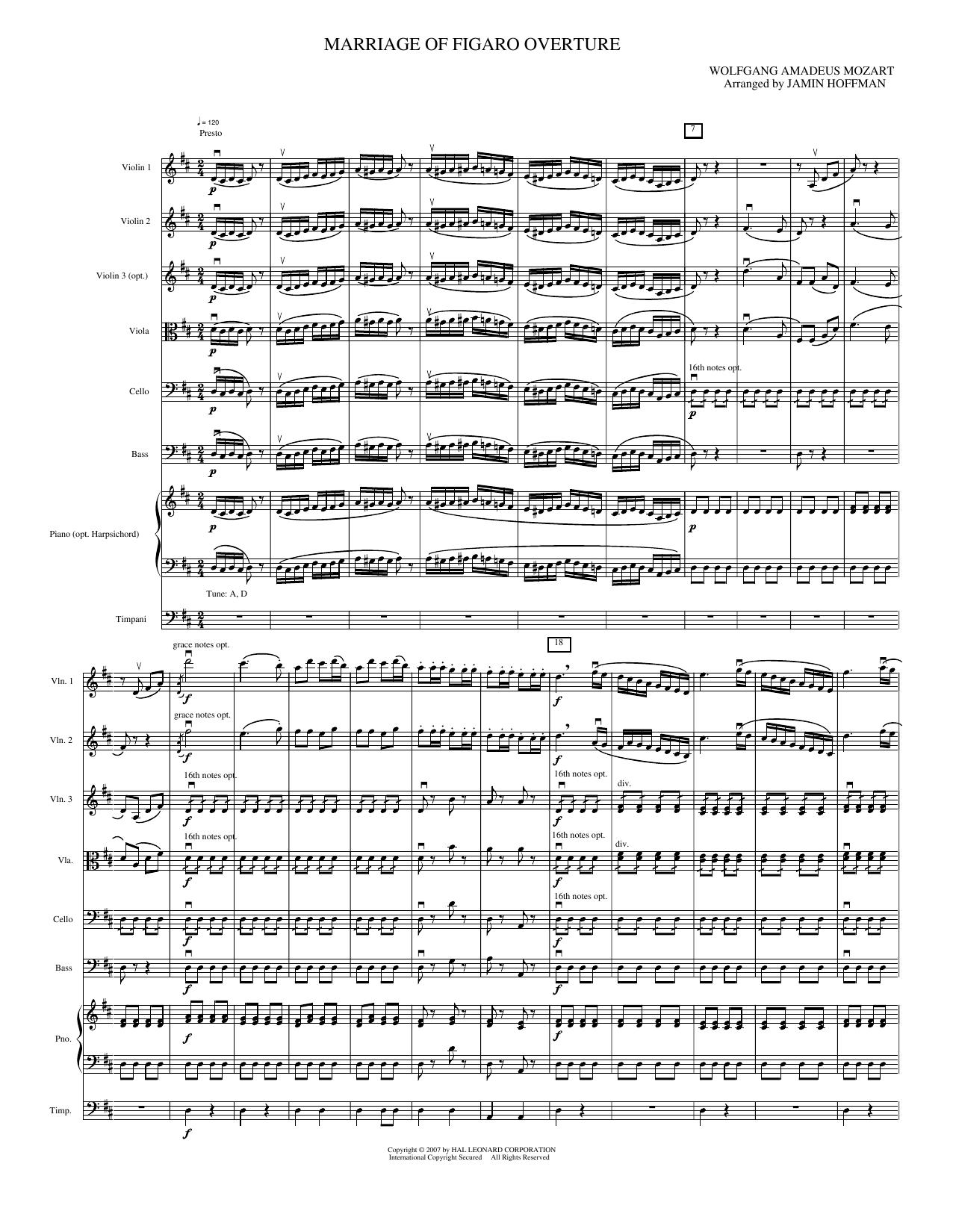
Marriage of Figaro Overture: String Orchestra Conductor Score & Parts

By W.A. Mozart / Arranged by Jamin Hoffman

Grade: 3-4

Item: 35-PK00426801

Digital Download
$45.00

Buy Extra Parts (Digital PDF Download)

Product Price Quantity
Marriage of Figaro Overture - Full Score $45.00

Parts Added to Cart!

Description
Marriage of Figaro Overture

Marriage of Figaro Overture: String Orchestra Conductor Score & Parts isn't in MakeMusic Cloud just yet...but it could be. Let us know you'd like to see it, and you'll help shape what comes next. In the meantime, start a free trial and dive into thousands of interactive titles your students can play along with today.

Sample Audio
No sample audio found.
Sample Video
Additional Details
Publisher: Hal Leonard
SKU: 35-PK00426801

More about this title

About the Composer: W.A. Mozart

Wolfgang Amadeus Mozart (1756-1791) composed the opera "Le nozze di Figaro" in 1786, and its overture has become one of the most performed orchestral works in the classical repertoire. Mozart's gift for melody and harmonic sophistication shine throughout this piece, making it an ideal introduction to operatic form and classical orchestration for young musicians.

As both a composer and performer, Mozart understood the technical demands and expressive possibilities of every instrument. This overture showcases his mastery of motivic development and structural clarity; these qualities make it invaluable for teaching ensemble balance, phrasing, and the fundamentals of sonata form.

Why we love this

This arrangement captures the exuberance and wit of Mozart's original while remaining genuinely playable at the Grade 3-4 level. Jamin Hoffman has preserved the melodic brilliance and harmonic language that make this overture endure, giving your students access to genuine Mozart rather than a simplified skeleton of the piece. A string orchestra can deliver real sparkle here; the famous themes are instantly recognizable and deeply satisfying to perform.

What to expect

Comic opera energy captured in pure orchestral form. The opening melody bounces with character and purpose, building momentum through dialogue between sections. By the work's end, you've heard themes develop, transform, and resolve with the kind of inevitable rightness that makes Mozart timeless.

Who it's for

String orchestras at the intermediate level who are ready to tackle genuine classical literature with all of its structural sophistication and emotional range. This works beautifully for programs that want to expose students to opera and the forms that grew out of it, or for teachers building a balanced concert around themed programming ("Mozart," "Operatic Delights," "Overtures and Preludes").

How to get the most out of it

  • Keep the famous opening theme light and connected; resist the urge to break the phrase at the bar line. Violins should shape the first few measures as one graceful gesture, with violas and cellos providing warm support underneath.
  • Articulation matters enormously in the faster sections. Crisp, unified detaching on the rhythmic figures will give the piece its characteristic humor and drive without sacrificing elegance.
  • Balance the accompaniment textures so that moving lines remain audible. When violas carry sixteenth-note figures behind a theme, they should sing through, not recede into the background.
  • Attend to the recapitulation with fresh energy. This is where Mozart reveals his structural mastery; a small lift in tempo and intensity here signals the return and keeps listeners engaged through to the final cadence.

How to use it

Open a concert with this overture to set a sophisticated, buoyant tone. It pairs beautifully with other classical works or with contrasting romantic-era pieces, since its clarity and directness make it an ideal bridge between styles. Early in the season, it serves as an accessible entry point to sonata form and operatic storytelling.

Skills your students will build

  • Sonata form recognition and performance
  • Maintaining lyrical phrasing over barlines
  • Balancing melody and accompaniment textures
  • Articulation clarity in rapid figurations
  • Sectional coordination without sacrificing ensemble blend
  • Understanding thematic development and recapitulation

You May Also Like