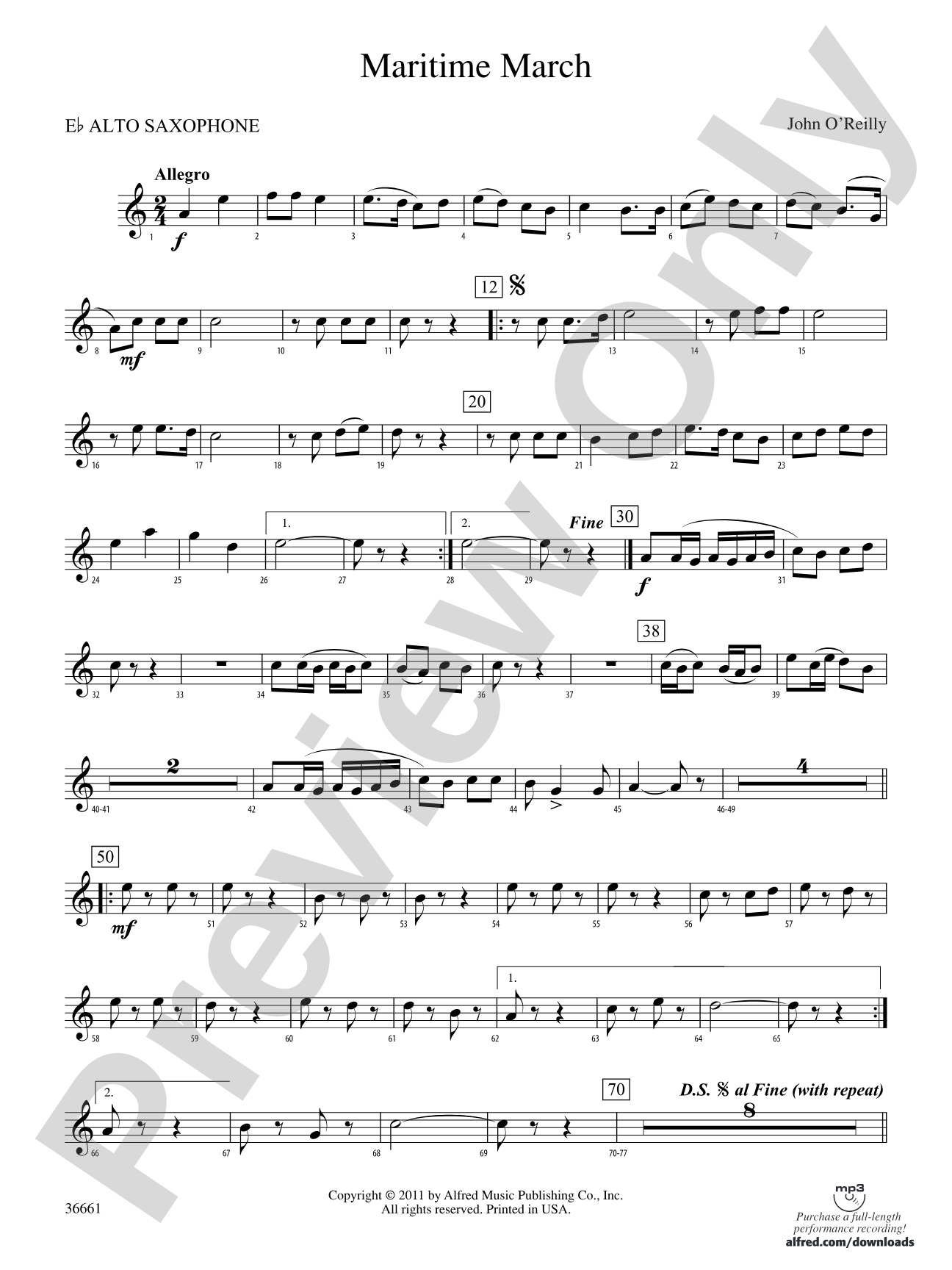
Maritime March: E-flat Alto Saxophone Sheet Music Preview

Maritime March: E-flat Alto Saxophone

By John O'Reilly

Grade: 1 (Very Easy)

Item: 00-PC-0015090_AX1

Digital Download
$3.00
Description
"Maritime March" is a "jaunty" British-style march opening up in the key of C natural minor (Aeolian mode). Sixteenth notes combined with simple syncopations highlight the second strain in a question-and-answer section that pits the woodwinds against the brass. The traditional trio moves to the key of E-flat and features the low clarinets in unison with the French horns. This is a very appealing march that will be easy to put together and really make your young band shine.

This piece correlates to Accent on Achievement Book 2, Page 15.

Don't just read it, hear it, play along with it, and watch your students grow with it. In MakeMusic Cloud, Maritime March: E-flat Alto Saxophone comes alive with professional accompaniment, adjustable tempo, and built-in practice tools that turn solo practice into real progress.

Sample Audio
0:00
0:00
Sample Video
Additional Details
Series: Accent on Achievement
Publisher: Alfred Music
Page Count: 120
SKU: 00-PC-0015090_AX1

More about this title

About the Composer: John O'Reilly

John O'Reilly is a prolific composer and arranger whose work has become central to music education curricula across North America. His compositions prioritize clarity of voice leading and accessibility without sacrificing musical substance, making him a trusted voice for directors building young ensembles.

Why we love this

This march proves that Grade 1 writing can still deliver genuine character. The modal color of C natural minor sets it apart from predictable march fare, and the woodwind-brass antiphonal writing in the second strain creates real ensemble dialogue. Your students will feel like they're playing something that matters.

What to expect

Crisp and spirited, with the gait of a proper British march. The Aeolian mode gives it an unexpected sophistication, something between nostalgic and modern. When the trio arrives in E-flat with those singing low reeds and French horns, the energy shifts to something warm and almost ceremonial.

Who it's for

Directors of beginning and early intermediate bands will find this piece ideal for students just gaining confidence with ensemble playing. The Grade 1 difficulty level keeps technical demands manageable while the British march style and modal harmonic color engage ears accustomed to simpler material.

How to get the most out of it

  • Shape the jaunty character with articulation clarity in the opening theme. Crisp tonguing in the woodwinds and brass will let the syncopation breathe rather than sound clumsy.
  • Balance the question-and-answer exchange between woodwinds and brass by having each section support their line dynamically. Don't let either color disappear in the antiphonal passages.
  • Feature the low clarinet-French horn unison in the trio with a warm, unified tone quality. Lock the blend between these two timbres so the transition to E-flat feels settled and lyrical.
  • Establish a steady, confident march tempo from the top. Young bands often rush marches; a clear conducting pattern will anchor the ensemble through those syncopated figures.

How to use it

Program this as a confident opener for a concert featuring early-level ensemble work, or use it mid-set to lift energy without demanding a technical reset. The march form and accessible difficulty make it ideal for spring concerts or end-of-year performances where you want students to feel accomplished and audiences to hear genuine musicianship.

Skills your students will build

  • Understanding modal harmony (C natural minor/Aeolian mode)
  • Reading and executing sixteenth-note passages with syncopation
  • Blend and balance in antiphonal (question-and-answer) sections
  • Ensemble rhythmic precision in march style
  • Part independence across woodwind and brass choirs

You May Also Like