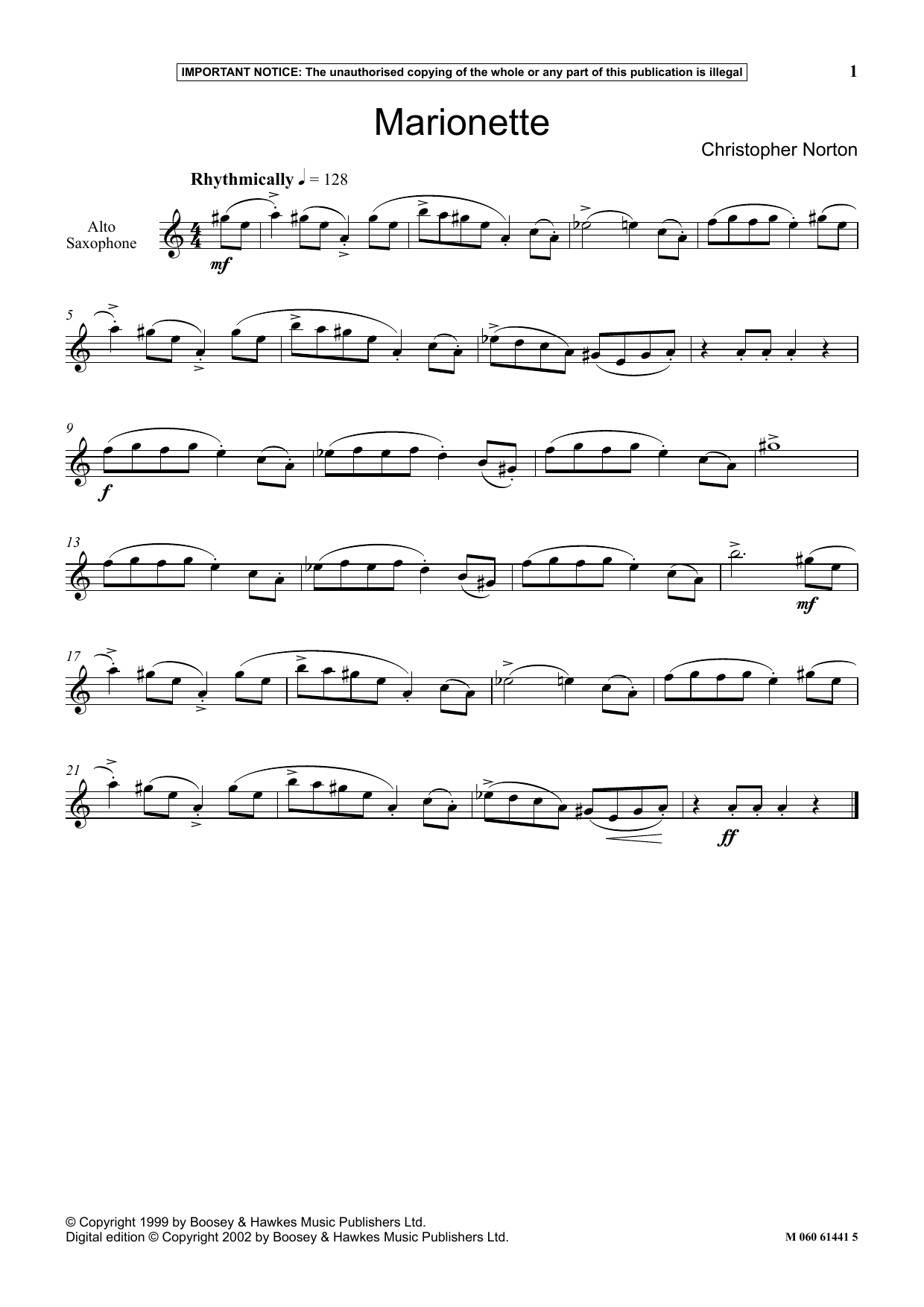
Christopher Norton is a British composer and arranger whose work spans classical training, jazz sensibilities, and a deep commitment to music education. His compositions for young musicians are known for their accessibility without sacrificing musical substance; Norton writes with an understanding of what students can accomplish at each level while still pushing them toward genuine musicianship.
Why we love this
Norton captures something genuinely theatrical in this piece without resorting to heavy-handed effects or complicated harmonic language. The character study here reads clearly to listeners while remaining satisfying for players to execute, making it a strong choice for recitals or collections where you need something that stands on its own.
What to expect
The music evokes the jerky, controlled movements of a puppet with surprising emotional depth. There's a quality of wry observation here, even playfulness, as if the composer is asking you to find the humanity in something mechanical and constructed.
Who it's for
This piece works well for intermediate pianists or soloists developing their interpretive skills and ability to convey character through musical means. It's also accessible for ensemble arrangements or student recitals where variety in style and mood is desired.
How to get the most out of it
Shape the melodic line with clear phrasing that respects the piece's dramatic arc; avoid a mechanical or robotic approach despite the titular subject matter.
Balance expressiveness with precision in the accompaniment figures so they support rather than overshadow the primary voice.
Attend to dynamic contrasts carefully, as they're essential to the characterization of a marionette's movements.
How to use it
Pair this with other character pieces or miniatures to create a thematic program exploring how composers depict non-human subjects. It also works as a lighter moment in an otherwise serious recital, offering both musical interest and welcome tonal contrast.
Skills your students will build
Interpreting character and mood through articulation and phrasing
Controlling rhythmic precision while maintaining musical expression
Shaping secondary voices to support narrative clarity
Understanding how repetition and variation create character development
You May Also Like
Scan to Complete Your Purchase
Use your phone's camera to scan the code below
You'll log in on your phone and the order will be added to your account