
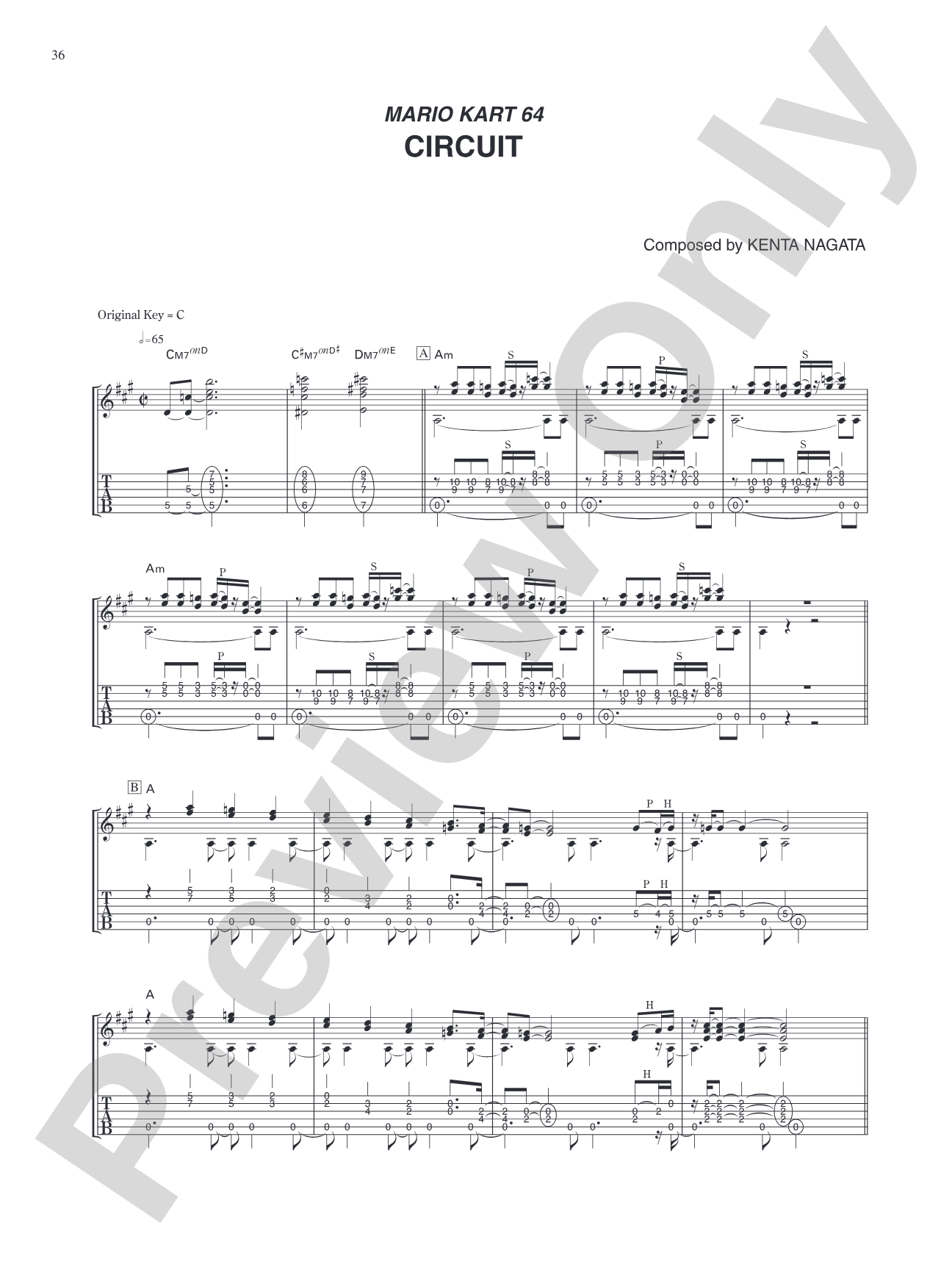

Mario Kart 64 Circuit: Guitar Tab
34 Super Mario™ Themes Arranged for Guitar TAB
By Koji Kondo, Shiho Fujii, Asuka Ohta, Soyo Oka, Kenta Nagata, Hirokazu Tanaka, and Mahito Yokota
Item: 00-PS-0015208
$4.99
One moment…
Related Items
Super Mario Bros. Ground Background Music: Guitar Tab |
$4.99
|
View | |
Super Mario Bros. Underground Background Music: Guitar Tab |
$4.99
|
View | |
Super Mario Bros. Invincible Background Music: Guitar Tab |
$4.99
|
View | |
Super Mario Bros. Underwater Background Music: Guitar Tab |
$4.99
|
View | |
Super Mario Bros. Power Down Game Over: Guitar Tab |
$4.99
|
View | |
Super Mario Bros. Time Up Warning Fanfare: Guitar Tab |
$4.99
|
View | |
Super Mario Bros. Course Clear Fanfare: Guitar Tab |
$4.99
|
View | |
Super Mario Bros. World Clear Fanfare: Guitar Tab |
$4.99
|
View | |
Super Mario Bros. The Lost Levels The Lost Levels Ending: Guitar Tab |
$4.99
|
View | |
Super Mario Bros. 3 Map 1: Guitar Tab |
$4.99
|
View | |
Super Mario Bros. 3 Ground Background Music: Guitar Tab |
$4.99
|
View | |
Super Mario Bros. 3 Boss of the Fortress: Guitar Tab |
$4.99
|
View | |
Super Mario Bros. 3 Skyship Background Music: Guitar Tab |
$4.99
|
View | |
Super Mario World Title: Guitar Tab |
$4.99
|
View | |
Super Mario World Castle Background Music: Guitar Tab |
$4.99
|
View | |
Dr. Mario Title Background Music: Guitar Tab |
$4.99
|
View | |
Dr. Mario Chill: Guitar Tab |
$4.99
|
View | |
Super Mario Kart Mario Kart Circuit: Guitar Tab |
$4.99
|
View | |
Super Mario World 2 Yoshi's Island Ground Background Music: Guitar Tab |
$4.99
|
View | |
Super Mario World 2 Yoshi's Island Athletic Theme: Guitar Tab |
$4.99
|
View | |
Super Mario 64 Main Theme: Guitar Tab |
$4.99
|
View | |
Super Mario 64 Water Land: Guitar Tab |
$4.99
|
View | |
Super Mario Sunshine Dolpic Town: Guitar Tab |
$4.99
|
View | |
New Super Mario Bros. Title: Guitar Tab |
$4.99
|
View | |
New Super Mario Bros. Giant Background Music: Guitar Tab |
$4.99
|
View | |
New Super Mario Bros. Battle Background Music 1: Guitar Tab |
$4.99
|
View | |
New Super Mario Bros. Battle Background Music 2: Guitar Tab |
$4.99
|
View | |
Super Mario Galaxy Ending Staff Credit Roll: Guitar Tab |
$4.99
|
View | |
Mario Kart World Rainbow Road: Guitar Tab |
$4.99
|
View | |
New Super Mario Bros. Wii Title: Guitar Tab |
$4.99
|
View | |
New Super Mario Bros. Wii Ground Background Music: Guitar Tab |
$4.99
|
View | |
New Super Mario Bros. Wii Underwater Background Music: Guitar Tab |
$4.99
|
View | |
New Super Mario Bros. Wii Desert Background Music: Guitar Tab |
$4.99
|
View | |
Super Mario™ Series for Guitar: Guitar TAB Book |
$19.99
|
View |
Description
After decades of anticipation, Alfred Music is proud to release the officially licensed, collectible sheet music companion folios to the Super Mario Bros.™ video game series. This collection of 34 themes is arranged for solo guitar performance with full notation and TAB. Each song is arranged in easy guitar keys at an easy--intermediate level, and all pieces are suitable for recitals, concerts, and solo performances. Beloved by generations of gamers around the globe, these instantly recognizable melodies are drawn from more than two decades of Nintendo® video games, from Koji Kondo's iconic "Super Mario Bros.™ Ground Background Music" to the New Super Mario Bros.™ Wii™ themes. Adding to the fun, graphics from the corresponding games grace each page of the sheet music. Impress friends, family, and audiences of all ages by playing from this magnificent collection, which makes a great gift for every guitarist.
Titles: Super Mario Bros.™ Ground Background Music * Super Mario Bros.™ Underground Background Music * Super Mario Bros.™ Underwater Background Music * Super Mario Bros.™ Invincible Background Music * Super Mario Bros.™: The Lost Levels Ending * Super Mario Bros.™ 3 Map 1 * Super Mario Bros.™ 3 Ground Background Music * Super Mario Bros.™ 3 Boss of the Fortress * Super Mario Bros.™ 3 Skyship Background Music * Super Mario World™ Title * Super Mario World™ Castle Background Music * Dr. Mario™ Chill * Dr. Mario™ Title Background Music * Super Mario Kart™ Mario Circuit * Super Mario World™ 2 Yoshi's Island™ Athletic * Super Mario World™ 2 Yoshi's Island™ Ground Background Music * Super Mario 64™ Main Theme * Super Mario 64™ Water Land * Mario Kart™ 64 Circuit * Super Mario Sunshine™ Dolpic Town * New Super Mario Bros.™ Title * New Super Mario Bros.™ Giant Background Music * New Super Mario Bros.™ Battle Background Music 2 * New Super Mario Bros.™ Battle Background Music 1 * Super Mario Galaxy™ Ending Staff Credit Roll * Mario Kart™ Wii™ Rainbow Road * New Super Mario Bros.™ Wii™ Title * New Super Mario Bros.™ Wii™ Ground Background Music * New Super Mario Bros.™ Wii™ Underwater Background Music * New Super Mario Bros.™ Wii™ Desert Background Music * Super Mario Bros.™ Time Up Warning Fanfare * Super Mario Bros.™ Course Clear Fanfare * Super Mario Bros.™ World Clear Fanfare * Super Mario Bros.™ Power Down, Game Over.
"Best in Show" Award at Winter NAMM 2012 presented by Music Inc. magazine.


Titles: Super Mario Bros.™ Ground Background Music * Super Mario Bros.™ Underground Background Music * Super Mario Bros.™ Underwater Background Music * Super Mario Bros.™ Invincible Background Music * Super Mario Bros.™: The Lost Levels Ending * Super Mario Bros.™ 3 Map 1 * Super Mario Bros.™ 3 Ground Background Music * Super Mario Bros.™ 3 Boss of the Fortress * Super Mario Bros.™ 3 Skyship Background Music * Super Mario World™ Title * Super Mario World™ Castle Background Music * Dr. Mario™ Chill * Dr. Mario™ Title Background Music * Super Mario Kart™ Mario Circuit * Super Mario World™ 2 Yoshi's Island™ Athletic * Super Mario World™ 2 Yoshi's Island™ Ground Background Music * Super Mario 64™ Main Theme * Super Mario 64™ Water Land * Mario Kart™ 64 Circuit * Super Mario Sunshine™ Dolpic Town * New Super Mario Bros.™ Title * New Super Mario Bros.™ Giant Background Music * New Super Mario Bros.™ Battle Background Music 2 * New Super Mario Bros.™ Battle Background Music 1 * Super Mario Galaxy™ Ending Staff Credit Roll * Mario Kart™ Wii™ Rainbow Road * New Super Mario Bros.™ Wii™ Title * New Super Mario Bros.™ Wii™ Ground Background Music * New Super Mario Bros.™ Wii™ Underwater Background Music * New Super Mario Bros.™ Wii™ Desert Background Music * Super Mario Bros.™ Time Up Warning Fanfare * Super Mario Bros.™ Course Clear Fanfare * Super Mario Bros.™ World Clear Fanfare * Super Mario Bros.™ Power Down, Game Over.
"Best in Show" Award at Winter NAMM 2012 presented by Music Inc. magazine.
Discover MakeMusic Cloud: thousands of interactive titles your students can play along with today.
Sample Audio
No sample audio found.
Sample Video
Additional Details
Publisher:
Alfred Music
Page Count:
64
SKU:
00-PS-0015208
More about this title
About the Composer: Kenta Nagata
Kenta Nagata is a video game composer whose work has shaped the sound of Nintendo's most iconic franchises. His compositions demonstrate a gift for writing melodies that lodge instantly in memory while remaining musically sophisticated enough to sustain repeated listening across gameplay. His arrangements for this guitar collection preserve the harmonic clarity and memorable voicings of the original game audio while adapting them thoughtfully for solo guitar performance.
Why we love this
This collection gives guitarists access to 34 instantly recognizable melodies arranged at an honest easy-intermediate level, with both notation and TAB. The pairing of beloved gaming themes with genuine musical substance means students stay motivated while developing real technique and musicianship.
What to expect
Playful and purposeful. These themes carry the energy and optimism of the games themselves, but arranged here they invite a performer's own musicality and phrasing. The melodies are so durable that they seem to sing themselves, yet the harmonic context offers enough depth to keep both player and listener genuinely engaged.
Who it's for
Guitarists at the early-intermediate level who want to expand beyond traditional classical or folk repertoire while building core skills. Solo performers preparing recital programs, practice room musicians seeking music with immediate engagement, and any guitarist who grew up with these games and wants to hear them come alive under their own hands.
How to get the most out of it
- Lean into the character of each theme rather than rushing the tempo. Many of these melodies benefit from space and clarity, especially the underwater and castle themes where atmosphere matters as much as accuracy.
- Use the TAB as a reference for efficient positioning, but read the standard notation to understand the harmonic movement. This dual approach builds both fretboard familiarity and reading skills.
- Pay attention to the game graphics on each page. They're not decoration. They orient you musically to the original context and can guide interpretive choices like dynamics and tone color.
- When performing multiple pieces in sequence, consider the emotional arc. Pairing a fast circuit theme with a slower castle piece creates natural variety and keeps an audience engaged.
How to use it
Build a thematic concert around video game music as cultural repertoire, mixing these recognizable pieces with other game soundtracks or contemporary film themes. Alternatively, program one or two standout pieces within a traditional recital to offer genre variety and connect with audiences beyond the usual concert music demographic. These work particularly well in educational settings where engagement matters and in informal performance contexts like open mics or community events.
Skills your students will build
- Reading music across multiple registers and positions on the fretboard
- Coordinating standard notation with TAB for efficient learning
- Building left-hand dexterity and finger independence through varied melodic contours
- Interpreting phrasing and dynamics in a melody-driven context
- Developing tone control across different harmonic and textural demands