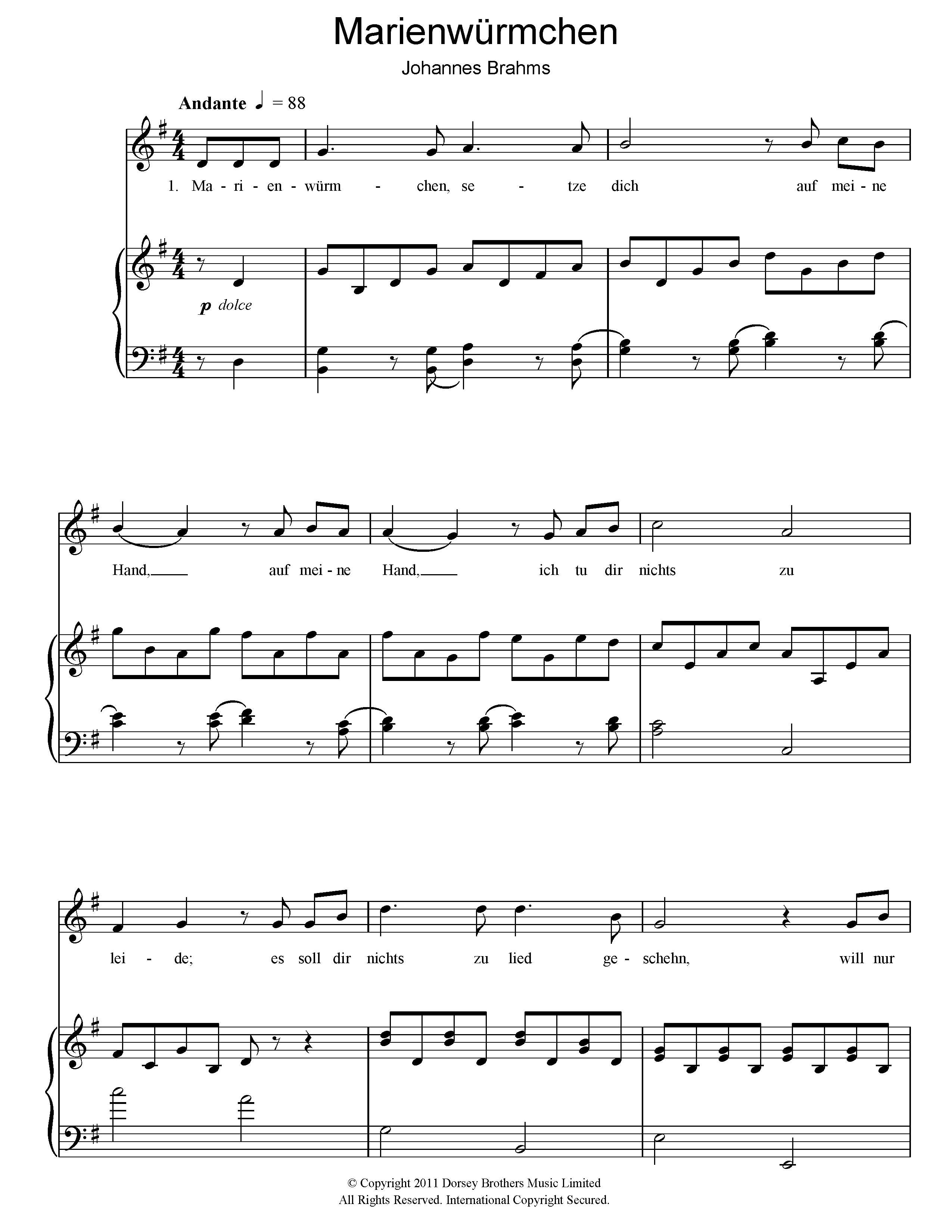
Marienwurmchen Sheet Music Preview

Marienwurmchen: Piano Vocal

As performed by Johannes Brahms

Item: 35-DS00205512

Digital Download
$5.99
Description

Marienwurmchen: Piano Vocal isn't in MakeMusic Cloud just yet...but it could be. Let us know you'd like to see it, and you'll help shape what comes next. In the meantime, start a free trial and dive into thousands of interactive titles your students can play along with today.

Sample Audio
No sample audio found.
Sample Video
Additional Details
Publisher: Hal Leonard
Page Count: 4
SKU: 35-DS00205512

More about this title

About the Artist: Johannes Brahms

Johannes Brahms (1833–1897) stands as one of the nineteenth century's most influential composers, bridging Romantic expression with classical structure. His output spans symphonies, concertos, chamber works, and hundreds of vocal pieces, including over 200 songs that showcase his gift for marrying intimate text-setting with sophisticated piano writing.

Why we love this

Brahms's songs reward singers who can balance lyrical warmth with interpretive detail. This work exemplifies his skill at crafting grateful, singable vocal lines that sit naturally in the voice while the piano part remains genuinely interesting for the accompanist, making it ideal for recital pairing or concert encores.

What to expect

Intimate and quietly observant, this song captures a moment of gentle affection with Brahms's characteristic blend of warmth and restraint. The music unfolds without dramatic gesture, inviting the listener into a private emotional space.

Who it's for

Vocalists developing their Lied repertoire and pianists seeking substantial art song accompaniments. Teachers building recital programs with repertoire that demands musical maturity from both performers.

How to get the most out of it

  • Shape the vocal phrase according to the text's natural speech rhythm rather than forcing uniform phrasing; Brahms's bar lengths often mirror language cadence.
  • Allow the piano introduction and interludes to breathe independently; they are not merely accompaniment but equal voices in the dialogue.
  • Experiment with subtle tempo flexibility at phrase endings to accommodate the singer's need for breath and emotional punctuation.
  • Balance the singer's dynamic range against the piano so both colors remain distinct in smaller venues without oversinging.

How to use it

Pair this with other Brahms songs to showcase his lyrical voice, or balance a heavier romantic work as a recital interlude. Its compact length and accessible character make it valuable for student recitals where it demonstrates serious artistry without demanding advanced vocal technique.

Skills your students will build

  • Text painting and dramatic intention in art song
  • Balancing vocal line with complex piano accompaniment
  • Interpretive flexibility within a classical framework
  • German diction and pronunciation in context

You May Also Like