Mariachi!: Piano Sheet Music Preview

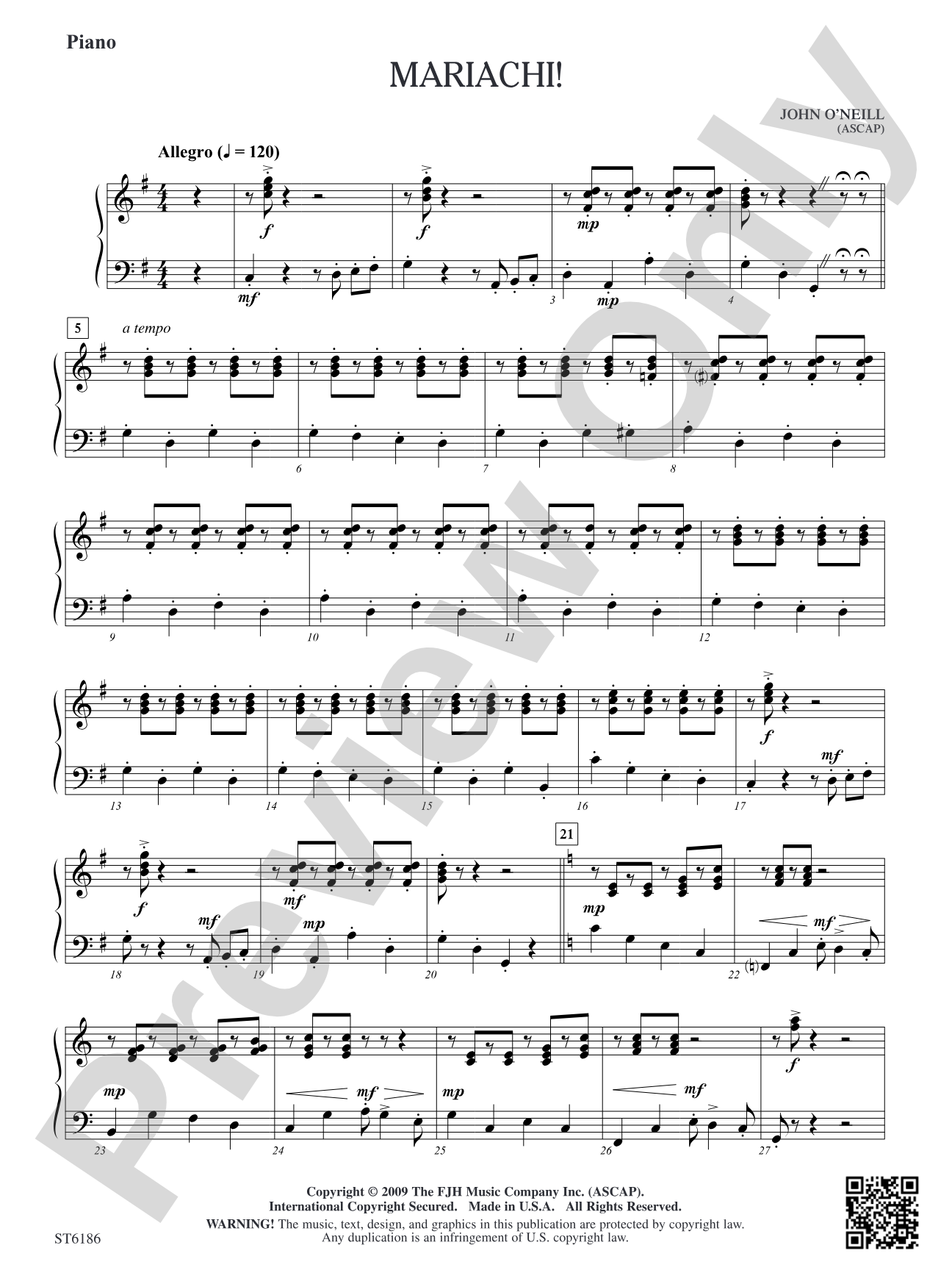
Mariachi!: Piano

By John O'Neill

Grade: 2.5

Item: 98-PC-DST6186_K

Digital Download
$7.00
Description
Explore alternative styles with this fun work that integrates all sections as the work develops. Written with ultimate flexibility in mind, this piece also works well with just violin 1 and piano; violin 1, violin 2 and piano; or even viola and piano! Perfect for smaller orchestras, yet written extremely well for large orchestras as well.

Mariachi!: Piano isn't in MakeMusic Cloud just yet...but it could be. Let us know you'd like to see it, and you'll help shape what comes next. In the meantime, start a free trial and dive into thousands of interactive titles your students can play along with today.

Sample Audio
0:00
0:00
Sample Video
Additional Details
Series: FJH Developing Strings
Publisher: The FJH Music Company, Inc.
SKU: 98-PC-DST6186_K

More about this title

About the Composer: John O'Neill

John O'Neill has built a reputation for writing orchestral music that serves the needs of young musicians without sacrificing musical integrity. His work across multiple ensemble types demonstrates a clear understanding of what students at different developmental levels can accomplish and what will genuinely engage them in the rehearsal room.

O'Neill's approach to composition emphasizes accessibility paired with substance. His pieces for developing orchestras show particular skill in balancing flexibility of instrumentation with coherent musical design, making him a trusted voice in school music programs seeking repertoire that works across varying performance circumstances.

Why we love this

John O'Neill wrote this piece with genuine flexibility in mind, not as an afterthought. You can run it with your full string orchestra, or pivot to a trio arrangement if your roster demands it, and the writing holds up beautifully either way. That kind of practical generosity, combined with the infectious energy of the mariachi style, makes this a piece that works just as well for building ensemble cohesion as it does for stretching your musicians into unfamiliar rhythmic territory.

What to expect

Bright, energetic, and unmistakably rooted in mariachi tradition. The piece captures the genre's characteristic rhythmic drive and festive spirit while remaining accessible to developing orchestras. Expect infectious momentum and a sound that feels both authentic and playfully arranged.

Who it's for

Directors managing string orchestras across a wide range of sizes will find genuine utility here. Whether you're building a chamber ensemble, running a full orchestra, or working with intermediate students who need exposure to world music styles, this piece adapts without compromise.

How to get the most out of it

  • Lean into the rhythmic precision that mariachi style demands. The characteristic strumming patterns and syncopated figures need clarity and ensemble lock, so isolate those sections in rehearsal and count through them together before layers stack up.
  • Balance the violin 1 melodic voice against the accompaniment texture. In smaller configurations (violin 1 and piano, for instance), the solo line carries the full character of the piece, so shape it with confidence and let it speak over the harmonic support.
  • If you're expanding to full orchestra, use the developing arrangement to your advantage. The piece reveals new instrumental combinations gradually, so let each section emerge naturally rather than pushing all voices equally from the top.

How to use it

This works beautifully as a second-half concert opener, especially paired with standard repertoire. The novelty style and multicultural content give variety to a concert while the manageable technical level keeps rehearsal time realistic. Consider programming it when you want to celebrate rhythmic work and stylistic flexibility without the weight of a standard classical piece.

Skills your students will build

  • Syncopated rhythmic reading and execution in mariachi style
  • Flexible ensemble adaptation (full orchestra to chamber configurations)
  • Balancing melody and accompaniment across different instrumental combinations
  • Rhythmic precision and ensemble lock in syncopated figures
  • Exposure to multicultural musical traditions through performance

You May Also Like