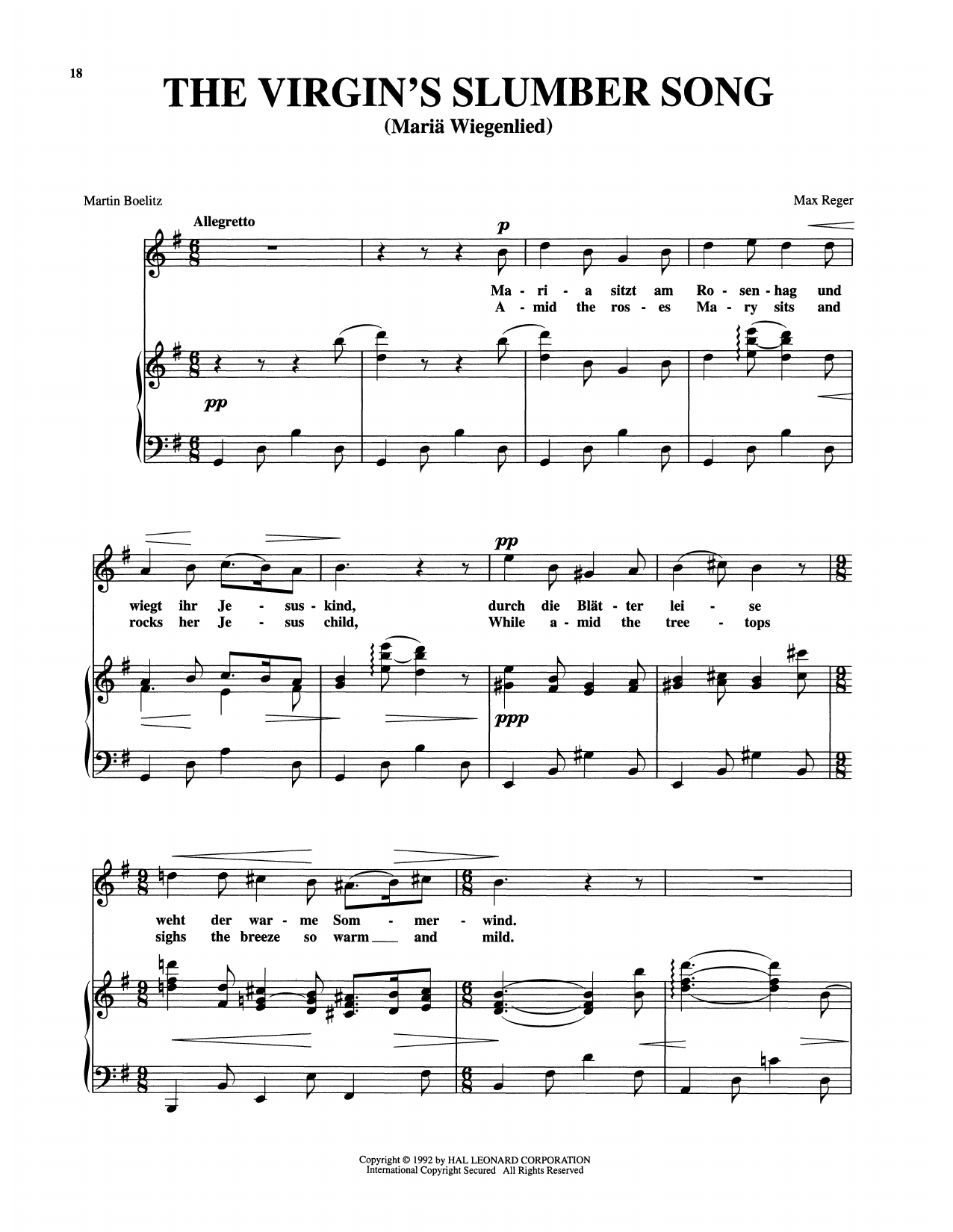
Maria Wiegenlied (The Virgin's Slumber Song) Sheet Music Preview

Maria Wiegenlied (The Virgin's Slumber Song): Piano Vocal

Item: 35-DS01827445

Digital Download
$5.99
Description

Maria Wiegenlied (The Virgin's Slumber Song): Piano Vocal isn't in MakeMusic Cloud just yet...but it could be. Let us know you'd like to see it, and you'll help shape what comes next. In the meantime, start a free trial and dive into thousands of interactive titles your students can play along with today.

Sample Audio
No sample audio found.
Sample Video
Additional Details
Publisher: Hal Leonard
Page Count: 3
SKU: 35-DS01827445

More about this title

About the Creator: Carl Riedel

Carl Riedel (1827–1888) was a German composer and conductor whose gift for vocal music shaped the choral traditions of 19th century Germany. Working primarily in Leipzig, he composed extensively for choir and voice, earning respect as both a creative force and a thoughtful interpreter of German Romantic ideals.

Riedel's settings of sacred texts reflect the reverence and intimacy that characterized German vocal writing of his era. Maria Wiegenlied remains one of his most enduring works, a testament to his ability to create deeply human moments through simple, profound musical gestures.

Why we love this

The piece unfolds with remarkable restraint, allowing the vocal line to inhabit the foreground while the piano provides warm harmonic support rather than competition. For singers, it offers a masterclass in phrasing within a modest range; for pianists, the accompaniment balances technical simplicity with emotional substance, making it accessible without feeling trivial.

What to expect

A quiet moment of devotion captured in song: the Virgin Mary cradling her child in sleep, the melody rising and falling like breath itself. The harmonic language is direct and consonant, creating an almost timeless quality that feels both intimately personal and spiritually elevating.

Who it's for

Soprano or light mezzo soloists who benefit from a sacred work that sits comfortably in the middle voice register without extreme demands. It serves pianists seeking repertoire where musicianship and restraint matter more than virtuosity.

How to get the most out of it

  • Let the melody breathe in natural speech rhythms rather than metronomic precision; the text's meaning should guide your phrasing as much as the written notes.
  • Shape the piano part with subtle dynamic contours that support (never undermine) the vocal line's arc, treating the accompaniment as a gentle rocking motion rather than mechanical accompaniment.
  • Honor the piece's intimate scale by singing with a naturally produced tone at a moderate dynamic level; projection is less valuable here than clarity and warmth.

How to use it

This fits naturally into Christmas services, concert programs, or recitals seeking intimate, reverent moments. Pair it with other German vocal literature or use it to ground a program that might otherwise feel ornate; its sincerity provides ballast.

Skills your students will build

  • Phrasing shaped by text and natural speech prosody rather than metric regularity
  • Sustaining a lyrical vocal line over a simple harmonic foundation
  • Sensitive ensemble balance between voice and accompaniment
  • Performing with emotional directness in a folk-like setting

You May Also Like