Maria (from The Sound of Music) Sheet Music Preview

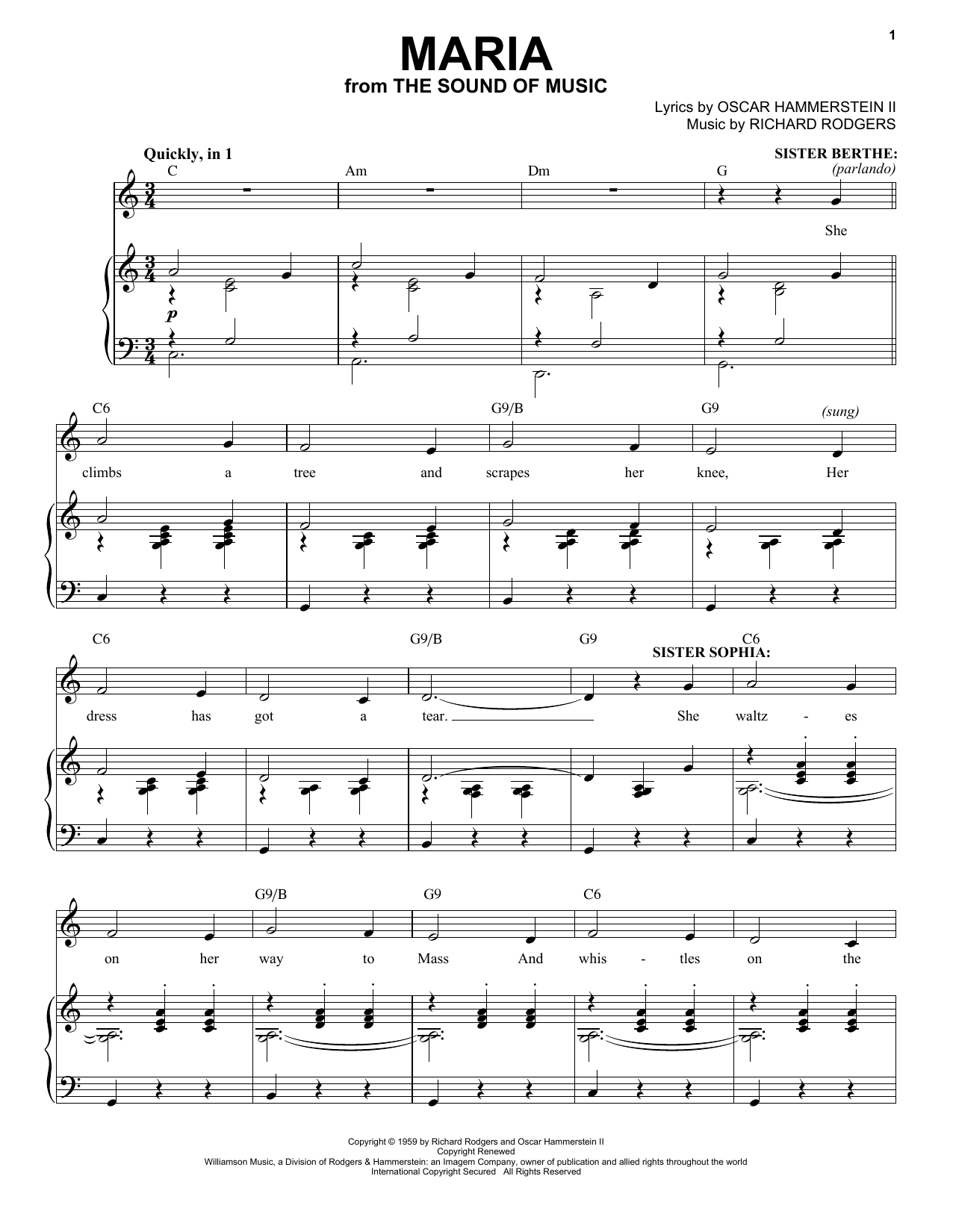
Maria (from The Sound of Music): Piano Vocal

As performed by Rodgers & Hammerstein

Item: 35-DS00430984

Digital Download
$5.99
Description

Maria (from The Sound of Music): Piano Vocal isn't in MakeMusic Cloud just yet...but it could be. Let us know you'd like to see it, and you'll help shape what comes next. In the meantime, start a free trial and dive into thousands of interactive titles your students can play along with today.

Sample Audio
No sample audio found.
Sample Video
Additional Details
Publisher: Hal Leonard
Page Count: 10
SKU: 35-DS00430984

More about this title

About the Artist: Rodgers & Hammerstein

Richard Rodgers and Oscar Hammerstein II transformed American musical theater by proving that songs could serve story as powerfully as dialogue. Their 1959 collaboration on The Sound of Music became the most performed musical of all time, built on Hammerstein's gift for lyrics that matched character development with melody, paired with Rodgers' instinct for memorable, singable tunes that work across ensemble and solo contexts.

Their influence on music education runs deep. Teachers across generations have used their scores to teach legible vocal writing, accessible harmonies that don't condescend, and the craft of setting text to music in ways that illuminate meaning. For student singers and pianists, their work offers a masterclass in how accompaniment supports rather than overshadows the voice.

Why we love this

Maria strikes the balance between accessibility and genuine musicality that makes Rodgers and Hammerstein so valuable in educational settings. The melody sits naturally for developing voices, the accompaniment pattern is learnable without sacrificing sophistication, and the song's emotional arc gives singers a real character moment to inhabit rather than just notes to execute.

What to expect

Warm, slightly exasperated affection mixed with genuine bewilderment. The music captures that particular moment when adults find themselves charmed despite their better judgment, all wrapped in a melody that feels both bouncy and contemplative at once.

Who it's for

Solo vocalists preparing for lessons, recitals, or audition repertoire will find a song that demands genuine interpretation within a manageable range. Pianists accompanying choir or voice students benefit from an accompaniment pattern that's clear enough to support an uncertain singer while remaining musical on its own.

How to get the most out of it

  • Shape the phrase around the text's natural speech rhythms rather than attacking every eighth note with equal weight; "How do you solve a problem like Maria" needs room to breathe and wonder.
  • Find the warm, conversational quality in the piano part during the verses; this is nun-room gossip, not a formal announcement, and your accompaniment tone should reflect that intimacy.
  • Let the chorus melody sit slightly back from the verse material; the shift in texture and register should feel like an interjection or memory rather than an escalation.

How to use it

Pair this with other Broadway selections to build a recital program that doesn't shy away from theater repertoire. It also works as a bridge piece in voice studios, introducing students to character work and text interpretation without the vocal demands of more dramatic material.

Skills your students will build

  • Text interpretation and emotional subtext
  • Legible, singable melody reading
  • Accompanying singers while maintaining independence in the piano line
  • Shaping phrases based on lyrical content rather than bar lines
  • Navigating popular music arrangements with classical technique

You May Also Like