
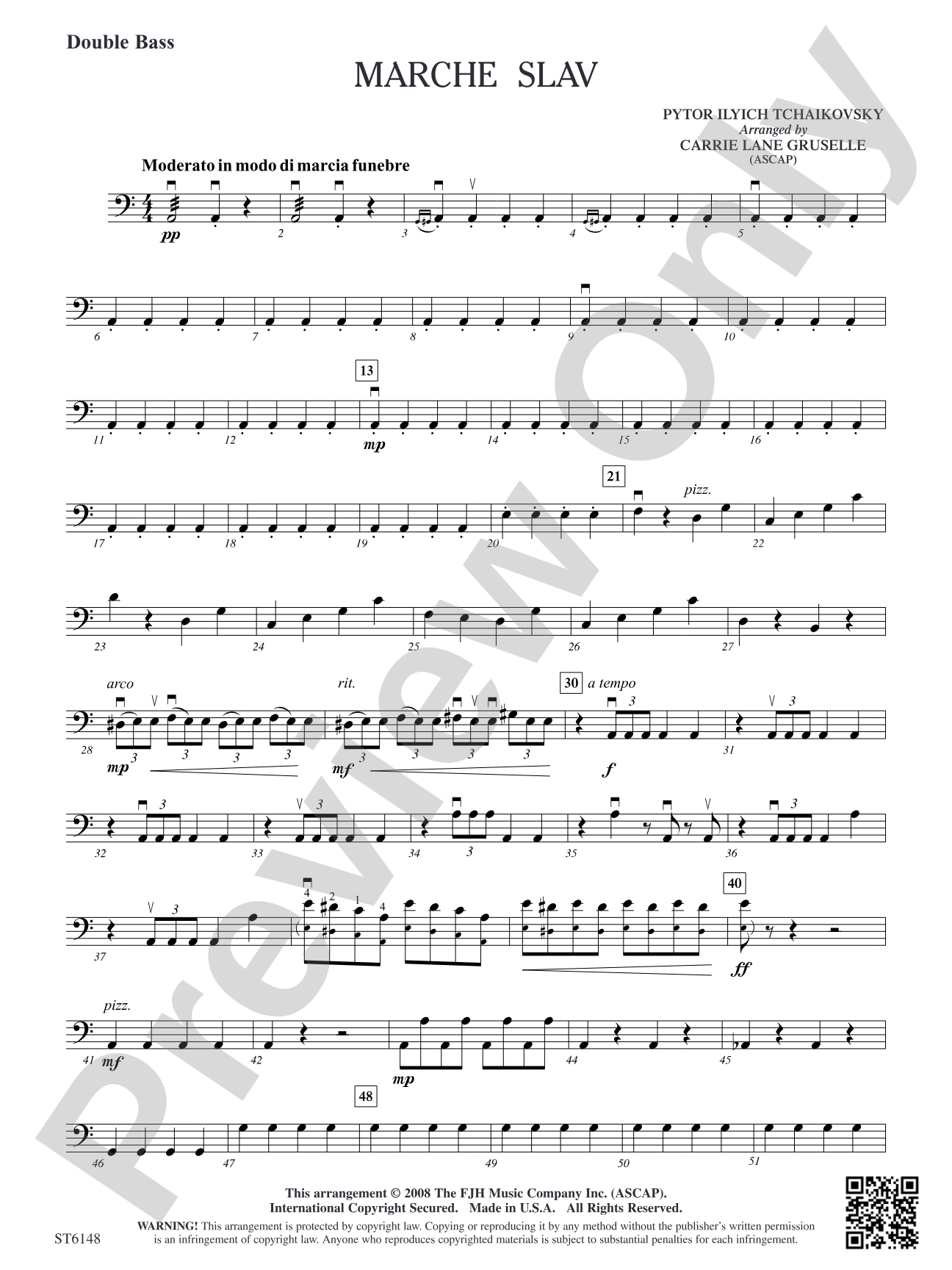

Marche Slav: Double Bass
By Pyotr Ilyich Tchaikovsky / arr. Carrie Lane Gruselle
Grade: 4
Item: 98-PC-DST6148_SB
$7.00
Pickup currently not available
Description
Tchaikovsky's famous Marche Slav exemplifies the spirit of 19th century nationalism as it was growing in Europe. This exceptional arrangement set in A minor (a more comfortable key than the original B-flat minor) has all the elements of the original and lets your orchestra shine without the need of winds and percussion. Brilliant orchestration and arranging meets the work of a master composer!


Don't just read it, hear it, play along with it, and watch your students grow with it. In MakeMusic Cloud, Marche Slav: Double Bass comes alive with professional accompaniment, adjustable tempo, and built-in practice tools that turn solo practice into real progress.
Open in the Player
Jump straight in and assign it today.
Start Your Free Trial
Open this title and explore the full library in minutes.
Sample Audio
1
Audio File
--:--
0:00
0:00
Sample Video
No sample videos found.
Additional Details
Series:
FJH String Orchestra
Publisher:
The FJH Music Company, Inc.
SKU:
98-PC-DST6148_SB
More about this title
About the Composer: Pyotr Ilyich Tchaikovsky
Pyotr Ilyich Tchaikovsky (1840-1893) stands as one of the most performed composers in the orchestral canon, celebrated for his gift for melody and his ability to distill emotional intensity into symphonic form. A Russian Romantic who drew deeply from folk music and nationalist sentiment, Tchaikovsky composed across all major genres and left an indelible mark on concert programming worldwide. His orchestral works remain central to the string orchestra repertoire because of their singable lines, dramatic architecture, and immediate appeal to both players and audiences.
Why we love this
Marche Slav arrives here in a key that actually sits comfortably for strings, removing a major technical hurdle while preserving every bit of the original's martial character and melodic sweep. The arrangement respects Tchaikovsky's orchestration instincts so completely that players feel they are performing a masterwork, not a reduction. This is the kind of piece that reminds students why they joined orchestra in the first place: sheer musical dignity paired with visceral, forward-moving excitement.
What to expect
Marche Slav unfolds with the pageantry of a ceremonial procession, its famous Russian folk melody both proud and yearning. The piece moves through passages of gathering strength and periods of introspection, building toward a climax that feels earned rather than imposed. From first note to last, it radiates the confidence of 19th century nationalism rendered through the lens of a compositional master.
Who it's for
String orchestras at the Grade 4 level that are ready for a work of genuine artistic stature. This arrangement serves advanced middle school orchestras and serious high school groups who want to program something that challenges them musically without overwhelming them technically. Conductors seeking a showpiece that educates rather than showcases will find it indispensable.
How to get the most out of it
- Shape the opening theme with a deliberate, processional tempo; Marche Slav demands clarity of line over virtuosity, so let the melody breathe rather than rush it.
- Balance the inner voices carefully during the thematic development in the middle section; second violins and violas carry harmonic weight that shouldn't disappear into accompaniment.
- Build momentum organically toward the final section by gradually increasing dynamic intensity rather than jumping to fortissimo; Tchaikovsky's structure creates its own crescendo if you trust the progression.
- Pay attention to the Russian folk melody that emerges; its character is neither melancholy nor aggressive, but resolute and ceremonial, which should shape your tone production and phrasing throughout.
How to use it
Open a concert with Marche Slav to establish a tone of musicality and ambition from the start, or place it as a centerpiece that allows an interval for reflection and applause. Its length and dramatic shape make it ideal for demonstrating ensemble growth over the course of a season, and it pairs naturally with other Romantic-era works or contemporary pieces that explore national identity.
Skills your students will build
- Reading sustained melodic lines with attention to phrase shape and direction
- Balancing tutti sections where multiple voices carry equal thematic weight
- Executing smooth dynamic transitions across the full ensemble
- Responding to a conductor's interpretation of Romantic-era orchestration and style
- Maintaining rhythmic precision in a processional context (avoiding rushed tempi)